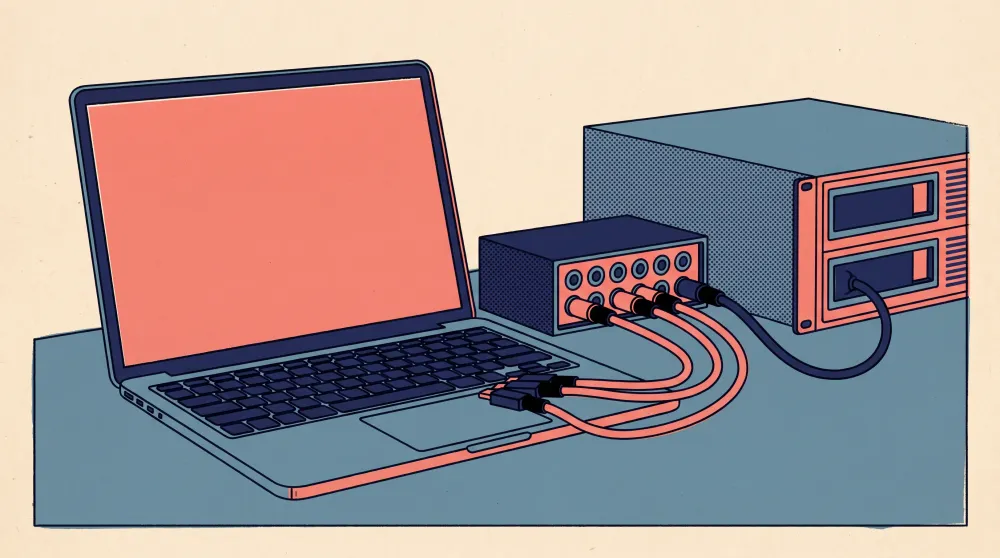
A Serious AI Workbench Starts With Ten Local MCP Servers
A serious AI workbench needs sources of truth beyond files, shell and Git. These ten MCP servers add browser state, hosted development records, live operations and user-owned memory without requiring a server rack, provided each runs behind a narrow identity and a task-specific profile.
Marcus SchulerAugust 25, 2026, 2:45 AM PST · 30 min read
Implicator PRO Briefing / 25 Aug 2026
Pro Members Only
The word “server” still persuades many AI users that the Model Context Protocol belongs in a rack or a cloud account. That is the wrong mental model. A local MCP server can be a modest process launched by the client only when it is needed. The harder question begins after installation: which external records deserve a place in an AI workbench, and how much authority should each connection receive? This briefing selects ten non-overlapping sources of truth and gives every one a practical job, a lowest-risk operating profile and a reason to leave it disabled when that boundary cannot be enforced.
New to Implicator PRO? Subscribe for $8/month -- new deep dive every Tuesday morning 3am PST.
On July 28, 2026, David Soria Parra, a co-inventor of the Model Context Protocol (MCP) and one of its lead maintainers, helped publish the 2026-07-28 specification. The release replaced session-bound remote exchanges with a stateless core and gave gateways more direct ways to route and authorize requests. It also carried a hardware misconception into a much larger audience: to somebody assembling a first AI workbench, the word “server” can sound like a demand for another computer, a rack in a closet or a cloud instance that must stay online.
Editor-in-Chief and founder of Implicator.ai. Former ARD correspondent and senior broadcast journalist with 10+ years covering tech. Writes daily briefings on policy and market developments. Based in San Francisco.
E-mail: editor@implicator.ai
 IMPLICATOR