Implicator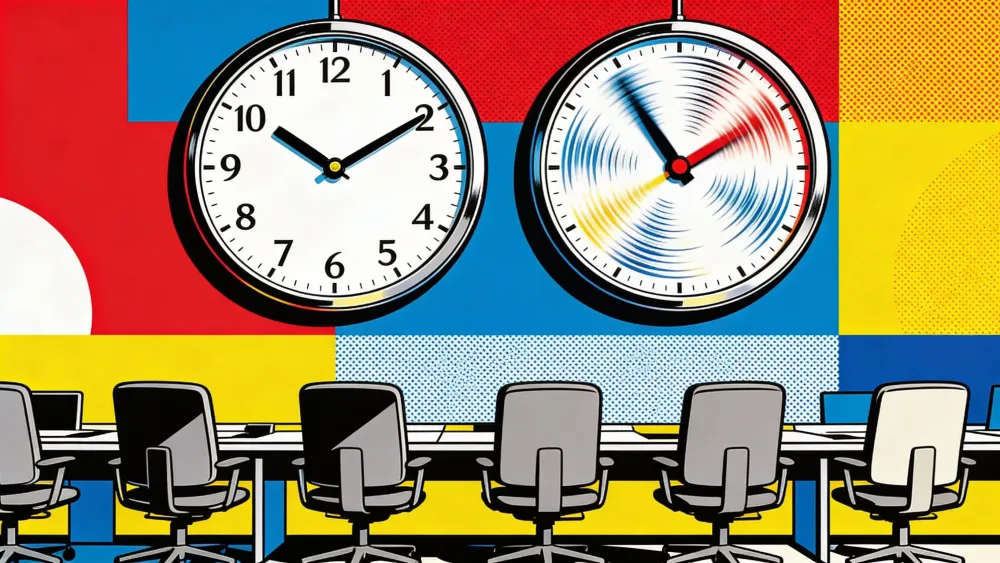
Something rare happened in the AI economy debate this past week. From The Atlantic to a Substack with a few thousand subscribers, everybody published at once.
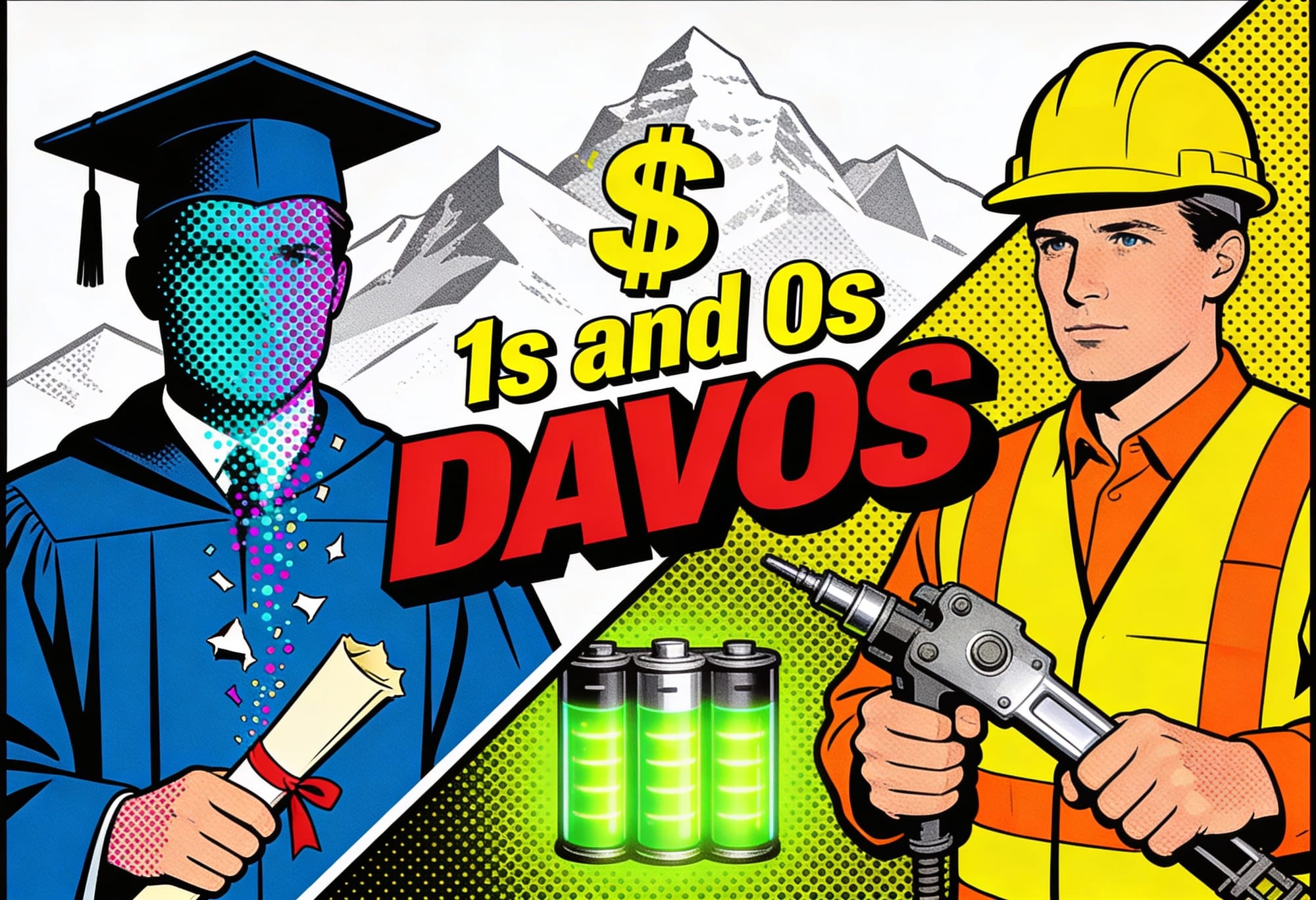
Annie Lowrey in The Atlantic documented how Americans with bachelor's degrees now make up 25 percent of the unemployed. A record. High school graduates are finding jobs faster than college graduates. Also a record.
Andrew Yang warned of the "great disemboweling of white-collar jobs" and told homeowners in Silicon Valley to sell now. Sam Altman admitted on CNBC that some companies are using "AI washing" to disguise ordinary layoffs, then added that real displacement is coming. The Guardian profiled a 20-year-old computer science student who switched to nursing because he figures coding jobs won't exist by graduation.
And then Citrini Research published a fictional macro memo from June 2028 imagining what happens after the S&P falls 38 percent, unemployment hits 10.2 percent, and the AI boom delivers everything Wall Street wanted. The piece went viral inside of 24 hours. Techmeme picked it up. Bloomberg ran an interview. The Times of India wrote an analysis of its implications for the Indian IT sector. For a Substack thought experiment, it punched through every audience wall it hit.
All of this within five days. Same economy. Wildly different diagnoses.
Two clocks are now running on the AI economy, and they show different times. One measures what has happened so far. The other measures what the composition of the workforce suggests is coming. The debate that erupted this week is about which clock to trust. The uncomfortable answer is both.
The Argument
- Nine in ten executives reported zero AI impact on jobs after three full years of ChatGPT
- Bachelor's degree holders now make up 25% of unemployed Americans, a record
- Citrini Research's viral 'Ghost GDP' scenario models how AI success could trigger economic crisis
- MIT data shows AI boosting junior developer output 27-39% vs. 8-13% for seniors
The backward-looking case looks bulletproof
Start with what the skeptics have. Their numbers hold up.
Three full years of ChatGPT's existence, and the macro data refuses to move. The NBER surveyed 6,000 global executives. Nearly nine in ten said AI had zero impact on employment or productivity. Not modest impact. Zero. The Yale Budget Lab combed Bureau of Labor Statistics data through November 2025 and found nothing either, not in job mix, not in unemployment duration, not in the occupations most exposed to automation. Goldman Sachs and JPMorgan economists reported last week that the AI boom contributed "basically zero" to U.S. economic growth. Apollo chief economist Torsten Slok summarized the disconnect with less cushion. "AI is everywhere except in the incoming macroeconomic data."
The January 2026 numbers landed hard. 108,435 job cuts across the U.S. Worst month since 2009. Dig into the Challenger, Gray & Christmas data and AI was explicitly cited in only 7,600. The rest were contract losses, market conditions, and plain restructuring wearing AI's name as a costume.
If you stopped reading here, the verdict would be tidy. AI is a stock market story, not an employment story. Hype dressed in a hoodie.
But backward-looking gauges are the wrong instrument for a forward-looking problem.
The leading indicators tell a different story
Something is shifting in the composition of who works and who doesn't. The changes are specific enough to measure and broad enough to worry about.
Occupations with high AI exposure have seen sharper spikes in joblessness than the averages suggest. Stanford economist Erik Brynjolfsson published data last year showing a 13 percent relative decline in employment for early-career workers in AI-exposed occupations. Most experienced workers saw stable or growing employment. Same economy, different floor depending on where you stand.
At MIT, field experiments across Microsoft, Accenture, and a Fortune 100 manufacturer tracked nearly 5,000 developers working with AI coding assistants. Weekly task completion jumped 26 percent. Junior developers, whose work skews mechanical, gained 27 to 39 percent. Senior developers, whose daily decisions involve more judgment, gained 8 to 13 percent.
That spread matters more than the average. AI is already sorting workers by replaceability. By the ratio of mechanical skill to judgment in their daily work. Nothing else.
In the Guardian's reporting, the behavioral shifts are already playing out in individual careers. A 45-year-old animation director got laid off after disclosing he wasn't using generative AI. A medical coder spent nine months job-hunting while deliberately skipping any listing that mentioned AI integration. Recruiters told the Guardian that roughly a quarter of sales candidates in the past six months tried to leave SaaS jobs entirely. They're convinced those roles have a shelf life.
Dario Amodei at Anthropic went further. Half of all entry-level white-collar jobs, gone. Mustafa Suleyman at Microsoft gave it a deadline. Eighteen months until most tasks performed sitting at a computer are fully automated. The AI labs sound emboldened by what their own coding agents can do, and defensive about the consequences of saying so publicly.
If you work in a job where you sit at a desk and look at a screen most of the day, you have heard some version of this. The question is which clock to trust.
Ghost GDP and the velocity trap
Most bear cases for AI argue that the technology is a bubble and won't deliver. Citrini flips the premise. What if AI delivers everything it promises, and the economy cracks anyway?
Citrini's 2028 is a world where AI has blown past every benchmark. Productivity grows faster than anything since Eisenhower. Corporate margins expand because labor costs collapsed. By every traditional measure, the economy should be healthy.
It isn't. Because machines don't spend money.
Stay ahead of the curve
Strategic AI news from San Francisco. No hype, no "AI will change everything" throat clearing. Just what moved, who won, and why it matters. Daily at 6am PST.
No spam. Unsubscribe anytime.
Citrini calls the result "Ghost GDP." Output that registers in national accounts but never circulates through the real economy. A single GPU cluster in North Dakota, generating the work previously done by 10,000 white-collar employees in Manhattan, contributes to GDP. But it doesn't eat lunch, pay a mortgage, buy clothes for anyone's kids, or subscribe to anything.
The feedback loop is clean and vicious. Companies replace workers with AI. Margins improve. Stock prices climb. Savings get reinvested in more AI capacity. More workers get displaced. Those workers spend less. Companies selling things to those workers weaken. Those companies invest more in AI to protect their own margins. Each company's individual decision is rational. The collective result is corrosive.
What makes the piece cut deeper than most doomsday scenarios is its financial specificity. The $13 trillion U.S. mortgage market was underwritten on the assumption that borrowers would keep earning at roughly their current income for 30 years. If white-collar income gets structurally impaired, those assumptions crack, and the loans were good on the day they were written. The world just changed afterward. PE-backed software deals, levered at 25 times EBITDA on the assumption that annual recurring revenue would remain recurring, face a version of the same problem when AI agents can replicate the core product.
The Citrini piece is the latest entry in a debate that has been gathering velocity since at least January. But it's the sharpest. It doesn't argue that AI will fail. It argues that AI's success and the economy's health may be running on different tracks. That framing got under people's skin because the mechanism is plausible, the financial chain reactions are specific, and the traditional tools, rate cuts, QE, fiscal stimulus, don't address the root cause. You can't cut interest rates your way out of a labor market where a Claude agent does the work of a $180,000 product manager for $200 a month.
Wall Street felt anxious enough to pay attention. That anxiety is itself a data point.
The two clocks are drifting apart
Here is the honest read. Both clocks are keeping accurate time. They are measuring different horizons.
The backward-looking data, the CEO surveys, the labor statistics, the macro aggregates, all of it is correct as of today. AI has not triggered a macro employment crisis. The economy is not in freefall.
The forward-looking signals, the composition shifts in unemployment, the behavioral pivots among workers and students, the productivity gains concentrated at the junior end, those are also correct. Something is building.
BLS data from Q3 2025 showed nonfarm labor productivity jumping 4.9 percent while hours worked barely moved at 0.5 percent. Output grew nearly ten times faster than the labor behind it. That combination is textbook technological displacement in its early phase. Brynjolfsson noted a 2.7 percent year-over-year productivity gain in 2025. "The updated U.S. data suggests we are now transitioning out of this investment phase into a harvest phase," he wrote in the Financial Times, "where those earlier efforts begin to manifest as measurable output."
James Wang, writing in Weighty Thoughts, estimated that AI's floor contribution from software coding alone runs to roughly $36 billion in annual output, about 0.12 percent of GDP. That already exceeds the most skeptical estimates of AI's total economic contribution. Goldman Sachs thinks AI adds 1.5 percentage points to productivity growth by 2027. The S&P 500 already trades at 22.2 times forward earnings, 18 percent north of its ten-year average. Markets are priced for everything going right.
But "everything going right" for shareholders and "everything going right" for workers have quietly become two separate conditions. If you're tracking the spread, the Citrini thought experiment didn't invent that divergence. It just followed it forward until the tracks diverged enough for everyone to see.
When the clocks sync
The Citrini piece is fiction. It says so on the first page. But fiction that models a plausible mechanism with financial specificity deserves more attention than a prediction that merely asserts a conclusion.
If you want a concrete test, watch three numbers over the next 12 months. The spread between productivity growth and real wage growth. The ratio of bachelor's-degree to non-degree unemployment claims. And the early-stage delinquency rate on jumbo mortgages in tech-heavy ZIP codes.
All three sit within normal ranges right now. Barely.
The debate that erupted this past week will not settle because it cannot settle. Not yet. The macro clock says nothing structural has happened. The micro clock says something structural has started. Both are reading their own instrument correctly.
The argument everyone is having, from Lowrey to Yang to Altman to Citrini, is about when those clocks sync up.
Frequently Asked Questions
What is Ghost GDP?
A concept from Citrini Research describing economic output generated by AI that registers in GDP but never circulates through the real economy. Machines don't eat lunch, pay mortgages, or buy consumer goods. The output is real. The spending isn't.
Has AI actually caused measurable job losses?
Not in the aggregate data yet. The NBER found nine in ten executives reported zero impact. Of 108,435 U.S. job cuts in January 2026, only 7,600 cited AI. But early-career workers in AI-exposed occupations saw a 13 percent relative employment decline.
What was the Citrini Research 2028 memo?
A fictional macro analysis imagining the U.S. in June 2028 after AI delivered everything promised. In the scenario, the S&P fell 38 percent and unemployment hit 10.2 percent because displaced workers couldn't sustain consumer spending.
Why are college graduates struggling more than non-graduates?
AI automates cognitive tasks performed at desks and screens. White-collar roles heavy on routine analysis and data processing face more exposure than trades or manual work. Bachelor's degree holders now represent a record 25 percent of the unemployed.
What economic indicators should you watch?
Three numbers over the next 12 months. The gap between productivity growth and real wage growth. The ratio of bachelor's-degree to non-degree unemployment claims. And early-stage delinquency rates on jumbo mortgages in tech-heavy ZIP codes.


Marcus Schuler
Senior broadcast journalist and former ARD correspondent for Europe's largest public broadcaster. Covering the tech industry from San Francisco for 10+ years. Founded implicator.ai for independent, rigorous AI reporting. E-mail: [email protected]