Implicator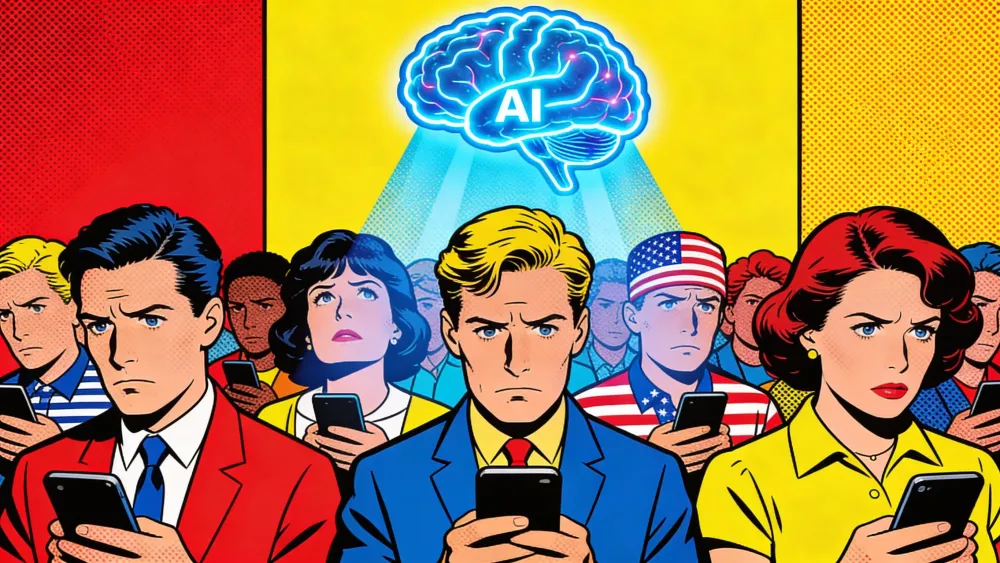
Fifty-one percent of Americans now use artificial intelligence for research, according to a Quinnipiac University poll released Monday. That's up 14 points in a single year. Usage for data analysis jumped from 17 to 27 percent. Fewer than three in ten Americans say they've never touched an AI tool, down from a third last spring. A majority say development is moving faster than they expected, a country watching AI accelerate and feeling it leave them behind.
Only 21 percent trust what AI tells them.
The industry frames this as a contradiction. It isn't one. Americans have always adopted technologies they distrust. They scroll platforms they believe are damaging. They hand personal data to companies they suspect will misuse it. The pattern isn't confusion. It's resignation. And the industry should find that more alarming than resistance.
Take the medical question. Quinnipiac told respondents to imagine AI had been proven more accurate than a human at reading scans. Would they want AI alone, a doctor alone, or both? Eighty-one percent picked the combination. Just 3 percent would hand the job to a machine. A tool that's provably better, and people still want the doctor in the room. That instinct runs deeper than any adoption metric.
What separates AI from prior waves of reluctant adoption is speed. The gap between usage and trust took social media roughly a decade to produce political consequences. AI's version is widening faster, across more demographics, and the politics are already catching up.
Key Takeaways
- Quinnipiac poll: 51% of Americans use AI for research (up from 37%), but only 21% trust AI-generated information
- Every sentiment metric worsened since April 2025, with 55% now saying AI does more harm than good in daily life
- Gen Z is the most pessimistic generation despite highest AI usage, with 81% expecting job losses
- Over 1,500 AI-related bills hit state legislatures in 2026 as bipartisan demand for regulation grows
Every gauge moved the wrong direction
Compare the Quinnipiac numbers to the same poll last April, and the shift is unmistakable.
A year ago, 44 percent said AI would harm their daily lives. Now 55 percent do. In education, the harm number climbed ten points to 64 percent. But the jobs figure tells the real story. Fifty-six percent expected AI to shrink opportunities last spring. Now seven in ten Americans believe it will. Among workers worried about their own positions specifically, the share jumped from 21 to 30 percent in twelve months. That's a 43 percent rise in personal economic fear.
These aren't abstract worries from people who've never opened ChatGPT. They come from the same population reporting surging adoption. Pew Research Center found the same tension across five years of trend data: half of U.S. adults now say they're more concerned than excited about AI, up from 37 percent in 2021. Americans are more anxious about AI than citizens of most of the 24 other countries Pew surveyed.
A December YouGov survey quantified the floor. Five percent of Americans trust AI "a lot." Seventy-seven percent worry it could threaten humanity. And trust is not merely low. It's eroding. Confidence fell, not rose. More people said they trust AI less now than a year ago than said they trust it more. The industry reads adoption as trust earned. The poll says trust spent.
A CBS News/YouGov survey of 2,500 adults the same week found the skepticism spreading. Americans who wouldn't let AI manage their finances were also the most likely to oppose military AI applications. And none of this stays neatly contained in one category.
The generation that knows it best fears it most
If exposure cured the trust problem, the 18-to-27-year-olds who grew up swiping and typing would be cheering loudest. They aren't. Gen Z uses AI tools more than anyone. Over half open one every week. A Wharton-led study found nearly three-quarters had opened a chatbot in the past month alone.
They also expect the worst outcomes. Eighty-one percent of Gen Z told Quinnipiac that AI will shrink job opportunities. No other generation came close. Baby Boomers were 15 points lower. Tamilla Triantoro, a Quinnipiac business analytics professor, put the inversion bluntly. "AI fluency and optimism here are moving in opposite directions."
Get Implicator.ai in your inbox
Strategic AI news from San Francisco. No hype, no "AI will change everything" throat clearing. Just what moved, who won, and why it matters. Daily at 6am PST.
No spam. Unsubscribe anytime.
The behavioral consequences are visible. Nearly three in five young adults now view AI as a threat to their white-collar careers, and some are rethinking college entirely, pivoting toward trades they believe are harder to automate. Employers are already replacing entry-level roles with AI, hollowing out the training pipeline that built every generation of managers.
But Gen Z isn't panicking from ignorance. They've done the math. That clarity is what scares them.
The Wharton study surfaced something stranger. Ask Gen Z whether AI makes people lazier and 79 percent say yes. Ask whether it erodes intelligence and 62 percent agree. They keep using it anyway. The short-term productivity hit is too good to pass up, even if the long-term cost frightens them. Wharton researchers have a name for this cognitive dodge: the "better-than-average effect." Everyone thinks their coworkers will get dumber from AI dependence. Not them, of course. Never them. And so adoption rolls forward on a foundation of collective self-deception.
The political window is closing
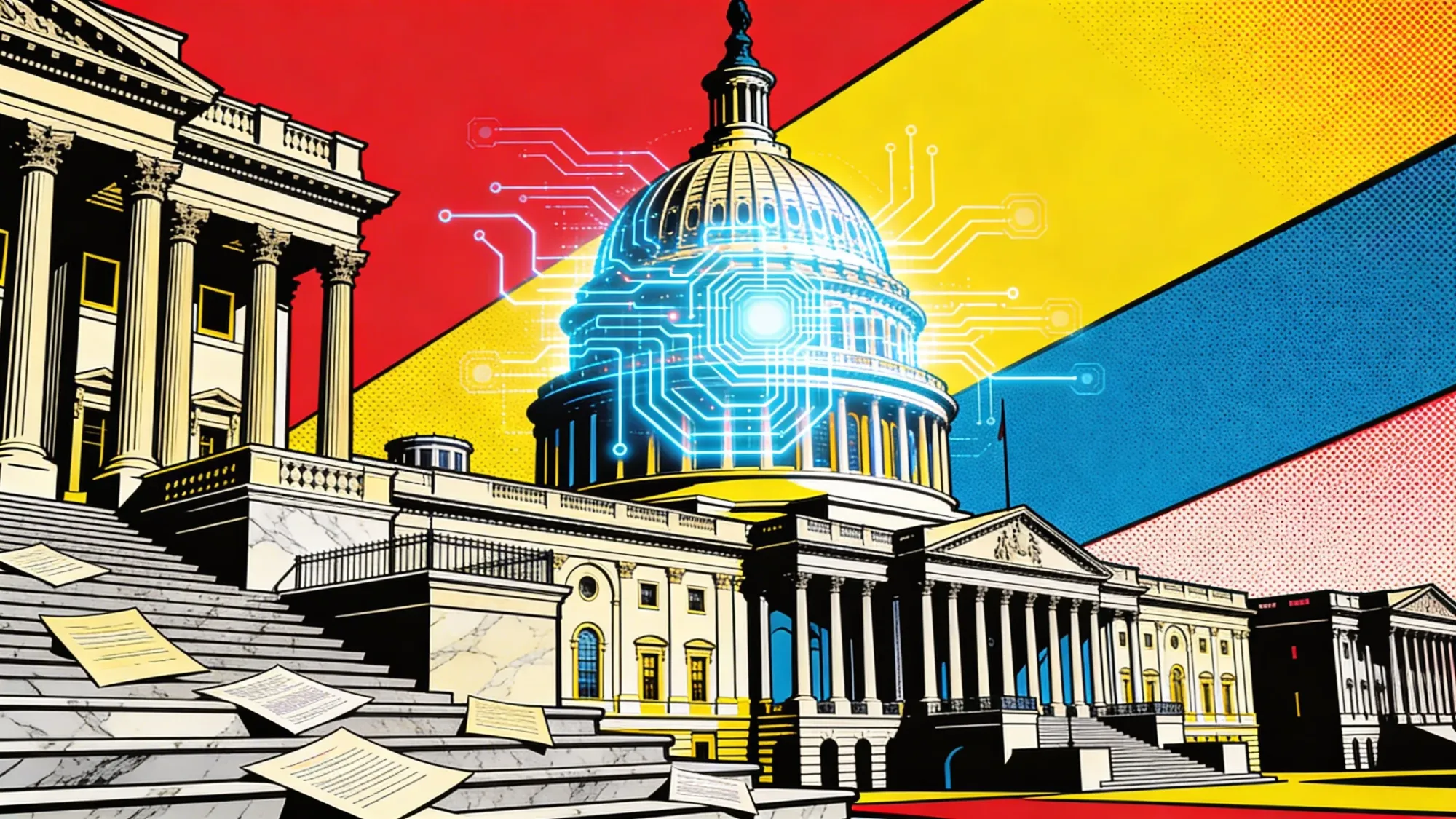
If you work in AI policy, stop reading sentiment charts and start counting legislation. Fifteen hundred AI-related measures landed in state legislatures this year, the Atlantic Council reported last week. And the demand cuts across party lines. Vanderbilt University polling found even more Republicans than Democrats want AI regulated. Three out of four Quinnipiac respondents said the federal government is failing to do enough.
Trump signed an executive order in December trying to block states from writing their own AI rules. The White House followed up with a national framework on March 20. Neither move slowed the states down. If anything, the preemption attempt made legislators angrier. Lawmakers who watched their constituents' electricity bills climb and their kids' homework arrive pre-written by ChatGPT were not in the mood to wait for Congress.
A January Morning Consult survey found a majority of Americans believe the administration is too cozy with Big Tech. The regulatory pressure is not coming from one side. It is genuinely bipartisan, which makes it far harder for the industry to lobby its way out.
Tess deBlanc-Knowles of the Atlantic Council warned that "treating public skepticism as noise to be managed rather than a signal to be heeded risks causing rapid political polarization on artificial intelligence." That warning landed four days before the Quinnipiac numbers made it concrete. Companies spent two years arguing that sentiment would warm once people used the tools. The data proves the opposite happened.
Who built this, and for whom
The trust deficit maps onto a question the industry would rather avoid. Last April, Quinnipiac asked whether AI is being developed by people who represent Americans' interests. Five percent said yes. Just five. Fifty-four percent couldn't even answer. Nobody told them who's building the thing reshaping their working lives, and they noticed. Call that what it is. Alienation.
The income divide sharpens the picture. In the April 2025 data, 60 percent of households earning over $200,000 said AI would do more good than harm. Among households under $50,000, 59 percent said the opposite. The people most enthusiastic about AI and the people earning the most from the current economy are largely the same group. Everyone else watches a technology reshape their labor market with no assurance it was built for them.
Data for Progress found in February that the single strongest predictor of AI sentiment isn't age, party, or education. It's how often you use it. Daily users view AI favorably by 57 points. People who rarely touch it oppose it by 42. The country is splitting into those who've made a grudging peace with AI and those who see it arriving uninvited, into their jobs, their children's classrooms, their communities' water tables.
Eighty percent of Americans told Quinnipiac they would refuse a job with an AI supervisor. Sixty-five percent oppose data centers in their neighborhoods, citing electricity costs and water use. These aren't the numbers of a public warming to a new technology. They're the numbers of a public being dragged toward one.
The debt comes due
Chetan Jaiswal, who helped direct the Quinnipiac survey, chose one word to describe what the numbers mean. Warning.
Americans aren't rejecting AI, Jaiswal said. They're sending a message. Too much uncertainty. Too little trust. Not enough regulation. And far too much fear about jobs.
You've heard this framing before. Apply it to social media around 2016. Back then, the gap between adoption and trust seemed manageable. Platforms grew anyway. Regulation came late. The political fallout reshaped elections, media, and public health for a generation.
AI's trust deficit is wider, deeper, and accelerating faster. The industry treats adoption numbers as validation. The public treats the same numbers as evidence that a technology they didn't ask for is being imposed on their lives. One of those readings will prove correct. Adoption without trust is not a growth story. It's a debt. And the interest is compounding.
Frequently Asked Questions
What did the Quinnipiac poll find about AI trust?
Only 21% of Americans trust AI-generated information most or almost all of the time. Seventy-six percent say they trust it hardly ever or only some of the time, largely unchanged from April 2025 despite surging adoption rates.
Which generation is most pessimistic about AI's impact on jobs?
Gen Z (born 1997-2008) is the most pessimistic, with 81% saying AI will decrease job opportunities. That's 15 points above Baby Boomers, despite Gen Z using AI tools more than any other generation.
How has American AI sentiment changed since 2025?
Every metric worsened. The share saying AI does more harm than good jumped from 44% to 55%. Fear of job losses surged from 56% to 70%. Personal job obsolescence concerns among employed Americans rose from 21% to 30%.
What is driving the AI trust gap in America?
Americans adopt AI for productivity gains while distrusting its accuracy and fearing its economic impact. Only 5% trust AI a lot according to YouGov, and 77% worry it could threaten humanity. Usage frequency is the strongest predictor of sentiment.
How are states responding to public AI concerns?
Over 1,500 AI-related bills were introduced in state legislatures in 2026. The demand is bipartisan, with 74% of Americans saying the federal government is not regulating AI enough despite the White House pushing a national framework.

Maria Garcia
Bilingual tech journalist slicing through AI noise at implicator.ai. Decodes digital culture with a ruthless Gen Z lens—fast, sharp, relentlessly curious. Bridges Silicon Valley's marble boardrooms, hunting who tech really serves.