Implicator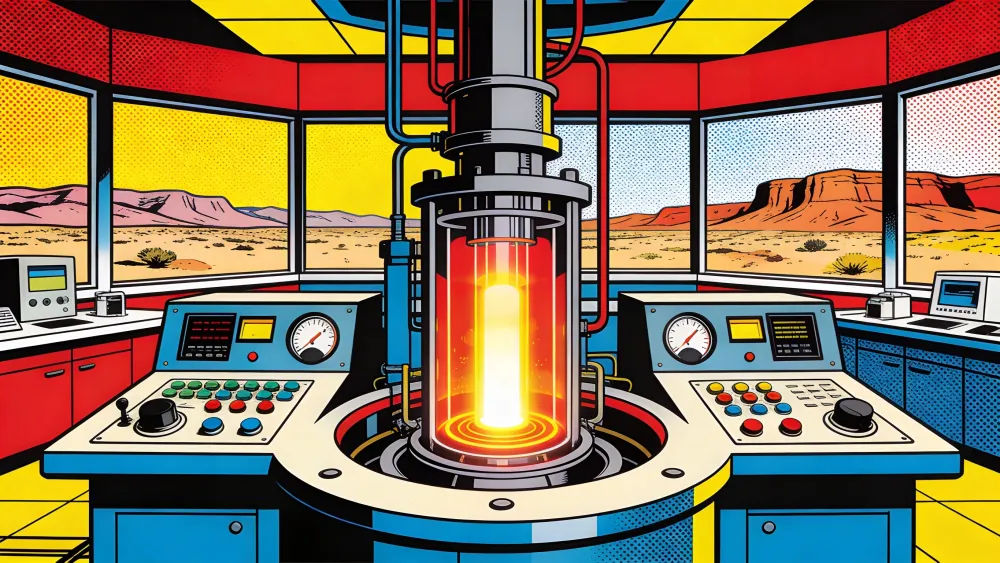
Antares Nuclear received the first documented safety analysis approval under the Department of Energy's Reactor Pilot Program, the agency confirmed Monday. The clearance under DOE standard 1271 puts the California startup into readiness reviews for its Mark-0 microreactor at Idaho National Laboratory, with a self-sustaining chain reaction targeted before July 4. The milestone arrives as Microsoft, Google, Amazon, and Oracle pour billions into nuclear-powered data center infrastructure, betting that advanced reactors can close a power gap that threatens to stall AI expansion.
Key Takeaways
- Antares Nuclear received the first DOE safety analysis approval under the Reactor Pilot Program, clearing the path to criticality before July 4.
- The microreactor produces 100 kW to 1 MW, too small for data centers, but its regulatory pathway benefits every reactor developer.
- NRC proposed letting DOE-authorized designs bypass standard commercial licensing, shortening the path from demonstration to grid power.
- No commercial-scale HALEU fuel production exists outside Russia and China, leaving domestic supply as the biggest bottleneck.
AI-generated summary, reviewed by an editor. More on our AI guidelines.
What the approval actually means
Bob Boston, manager of the DOE's Idaho Operations Office, granted the approval Monday afternoon. No hedging. "The Department of Energy DSA is equivalent to an NRC license," Boston said, placing Antares ahead of nine other firms in the pilot program.
The Mark-0 is a zero-power demonstration reactor. It will validate reactor physics, neutronics models, and the instrumentation and control system that Antares plans to reuse in its Mark-1, an electricity-producing unit scheduled for 2027. Fuel fabrication has been underway at BWX Technologies since October 2025, using HALEU uranium secured through a DOE allocation.
Worth noting what this is not. Antares is not building a data center reactor. Its R1 commercial design generates between 100 kilowatts and 1 megawatt. Enough to run a remote military base. Not enough to keep a hyperscale data center lit. Pentagon and NASA come first, with deployments targeted for 2028.
The data center connection runs through the plumbing
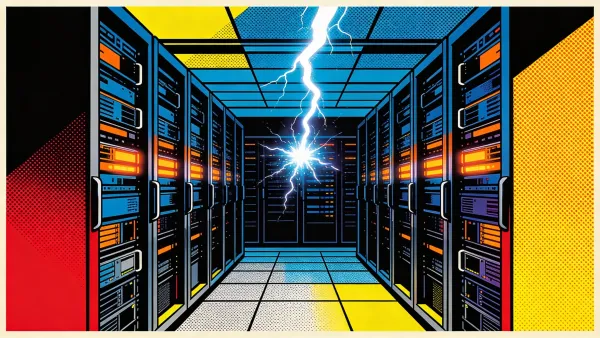
Strip away the press releases and you see it. The link between microreactors and AI infrastructure runs through regulatory and industrial plumbing, not power output.
The DOE's Reactor Pilot Program exists because Trump signed four executive orders in May 2025 establishing what Idaho National Laboratory Director John Wagner called "the most aggressive nuclear-deployment timelines in American history." The target: quadrupling U.S. nuclear capacity from roughly 100 GW to 400 GW by 2050. Wagner told a Senate committee in March that Microsoft, Google, Amazon, and Oracle have all made commitments to nuclear-powered data center infrastructure. Microsoft's 20-year agreement with the Crane Clean Energy Center leads the pack.
Kairos Power already signed a deal with TVA and Google. The terms: up to 50 megawatts from its Hermes 2 plant in Oak Ridge, Tennessee, feeding the grid by 2030. Before that contract, no U.S. utility had purchased electricity from a Generation IV reactor.
Get Implicator.ai in your inbox
Strategic AI news from San Francisco. No hype, no "AI will change everything" throat clearing. Just what moved, who won, and why it matters. Daily at 6am PST.
No spam. Unsubscribe anytime.
But those are not microreactors. The nuclear capacity that Big Tech needs will come from small modular reactors in the 50-to-300 megawatt range and from restarts of shuttered conventional plants. DOE Assistant Secretary Theodore Garrish testified that reactor uprates alone could add 2.5 gigawatts by 2027 and 5 gigawatts by 2029.
A regulatory shortcut takes shape
This is where Antares changes the picture for everyone building reactors.
On April 2, the Nuclear Regulatory Commission proposed a rule that would let reactor designs already authorized by the DOE bypass the standard commercial licensing process. NRC Chair Ho Nieh was blunt: "If another federal agency has done the heavy lifting, the NRC will not make reactor developers start over from scratch."
Twelve NRC staffers sit embedded with the DOE's pilot projects right now. The proposed rule would let those interactions count toward a future commercial license. For companies like Kairos Power or Oklo that want to sell power to data centers, the pathway from DOE demonstration to commercial grid just shortened. The mood among reactor developers is emboldened.
Four of the eleven reactor designs in the pilot program have cleared their preliminary safety analysis: Antares, Radiant Industries, Valar Atomics, and Aalo Atomics. Different coolants, different fuels, different power outputs. All of them need HALEU that, outside Russia and China, barely exists at commercial scale.
The fuel problem nobody fixed
That constraint looms over everything. Wagner told the Senate committee that no commercial-scale HALEU production exists outside Russia and China, and projected demand through 2030 will far exceed current capacity. The DOE issued $2.7 billion in task orders to three enrichment companies in January, $900 million each to American Centrifuge Operating, General Matter, and Orano Federal Services. Domestic production timelines remain uncertain.
The geopolitical math is uncomfortable. China has 32 reactors under construction. Russia is building 27, including 20 in other countries. Between them, 59 of the world's 63 reactors under construction carry a Chinese or Russian design. Sit in the infrastructure planning seat at any major cloud provider and that ratio stings.
What comes next
Antares enters the DOE Readiness Review, the final gate before startup approval. If the Mark-0 achieves criticality before July 4, it validates something larger than one microreactor. A company founded in 2023 would have moved from incorporation to controlled chain reaction in under three years. That is not how the nuclear industry has worked. Ever.
The company has raised roughly $134 million to date. Its Torrance, California facility can produce up to 10 microreactor units per year. None of that powers a single GPU cluster. But the regulatory infrastructure Antares is helping build, the streamlined DOE approvals, the NRC commercial licensing shortcut, the domestic HALEU supply chain, those are the pieces that serve every reactor developer chasing the 400-gigawatt target that AI's electricity appetite demands.
Frequently Asked Questions
What did Antares Nuclear just achieve?
Antares received the first Documented Safety Analysis approval under the DOE's Reactor Pilot Program, the equivalent of an NRC license according to the DOE's Idaho Operations Office. The company now enters the Readiness Review, the final phase before startup approval for its Mark-0 demonstration reactor at Idaho National Laboratory.
Can Antares microreactors power data centers?
Not directly. The R1 design generates between 100 kilowatts and 1 megawatt, built for military bases and remote sites. Data centers need hundreds of megawatts. The relevance to AI infrastructure is indirect: Antares helps build the regulatory framework and supply chain that larger reactor developers also need.
What is the DOE Reactor Pilot Program?
A federal initiative created by executive order in May 2025, targeting at least three advanced reactors achieving criticality by July 4, 2026. Ten companies with eleven reactor designs participate. The program lets developers bypass traditional NRC licensing for initial testing while DOE serves as regulatory authority.
How does the NRC's proposed rule affect the nuclear industry?
The rule would let reactor designs authorized by DOE or DOD move through commercial licensing without starting from scratch. Twelve NRC staffers are already embedded with pilot projects. For companies planning to sell power to data centers, this significantly shortens the path from demonstration to commercial operation.
What is the HALEU fuel supply problem?
High-Assay Low-Enriched Uranium is required by most advanced reactor designs. No commercial-scale production exists outside Russia and China. The DOE issued $2.7 billion in task orders to three companies in January 2026, but domestic production timelines remain uncertain while demand is projected to exceed supply through 2030.
AI-generated summary, reviewed by an editor. More on our AI guidelines.



Maria Garcia
Bilingual tech journalist slicing through AI noise at implicator.ai. Decodes digital culture with a ruthless Gen Z lens—fast, sharp, relentlessly curious. Bridges Silicon Valley's marble boardrooms, hunting who tech really serves.