IMPLICATOR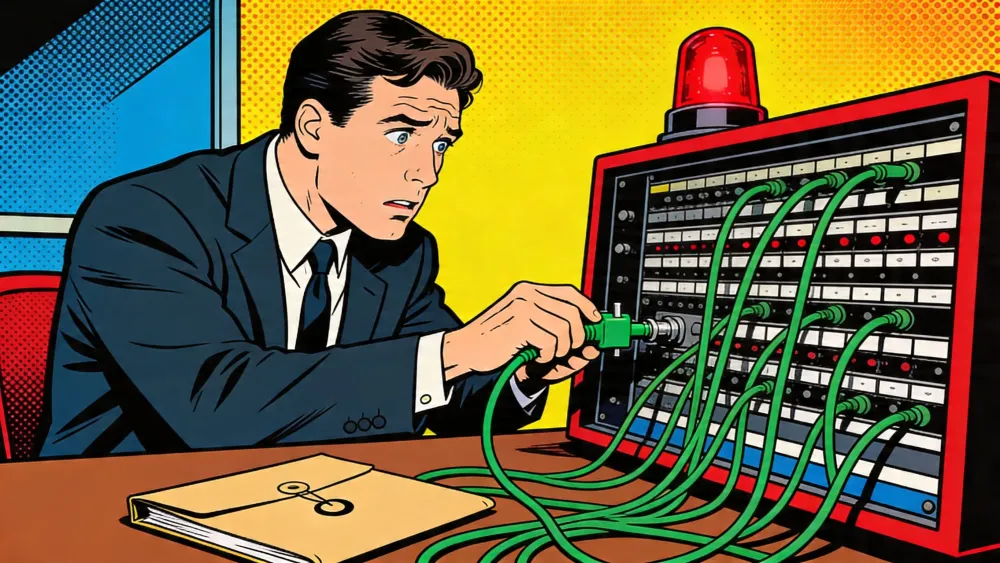
White House officials and Anthropic described Friday's West Wing meeting as productive. The talks centered on possible civilian access to Claude Mythos Preview while the Pentagon's supply-chain risk fight stays in court. The room included CEO Dario Amodei, chief of staff Susie Wiles and Treasury Secretary Scott Bessent, which puts the stakes in plain view: one blacklist, six agency lanes. That is the math Washington is trying to make look tidy.
The official statements had the varnish you would expect. Productive. Constructive. Cybersecurity, America's AI lead, safety. Fine. The important part is less polished: the administration that tried to cut Anthropic off in February now wants an open line because Mythos may find bugs before hostile actors do.
Key Takeaways
- Anthropic and the White House described the April 17 West Wing meeting as productive.
- Wiles and Bessent are exploring civilian Mythos access while the Pentagon fight stays in court.
- OMB has already told major agencies that Mythos access protections are being prepared.
- The likely compromise gives civilian agencies defensive access without resolving the military-use dispute.
AI-generated summary, reviewed by an editor. More on our AI guidelines.
The meeting gave Wiles the switchboard
Wiles did not walk into a peace process. She walked into a switchboard with one blinking red line from the Pentagon and several green ones from the rest of government.
According to several reports, both sides went into the meeting trying to wall off the Pentagon fight from future work with other departments. Wiles was careful on the court case, saying it was in court, but she made clear the government needs a relationship with Anthropic. A source familiar with Bessent's thinking said he joined because he wanted everyone on the same page. A Treasury secretary does not sit in because the vibes improved.
He sits in because the financial system is anxious.
The Office of Management and Budget has already told Cabinet technology and cybersecurity officials that protections are being prepared for possible Mythos access "in the coming weeks," Bloomberg reported. The email went to Defense, Treasury, Commerce, Homeland Security, Justice, State and other agencies. If you are running Treasury, that distinction matters. The Pentagon can argue doctrine. The rest of the building has networks to defend.
The Pentagon fight shrank overnight
The dispute began as a broad federal rupture. Trump told agencies in February to stop using Anthropic technology. Defense Secretary Pete Hegseth labeled the company a supply-chain risk after Amodei refused to drop two restrictions, no mass domestic surveillance and no fully autonomous weapons. Anthropic sued in California and Washington, D.C.
Friday's meeting changes the denominator. The fight no longer looks like Anthropic versus the federal government. It looks like Anthropic versus one armed branch of it.
Nobody has said the supply-chain risk label is going away. Nobody has said the Pentagon gets Mythos. Two officials told one outlet that a compromise would likely exclude the Pentagon if one lands, leaving Hegseth's posture intact while civilian agencies get the tool they want.
Awkward? Sure. But Washington runs on awkward.
One administration source put it more bluntly: every agency except the Department of War wants Anthropic. That line turns the blacklist into an outlier, not a consensus.
Mythos made delay expensive
Mythos changed the bargaining table because it turned a policy fight into a clock.
Anthropic says Claude Mythos Preview has found thousands of high-severity zero-day vulnerabilities, including flaws in every major operating system and browser. In Project Glasswing, the company gave access to partners including AWS, Apple, Cisco, CrowdStrike, Google, JPMorgan, Microsoft, Nvidia and Palo Alto Networks. The company said Mythos scored 83.1 percent on CyberGym, compared with 66.6 percent for Anthropic's next-best model, a gap Implicator covered when Glasswing launched.
Those numbers need caution. Some vulnerability claims still depend on Anthropic's own disclosures. Still, one wire report noted that even critics such as former White House AI adviser David Sacks have said the model should be taken seriously. Once a rival camp says the thing may be real, the government cannot treat it as a stunt.
For defenders, the worst case is not that Mythos exists. The worst case is that other labs, criminals or state-backed teams reach similar capability before agencies patch the old code sitting in dull server rooms. The fluorescent-light version of national security. Not a drone strike. A forgotten library on a payment system.
Get Implicator.ai in your inbox
Strategic AI news from San Francisco. No hype, no "AI will change everything" throat clearing. Just what moved, who won, and why it matters. Daily at 6am PST.
No spam. Unsubscribe anytime.
The compromise is civilian access
The likely deal is hiding in plain sight. Anthropic keeps its two red lines for military use. Civilian agencies get controlled Mythos access for defensive cybersecurity. The White House says it balanced innovation and safety. The Pentagon says it did not bend.
That is not a grand reconciliation. It is a routing decision.
A market position like that gives Anthropic room to accept a half-win. One report put the latest round at $30 billion in new capital and the valuation at $380 billion. Company-sourced revenue figures cited elsewhere are stranger, above $30 billion annualized after roughly $9 billion at the end of 2025. Then the customer count. More than a thousand accounts are already in seven-figure annual spend.
Washington has the harder problem. If Anthropic was too dangerous for federal use in February, why is it useful enough for Treasury and CISA in April? If the restrictions were intolerable for the Pentagon, why are they manageable for agencies that protect banks, energy systems and government networks?
Inside Wiles's office sits the answer. The administration still wants the power. It is negotiating where the guardrails sit.
What comes next is narrower
Next comes the real test: whether OMB turns "coming weeks" into actual agency access, and whether the May 19 court arguments force the Pentagon to soften before the White House finishes its side arrangement.
Watch Bessent. If Treasury moves first, the compromise becomes real before anyone announces it.
Amodei entered the West Wing with one department trying to keep him out and several others trying to get him in. By the end of Friday, the fight had a smaller shape. The blacklist did not disappear. It just stopped controlling every door.
Frequently Asked Questions
What happened at the White House meeting with Anthropic?
The White House and Anthropic described the April 17 meeting as productive. Dario Amodei met with Susie Wiles, Scott Bessent and other officials to discuss how Anthropic and the U.S. government could work together on cybersecurity, AI leadership and safety.
Does the meeting end the Pentagon fight?
No. Anthropic is still contesting the Pentagon's supply-chain risk designation in court. The likely compromise separates civilian agency access to Claude Mythos from the military dispute over mass surveillance and autonomous weapons restrictions.
Why did Scott Bessent join the meeting?
One report said Bessent wanted officials aligned because Treasury and other agencies are interested in Mythos access. The concern is that similar AI tools could help hackers attack financial systems, or help defenders find weak code first.
What is Claude Mythos Preview?
Claude Mythos Preview is Anthropic's restricted cybersecurity model. Anthropic says it found thousands of zero-day vulnerabilities and scored 83.1 percent on CyberGym, compared with 66.6 percent for its next-best model.
What should readers watch next?
Watch whether OMB turns its "coming weeks" language into real civilian agency access, and whether the May 19 court arguments push the Pentagon toward a narrower settlement.
AI-generated summary, reviewed by an editor. More on our AI guidelines.


Free AI briefing · Weekdays
The AI stories that matter, sourced and explained.
Join the Morning Briefing. It goes out every weekday at 4:45 a.m. Pacific, with later sends for the East Coast, Berlin and Tokyo.
Free when you sign up: The Paperclip Compendium, our tested guide to running AI agents.
Free. Unsubscribe in one click.

Marcus Schuler
Editor-in-Chief and founder of Implicator.ai. Former ARD correspondent and senior broadcast journalist with 10+ years covering tech. Writes daily briefings on policy and market developments. Based in San Francisco. E-mail: editor@implicator.ai