IMPLICATOR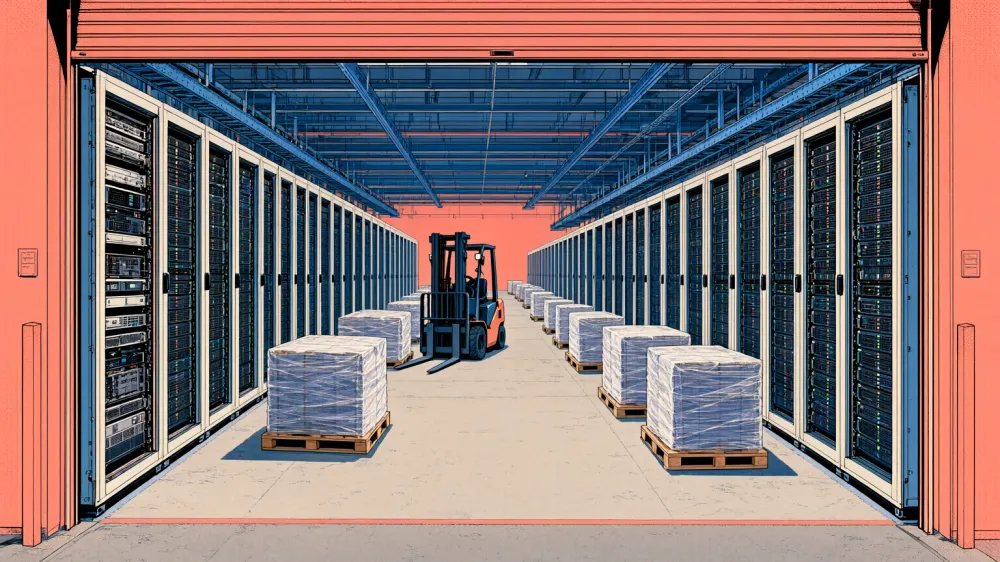
Ross Hendricks, a professional research analyst whose Ross Report focuses on financial markets, particularly energy, and who has worked directly with the chief investment officer of a $500 million global macro fund, tried to put a financing plan around Anthropic’s $518 billion in computing commitments. In a post on X, he imagined the company raising $100 billion in an initial public offering and asked, “and then what, $400B from the debt markets?” He treated the spending as though it might need financing in a single year, though the commitments run over roughly a decade. One clause makes clear why their timing is only part of the problem.
“If our actual spend falls short, we must pay Google the difference.”
Reuters obtained Anthropic’s confidential IPO prospectus and broke details of it this week. The document sets out a fast-growing business seeking a valuation above $2 trillion, with computing capacity it must largely pay for whether it uses it or not, while nearly a quarter of its 2025 revenue came from two customers and many of its largest customers are not locked into long-term contracts.
The Breakdown
- Anthropic's IPO prospectus commits at least $518 billion over roughly a decade to six infrastructure partners, and about 80% of it is non-cancelable or payable regardless of usage.
- Nearly a quarter of 2025 revenue came from two unnamed customers, and many of its largest customers are not locked into long-term contracts.
- 2025 revenue was about $4.59 billion against an operating loss of about $8.06 billion, roughly $1.76 lost per dollar of revenue.
- Second-quarter 2026 revenue reached $11.5 billion, but the reported figures give no amount for the adjusted operating profit.
AI-generated summary, reviewed by an editor. More on our AI guidelines.
The commitments
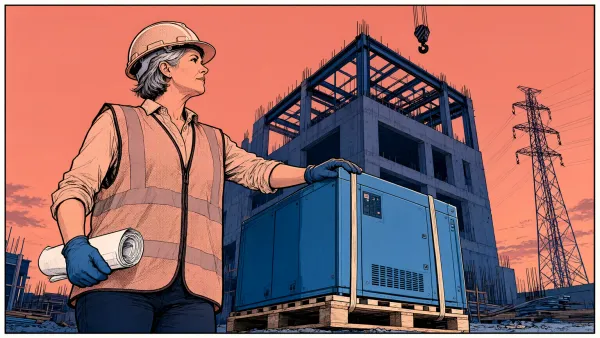
Anthropic expects to spend at least $518 billion with six infrastructure partners over roughly a decade. About 80% of that amount is non-cancelable or payable regardless of usage. In ordinary terms, Anthropic must pay for much of the capacity it has reserved even if customers use less of its AI services than expected. The commitments rest on the company’s expectation that demand for advanced AI will be “limited principally by the availability of compute.” Many of its largest customers, however, can reduce or stop their spending.
The largest disclosed service commitments are at least $111.1 billion to Google from April 2026 through July 2033, $110 billion to Amazon from May 2026 through April 2036, and $31.4 billion to Microsoft from November 2026 through May 2033. The Microsoft obligation can be canceled if Microsoft commits an uncured material breach. Anthropic also has about $161.2 billion in Broadcom-related equipment lease obligations that are largely non-cancelable.
Those amounts come due over different periods, rather than when Anthropic lists. Spread evenly over roughly a decade, $518 billion would average about $52 billion a year, though the agreements do not require even payments.
Not every arrangement carries the same constraint. Agreements with Elon Musk’s xAI could result in up to $84.5 billion of Anthropic spending for Nvidia-based computing capacity through 2029, but are largely cancelable with a 90-day notice. AMD has committed to buy up to $5 billion of Anthropic stock and supply computing capacity expected to exceed $20 billion. The disclosed terms give Anthropic more room to retreat from the xAI arrangement than from its obligations to Google, Amazon, Microsoft and Broadcom.
The suppliers also occupy other positions in Anthropic’s business. Amazon, Google and Microsoft provide infrastructure and distribution while developing competing AI models. Anthropic says their incentives “may not be fully aligned” with its own. If third-party computing access is curtailed, repriced or terminated, the filing says, its operations could suffer.
FREE AI BRIEFING · WEEKDAYS
Track the money behind the AI buildout.
Get the AI stories shaping the day, with concise context from San Francisco. The briefing takes about five minutes and arrives at 4:45 a.m. Pacific, 7:45 a.m. Eastern.
Free. No hype. Unsubscribe anytime.
The customers
The other side of those commitments is a young revenue base. Anthropic recorded about $4.59 billion in revenue in 2025, roughly 12 times its approximately $386 million in 2024 revenue. Nearly a quarter of the 2025 total came from two customers whose identities have not been disclosed.
The prospectus has not been made public, and Anthropic declined to comment. The coverage of the filing does not report gross margin or inference cost per customer, and the two large customers are not named. That limits what can be concluded about how much of Anthropic’s new revenue it can keep after paying to run the models.
Its 2025 operating expenses totaled about $12.65 billion. Compute and infrastructure accounted for $7.33 billion, more than half that total and about three times the comparable spending in 2024. Anthropic’s operating loss was about $8.06 billion in 2025, or roughly $1.76 lost on operations for every dollar of revenue.
Anthropic’s reported net loss of about $42 billion in 2025 needs a separate explanation. About $34 billion came from an accounting charge tied to the rising estimated value of financing that could later convert into shares. It was not cash spent running the business. At the end of December 2025, the company held $20.28 billion in cash, cash equivalents and short-term investments.
The revenue case
Revenue reached $11.5 billion in the second quarter of 2026, and Anthropic is on course for a second consecutive quarter of operating profit on an adjusted basis. The published coverage gives no amount for that adjusted profit and does not say what was adjusted out.
Ed Zitron is the CEO of EZPR, a media relations and primary research company. An AI critic who hosts the Better Offline podcast, he lives and works in Las Vegas and New York. He wrote on X: “Bahahahaha Anthropic is a total dog of a company. Spent $12.6bn to make $4.6bn in revenue in 2025, $7.33bn of which was compute costs. Operating loss of $8bn. Losses getting worse.” His post cites the 2025 figures, while the more recent result is an operating profit on an adjusted basis.
Four quarters at Anthropic’s second-quarter revenue pace would produce about $46 billion. That comparison shows the scale of the change since 2025; it does not establish what Anthropic will earn over the next year or how its adjusted result translates into cash.
Yulia Zeng, a financial editor at TradingKey in Shenzhen who previously worked at banks and brokerage firms, argued that Anthropic has to cut the unit cost of its AI services quickly enough, or larger revenue may come with even larger computing bills. The disclosed customer concentration and contract terms make that test harder to assess from the figures available so far.
Know someone who'd find this useful? ✉️ Email it to a friend in one click, or they can subscribe free here.
The risks and control
The prospectus spends roughly 80 of its 261 pages on risk factors, compared with 48 pages describing the business. It warns that advanced models could pose “catastrophic or existential risks to humanity” and describes harmful behavior observed in controlled tests.
The filing ties customer usage, and therefore revenue, to a “continuous and overlapping cadence” of new model releases. Anthropic CEO Dario Amodei has called for slowing the release of frontier capabilities. Addressing the UN Security Council last week, he called AI “the most important global security issue facing the world today.” In a sample week in July, about 6% of the computing power Anthropic used for AI research went to safety work.
The filing’s Summary Compensation Table shows Amodei made nearly $18 million in 2025, largely through stock and option awards. He privately met President Donald Trump at the White House on Sunday and was expected back on Tuesday for a lunch on AI with Trump and House Speaker Mike Johnson, alongside Meta CEO Mark Zuckerberg and Nvidia CEO Jensen Huang.
Dan Ives, a partner and senior managing director at Yorkville Ives, told CNBC that Amodei’s calls for a slowdown were a “head scratcher.” If Anthropic and OpenAI “slowed down, China would just accelerate and win,” he said. Anthropic has to “continue to put foot on the pedal” in what he called an “F1 race.”
In July 2026, Ives announced that he was leaving Wedbush Securities, where he had spent eight years, and teamed up with Yorkville Securities to launch Yorkville Ives & Co. The merchant bank focuses on artificial intelligence, technology, industrials, energy transition and infrastructure and plans to invest its own capital alongside clients and partners. Known for colorful jackets, Ives said in an interview published July 18 that he disagreed with “even some of the bubble talk.” He said, “We’re going to look back on this period and realize this is building the Vegas Strip in 1955.”
A new Founder LLC, initially comprising its seven co-founders, would direct a single Class F share carrying 50.1% of the voting power on key matters. Ordinary Class A shares would carry one vote each. The filing says the structure could lead to decisions “that may conflict with short-, medium-, or long-term financial interests and business performance, which may negatively impact the value of our Class A common stock.”
The market test
Anthropic is seeking a valuation above $2 trillion, more than double its estimated $965 billion valuation in a May 2026 funding round. Nasdaq Private Market put its private valuation at $1.32 trillion as of late September. An offering could raise more than $100 billion, with a debut likely after the November midterm elections. Anthropic submitted its filing confidentially in June 2026 and must make it public at least 15 days before its investor roadshow.
The market has supplied mixed signals. SpaceX listed in June 2026 at a $1.77 trillion valuation, and its shares traded around $147 in late September, above their $135 IPO price. AI and chip shares have recently sold off. On September 29, Oura postponed its planned offering, citing market “uncertainty.”
Andrew Ross Sorkin, writing DealBook from Washington ahead of a White House lunch, called Anthropic “the tech economy’s canary in the coal mine.” Amazon and Google hold large stakes in Anthropic carried on their balance sheets at high valuations. A delayed or discounted debut, he wrote, “sets off a cascading mark-to-market event.” A lower valuation for Anthropic would drag down the implied valuation of OpenAI and threaten its large backers, including Nvidia. Sorkin wrote: “If this I.P.O. window closes, it threatens to expose those ‘circular financing’ fears we’ve been warning about here for months.”
Frequently Asked Questions
How much has Anthropic committed to spend on computing?
At least $518 billion over roughly a decade with six partners, including at least $111.1 billion with Google, $110 billion with Amazon, $31.4 billion with Microsoft and about $161.2 billion in Broadcom-related equipment leases. About 80% is non-cancelable or payable regardless of usage.
Why does customer concentration matter here?
Nearly a quarter of Anthropic's 2025 revenue came from two customers, and many of its largest customers are not locked into long-term contracts and could reduce or stop spending. Most of the compute bill, by contrast, is owed whether it is used or not.
Did Anthropic really lose $42 billion in 2025?
The reported net loss was about $42 billion, but about $34 billion was an accounting charge tied to the rising estimated value of financing that could convert into shares. The operating loss was about $8.06 billion on revenue of about $4.59 billion.
Is any part of the compute plan flexible?
Yes. Agreements with xAI that could lead to up to $84.5 billion of Anthropic spending on Nvidia-based capacity through 2029 are largely cancelable with 90 days' notice.
When could Anthropic go public?
A debut is likely after the November midterm elections, at a targeted valuation above $2 trillion. The filing was submitted confidentially in June and must be made public at least 15 days before the investor roadshow.
AI-generated summary, reviewed by an editor. More on our AI guidelines.
Related stories




Marcus Schuler
Editor-in-Chief and founder of Implicator.ai. Former ARD correspondent and senior broadcast journalist with 10+ years covering tech. Writes daily briefings on policy and market developments. Based in San Francisco. E-mail: editor@implicator.ai