



Good Morning from Las Vegas,
I'm on the ground at AWS re:Invent, where Amazon just unveiled custom chips, frontier models, and autonomous agents that learn your codebase over weeks. Vertical integration from silicon to software. Claude still dominates on Bedrock. Amazon's Nova barely registers. Yet.
Back home, Anthropic hired IPO lawyers and announced its first acquisition on the same day. The company wants Wall Street to see momentum. Valuation jumped from $183 billion in August to above $300 billion. Revenue grew sevenfold since January. But the pitch deck will need to address that $2.8 billion annual cash burn.
Amazon invested $8 billion in Anthropic. Now it's quietly building what looks like a replacement. That's just Silicon Valley.
Stay curious,
Marcus Schuler
Anthropic's IPO Race: Safety Sells, But the Burn Rate Tells Another Story

Anthropic hired IPO lawyers and announced its first acquisition on the same day, signaling a company in sprint mode toward public markets.
The December 2 double announcement, Wilson Sonsini for IPO preparation plus the Bun JavaScript runtime acquisition, arrived while Anthropic negotiates a funding round valuing it above $300 billion. That's up from $183 billion in August.
The timing isn't subtle. Anthropic's investors want to beat OpenAI to public markets, viewing a first-mover advantage as critical for shaping how Wall Street values unprofitable AI research labs. Claude Code reaching $1 billion in run-rate revenue just six months after launch strengthens that pitch. Total company revenue grew from $1 billion in January to $7 billion by October.
But the efficiency narrative has limits. Anthropic still burns $2.8 billion more cash than it generates annually. Its safety-first positioning has won enterprise customers while alienating Trump administration figures who view AI safety advocacy as competitive sabotage. Racing to an IPO while deeply unprofitable and politically exposed creates risks that no acquisition announcement can fully obscure.
Why This Matters:
- Anthropic's IPO timeline, potentially 2026, will test whether public markets accept massive losses for AI growth stories
- Enterprise customers choosing between AI vendors now face uncertainty about both companies' long-term financial stability
 Robert Brown
AI Image of the Day

Prompt:
a full realistic male human face in front of a black background
AWS Builds Full-Stack AI Empire, From Custom Chips to Autonomous Agents
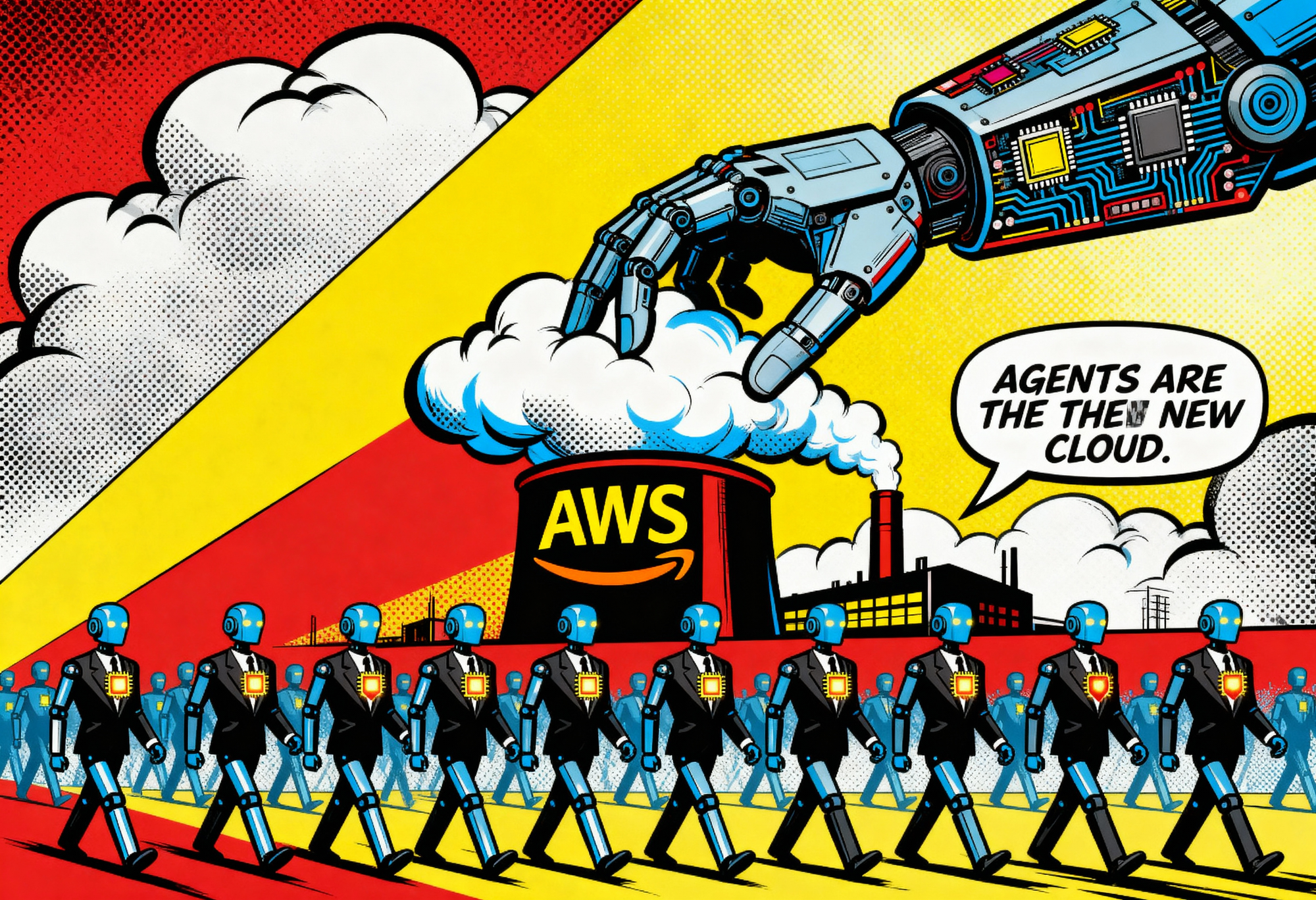
AWS CEO Matt Garman declared "agents are the new cloud" at re:Invent 2025, but the real announcement was structural.
AWS unveiled vertical integration spanning custom silicon, frontier models, and agent runtimes designed to capture the entire AI value chain. The numbers tell the story: more than one million Trainium chips deployed, over 50 percent of Bedrock tokens running on proprietary silicon, and 3.8 gigawatts of new data center power added in twelve months.
Nova Forge may prove the sharpest weapon. At $100,000 annually, enterprises can now train domain-specific frontier models without building research labs. Reddit already used it to create a content moderation system with contextual understanding that generic LLMs lack. Three frontier agents, Kiro, Security Agent, and DevOps Agent, complete the lock-in strategy. Each operates autonomously for weeks, learning organizational patterns that compound switching costs monthly.
The tension with Anthropic grows harder to ignore. Amazon's $8 billion investment made Claude the dominant Bedrock model while Nova commands less than 5 percent market share. Trainium4's NVLink Fusion compatibility suggests coexistence with Nvidia, not surrender.
Why This Matters:
- Enterprise buyers face compounding lock-in as agents learn codebases over months, not days
- AI startups raising at billion-dollar valuations now compete against $100K training access
 Marcus Schuler
 Marcus Schuler
🧰 AI Toolbox
How to Write Code Faster with AI-Powered Autocomplete
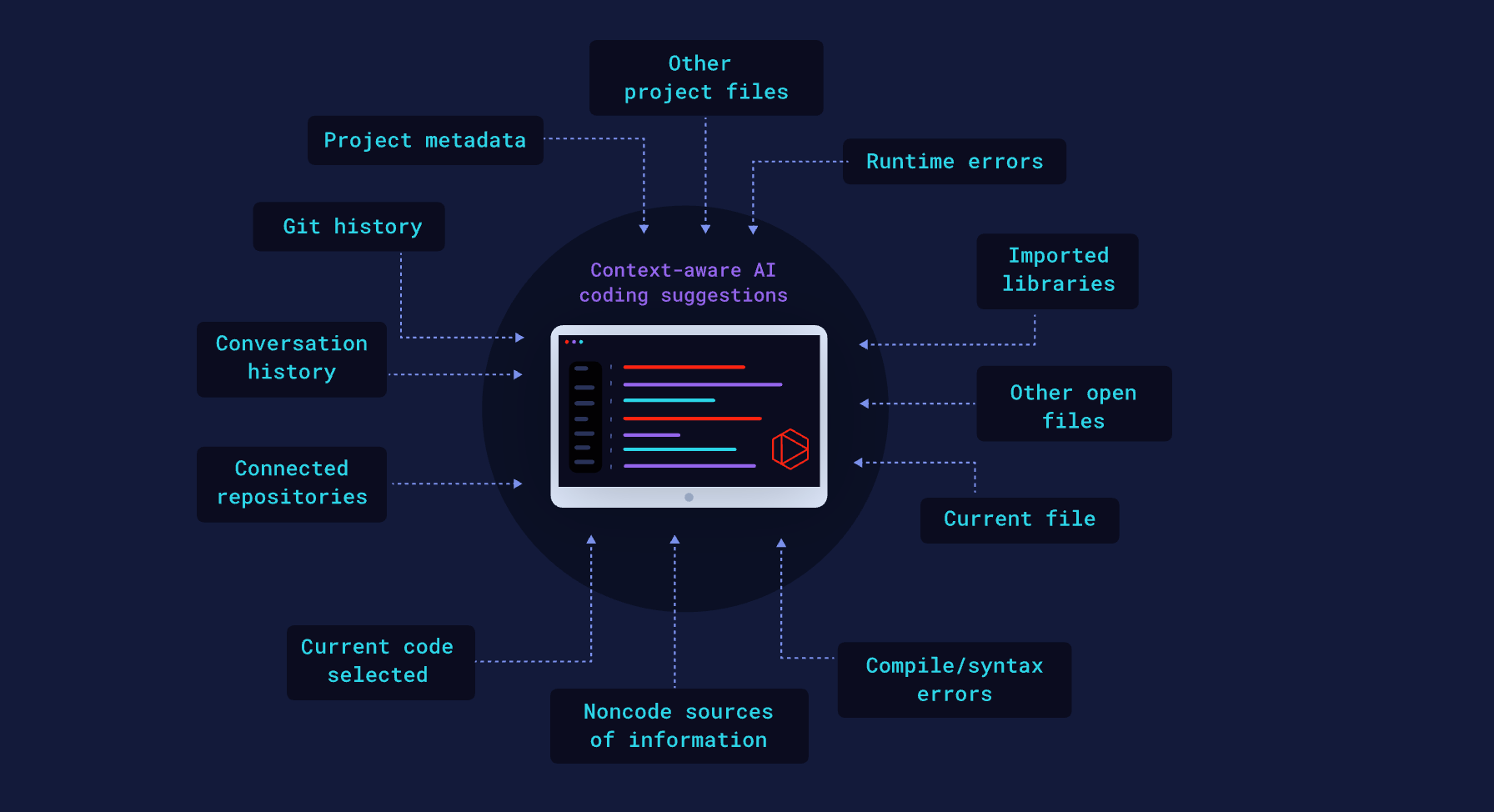
Tabnine is an AI code assistant that accelerates software development by predicting and suggesting code as you type. It installs directly into your IDE and learns your coding patterns to offer personalized completions, plus an AI chat for generating code from natural language prompts.
Tutorial:
- Go to the Tabnine website and sign up for a free account
- Install the Tabnine extension in your IDE (VS Code, JetBrains, Visual Studio)
- Start typing code and Tabnine suggests completions based on context
- Press Tab to accept suggestions or keep typing to refine them
- Use the AI Chat to generate code, tests, or documentation from natural language
- Let Tabnine learn your codebase patterns for increasingly personalized suggestions
- Ship code faster while maintaining your team's coding standards
AI & Tech News
AI-Generated Content Reaches Billions on TikTok, Study Finds
A new investigation by AI Forensics has revealed that 354 AI-focused TikTok accounts published approximately 43,000 posts created using generative AI tools, accumulating a staggering 4.5 billion views in just one month. The research found that the content included anti-immigrant rhetoric and sexual material, raising serious concerns about the spread of AI-generated harmful content on major social media platforms.
AI-Generated Children's Content on YouTube Sparks Developmental Concerns
YouTube creators are increasingly using artificial intelligence tools to produce videos targeting children and babies, with much of this content falsely marketed as educational. Child development experts are raising alarms that prolonged exposure to these AI-generated videos may have lasting effects on young children's brain development during critical formative years.
AI Data Centers Driving Surge in Copper Demand
AI data centers are consuming more than twice the copper of conventional facilities, requiring 27 to 33 tons per megawatt compared to traditional data centers, according to Mexican mining company Grupo México. The growing demand from AI infrastructure and green energy grids is straining copper supplies at a time when mine production is stagnating and new discoveries remain rare.
Palantir's Immigration System Powers ICE Deportation Efforts
Palantir's Immigration Operating System is being used by Immigration and Customs Enforcement to track and deport undocumented immigrants, according to sources and documents obtained by the Washington Post. The report highlights a notable shift for CEO Alex Karp, a longtime Democrat who criticized Trump's immigration plans as making "no sense" a decade ago but now describes "extreme skepticism" on immigration as "the truly progressive position."
Startups Build Website Replicas to Train AI Agents on Real-World Tasks
Startups including AGI and Plato are developing near-perfect replicas of major websites to train AI agents to perform specific tasks such as booking flights and navigating online services. The practice recently drew attention when United Airlines lawyers discovered an almost exact copy of the airline's website had been created this summer, highlighting both the growing sophistication of AI training methods and potential legal concerns surrounding the approach.
Dallas Becomes Fourth US City for Uber's Autonomous Ride Options
Uber Technologies Inc. has announced the launch of autonomous robotaxi rides in Dallas through a partnership with Avride Inc., expanding the company's self-driving vehicle service to its fourth US city. The Dallas rollout follows Uber's previous autonomous ride deployments in Phoenix, Austin, and Atlanta, signaling the company's continued push to integrate driverless technology into its rideshare platform.
Half of US States Now Require ID or Biometric Verification to Access Adult Content
Missouri has become the 25th state to implement restrictive age verification laws for accessing pornographic content, meaning half of all US states now require adults to submit identification documents or biometric data before viewing adult material online. The growing wave of state-level legislation reflects an expanding effort to restrict minors' access to explicit content, though critics have raised concerns about privacy implications for adult users who must now hand over sensitive personal information to access legal material.
Joe Rogan Dominates Spotify Charts for Fifth Straight Year
Spotify has released its 2025 Wrapped rankings for the most popular U.S. podcasts, with The Joe Rogan Experience claiming the top position for the fifth consecutive year. The annual list reveals a significant shift toward video content in podcasting, with 24 of the 50 most-listened-to shows now offering video on the platform, representing nearly half of all top-ranked programs.
London Fintech Sokin Secures $50M Series B for Cross-Border Payment Expansion
London-based fintech Sokin has raised $50 million in Series B funding led by Prysm Capital, valuing the B2B cross-border payments company at $300 million. The company plans to use the investment to accelerate its international expansion and further develop its payment technology products.
Binance Appoints Co-Founder Yi He as Co-CEO in Major Leadership Shake-Up
Binance, the world's largest cryptocurrency exchange, has named co-founder Yi He as co-CEO alongside current CEO Richard Teng, marking a significant leadership restructuring at the company. He, who shares children with former CEO Changpeng Zhao (CZ), becomes one of the rare women to hold a top executive position at a major crypto firm, bringing her longtime experience at the company to the dual leadership role.
Trump Brothers' American Bitcoin Crashes 38.8%, Erasing $1 Billion in Market Value
American Bitcoin, the cryptocurrency mining company backed by Donald Trump Jr. and Eric Trump, suffered a devastating 38.8% single-day loss on December 2, wiping out approximately $1 billion in market value as investors rushed to sell shares following the end of a lock-up period. The collapse compounds difficulties for Trump family business ventures, with Trump Media & Technology Group (TMTG) having lost nearly 70% of its value throughout 2025.
HBO Max's 4K Mad Men Release Marred by Technical Errors
The highly anticipated 4K remaster of the acclaimed drama series "Mad Men" launched on HBO Max this week with significant technical problems, including scenes that were missing post-production edits that had appeared in the original broadcast versions. According to a source cited by The Hollywood Reporter, the errors occurred because Lionsgate delivered the incorrect 4K file to the streaming platform.
Vinci Raises $36 Million Series A for AI-Powered Chip Design Simulation
Vinci, a startup developing AI-powered simulation software to speed up chip and hardware design, has raised $36 million in a Series A funding round led by Xora Innovation, bringing the company's total funding to $46 million. The investment will support Vinci's continued development of software tools aimed at accelerating the traditionally time-intensive hardware simulation process.
🚀 AI Profiles: The Companies Defining Tomorrow

Vinci wants to be the ChatGPT for physics. The Palo Alto startup claims it can run thermal simulations 1,000x faster than legacy tools, and chipmakers drowning in heat problems are paying attention.
The Founders
Founded 2023. Around 25 employees. CEO Hardik Kabaria brings a Stanford PhD in computational geometry plus Carbon 3D-printing experience. CTO Sarah Osentoski led AI teams at Bosch and Iron Ox. The duo blends hardcore physics with production ML. Early hires from NASA, Tesla, Nvidia, Meta. 🔬
The Product
A "foundation model for the physical world" that skips the meshing bottleneck entirely. Upload CAD. Get thousands of validated simulations in hours, not weeks. Runs behind your firewall. No training on customer data. One engineer reportedly ran 20,000+ simulations in a single day. The platform acts like an agentic expert, deciding where to sample next. First target: thermal analysis for AI chips running hot enough to fry eggs. ♨️
The Competition
Synopsys swallowed Ansys for $35B, creating a simulation giant. Cadence and Siemens EDA round out the old guard. Startups Neural Concept and Luminary Cloud chase similar AI-physics dreams. Nvidia took a $2B stake in Synopsys. Vinci bets independence and speed can beat integration.
The Financing
$46M total raised. $36M Series A led by Xora Innovation (Temasek-backed). Eclipse and Khosla Ventures joined both rounds. Valuation undisclosed. Usage-based pricing. EDA market sits at ~$19B and climbing. 💰
The Future ⭐⭐⭐⭐
Chips keep getting hotter. Data centers hit power walls. If Vinci's accuracy holds in production, it becomes essential infrastructure. The risk? Convincing conservative engineers to trust a startup when Synopsys comes calling with the full stack.


