IMPLICATOR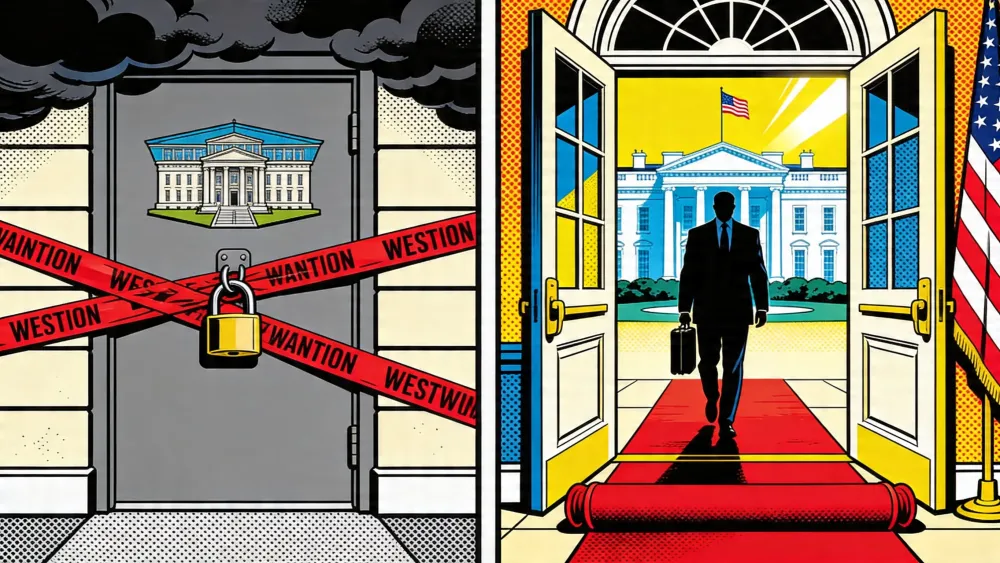
Anthropic CEO Dario Amodei is scheduled to meet with White House chief of staff Susie Wiles in the West Wing on Friday, Axios reported, describing the sit-down as a breakthrough in the company's bitter fight with the Pentagon. The meeting arrives as federal agencies, including Treasury, State, and the Cybersecurity and Infrastructure Security Agency, press for access to Anthropic's Claude Mythos Preview, a model the company says has uncovered thousands of zero-day vulnerabilities in every major operating system and web browser. It is Amodei's second high-stakes Trump administration meeting this year, after a February ultimatum from Defense Secretary Pete Hegseth that Anthropic declined, triggering a supply-chain risk designation now contested in two federal courts.
The Office of Management and Budget told Cabinet officials this week that protections are being set up to allow agencies to use Mythos "in the coming weeks," according to a memo from federal CIO Gregory Barbaccia reviewed by Bloomberg. Treasury Secretary Scott Bessent and Federal Reserve Chair Jerome Powell convened top bank CEOs in Washington last week to discuss the model. The Pentagon remains shut out. Anthropic's lawsuits in San Francisco and Washington are still in motion.
Here is where the picture shifts. The administration that called Anthropic's founders "leftwing nut jobs" and labeled the company a national security risk is walking its CEO through the West Wing. That looks like a contradiction. It isn't.
Key Takeaways
- Anthropic CEO Dario Amodei meets White House chief of staff Susie Wiles Friday, even as the Pentagon keeps Anthropic on a supply-chain risk blacklist Trump ordered in February.
- OMB told Cabinet officials this week that Treasury, State, DHS, Commerce, Justice, and CISA will get access to Claude Mythos Preview within weeks, according to a memo reviewed by Bloomberg.
- Anthropic's annualized revenue climbed above $30 billion from roughly $9 billion at the end of 2025, with a fresh $30 billion raise at a $380 billion valuation and an IPO reportedly in play by October.
- Project Glasswing, announced April 7, found zero-days in OpenBSD, FFmpeg, and the Linux kernel, rewriting Washington's calculus on whether the government can afford to blacklist the company over a contract fight.
AI-generated summary, reviewed by an editor. More on our AI guidelines.
Two doors, one house
Wiles is not a peace envoy. She is a workaround.
Hegseth has not reversed position. The Defense Department is still pulling Claude out of its workflows. Top Pentagon official Emil Michael, who publicly called Amodei "a liar" with "a God-complex," has not softened. The DC Circuit sided with the Pentagon on April 8, letting the supply-chain risk label stand while the case is expedited. If you read Friday's meeting as a détente, you are reading the wrong door.
What Wiles represents is a second door. While the Pentagon fights in court, OMB is opening parallel lanes for Treasury, State, Homeland Security, Commerce, and Justice. One agency blacklists. Another opens access. Both sit under the same President, who in late February ordered every federal agency to "IMMEDIATELY CEASE" use of Anthropic's technology. One administration official told Axios this week: "All the intel agencies use Anthropic. Every agency except War wants to."
That is not bureaucratic confusion. It is policy running on two tracks.
The emboldened side is Anthropic. The cornered side is Hegseth.
The label that keeps falling apart
The legal story is uglier than the politics.
Before Anthropic, the supply-chain risk designation under 10 USC 3252 had been applied to foreign firms such as Huawei and ZTE over concerns about surveillance backdoors in hardware. Anthropic is the first American company to wear the label. U.S. District Judge Rita Lin, in her 43-page March 26 ruling, described the designation as "usually reserved for foreign intelligence agencies and terrorists, not for American companies," and called the administration's conduct "classic First Amendment retaliation." She issued a preliminary injunction blocking the ban.
The DC Circuit reached the opposite conclusion on April 8. Judges Henderson, Katsas, and Rao denied Anthropic's stay, writing that "the equitable balance here cuts in favor of the government" and that the company's harm was "primarily financial in nature." Oral arguments are set for May 19. Two federal courts, two opposing rulings. And between them, a company the administration keeps trying to hire through other channels.
The statute was designed to keep hostile actors out of military information systems. It was not designed to punish an American firm for insisting on contract restrictions already written into its terms of service: no mass domestic surveillance, no fully autonomous weapons. The Pentagon wanted those restrictions gone. Anthropic refused. The retaliation followed.
That sequence matters. Thirty-seven researchers from OpenAI and Google DeepMind filed an amicus brief backing Anthropic's case. Pentagon officials have countered that existing US law already prohibits the uses Anthropic was worried about. If that were true, there was nothing to argue about. Something else was at stake.
The revenue the feud built
Anthropic has looked cornered in court. In the market, anything but.
Pull the numbers together and the picture is absurd. Annualized revenue now sits above $30 billion, per company disclosures VentureBeat cited, against roughly $9 billion at the end of 2025. The count of customers paying a million dollars a year or more? That number doubled inside two months and sailed past 1,000. Paid consumer subscriptions? Also doubled. The Claude app briefly topped Apple's charts. And Anthropic just raised $30 billion at a $380 billion valuation, the Financial Times reported Thursday, with an IPO reportedly in play as soon as October.
The Pentagon fight did not slow any of it. The fight sold it.
When OpenAI announced its Pentagon deal on the same February afternoon Anthropic was blacklisted, ChatGPT uninstalls jumped 295 percent day-over-day, according to Sensor Tower data cited by Quartz. Claude downloads rose 51 percent the same weekend. OpenAI's most senior robotics executive, Caitlin Kalinowski, resigned that night, writing that autonomous lethality and warrantless surveillance "are lines that deserved more deliberation than they got."
Get Implicator.ai in your inbox
Strategic AI news from San Francisco. No hype, no "AI will change everything" throat clearing. Just what moved, who won, and why it matters. Daily at 6am PST.
No spam. Unsubscribe anytime.
Two stories, one afternoon. One company took the Pentagon's money. The other took the Pentagon to court. Users noticed which was which.
What Mythos actually changed
Until April 7, Anthropic could plausibly be framed as a doomster startup with expensive principles. Then it announced Project Glasswing.
The numbers are the story. Claude Mythos Preview, restricted to a dozen launch partners and several dozen additional organizations, found a 27-year-old remote-crash vulnerability in OpenBSD. It found a 16-year-old bug in FFmpeg that automated testing had exercised five million times without catching. It autonomously chained Linux kernel flaws to escalate from ordinary user access to full system control. All patched. On CyberGym, Mythos scored 83.1 percent; Anthropic's next-best model scored 66.6. Launch partners include Amazon, Apple, Broadcom, Cisco, CrowdStrike, Google, JPMorgan, the Linux Foundation, Microsoft, Nvidia, and Palo Alto Networks, according to VentureBeat.
CrowdStrike CTO Elia Zaitsev said the window between discovery and exploitation "now happens in minutes with AI." That is the sentence that rewrote Washington's calculus. If Mythos can find civilization-scale bugs faster than any human team, the government cannot afford to blacklist it over a contract fight. Hostile powers will not extend the same courtesy.
The Bloomberg memo from OMB's Barbaccia followed within nine days of Glasswing's launch. Bessent convened bank CEOs the same week. CISA began testing. The Commerce Department's Center for AI Standards and Innovation stepped in. The Pentagon designation held on paper. The technology outran it anyway.
What Friday actually means
Here is the trade the White House is quietly negotiating.
Anthropic walks away with civilian-agency access. Treasury, State, DHS, Commerce, Justice, plus the intel community. Its domestic-surveillance and autonomous-weapons carve-outs survive the trade. Amodei stops catching personal attacks from the President. And the Pentagon fight narrows in court. A contract dispute, no longer a test of whether the federal government can torch an American company over public speech. The supply-chain risk label sits on paper, waiting for a judge, or a quiet settlement, to retire it.
The administration walks away with Mythos inside the agencies that actually need it. The ones responsible for the power grid, the banking system, and the data platforms nation-state hackers target first. Hegseth keeps his face. The Pentagon keeps its "all lawful purposes" posture for future AI procurement with other vendors, most likely OpenAI.
Who loses? Emil Michael's "liar" posts already read petty against a $30 billion revenue line and a West Wing meeting. Defense contractors caught between contradictory court orders have no clean compliance answer. And every AI company watching this from the outside now knows the cost of writing safety restrictions into a government contract, plus the cost of walking them in.
Trump's February directive to cut federal ties with Anthropic has already been undone in practice. The administration official who told Axios that Anthropic uses "fear tactics" was describing, without noticing, a strategy that worked.
The lesson Europe should read carefully
The EU AI Act takes full effect in August. It bans what Anthropic's terms already banned: real-time biometric surveillance in public spaces, social scoring, predictive policing based on profiling. Brussels's "Digital Omnibus" package is proposing to delay and weaken parts of it, with supporters arguing that European rules make the continent less competitive against American AI.
The Anthropic fight flips that argument. What the US has shown is not an edge through deregulation. It has shown what happens when a safety principle lives only in terms of service and press releases rather than in law. A safety rule written into a contract is enforceable until the counterparty is strong enough to cancel the contract. A safety rule written into statute is harder to erase in a Friday afternoon post on Truth Social.
Anthropic held the line. The company is still fighting in court. And the only reason federal agencies are sprinting toward Mythos anyway is that the technology became too useful to ignore. If you are writing AI law in Brussels, that is not a pattern to import. It is one to codify against.
What to watch Friday
Wiles's calendar is closely held. Whatever comes out of the meeting will arrive as a leak or a statement, not a press conference. Three things matter. Does OMB's "coming weeks" language tighten into a firm rollout schedule for Mythos inside the civilian agencies? Does the administration signal any retreat from the supply-chain risk label before the May 19 DC Circuit arguments? And does Hegseth, so far absent from any softening, stay absent?
Amodei walks into Wiles's office Friday. Hegseth remains on Truth Social. The distance between those two data points is the whole story, and the shape of every AI procurement fight that follows.
Frequently Asked Questions
What is Dario Amodei meeting Susie Wiles about?
According to Axios, Amodei and the White House chief of staff are meeting in the West Wing on Friday to discuss agency access to Anthropic's technology. The conversation centers on Claude Mythos Preview, a model the company says has uncovered thousands of zero-day vulnerabilities across operating systems and browsers.
Why is the Pentagon fighting Anthropic if the White House is opening doors?
Defense Secretary Pete Hegseth demanded Anthropic drop its domestic-surveillance and autonomous-weapons restrictions in February. Anthropic refused. The Pentagon applied a supply-chain risk designation previously used against firms like Huawei and ZTE. OMB is now running a parallel track that lets civilian agencies access the model while the legal fight continues.
What is Project Glasswing and Claude Mythos Preview?
Project Glasswing, announced April 7, is Anthropic's cybersecurity program. Claude Mythos Preview, restricted to a dozen launch partners plus dozens more organizations, autonomously found vulnerabilities including a 27-year-old OpenBSD bug and a 16-year-old FFmpeg flaw. On the CyberGym benchmark, it scored 83.1 percent versus 66.6 for Anthropic's next-best model.
How are the courts ruling on the supply-chain risk designation?
Judge Rita Lin in San Francisco issued a preliminary injunction on March 26, calling the designation 'classic First Amendment retaliation.' The DC Circuit denied Anthropic's stay on April 8, writing that the balance favors the government. Oral arguments are scheduled for May 19.
Why does this matter for European AI regulation?
The EU AI Act takes full effect in August and bans real-time biometric surveillance, social scoring, and predictive policing based on profiling, the same uses Anthropic's terms of service banned. The Digital Omnibus package proposes softening it. The Anthropic fight shows what happens when safety rules live only in contracts rather than statute: a strong counterparty can cancel the contract.
AI-generated summary, reviewed by an editor. More on our AI guidelines.

Free AI briefing · Weekdays
The AI stories that matter, sourced and explained.
Join the Morning Briefing. It goes out every weekday at 4:45 a.m. Pacific, with later sends for the East Coast, Berlin and Tokyo.
Free when you sign up: The Paperclip Compendium, our tested guide to running AI agents.
Free. Unsubscribe in one click.

Marcus Schuler
Editor-in-Chief and founder of Implicator.ai. Former ARD correspondent and senior broadcast journalist with 10+ years covering tech. Writes daily briefings on policy and market developments. Based in San Francisco. E-mail: editor@implicator.ai