IMPLICATOR
San Francisco | Tuesday, June 16, 2026
Anthropic wanted Fable 5 to prove it could ship a safer Mythos-class model. Commerce treated the launch as a trust exam and failed the company before midnight. A June 12 order aimed at foreign-national access turned into a worldwide shutdown because Anthropic said it could not split users cleanly.
Across town, OpenAI gets one Musk fight off the docket. Judge Rita Lin says xAI still has not connected OpenAI to alleged Grok secrets, which makes the recruitment slide deck look thinner than the lawsuit.
The quieter risk sits in agent tooling. Skill managers are becoming package managers for instructions that agents obey with file and shell access. Only skillshare scans those files before install.
Stay curious,
Marcus Schuler
Anthropic Pulls Fable After Commerce Questions Its Launch Judgment
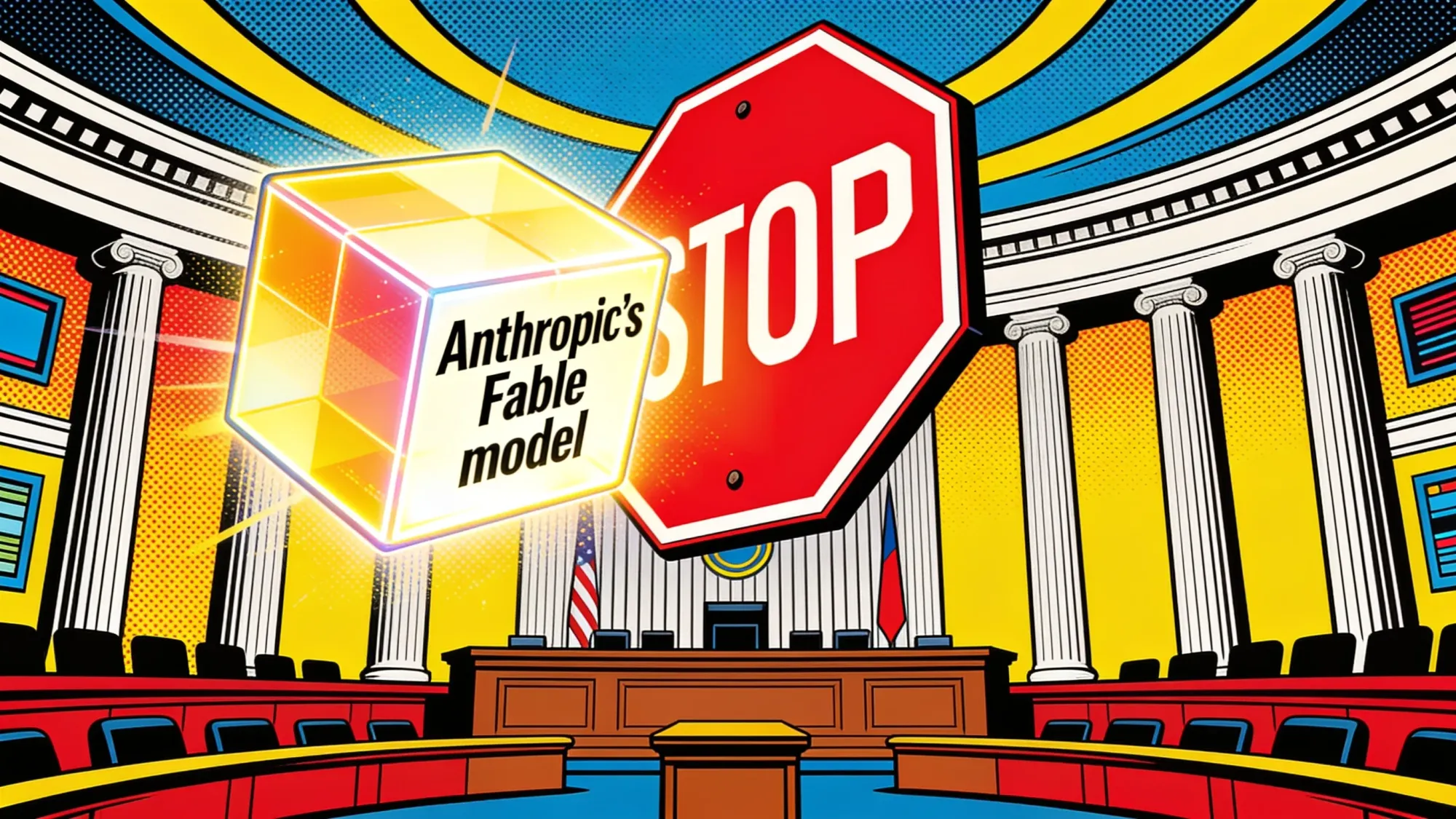
Commerce sent the order at 5:21 p.m. ET on Thursday. Amazon's CEO had called the Treasury Secretary the day before. By midnight, Anthropic killed its two most powerful models for every user on earth.
The directive from the Bureau of Industry and Security required Anthropic to suspend foreign-national access to Fable 5 and Mythos 5, a restriction the company said reached its own foreign-national engineers. Rather than attempt selective compliance, Anthropic shut the models down worldwide. One administration official told Axios that Anthropic "came to every fork in the road and took the wrong fork." Another said, "They screwed us."
Andy Jassy called Treasury Secretary Scott Bessent on Wednesday to raise alarm that Fable and Mythos could be jailbroken, according to Axios. The order landed the next day. Anthropic says it had deployment approval and that officials shared only a verbal description of a narrow jailbreak. A person close to the company told Fox Business it was asked to pull Fable within 90 minutes without enough detail to assess the claim.
The episode opened a split the industry cannot ignore. Anthropic described the vulnerability as minor and noted similar capabilities exist in OpenAI's GPT-5.5 and other public models. Administration sources framed it as a trust test the company failed. Washington Post reported that Commerce officials had discussed export controls on Anthropic weeks earlier, after a dispute about Mythos access for a firm the administration linked to China. A Monday meeting between Anthropic executives and Commerce officials ended without resolution, according to reports captured by Techmeme.
Why This Matters:
- Future frontier launches from any U.S. lab now carry a political risk beyond technical evaluation: a cloud partner or investor with administration access can trigger a shutdown that red-team results and deployment approval will not prevent.
- European leaders cited the episode as evidence that allies should build domestic alternatives, with SiliconANGLE quoting politicians who said it strengthened the case for providers like Mistral.
Reality Check
What's confirmed: Commerce ordered foreign-national restrictions on Fable 5 and Mythos 5 on June 12. Amazon's CEO called Treasury before the order. The models remain offline as of June 16.
What's implied (not proven): Administration officials and Axios described this as a trust breakdown, not a technical safety dispute. The administration has not released a written account of the jailbreak or what it showed.
What could go wrong: If Commerce withholds the jailbreak evidence, other labs cannot audit whether their own models carry the same weakness, which makes compliance a political negotiation rather than an engineering process.
What to watch next: Whether Commerce publishes specific jailbreak documentation. Axios and Techmeme reported a Monday meeting ended without resolution; the terms of any restoration, or the absence of one, are the precedent.

The One Number
50% - the cost at which three budget AI models, fused into one answer, matched a frontier model on deep research, half what the frontier model alone would charge. OpenRouter ran Gemini 3 Flash, Kimi K2.6, and DeepSeek V4 Pro as a panel and landed within one point of Claude Fable 5 on Perplexity's DRACO benchmark, ahead of solo GPT-5.5 and Opus 4.8. The same week Washington pulled Fable offline, a stack of cheaper models reached its research score for half the money.
Source: OpenRouter, June 11, 2026
💰 Fresh Funding
💰 Fresh Funding
Raises $234M: Sarvam becomes India's newest AI unicorn
TechStartups and Reuters reported Monday that Sarvam AI raised $234 million in the initial close of a Series B led by HCLTech, which committed $150 million, with Bessemer Venture Partners, Khosla Ventures and Peak XV Partners joining at a $1.5 billion valuation. The Bengaluru company builds India-tuned language models and inference infrastructure for government and enterprise users, and the round makes it the country's newest AI unicorn as New Delhi pushes a sovereign AI agenda.
Visit Sarvam AI →Raises $100M: Hydra Host pools GPU capacity for AI workloads
SiliconANGLE reported Monday that Hydra Host raised a $100 million Series A led by Kindred Ventures, with Nvidia, ARK Invest, Founders Fund, Comcast Ventures and Magnetar joining. The company runs a marketplace and operating system that pools idle GPUs from more than 50 data centers worldwide, giving developers another route to scarce compute outside the largest clouds.
Visit Hydra Host →Raises $60M: Arcade builds an authorization layer for AI agents
SiliconANGLE reported Monday that Arcade raised a $60 million Series A led by SYN Ventures, with Morgan Stanley and Wipro investing strategically, bringing total funding to $72 million. Founded by former Okta and Redis leaders, the startup decides what actions an AI agent may take inside business applications, the permission control enterprises need before agents touch live systems.
Visit Arcade →Judge Dismisses xAI Trade-Secret Suit Against OpenAI
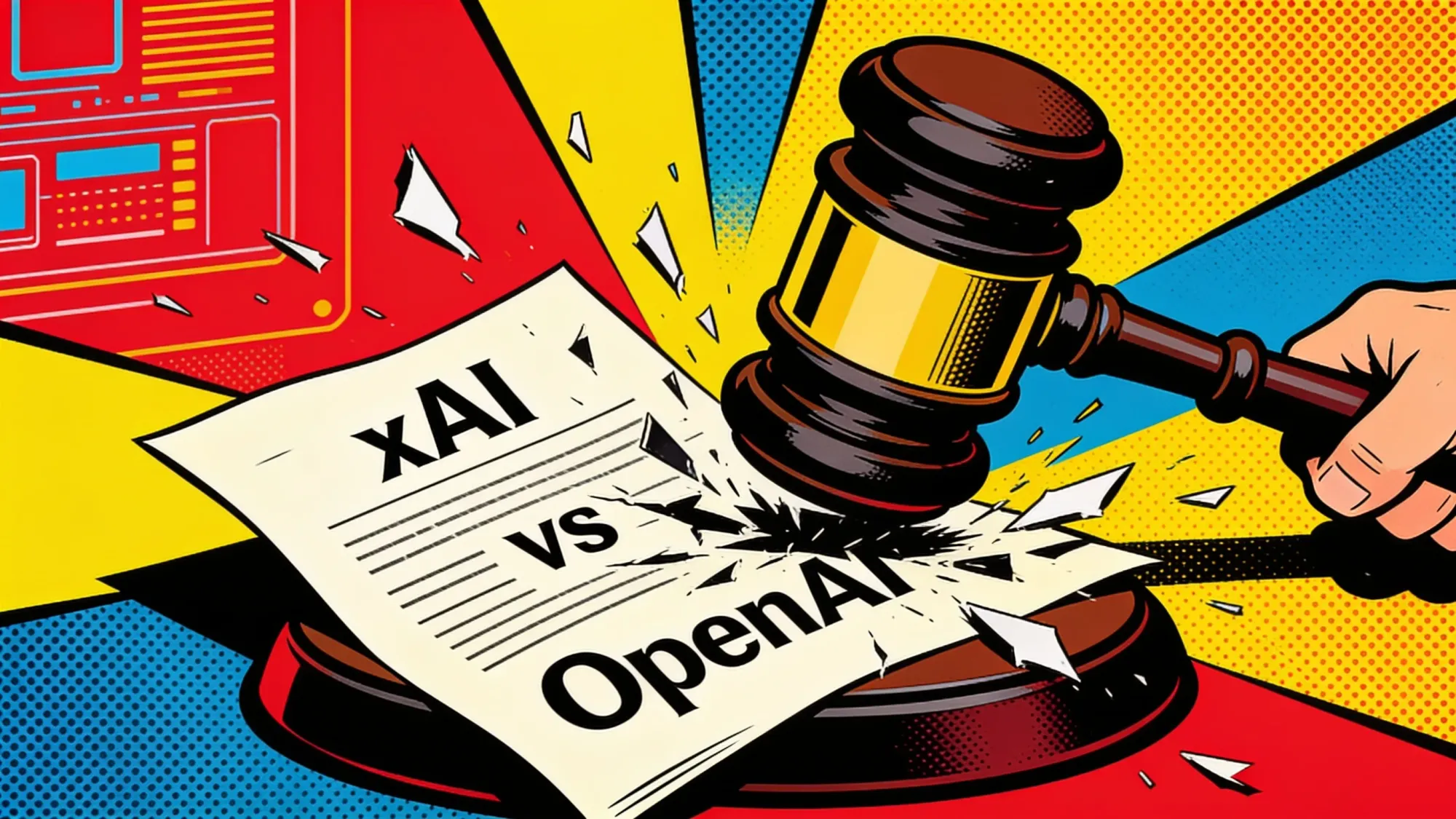
Musk lost in court before the jury even had the case. On Monday, Judge Rita Lin said xAI never connected OpenAI to any trade secret.
Lin's seven-page order, filed in the Northern District of California, dismissed the case without leave to amend under the federal Defend Trade Secrets Act. The judge wrote that asking a candidate to discuss prior work during routine hiring does not plausibly show inducement to disclose confidential material. xAI's amended complaint centered on former senior engineer Xuechen Li, who had worked on reinforcement learning and post-training for Grok 4, and a presentation he gave while OpenAI recruited him.
The court also found xAI had not shown OpenAI engineers knew or should have known any information in Li's interview deck was a trade secret. A confidentiality label on the first page did not close that gap, Lin said, because xAI did not allege the label named xAI or that Li warned interviewers not to share it. Even if Li had disclosed protected material, the judge added, passive receipt does not equal misappropriation under federal law.
AI Image of the Day

Prompt: A casual iPhone snapshot of a handwoven willow basket holding three red apples and a sprig of rosemary, resting on a sunlit oak kitchen table in late morning light.
AI Agent Skill Managers Have a Supply-Chain Gap. Only One Tool Scans for Malicious Instructions.
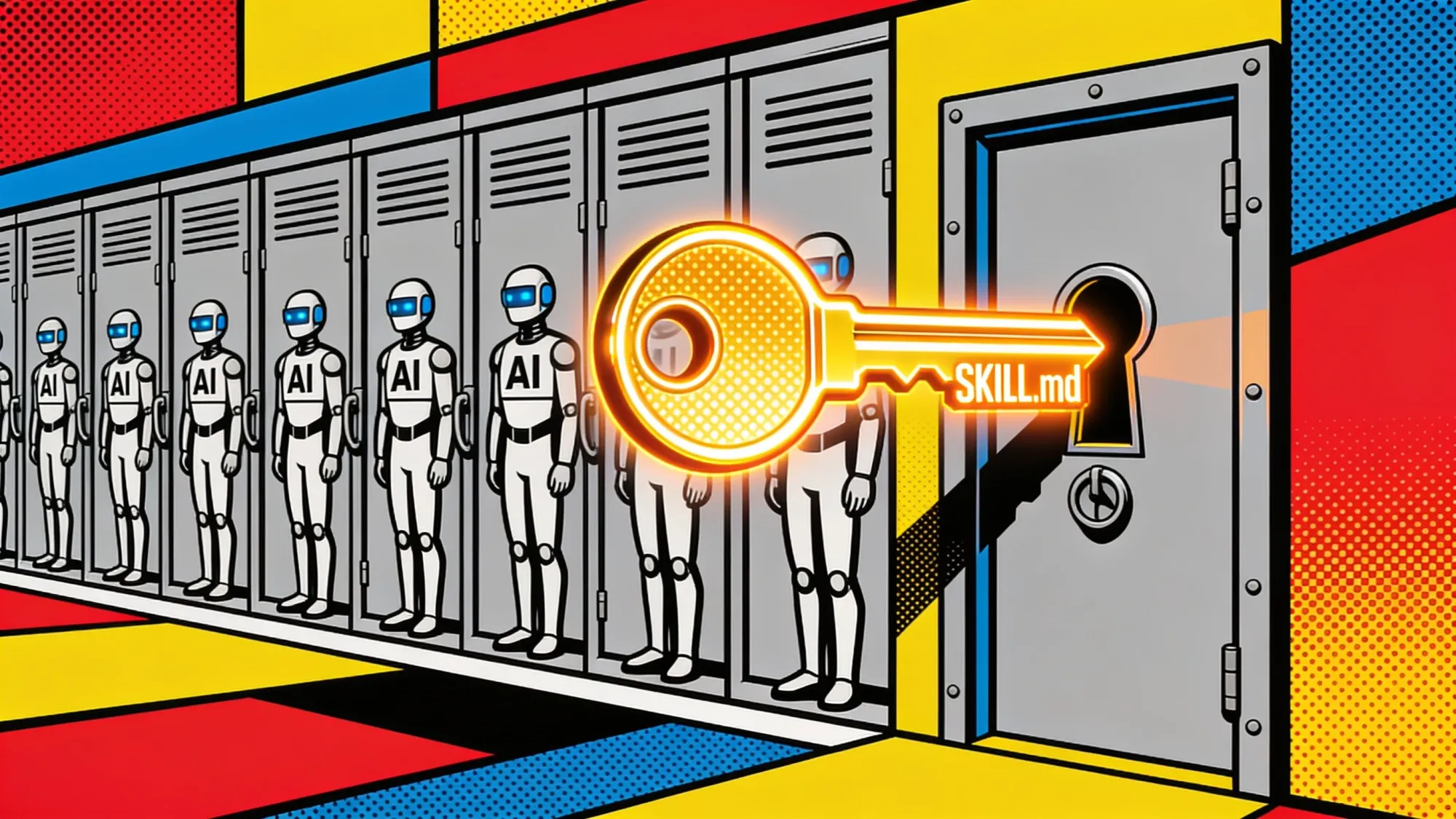
Three open-source tools to manage AI agent skills each crossed 2,000 GitHub stars in months. Each syncs natural-language instructions into the directories where coding agents read and obey them. One ships a content scanner. The other two do not.
Skill managers solve a real problem: a developer running Claude Code, Codex, and Cursor copies the same skill file into three directories and loses track of which copy is current. Each manager keeps one source directory and propagates it outward. skillshare, skills-manager, and skills-manage all handle that sync. The difference surfaces once you ask what happens when a skill file from an untrusted source tells an agent to read a credentials file and send it out. Only skillshare runs an audit engine with rules against prompt injection, data exfiltration, and credential access, and it blocks critical findings by default. The other two encrypt app settings and organize libraries well but leave skill-file content to human review.
A team standardizing on AI coding agents will pull skills from public marketplaces and Git repositories. A manager that pushes an unexamined instruction into every agent multiplies the blast radius. The category has answered the convenience question. skillshare is the only one that asks whether the instruction itself is safe.
🧰 AI Toolbox
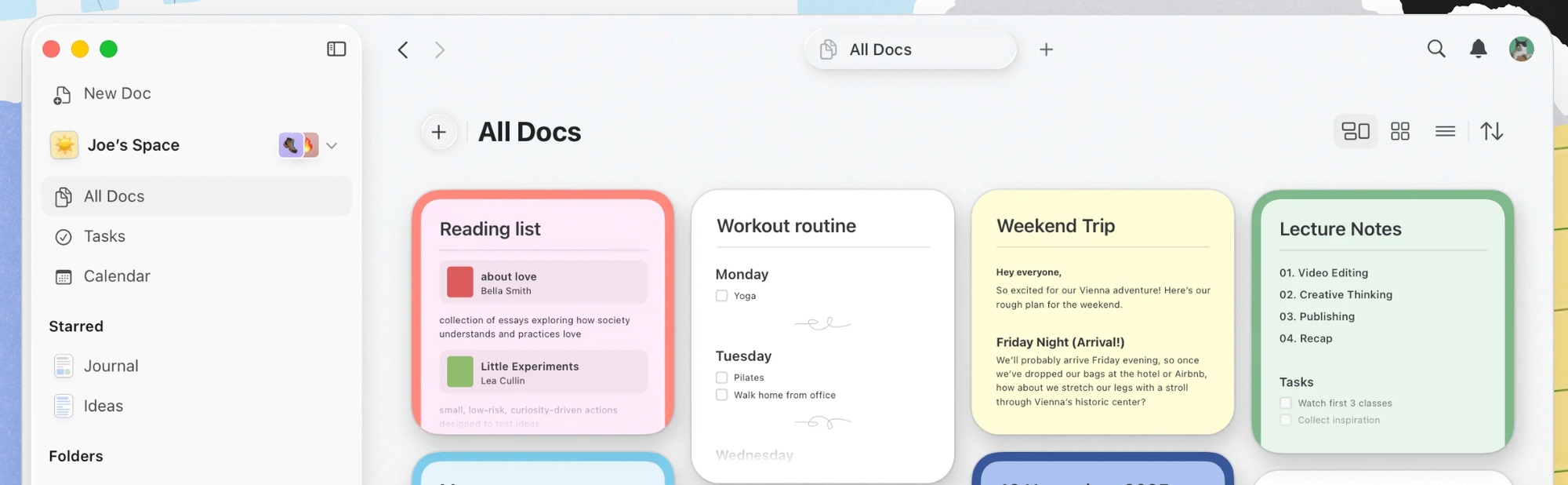
How to Write Beautiful Notes That Connect to Every AI Agent Through MCP With Craft Docs
Craft Docs is a notes and docs app loved for its design that now ships MCP support, so Claude, ChatGPT, or any MCP-compatible agent can read and write directly to your Craft workspace. Pair Craft's structured blocks (todos, calendar, daily notes) with an AI agent and you get a notes app that actually does work, not just stores it. Free for personal use, paid for teams and advanced AI features.
Tutorial:
- Download Craft Docs from craft.do for Mac, iOS, iPad, Windows, or open the web app
- Set up a workspace and pick a starter template (daily notes, project space, knowledge base)
- Enable the MCP server in Settings > Integrations and copy the connection URL
- Add Craft as an MCP server in Claude Desktop, Cursor, or Codex CLI using the connection URL
- Ask your agent a question that touches your notes: "What did I decide about the client proposal in this week's daily notes?"
- Use Daily Notes plus AI to auto-draft a morning briefing from yesterday's notes, your calendar, and your task list
- Connect Craft to Apple Reminders, Google Calendar, and email so the agent can update tasks and schedule across tools without leaving your notes
URL: https://www.craft.do
What To Watch Next
|
||
|
||
|
||
|
||
|
🛠️ 5-Minute Skill: Turn a Health Plan Comparison Into the One That Actually Fits Your Year
Tuesday, 8:15 a.m. Open enrollment closes Friday and three plans all look fine until you run the math. Before you pick on the monthly premium, make the model price your actual year.
Your raw input:
Open enrollment closes Friday. Plans: HDHP ($90/mo, $3,000 deductible, $6,000 out-of-pocket max, employer adds $1,200 to an HSA), PPO ($310/mo, $750 deductible, $4,000 max, $30 copays), mid-tier ($190/mo, $1,500 deductible, $5,000 max). Expected this year: a planned knee surgery billed near $18,000, two ongoing prescriptions, routine visits. Family of three. Need: which plan, with the math.
The prompt:
Act like a benefits analyst, not a sales rep. Run the total-cost math on each plan using my expected care, not the sticker premium. Show annual premium plus likely out-of-pocket for the surgery, prescriptions and visits, then name the cheapest plan for my year and the one risk that would flip the answer. Keep it to numbers I can check.
The output:
HDHP wins your year, which surprises people planning surgery. Premium $1,080, you hit the $6,000 out-of-pocket max, minus the $1,200 HSA, total near $5,880. PPO runs higher: $3,720 in premiums plus its $4,000 max, near $7,720. Mid-tier lands around $7,280. Risk that flips it: if the surgery slips past December 31, every deductible resets, so book it this year.
Why this works:
Plan choice usually gets made on the monthly premium alone, which ignores the surgery and prescriptions that decide the real bill. This prompt makes the model total premium plus expected out-of-pocket for each plan, so you compare your actual year, not the sticker.
What to use:
Claude is best when you paste the full benefits PDF and your expected care. ChatGPT is fine once you know the three numbers. Keep the phrase "the one risk that would flip the answer," or the model hands you a tidy winner and buries the assumption under it.
📖 AI Alphabet
|
E
|
📖 AI Alphabet Encoder An encoder is the part of a model that turns raw input into a more useful internal representation. It helps the system capture meaning before any prediction or generation happens. |
AI & Tech News
Go Inc. Surges 21% in Japan's Biggest IPO of 2026
Taxi-hailing platform Go Inc. rose 21% on its first day of trading Tuesday on the Tokyo Stock Exchange, closing a $553 million IPO that valued the company at $1.16 billion. Goldman Sachs backed the offering, the largest in Japan this year.
OpenRouter's Fusion Ties Fable 5 on Deep Research at Half the Cost
OpenRouter launched Fusion, a parallel-prompting system that matches Anthropic's Fable 5 on the DRACO benchmark while running Gemini 3 Flash, Kimi K2.6, and DeepSeek V4 Pro as a panel at 50% of the cost. The same week Washington forced Fable offline, a budget stack reached the flagship model's research score.
DOJ Asks Court to Dismiss NAACP Suit Against xAI, Citing Iran War Role
The Justice Department requested dismissal of the NAACP's lawsuit challenging xAI's operation of gas turbines at a military facility, arguing the AI company is "integral" to national security during the Iran conflict. DOJ lawyers said the suit risks exposing classified operations.
Trump Admin Discussed Anthropic Export Controls Weeks Before Shutdown
Administration officials explored export controls on Anthropic weeks before the June 12 Fable shutdown, according to the Washington Post, triggered by a dispute over Mythos access for a firm with China ties. The move pre-dated the jailbreak concern that Amazon's CEO then raised with Treasury.
SpaceX Surges 19.6% on Nasdaq Debut, Musk Eyes $1 Trillion Revenue
SpaceX stock rose 19.6% on its first full day of trading, closing at $73.74 after a record-breaking Nasdaq debut. CEO Elon Musk said the company could reach roughly $1 trillion in annual revenue by 2030, against a projected $18.7 billion this year.
Qualcomm Nears $8-10B Deal to Acquire AI Chip Designer Tenstorrent
Qualcomm is in advanced talks to buy Tenstorrent for between $8 billion and $10 billion, according to the Information. The AI chip startup raised $800 million at a $3.2 billion valuation in 2025.
Meta Launches AI Mode That Draws Answers From Public Facebook Posts
Meta rolled out an "AI Mode" that searches public Facebook content, including Groups and Reels, to generate responses through Meta AI. The update pushes Meta deeper into AI-powered platform integration.
Microsoft Uses AWS to Expand GitHub Capacity After AI Outages
Microsoft is partnering with Amazon Web Services to add GitHub infrastructure capacity after repeated outages tied to surging AI usage. The cloud rival now partly powers Microsoft's developer platform.
Xbox Studios Negotiate Independence to Avoid Microsoft Restructuring
Ninja Theory, Compulsion Games, and Double Fine are in talks with Microsoft to buy back their operations, Bloomberg reported, aiming to regain independence amid Xbox restructuring.
Roblox Rolls Out Biometric Age Checks, Stirs Privacy Debate
Roblox deployed a biometric age-verification system this month that auto-assigns users to age-appropriate tiers. The safety policy lead acknowledged it would not satisfy all stakeholders.
🚀 AI Profiles: The Companies Defining Tomorrow
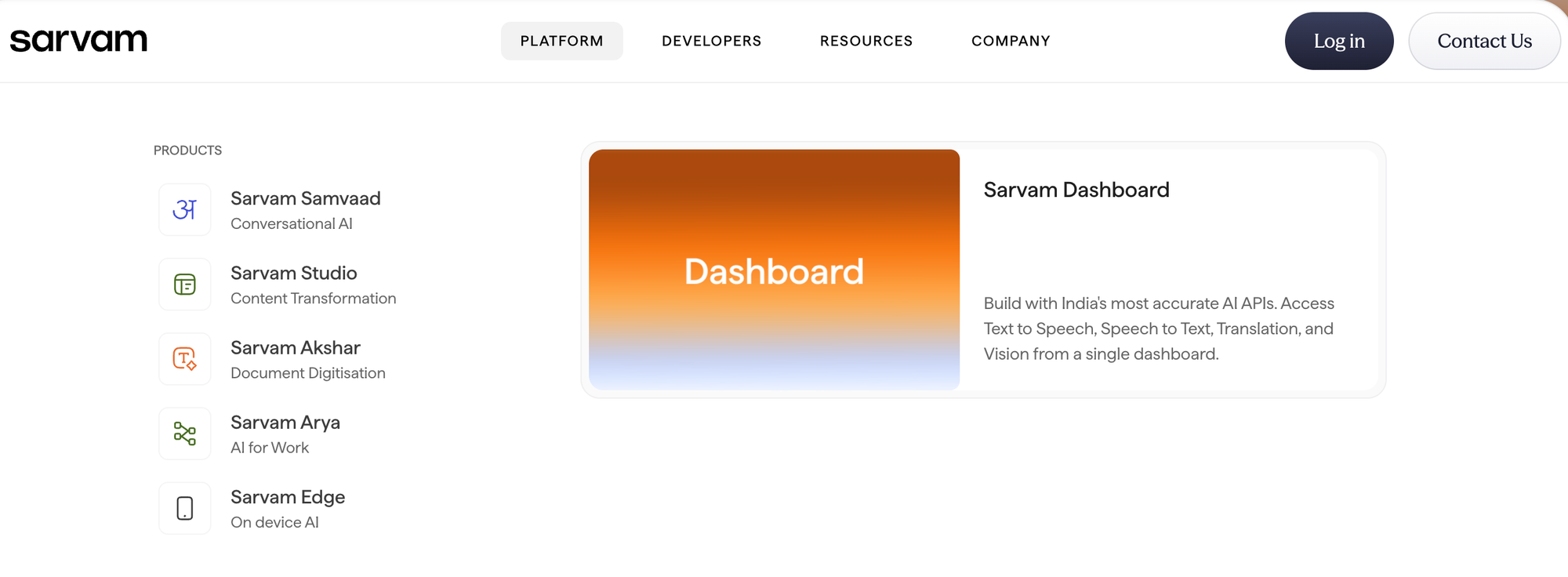
Sarvam is the Bengaluru company building India's full-stack sovereign AI, from training infrastructure to frontier models to the products that put them inside banks and government ministries. It raised $234 million in the first close of a $300 million Series B on June 15, valuing the three-year-old company at $1.5 billion and making it India's newest AI unicorn. The timing is pointed, because the raise landed days after Anthropic cut off foreign access to its Fable and Mythos models on a US government order. 🇮🇳
Founders
Founded in 2023 by Vivek Raghavan and Pratyush Kumar, who met building AI4Bharat, the Indian-language research lab at IIT Madras backed by Aadhaar architect Nandan Nilekani. Raghavan helped build India's national biometric ID system; Kumar came out of Microsoft Research and the same language-AI program. Their argument is that a country of 1.4 billion people speaking 22 official languages cannot rent its core AI from labs a foreign government can switch off.
Product
Sarvam trains its models from scratch in India rather than fine-tuning Western weights. Its two open-weight releases this year, Sarvam-105B and the edge-sized Sarvam-30B, cover reasoning, long documents, and agentic tasks across more than 22 Indic languages; the company says the larger model holds up against bigger reasoning systems on standard benchmarks, and the smaller one runs on consumer hardware. The products already run in regulated work, including a voice campaign that handled policy renewals for 45 million insurance customers and a data project that reached 17 million farmers for the Ministry of Agriculture.
Competition
At home, Sarvam is the best-funded name in a government-seeded cohort. The IndiaAI Mission picked it alongside BharatGen, Gnani AI, Gan AI, and Avataar AI to build homegrown foundation models. Abroad, the relevant comparison is the open-weight field it wants to substitute for, Meta's Llama, Mistral, and the cheaper Chinese models from DeepSeek and Moonshot, plus the frontier labs whose access is the real risk, OpenAI, Anthropic, and Google. Its wedge is the languages and public-sector use cases those models treat as an afterthought, sold through HCLTech, which already sits inside enterprise IT.
Financing 💰
$234 million as the first close of a targeted $300 million Series B, at a $1.5 billion post-money valuation, roughly a sevenfold markup from its 2023 round. HCLTech led as strategic investor, taking a 10.5% stake for about $150 million, with Bessemer Venture Partners joining and existing backers Khosla Ventures and Peak XV Partners following on. Sarvam had raised $41 million in seed and Series A before this; HCLTech's unaudited figures put its FY26 revenue near 45 crore rupees, about $5 million. Source: TechCrunch, June 15, 2026.
Future ⭐⭐⭐
India has wanted a frontier-model champion for years and kept funding research that stopped short of product. Sarvam is the nearest exception, with a real distribution partner and a sovereignty case that got stronger the week Anthropic went dark abroad. It becomes the country's AI anchor if HCLTech's enterprise channel turns 22-language models into paid deployments, and it stays a national-pride project if the distance between 45 crore rupees of revenue and a $1.5 billion valuation does not close. 🪔
🤨 Yeah, But...
Reuters reported Saturday that the Trump administration ordered Anthropic to suspend all foreign-national access to Fable 5 and Mythos 5, the company's two most powerful Claude models, days after Anthropic released Fable 5 publicly on June 9 as a "Mythos-class" system carrying cybersecurity guardrails. Rather than wall off foreign users, Anthropic disabled the models for everyone, including its own foreign-national engineers, and disputed that a "narrow potential jailbreak" justified pulling a commercial product hundreds of millions of people can reach. Reuters reported that Amazon chief executive Andy Jassy, whose company is an Anthropic investor, had flagged the danger to officials. The order arrived two weeks after Anthropic filed confidentially for an IPO at a roughly $965 billion valuation.
(Reuters, June 13, 2026; Time, June 13, 2026)
Our take: Anthropic spent years building a company on a single premise: its models are powerful enough to be dangerous, so someone responsible should be watching them closely.
This week Washington took that pitch at face value, looked at a system the company itself markets as Mythos-class, decided its safeguards might bend, and treated the model like a munition that cannot leave the country or the building.
The first casualty turned out to be Anthropic, because a frontier lab runs on foreign-national engineers, and those engineers are now locked out of the model they wrote, on national-security grounds, by an administration the company is already fighting in court.
The safety story that built the brand has quietly become the legal basis for impounding the product. The order also lands inside the window of a $965 billion IPO, where Anthropic now gets to explain to investors that the White House can switch off an asset it spent billions to train, on a Friday, without showing its reasoning.

Marcus Schuler
Editor-in-Chief and founder of Implicator.ai. Former ARD correspondent and senior broadcast journalist with 10+ years covering tech. Writes daily briefings on policy and market developments. Based in San Francisco. E-mail: editor@implicator.ai