 IMPLICATOR
Implicator PRO Briefing / 31 Mar 2026
When Apple throws its 50th birthday party at Apple Park on April 1, the man standing center stage won't be Tim Cook. It will be John Ternus. Bet on it. Fifty years old, runs engineering and design both, and controls the two groups that have made everything Apple sells since Jobs first picked up a whiteboard marker. Cook will be there. He'll say a few words. But the guest list, the seating chart, and the org chart all point the same direction. Apple is rehearsing what comes after Cook.
The timing is almost too clean. Apple turns 50 in the same year it plans to launch its first foldable phone, enter the smart home market with an entirely new product category, begin replacing Qualcomm's modems with its own silicon, and open Siri to rival AI assistants for the first time. Oh, and it needs to find a new CEO. Maybe not this quarter. Maybe not this year. But the machinery is moving, and every senior executive inside the Ring knows it.
Three questions will define Apple's next decade. Who leads? What does Apple build next? And can the company that controls every screw in its supply chain figure out artificial intelligence before the window closes?
The financial machine Cook assembled gives Apple time to answer all three. Record quarterly revenue of $143.8 billion in Q1 2026, up 16 percent year over year. iPhone sales hit an all-time high of $85.3 billion. Services blew past $30 billion, a first. Two and a half billion active devices in the wild. Market cap pushing $4 trillion.
But money doesn't buy intelligence. Not the artificial kind. Apple's competitors ship frontier models that write code and generate video, conduct research across the open web. Apple shipped notification summaries that hallucinated news headlines. Actual fabricated stories, from Apple's own models. Siri was supposed to make the iPhone feel alive. Ask anyone who relies on it daily how that's gone. And the Google deal Apple cut in January, paying roughly $1 billion a year for Gemini access? Biggest concession Cupertino has made in a generation. It cannot build this alone.
That changes the math on everything Apple does next.
The Breakdown
- CEO succession accelerating: Ternus, 50, gained oversight of design teams in January 2026. First time one executive has held both hardware and design since Jony Ive walked out. The presumed heir, COO Jeff Williams, retired in November 2025.
- Biggest product year in a decade: Foldable iPhone ($2,000+, 15-20 million units), smart home displays, in-house C2 modems that kill the Qualcomm dependency, and possibly smart glasses. All shipping before December.
- AI strategy rests on Google: Apple pays roughly $1 billion a year for Gemini models to rebuild Siri. iOS 27 then opens Siri to rivals, Claude and Perplexity among them, via a new Extensions system.
- Financial engine firing: Q1 2026 pulled $143.8 billion (up 16%). iPhone alone: $85.3 billion. Services crossed $30 billion. 2.5 billion devices in the wild and growing.
What Cook built, and what he didn't
Tim Cook took over a company worth roughly $350 billion in August 2011. He leaves behind, whenever he decides to leave, one approaching $4 trillion. The math alone should end any argument about his legacy. It won't, because the argument was never really about money.
Cook's genius was operational. He turned Apple's supply chain into a weapon, locking up manufacturing capacity years in advance, squeezing margins from suppliers, and using Apple's cash reserves to finance the factories that built its products. He expanded into services, transforming a hardware company into a recurring-revenue machine. Services alone now generate $30 billion per quarter, more than most technology companies earn in a year. He pushed into wearables and health, then payments. He grew Greater China revenue by 37.9 percent in the most recent quarter alone.
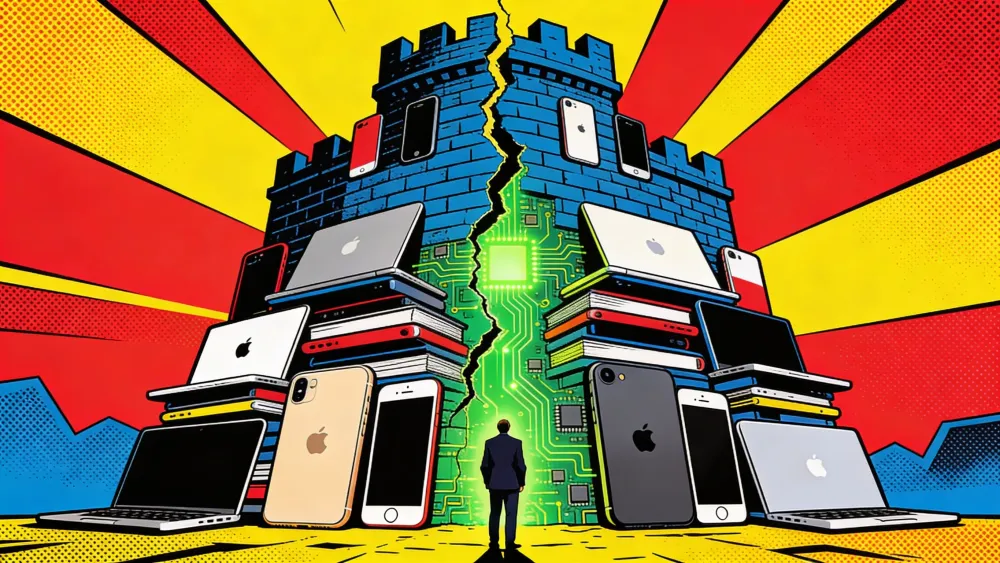
What Cook did not do is invent anything. That's not a knock on the man. It describes the job he picked. AirPods. Apple Watch. M-series chips. Even the ill-fated Vision Pro. All of it grew out of an engineering culture Cook inherited, not one he built. His contribution was execution at a scale no other CEO has matched. But execution without invention eventually produces a specific kind of vulnerability. The fortress Cook spent fifteen years building has no good answer for what's happening inside it. Apple's AI gap is that crack in the wall.
The timeline tells it. November 2022, ChatGPT drops. Eighteen months pass. Every major player, Google, Microsoft, Meta, Anthropic, has a competing model in the market. Apple takes until June 2024 to respond. Apple Intelligence. Writing tools. Notification summaries. Image generation. On-device only, and limited across the board. Critics piled on. The models were small, the features limited, the Siri improvements promised for "later." The 2025 expansion didn't close the gap. Apple Intelligence still trailed by a margin that embarrassed Cupertino's own engineers.
Cook is 65. His total compensation in fiscal 2025 was $74.3 million, including $57.5 million in stock awards that carry a retirement vesting provision. The provision triggers when an executive reaches age 60 with ten or more years of service. Cook has met both thresholds. He can leave with full vesting whenever he chooses. He told CNBC he would never retire "in the traditional way," suggesting he would remain involved, perhaps as chairman. The language of soft exits. The board is listening.
The swimmer who learned to draw
John Ternus swam competitively at the University of Pennsylvania, where he earned a mechanical engineering degree in 1997. His first job out of college was designing virtual reality headsets at a company called Virtual Research Systems. He joined Apple in 2001, working on the Cinema Display, and spent the next two decades climbing through hardware engineering. AirPods. iPad. Mac. iPhone. Apple Watch. Vision Pro. By 2021, he was senior vice president overseeing all hardware, reporting directly to Cook.
One appointment rewired the succession race.
In January 2026, Bloomberg reported that Cook had tapped Ternus to oversee Apple's design teams. Internally, Ternus is now billed as the "executive sponsor" of design, a bridge between the design staff and the rest of the executive team. It is the first time since Jony Ive's departure that one person has controlled both hardware engineering and design. At Apple, those two functions produce everything the company sells. Controlling them is controlling Apple.
The significance runs deeper than org charts. Jeff Williams, Apple's longtime chief operating officer and the executive most people assumed would succeed Cook, retired in November 2025. Williams was the operational heir, a supply-chain mind in the Cook mold. His departure didn't just clear the path for Ternus. It signaled a cautious but deliberate change in what the board values. Apple has had an operations CEO for fifteen years. The next one, the board appears to believe, should be a product person.
Ternus fits that profile in ways that extend beyond his resume. Colleagues describe someone who shows up in prototype labs, grills engineers about materials and tolerances, and has strong opinions about curve radii. On stage at keynotes, he's direct in a way Cook's polished reserve never allows. Fifty years old. Young enough to run the company for a decade, maybe longer.
But the Ternus bet carries a specific risk. He is a hardware executive taking charge of a company facing a software crisis. Apple's AI problems are not problems of silicon. The M-series chips are excellent. The Neural Engine processes on-device inference faster than any mobile competitor. The gap is in models, training data, and the conversational AI stack that sits on top of the hardware. Ternus will need to either fix that himself or hire someone who can.
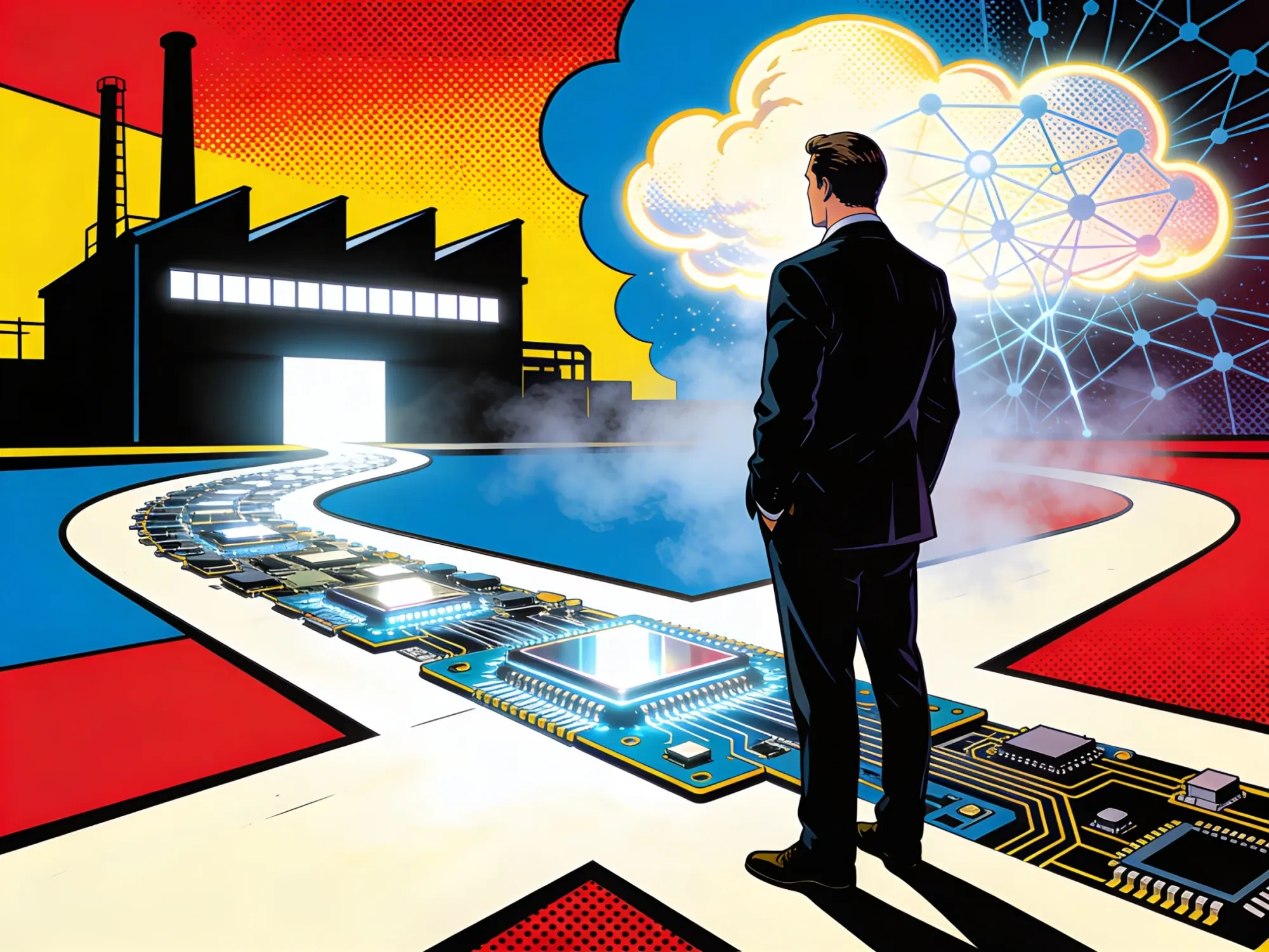
The most telling appointment is the one Apple hasn't made yet. After Meta offered Ruoming Pang tens of millions to lead its AI research, Apple lost the executive who ran the 100-person team responsible for Apple Intelligence's core models. Apple has not named a high-profile AI leader to replace him. The remaining AI team, by all appearances, is exposed. The vacancy says more than any press release.
Five new bets in twelve months
Strip away the anniversary marketing and Apple's 2026 product roadmap looks like a company trying to prove something. Not to Wall Street, which already rewards the stock handsomely. To itself.
Start with the foldable iPhone. Samsung has shipped seven Galaxy Z Fold generations while Apple watched. This fall, Apple finally enters. The specs hint at why Apple waited. A 7.8-inch inner display with a crease just 0.15 millimeters deep at a 2.5-degree angle. Nearly invisible to the eye. Nearly invisible to the fingertip. A 5.5-inch outer screen. Titanium construction. A price north of $2,000, making it the most expensive iPhone ever sold.
Reports put the display panel order at 20 million units. First-production targets jumped from 8 million to 15 million. Samsung's Galaxy Z Fold 8 lands roughly two months ahead, around July, at a similar price. But the real competition isn't Samsung. It's Apple's own iPhone 18 Pro, shipping the same fall with the company's first mmWave-capable in-house modem, the C2, internally codenamed Ganymede. Customers will have to choose between Apple's best traditional phone and its most experimental one. That's a tension the company has never managed before.
Smart home is the less proven bet. Apple is launching a HomePad, a device with a roughly 7-inch square display and a front-facing camera designed for wall mounting or countertop placement. A second version pairs the display with a speaker base resembling a HomePod mini. And Siri is supposed to run the whole thing. Which is the problem. Apple pushed launch from spring to fall because current Siri can't handle a device that lives or dies by voice. The Gemini-powered rebuild has to ship first.
Apple isn't stopping at the kitchen counter. Smart glasses are in development to challenge Meta's Ray-Ban partnership. Timeline: unclear. A HomeKit security camera is in the works. Throw in the HomePod mini 2, now with Wi-Fi 6E, and Apple has patched together a home device lineup from nothing in twelve months.
The thread running through all of it? Silicon. The foldable runs Apple's newest chip architecture. The C2 modem replaces Qualcomm with Apple's own design. The HomePad needs enough processing power for on-device Siri inference. Even the smart glasses, if they ship, will require a custom low-power chip. This is Ternus's domain. Every new product category reinforces the case for a hardware CEO.
The Vision Pro precedent: Apple's ambition doesn't guarantee results. Vision Pro sold 390,000 units in its first year. Then quarterly numbers collapsed, down to roughly 45,000. The ad budget? Slashed more than 95 percent. The $3,499 spatial computer proved that even Apple cannot will a product category into existence. The foldable iPhone and smart home devices carry the same risk, though at far more accessible price points.
One product failure instructs the rest, though. Vision Pro stumbled because it lacked a clear use case at its price, not because the hardware was poor. The foldable phone has 15 years of smartphone behavior to build on. The HomePad plugs into an installed base of millions of HomeKit accessories. Apple learns from its misses. Sometimes.
A billion dollars to admit you're behind
In January 2026, Apple and Google announced a multi-year partnership that restructured the balance of power in artificial intelligence. Under the deal, Apple gains access to Google's Gemini models and cloud infrastructure for an estimated $1 billion per year. Gemini will power the conversational Siri overhaul Apple plans to ship later this year. Complex queries that on-device models can't handle will route to Gemini running in Apple's own data centers, processed through Apple's Private Cloud Compute framework.
Not an exclusive arrangement. The OpenAI deal still stands, ChatGPT baked into Siri and Apple Intelligence since late 2024. But Gemini is the anchor. Bloomberg's reporting has made this plain: the cloud model set to power native Siri is Gemini.
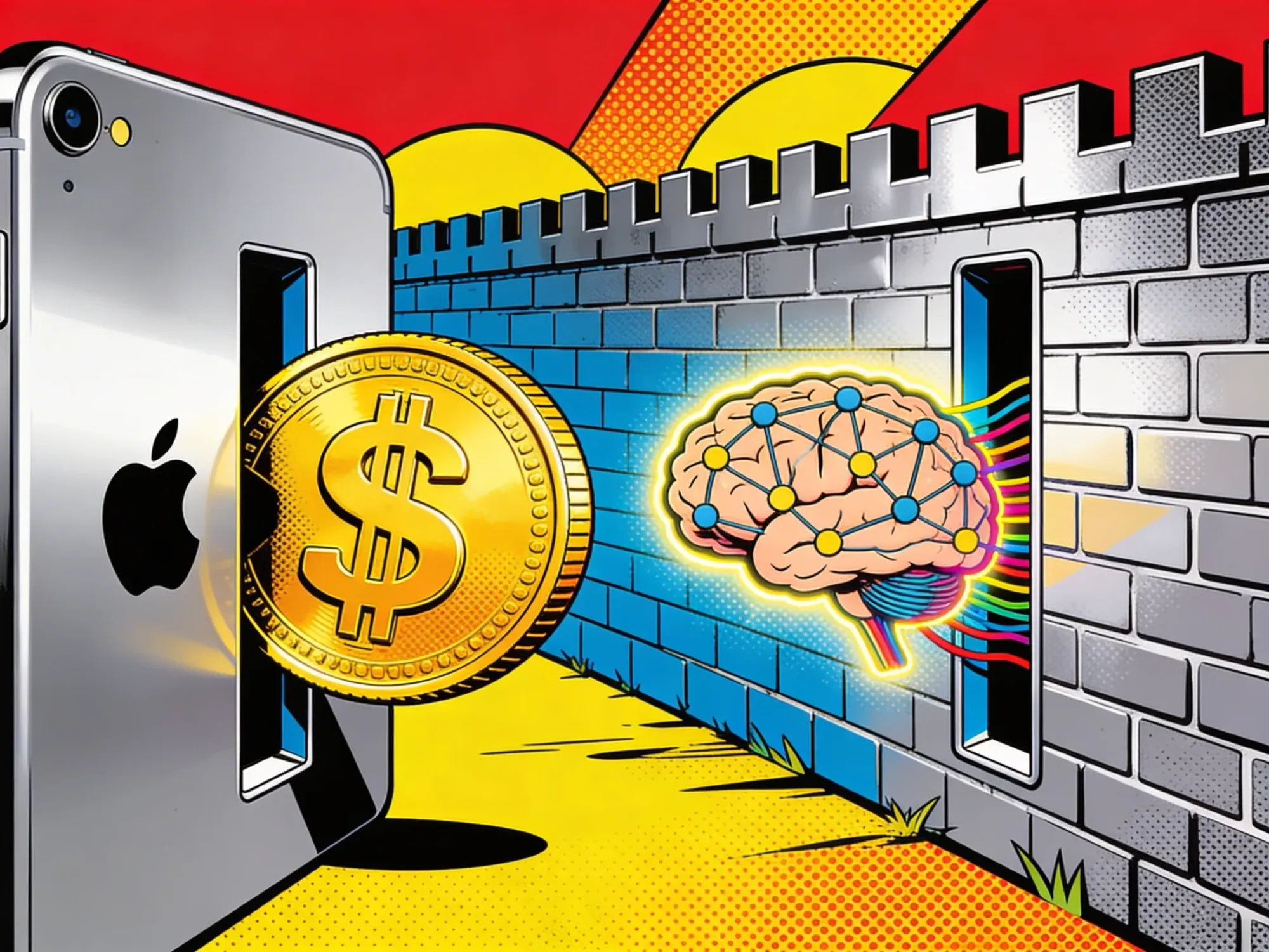
Sit with that for a second. The assistant on every iPhone, iPad, Mac, Apple Watch, and HomePod, the interface for 2.5 billion devices, will think using a Google model. Apple, the company that built its fortress by designing every chip and writing every operating system in-house, has outsourced the thinking in its most personal product.
The arrangement is more sophisticated than simple outsourcing. Apple has full access to the Gemini model within its own data center infrastructure. It can distill smaller, task-specific models from Gemini, compact enough to run directly on devices. The Foundation Models framework, released with iOS 26, already gives developers free on-device AI inference. Apple is constructing a stack that resembles vertical integration, even though the foundation model itself came from Mountain View.
Why couldn't Apple build this internally? The answer is unflattering but straightforward. Talent and data. Apple's on-device ML teams excel at narrow tasks like face recognition and computational photography. They are not competitive in the large language model race that now shapes the industry. When Meta dangled tens of millions in front of Ruoming Pang, he took the offer. He was running the team that built Apple Intelligence's core models. His departure left Apple's AI operation exposed at the worst possible moment.
And data matters as much as talent. Google feeds Gemini the largest web corpus ever assembled, sharpened by years of search relevance signals. Apple's privacy-first architecture, a real competitive edge, chokes the training data pipeline for its own models. The bind is structural. Apple cannot become a surveillance company to build better AI. But it can rent the output of a company that already did.
The $1 billion price tag is almost trivial against Apple's revenue. The company pulls in $143.8 billion in a single quarter. It could fund the Gemini deal from rounding errors. The real cost is strategic. Every year Apple depends on Google for AI capability is a year Apple's own model-training infrastructure falls further behind the frontier.
Opening the walled garden, one extension at a time
The most consequential announcement of Apple's 2026 won't be the foldable iPhone or the smart home push. It will happen on a Monday morning in June, at the Worldwide Developers Conference keynote at Apple Park.
Bloomberg reported on March 26 that iOS 27 is expected to include a new Extensions system for Siri, allowing third-party AI assistants to plug directly into Apple's voice interface. Claude, Gemini, Copilot, Grok, Perplexity, and potentially others will be accessible through a standardized integration layer. Users will configure preferred providers in Settings. They may even route different query types to different models: Gemini for research, Claude for code, ChatGPT for creative work.
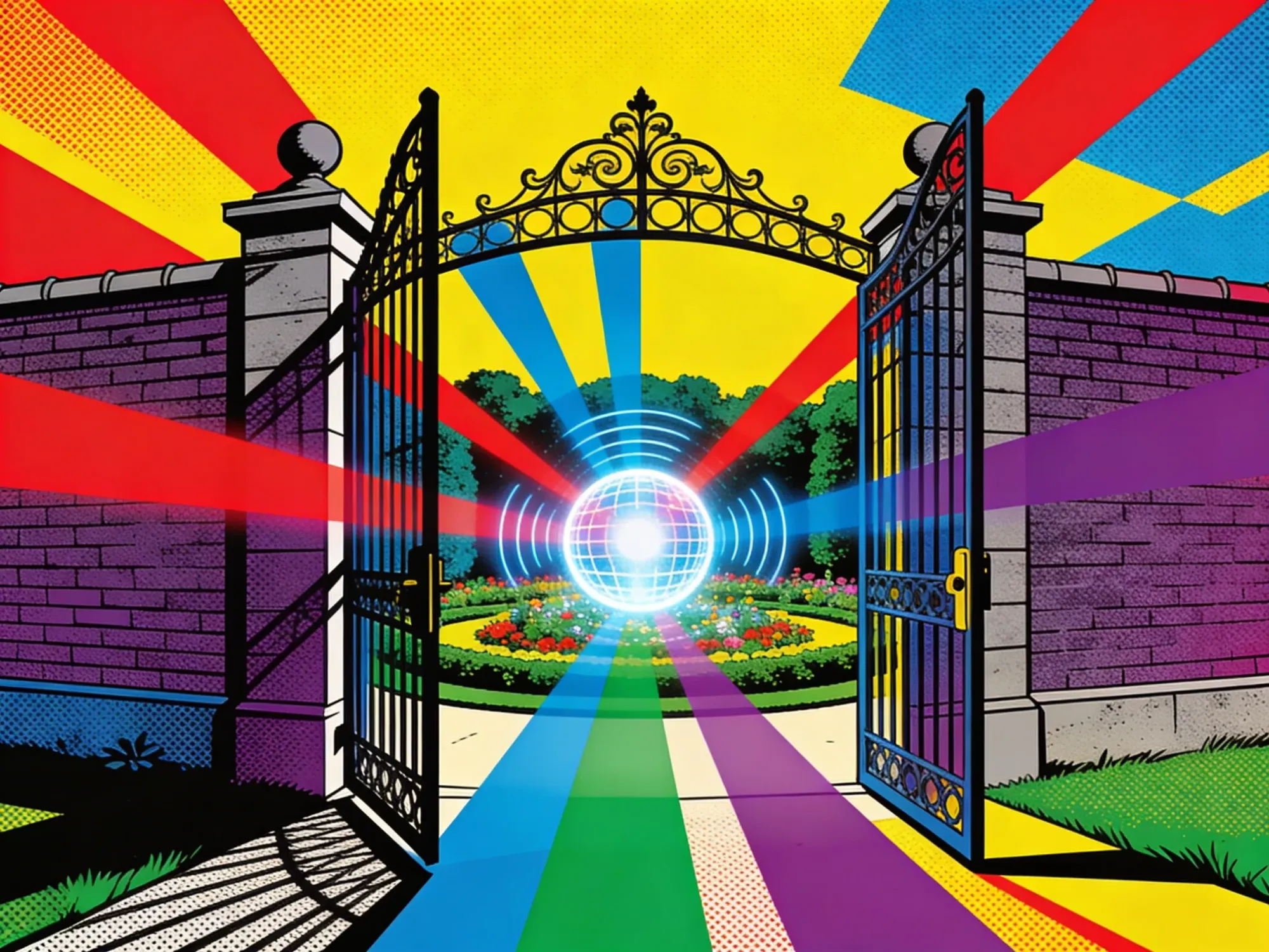
This is a fundamental architectural shift. For fifteen years, Siri has been a closed system. Apple controlled every layer, from input to output. Third-party developers could build SiriKit integrations for narrow tasks, ordering a ride or sending a message, but the conversational AI itself was Apple's territory alone. That era ends with iOS 27.
The strategic logic flows from three years of failure. That rebuilt Siri Apple hyped at WWDC 2024 still wasn't ready nearly two years later. Internal tests from February 2026 turned up persistent lag on hard queries, accuracy problems bad enough to crater a live demo. Rather than keep losing a race it entered late, Apple is changing the terms. Instead of competing model against model, Apple is positioning the iPhone as the distribution platform on which all models compete.
If you run an AI company, the prisoner's dilemma is stark. Refuse Apple's terms and lose access to 1.2 billion iPhones. Accept the 30 percent commission and gain system-level placement no advertising budget can match. The incentive structure makes refusal irrational, which is precisely how Apple designed it.
Apple already earns over $1 billion annually from AI app subscriptions routed through the App Store, before Extensions even launches. The new system formalizes what was happening organically and extracts rent at scale. OpenAI reportedly generates over $5 billion in annualized revenue. Anthropic, Google, and others are growing at comparable rates. These companies burn billions on model training and GPU clusters. Apple collects a percentage of their output at zero research cost. Without training a single model.
There's a demand-side wrinkle that complicates the math. A YouGov survey found only 24 percent of newer iPhone users rank voice assistants among their top-two use cases. Worse, 62 percent view smartphone AI as primarily a data collection mechanism. Apple is building a toll booth on a highway. The open question is how many drivers actually want to take that road.
But the play has a side that should make Cupertino's legal department anxious.
Regulatory exposure: The EU is already scrutinizing App Store commissions under the Digital Markets Act. The DOJ has its own active case targeting Apple's ecosystem control. Adding a 30% fee on AI assistant subscriptions funneled through Siri creates a new surface for regulators who already view Apple's platform pricing as extractive.
The Gemini deal itself carries regulatory weight. Google already pays Apple an estimated $20 billion per year to remain the default search engine on Safari. The DOJ cited that arrangement as evidence in its antitrust case against Google. Now Apple is layering a second billion-dollar Google deal on top, this one for AI. Brussels and Washington are paying attention.
Apple's defense will sound familiar: choice. We give users options. They can pick any assistant. We take a commission for providing the platform, the same way we handle apps. The argument holds, right up until a court decides it doesn't. The EU's Digital Markets Act could force Apple to accept sideloaded AI assistants that bypass the 30 percent fee entirely. If that happens, the Extensions play becomes a distribution advantage stripped of its revenue.
Where all three threads converge
The CEO question, the product question, and the AI question are not three separate problems. They are one problem examined from three angles.
Apple's next leader walks into a company printing record revenue while falling behind in the technology that will reshape computing for the next decade. The roadmap is packed. Foldable phones, smart home devices, smart glasses further out. Every single one needs an AI layer Apple can't build alone yet. And the AI play, pragmatic as it is right now, creates dependencies on Google and regulatory exposure that simply weren't there a year ago. Competitors smell the opening. Apple has grown cautious when pressed on AI timelines.
Ternus, if and when he takes the job, faces a choice that Cook never confronted. You can already see it taking shape. Cook could optimize a business built on Jobs's inventions. Ternus must decide what Apple actually is in a world where the most valuable capability, conversational AI, belongs to other companies.
One path: Apple becomes the distribution layer, the platform, the device that AI passes through on its way to users. This is the Extensions bet. It is lucrative, defensible in the medium term, and requires no breakthrough in model training. It is also a quiet admission that Apple will never lead in AI the way it leads in silicon design.
Another path: Apple uses the Gemini deal as a bridge, buying time while it builds internal capability. The Foundation Models framework. The on-device inference pipeline. Distilled models running on the Neural Engine. This path is harder, slower, and more expensive. It also preserves the vertical integration that made Apple worth $4 trillion in the first place.
The third path, and the most probable, is both simultaneously. Open the platform to third-party AI while investing in internal models. Let Google power Siri's cloud backend while training Apple's own systems to handle more queries on-device, year by year. Use the 30 percent commission revenue to fund the AI research that eventually makes the commission unnecessary.
That's a balancing act with no margin for error. The job demands a CEO who can optimize on-device inference at the silicon level and manage a software platform ecosystem in the same quarter. It also demands the instinct to know when Apple's own models are good enough to start closing the fortress doors again.
Cook built the fortress. The next CEO decides which doors to open, and which ones to lock.
What to watch
- WWDC, June 8: The Siri Extensions announcement is the single most telling signal for Apple's AI direction. Pay attention to what API surface Apple gives third-party models and who gets left off the list. If Apple shares the revenue split, that number is the tell for how hard Cupertino plans to tax AI distribution.
- iPhone Fold production volumes: Remember: 20 million display panels ordered. Above 10 million pre-orders, the foldable bet pays off. Below 5 million, Apple has another Vision Pro on its hands.
- Ternus at the September keynote: If Ternus introduces both phones while Cook watches from the audience, the succession clock moved faster than anyone at Bloomberg expected. The staging tells the story. Always does.
- Gemini performance inside Siri: When rebuilt Siri ships this fall, third-party benchmarks will tell the truth. Does Apple's customized Gemini match the standalone app? Any meaningful gap means a billion dollars bought a diluted product.
- EU Digital Markets Act enforcement: Brussels has until early 2027 to rule on whether Siri Extensions and the 30 percent cut satisfy DMA interoperability demands. Lose that one, and Apple has to detach its voice assistant from its revenue engine entirely.
Key Takeaways
- Succession is operational: Ternus's expanded design oversight, combined with Jeff Williams's retirement, means Apple's board has functionally chosen its next CEO. The only variable is timing.
- Hardware CEO, software crisis: Ternus's appointment signals the board believes AI will be won at the silicon level, but Apple's most pressing challenge is model capability, not chip architecture.
- Extensions rewrites the economics: By opening Siri to third-party LLMs and collecting 30 percent, Apple may earn more from AI distribution than it could from building frontier models of its own.
- Google dependency has a shelf life: The Gemini deal buys time, but each year Apple relies on Google for conversational AI is a year its internal capability falls further behind the leaders.
- Regulators are watching the stack: Two major financial relationships with Google, one for search and one for AI, will attract scrutiny from both the DOJ and the EU. Apple's "choice" defense works until a court rules that the 30 percent commission itself is the antitrust problem.
- Foldable iPhone is the real product test: With 15-20 million units in the pipeline, Apple is making its largest hardware bet since Apple Watch. Vision Pro's collapse raises the stakes considerably.
- The talent gap is the quiet crisis: Apple still hasn't replaced Ruoming Pang or made a marquee AI leadership hire. Until it does, the Google partnership isn't a bridge to independence. It's a dependency with an expiration date nobody has set.
Sources & Further Reading
Primary
- Apple Q1 2026 earnings release (Apple Newsroom)
- 50th anniversary announcement (Apple Newsroom)
Reporting
- Ternus succession profile (Bloomberg)
- Ternus takes design oversight (Bloomberg, Jan 2026)
- Siri Extensions and third-party AI in iOS 27 (Bloomberg, Mar 2026)
- Apple picks Gemini for Siri overhaul (CNBC, Jan 2026)
- Apple-Google AI deal details (9to5Mac)
- Executive departures and rising stars (Fortune, Dec 2025)
Background
- iPhone Fold specs, pricing, production numbers (Tom's Guide)
- Full 2026-2027 product roadmap (MacRumors)
- Vision Pro sales collapse and production status (MacObserver)
- Why the Siri overhaul is a distribution play, not an AI strategy (Implicator)
- Apple after Cook: the AI race rewrites the succession map (Implicator)
- Meta poaches Apple's AI lead with a multimillion-dollar offer (Implicator)
Free AI briefing · Weekdays
The AI stories that matter, sourced and explained.
Join the Morning Briefing. It goes out every weekday at 4:45 a.m. Pacific, with later sends for the East Coast, Berlin and Tokyo.
Free when you sign up: The Paperclip Compendium, our tested guide to running AI agents.
Free. Unsubscribe in one click.

Marcus Schuler
Editor-in-Chief and founder of Implicator.ai. Former ARD correspondent and senior broadcast journalist with 10+ years covering tech. Writes daily briefings on policy and market developments. Based in San Francisco. E-mail: editor@implicator.ai