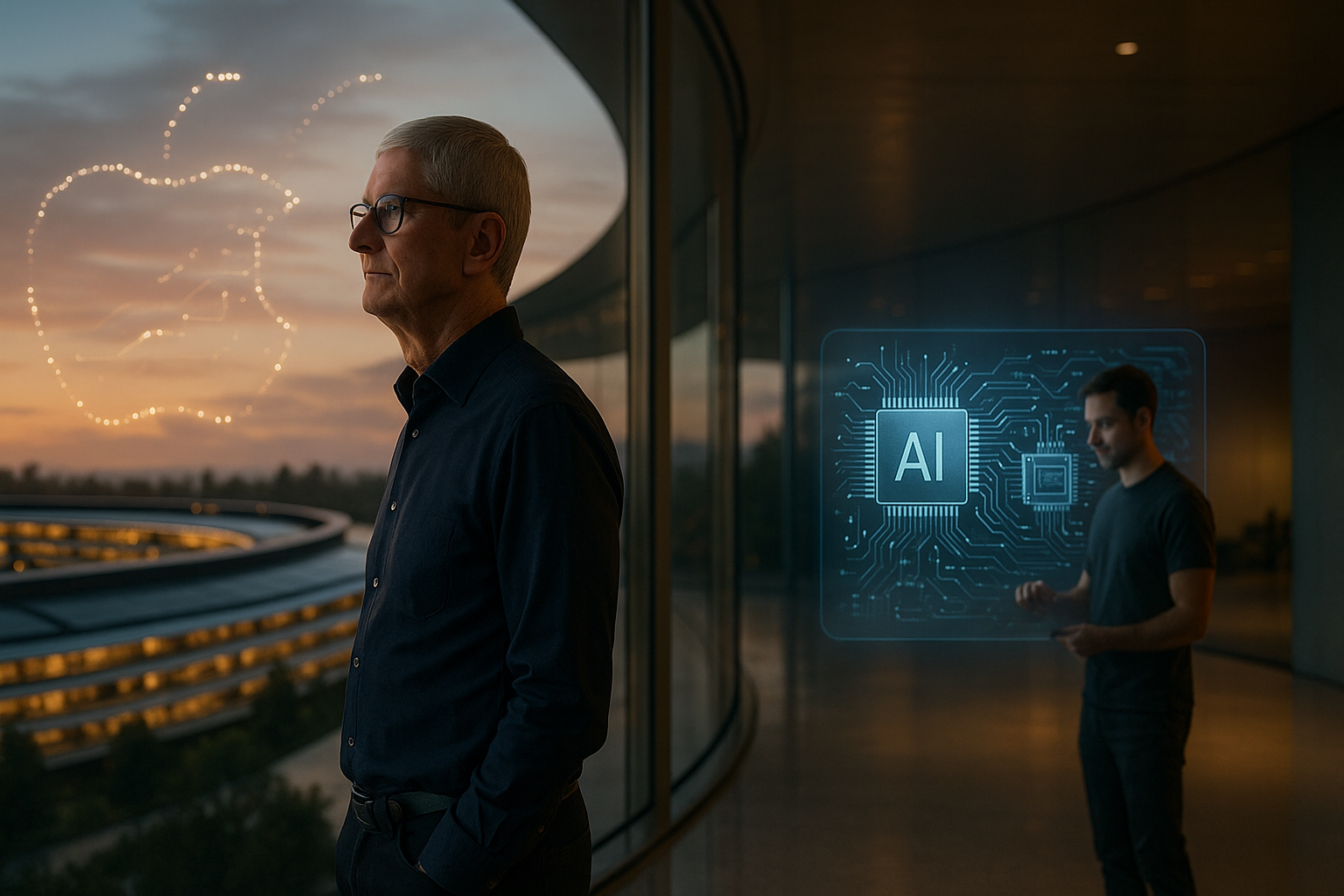
The company that built a trillion-dollar empire by watching others fail first is now chasing the category it watched collapse. Apple is building an AI wearable pin. The device packs two cameras and three microphones into something roughly AirTag-sized but thicker. A speaker, too. Apple is aiming for 2027, and the production numbers being discussed internally run to 20 million units.
Twenty million units. For a form factor that sold fewer than 10,000 when Humane tried it two years ago.
That's either supreme confidence or willful amnesia. Probably both.
Key Takeaways
• Apple is developing an AI wearable pin for 2027, planning 20 million units despite Humane selling fewer than 10,000
• The pin needs the rebuilt Siri chatbot (codenamed Campos), powered by Google's Gemini at $1B annually
• Apple is racing OpenAI's Jony Ive device, expected late 2026 or 2027
• Privacy contradictions loom: a camera-equipped wearable from the "privacy company"
The wreckage Apple walked through
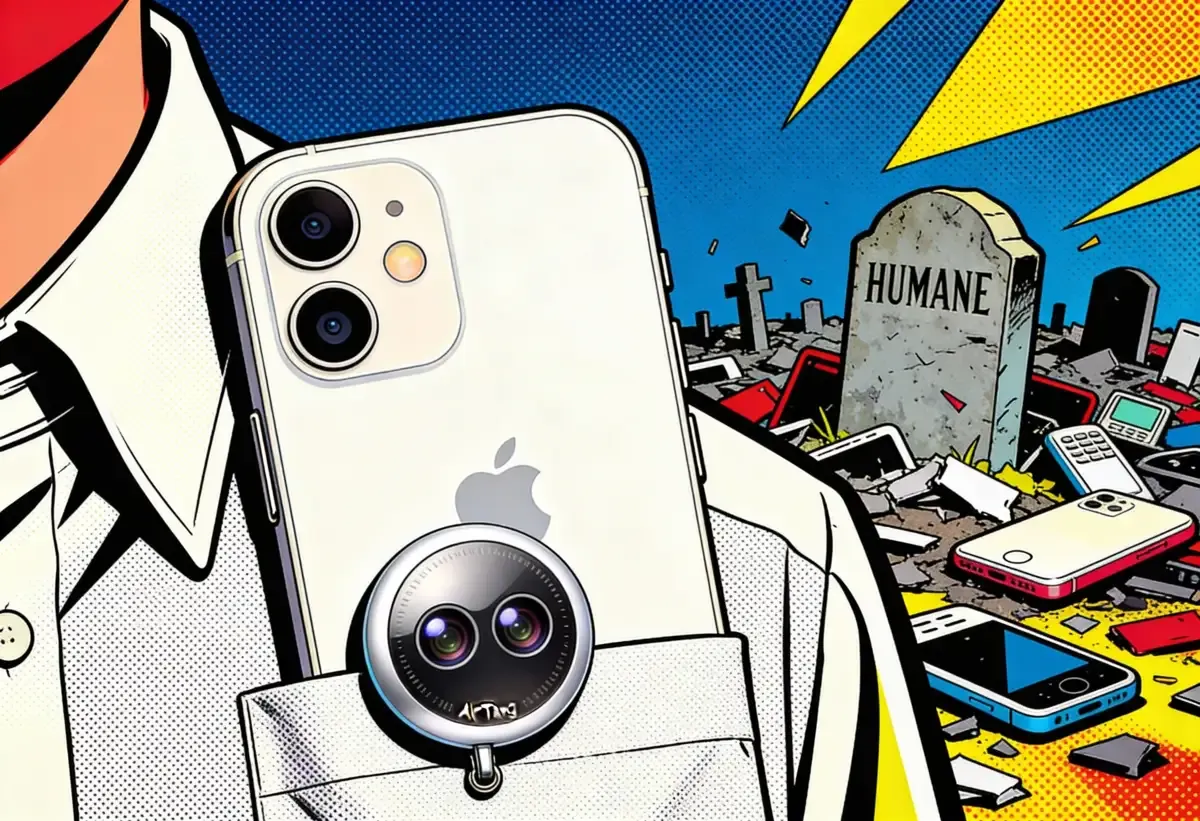
Humane's AI Pin crashed in February 2025. Two former Apple executives started the company. They walked out of Cupertino convinced they could build what their old employer wouldn't touch. Sales landed below 10,000 units at $700 each. Customers who paid an additional $24 monthly for the subscription service ended up holding a useless artifact. HP bought the remains for $116 million, a fire-sale price for what had been valued at over a billion dollars during the hype cycle.
The problems ran deeper than execution. The pin projected an interface onto users' palms using a small projector. Answers came slowly. Battery life disappointed. The core assumption, that people wanted a screenless AI companion clipped to their clothes, turned out to be wishful thinking dressed up as vision.
Rabbit R1 followed a similar arc. Rabbit pitched itself as the cheaper option. Spend less, get AI in your pocket without the flagship price tag. The software barely worked at launch. Somehow, after updates, it's still around. But "still around" isn't success. Neither device came close to replacing what people already carry in their pockets.
Apple watched all of this happen, studied the post-mortems, read the reviews. Then walked through the crash site, examined the burned fuselage, and decided the pilot was the problem, not the plane.
What you'll actually clip to your shirt
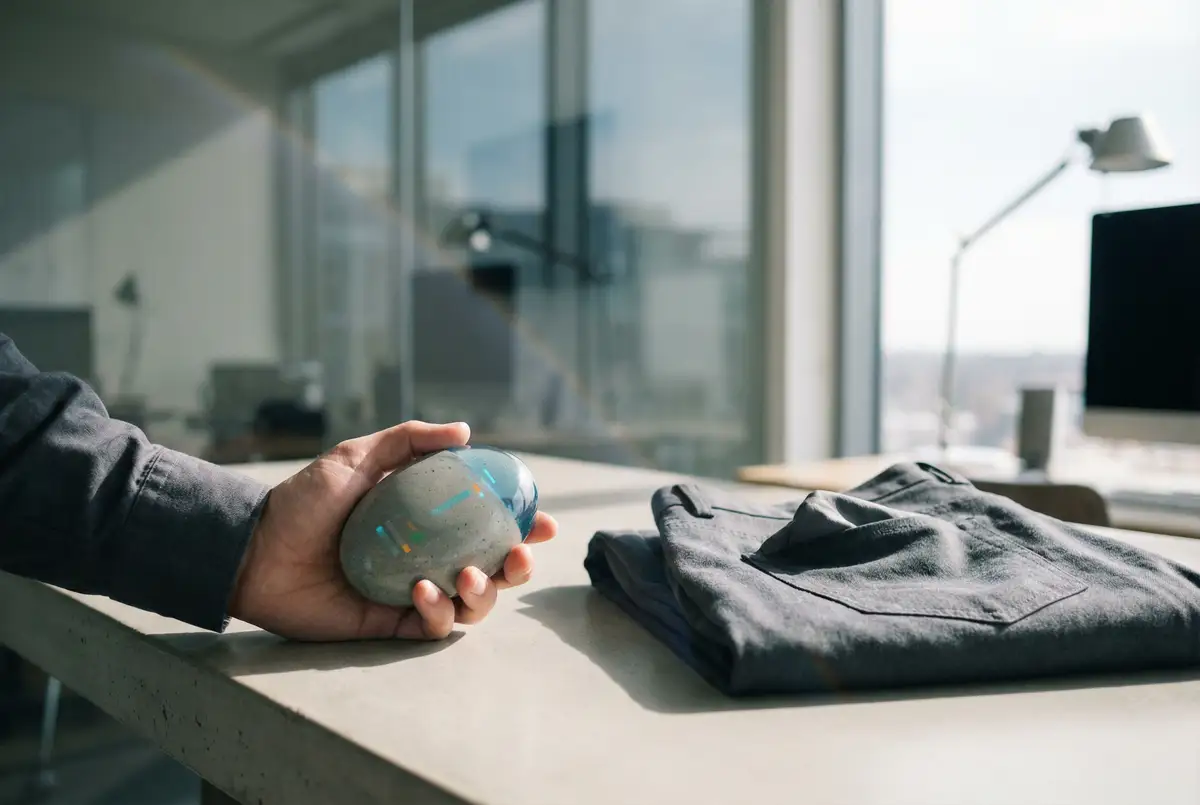
Engineers want the final product sized like an AirTag, only slightly thicker. Into that form factor, according to The Information, Apple is packing dual cameras (standard and wide-angle), three microphones, a speaker, a physical button along one edge, and a magnetic charging interface borrowed from Apple Watch. The shell is aluminum and glass, thin and flat and circular. Current prototypes apparently lack a built-in attachment method, which raises obvious questions. You're supposed to wear this thing all day. How? A safety pin through the aluminum? A lanyard? The detail might change during development. Or Apple might expect people to figure it out themselves.
The Information reports that Apple has been moving faster than usual on this project, trying to beat OpenAI's first hardware device to market. Altman and Jony Ive already have a prototype. Ive left Apple in 2019; now he's building hardware for the company that's been poaching Apple engineers for months. You can see why Cupertino might feel the pressure.
Stay ahead of the curve
Strategic AI news from San Francisco. No hype, no "AI will change everything" throat clearing. Just what moved, who won, and why it matters. Daily at 6am PST.
No spam. Unsubscribe anytime.
Whether the pin works alongside other devices or stands alone remains uncertain. The physical button, built-in cameras, and speaker suggest standalone capability. But Apple could bundle it with the smartglasses the company has reportedly been developing, expected as early as late 2026. Picture a pin handling audio and visual capture while glasses you're already wearing handle the display. That pairing would make more sense than a standalone disc that does everything and nothing well.
The Siri problem gets bigger hardware
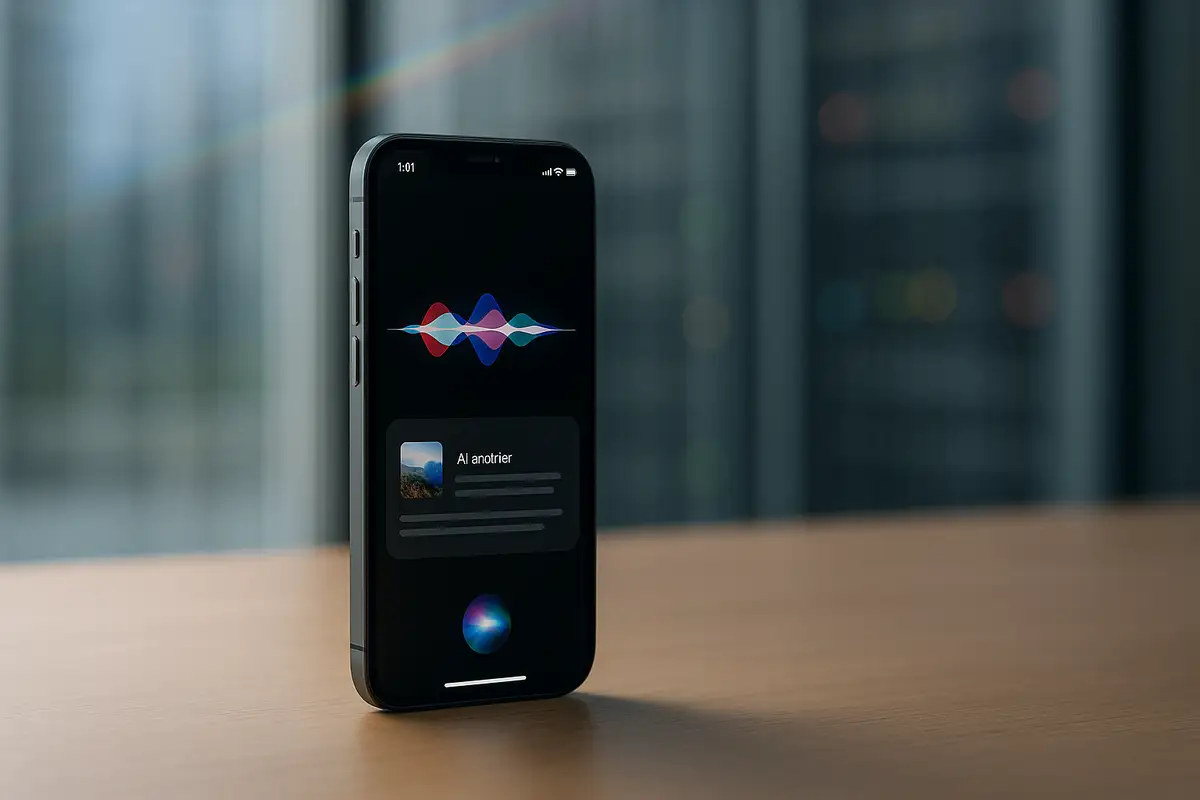
The same week as the pin leak, Bloomberg reported that Apple plans to turn Siri into a full chatbot by September 2026. Apple calls it Campos internally. Siri's current interface goes away. In its place, a ChatGPT-style conversation. Hold the side button, say the wake word, same triggers as before. But the response changes completely, allowing web searches, image generation, content creation, and file analysis.
This matters because a wearable AI device is only as useful as the AI running it. Humane's pin failed partly because the underlying intelligence couldn't deliver on the promise. Slow responses and thin capabilities made the hardware feel pointless. Apple can't ship a pin in 2027 with the Siri that exists today. The company knows this, and seems anxious about the timeline.
The chatbot version of Siri will run on what Apple internally calls "Apple Foundation Models version 11," built with Google's Gemini team. That's the same Gemini partnership Apple announced earlier this month after years of struggling to make its own AI stack competitive. Craig Federighi runs the show now. Giannandrea got pushed out in December 2025, and Federighi has been consolidating ever since. The price tag for Google's help: roughly a billion dollars a year. Apple spent years saying it could build everything itself. That check says otherwise.
The privacy contradiction nobody wants to address
You clip a device with two cameras and three microphones to your clothing. It captures what you see and hear. Apple markets itself as the privacy company. How does that work?
Nobody at Apple wants to touch this one. The App Store guidelines ban apps that generate non-consensual deepfakes. Grok does exactly that, 28 advocacy groups said so publicly, and the app is still there. Apple enforces privacy rules when it suits them. When removal creates headaches, the rules get flexible.
A wearable camera presents something different. This isn't about third-party apps. This is Apple's own hardware, governed presumably by Apple's stated values. How do you pitch an incognito recording device as privacy-respecting?
One answer might involve aggressive on-device processing. Keep the raw footage local. Send only anonymized queries to the cloud. Build the system so Apple never sees what the cameras capture. That would align with the Private Cloud Compute philosophy, even if the chatbot runs partly on Google servers.
Apple built its brand on one idea. What happens on your device stays on your device. A wearable that captures your surroundings and depends on cloud processing for its core functions doesn't fit that story cleanly. Apple's marketing team will need to thread a needle that might not have an eye.
Twenty million units worth of confidence
Production targets tell you what companies actually believe. Apple reportedly plans to manufacture 20 million pins at launch. Humane sold fewer than 10,000. That's not incremental confidence. That's a completely different bet.
Daily at 6am PST
Don't miss tomorrow's analysis
No breathless headlines. No "everything is changing" filler. Just who moved, what broke, and why it matters.
Free. No spam. Unsubscribe anytime.
The number makes sense only if Apple believes the category failed for execution reasons, not conceptual ones. Humane built the right idea with the wrong resources. Their AI wasn't smart enough. Their battery tech wasn't efficient enough. Their manufacturing wasn't scaled enough. Apple has all of that. And something Humane never had. A hardware lineup already living in your pockets and on your wrists.
Here's what that looks like. You ask the pin a question while walking. It pulls context from your calendar on your iPhone, references an email thread synced through iCloud, and delivers the answer through your AirPods. The pin becomes a capture device for a system that already surrounds you. Humane tried to build a standalone island. Apple can build a bridge to the mainland.
OpenAI is building hardware without that infrastructure. Whatever Altman and Ive create will need to work with iPhones and Android devices, crossing platform boundaries rather than deepening them. Apple can build something that only makes sense if you already own Apple products. That's always been the strategy. And it's why the company seems emboldened despite the category's dismal track record.
The risk sits elsewhere. Maybe the category failed because people don't want a camera pinned to their chest. Or maybe always-on ambient capture just creeps people out. No polish fixes that. And by 2027, the public might be done with AI promises that don't deliver. Apple could launch into a market already looking elsewhere.
The race nobody admits they're running
Apple says it doesn't compete on speed. Products ship when they're ready, not when competitors force the issue. At least that's what Apple tells itself. The reality, at least this week, looks different.
The company moved John Giannandrea out of AI leadership after years of delays and missed promises. It signed a billion-dollar deal with Google to power Siri because its own models couldn't keep up. It's rushing a pin to market to beat OpenAI's device, according to sources who spoke with The Information. For a company that prides itself on patience, the behavior reads as nervous.
Apple is playing catch-up and calling it patience. The strategy makes sense if the company can ship something that works. The hardware lineup advantage is real, the manufacturing expertise is real, and brand trust remains substantial despite the privacy contradictions.
But the AI pin category has exactly one lesson so far: nobody has figured it out. Humane failed spectacularly. Rabbit limps along. Meta's glasses succeed by being glasses first and AI second. The dedicated AI wearable, the thing that exists only to give you ambient AI access, hasn't found its audience.
Apple walked through the crash site and concluded the pilot was the problem. Twenty million units say they're sure.
The last company that sure was Humane.
Frequently Asked Questions
Q: What is Apple's AI pin and when will it launch?
A: Apple is developing an AirTag-sized wearable with dual cameras, three microphones, and a speaker. The target release is 2027, with production plans for 20 million units at launch. Development is still early and could be canceled.
Q: How does Apple's pin differ from Humane's failed AI Pin?
A: Unlike Humane's standalone device, Apple's pin would integrate with existing Apple products like iPhone, AirPods, and Apple Watch. Humane sold fewer than 10,000 units before HP acquired the company for $116 million in February 2025.
Q: What AI will power Apple's wearable pin?
A: The pin would run on a rebuilt Siri chatbot codenamed Campos, powered by "Apple Foundation Models version 11" built with Google's Gemini team. Apple is paying Google roughly $1 billion annually for access to the models.
Q: Why is Apple rushing this product to market?
A: Apple is trying to beat OpenAI's hardware device, being developed with former Apple design chief Jony Ive, expected in late 2026 or 2027. OpenAI has been poaching Apple engineers, adding competitive pressure.
Q: How does Apple address privacy concerns with a camera wearable?
A: It's unclear. Apple markets itself as the privacy company, but a device capturing surroundings with dual cameras and three microphones creates obvious contradictions. On-device processing could help, but cloud AI features may require data transmission.
Related Stories