



Good Morning from San Francisco,
The AI industry loves its narratives. Apple built an impenetrable talent fortress. AI is transforming every enterprise. Reinforcement learning is the only path forward. This week, reality filed objections.
Meta poached nine Apple executives, including the heads of AI, design, and robotics. $25 million packages made Apple's salary bands look quaint. Tim Cook's succession plan now resembles Jenga more than chess.
OpenRouter analyzed 100 trillion tokens and found something awkward: half of open-source AI usage goes to roleplay and adult content. Enterprise transformation? Barely a blip.
Meanwhile, Ashish Vaswani, the transformer's co-creator, bets pre-training beats reinforcement learning. The industry zigged. He zagged.
Three stories. Three assumptions. All cracking.
Stay curious,
Marcus Schuler
Apple's Executive Exodus Signals Deeper Rot in Cook's Empire

Tim Cook spent fourteen years building Apple into a $3.5 trillion monument to operational stability. That monument cracked in 2025.
Meta hired nine former Apple executives, including the heads of AI, design, and robotics, offering compensation packages worth $25 million annually. Apple's rigid salary bands couldn't compete.
The departures expose structural failures. AI researchers watched leadership consider licensing OpenAI models rather than trusting internal teams. The secrecy that works for hardware launches suffocates academics who want to publish.
Chip architect Johny Srouji told Cook he's considering leaving for another company, reportedly because he doesn't want to work under a different CEO. The succession question is destabilizing retention before Cook even exits.
Apple lost its COO, CFO, AI chief, design chief, and general counsel within twelve months. John Ternus, the likely successor, inherits depleted AI capabilities and a design team in flux.
Cook built something remarkable, but the leadership apparatus is disassembling simultaneously rather than sequentially. That's institutional stress, not transition planning.
Why This Matters:
- Meta's systematic poaching proves Apple's talent moat was shallower than investors assumed
- Ternus inherits a company mid-reorganization with its chip architect eyeing the exit
 Robert Brown
AI Image of the Day

Prompt:
A cinematic interior view of a cozy glass cabin bedroom nestled in the forest, during a calm overcast afternoon. The large slanted glass windows reveal tall pine trees outside under a soft gray-blue sky, with diffused natural light filling the room. Inside, a warm fire burns gently in a black cast-iron fireplace beside lush green plants and shelves filled with books and wooden details. A comfortable bed with thick blankets and pillows sits in the foreground, its fabric softly rumpled. Subtle string lights add a golden glow to the earthy wooden interior. No rain or water drops, just a peaceful moody atmosphere perfect for adding rain effects in post-production.
OpenRouter's 100 Trillion Token Study Reveals AI's Uncomfortable Truth

OpenRouter and a16z released an AI usage study this week that quietly undermines the industry's growth narrative. The headline figure, 100 trillion tokens analyzed, obscures a critical selection problem: this dataset captures indie developers and roleplay enthusiasts, not enterprise.
Banks route through Azure. Hospitals deploy on-premises. Fortune 500 companies use direct API contracts.
What the data does show is striking. Among open-source models, 52% of tokens go to roleplay and entertainment, with 15.4% classified as adult content.
Programming absorbs most of the rest, growing from 11% to over 50% of queries by November 2025.
Finance, legal, and healthcare barely register. Singapore ranks second globally in usage, almost certainly reflecting Chinese VPN traffic rather than genuine adoption. Most damning: one account caused a 20-percentage-point spike in tool usage, suggesting extreme concentration behind the aggregate numbers.
Growth appears linear, not exponential. Outside coding and entertainment, adoption looks flat. The "AI transforms everything" thesis needs stress-testing against data showing consumers want companionship and developers want coding help.
Why This Matters:
- Investors pricing universal enterprise adoption may face a correction as vertical-specific usage data emerges over 2026
- Model developers chasing enterprise markets should note that programming and entertainment drive actual demand today
 Marcus Schuler
Transformer Co-Creator Bets Pre-Training Beats the RL Consensus

Essential AI released Rnj-1 this week, an 8.3 billion parameter model trained on 8.4 trillion tokens under a thesis the industry has largely abandoned: pre-training determines the intelligence ceiling.
While DeepSeek R1 and OpenAI's o1 pushed the field toward reinforcement learning, Essential pivoted the opposite direction in February 2025. The person calling research shots makes this gamble credible. Ashish Vaswani, first author on "Attention Is All You Need," runs Essential's roadmap. His 2017 paper created the transformer architecture powering every frontier model today.
The benchmark numbers back the philosophy. Rnj-1 hits 20.8% on SWE-bench Verified in bash-only mode, which Essential claims is an order of magnitude above similarly-sized models for autonomous coding. Infrastructure disclosures reveal the startup reality underneath: 50% MFU on AMD MI300X GPUs, hybrid TPU/AMD training, nodes crashing from ECC errors in the night.
Essential released both models under Apache 2.0, inviting the community to run post-training experiments they cannot afford. The pre-training thesis gets its test case.
Why This Matters:
- Open-source developers gain an Apache 2.0 coding model matching larger proprietary systems without API lock-in
- Essential's end-of-2025 deadline creates a natural experiment testing whether pre-training or RL drives capability gains
 Maria Garcia
🧰 AI Toolbox
How to Generate Professional Images and Vectors with AI
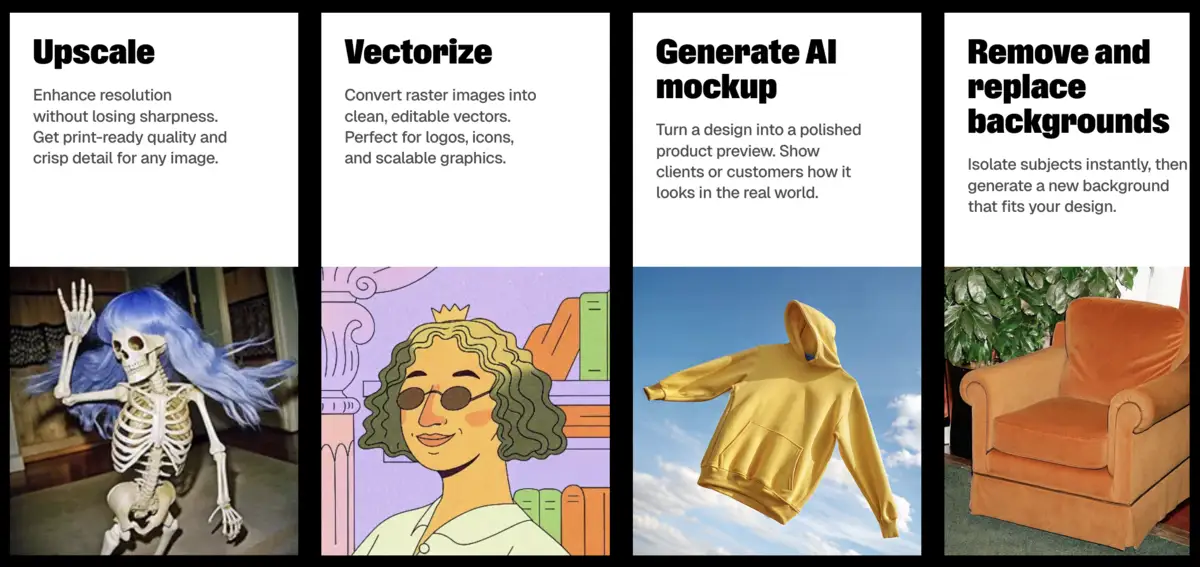
Recraft is a state-of-the-art AI image generation platform that creates both raster images and scalable vector graphics from text prompts. Choose from 20+ professional styles, create custom brand styles, and edit your creations with built-in tools like background removal, inpainting, and upscaling.
Tutorial:
- Go to the Recraft website
- Enter a detailed text prompt describing your desired image
- Select a style from the library or create your own custom style
- Generate multiple variations and refine with the similarity slider
- Edit results using inpainting, outpainting, or background removal tools
- Export as PNG, JPG, or SVG for scalable vector graphics
- Create brand-consistent visuals across all your design projects
 Marcus Schuler
Better Prompting…
Today: Summarization and Critical Analysis Prompt
Role: You are a senior analyst who excels at distilling complex material into clear, actionable summaries for busy executives.
Task: Analyze the excerpt I provide and produce a structured summary that captures both substance and subtext.
Instructions:
- Overview (3-5 sentences): Summarize the main argument or thesis in plain language. Explain what the author is trying to accomplish and why it matters. Avoid jargon; a smart non-specialist should understand this immediately.
- Key Takeaways: Identify the 4-7 most important points. For each, provide a one-sentence summary followed by a brief explanation if needed. Group related points under subheadings when logical.
- Evidence and Standout Details: Call out specific data points, statistics, trends, or quotes that are particularly compelling, surprising, or useful for making an argument. Include source attribution where present.
- Critical Assessment: Evaluate the excerpt for: potential bias or agenda, outdated claims or missing recent context, logical gaps or unsupported assertions, perspectives or stakeholders not represented, and strength of evidence provided.
- Meeting-Ready Questions: Conclude with 3 sharp, specific questions I could raise in a discussion to demonstrate critical engagement. These should probe weaknesses, challenge assumptions, or extend the analysis, not simply request clarification.
Formatting: Use clear headers. Keep language direct and sentences short. Prioritize scannability.
AI & Tech News
Google's Gemini 3 Pro Claims Vision AI Crown with Record-Breaking Benchmark Results
Google has announced that its latest AI model, Gemini 3 Pro, has achieved new benchmark records in vision AI capabilities, including complex visual reasoning tasks where it reportedly surpasses competing models Claude Opus 4.5 and GPT-5.1 in certain categories. According to Google's official blog post, the model delivers state-of-the-art performance across multiple domains including document understanding, spatial reasoning, screen comprehension, and video analysis.
IBM to Acquire Data Streaming Company Confluent in $11 Billion Cash Deal
IBM has agreed to acquire Confluent, a data streaming software company, for approximately $11 billion in cash, paying $31 per share in a deal that represents a significant premium over Confluent's roughly $8 billion market value as of its December 5 closing price. The acquisition of the data-infrastructure company marks a major move by IBM to strengthen its position in the data streaming and real-time data processing market.
Netflix's Hollywood Strategy Shift: Licensing as Lost Revenue
Tech analyst Ben Thompson examines how Netflix has fundamentally transformed movie distribution in Hollywood, with company executives now viewing content licensing deals as leaving potential revenue untapped rather than serving as a profitable revenue stream. The analysis also suggests that YouTube's market position could potentially bolster Netflix's antitrust case against Warner Bros. Discovery, as the streaming landscape continues to evolve amid ongoing industry consolidation concerns.
Edmonton Police Launch AI Facial Recognition Body Camera Pilot Program
Edmonton police in Canada have announced a partnership with Axon to pilot body cameras equipped with artificial intelligence facial recognition technology capable of identifying approximately 7,000 individuals on a "high risk" list. The department has stated that all AI-generated results will be verified by human officers before any action is taken, addressing concerns about the reliability and civil liberties implications of automated facial recognition in law enforcement.
EU Pushes Meta to Modify "Pay or Consent" Advertising Model
Meta has reached an agreement with the European Commission to modify its controversial "pay or consent" advertising model in the EU, which will include the introduction of ad-lite versions of both Instagram and Facebook for users who do not wish to pay for fully ad-free experiences. However, EU regulators have emphasized that "the case is not closed," signaling that further scrutiny of Meta's data collection and advertising practices may continue as the bloc enforces its digital regulations.
Chinese AI Companies Exploit Kenyan Workers Through Hidden Middleman Networks
A Rest of World investigation based on interviews with 10 Kenyan AI annotators reveals that Chinese artificial intelligence companies are hiring data labelers through secretive networks of middlemen and WhatsApp groups, deliberately structuring employment to avoid accountability. Kenya's unemployment crisis has created conditions that allow these companies to exploit workers through opaque systems offering minimal wages, with workers having little recourse or direct connection to the companies benefiting from their labor.
China Tech Giants Clash Over AI Phone Access
ByteDance's new agentic AI phone, the Nubia M153, is facing resistance from competing Chinese tech giants, with users reporting that its Doubao AI assistant is being blocked or restricted by Tencent's WeChat, Alibaba's Taobao, and other major applications. The conflict highlights growing tensions among China's largest technology companies over security concerns and competition for consumer attention in the emerging AI device market.
AI Actress Tilly Norwood Required 2,000 Iterations to Create
A Wall Street Journal report reveals the extensive development process behind Tilly Norwood, an artificial intelligence-generated actress created by company Particle6, which went through 2,000 iterations before reaching her final form. The digital performer has already attracted significant industry interest, with Particle6 disclosing that approximately 60 non-disclosure agreements are currently in place for projects involving the AI actress, signaling growing entertainment industry adoption of synthetic performers.
OpenAI Survey: AI Tools Save Workers Nearly an Hour Daily
A new survey conducted by OpenAI of 9,000 workers across 100 companies found that the company's artificial intelligence products save employees approximately 40 to 60 minutes per day on average when performing professional tasks. The findings come as OpenAI announced it has reached 1 million business clients, signaling significant enterprise adoption of AI tools in the workplace.
Cash-to-Crypto Swaps Enable Money Laundering and Sanctions Evasion, Investigation Finds
A New York Times investigation by Aaron Krolik reveals how "cash to crypto" swap services are allowing users worldwide to convert national currencies into stablecoins and then load them onto debit cards, effectively bypassing traditional financial oversight and international sanctions. The scheme represents a modern evolution of money laundering tactics, with smugglers, money launderers, and sanctioned individuals increasingly turning to cryptocurrency instead of traditional stores of illicit wealth like diamonds, gold, and artwork.
Big Tech's AI Ambitions Hit Power Supply Wall
Big Tech companies pursuing aggressive AI data center expansion face a critical electricity shortage, with an estimated 44 gigawatts of additional power capacity needed by 2028 to meet demand. The Financial Times reports that this power crunch poses a significant threat to the AI industry's growth trajectory and could potentially deflate what some observers have characterized as an AI "bubble," as infrastructure limitations collide with ambitious development plans.
AI Startup Pathway Develops Alternative to Transformer Architecture
A startup called Pathway is developing a new AI architecture named Dragon Hatchling that could potentially move beyond the transformer model that currently powers most large language models. The company aims to create a new class of adaptive AI systems that can do more than what current transformer-based technology allows, positioning itself for what it calls the "post-transformer era" of artificial intelligence development.
Singapore Fintech Giant Plans US Headquarters in San Francisco as Part of Strategic Pivot
Singapore-based payments and banking startup Airwallex has raised $330 million in fresh funding at an $8 billion valuation, marking a significant increase from its $6.2 billion valuation when it raised $300 million just seven months ago in May. The company is establishing a new headquarters in San Francisco as part of its US expansion strategy, while also reducing Chinese tech giant Tencent's stake in the business as it pivots toward the American market.
🚀 AI Profiles: The Companies Defining Tomorrow
Airwallex
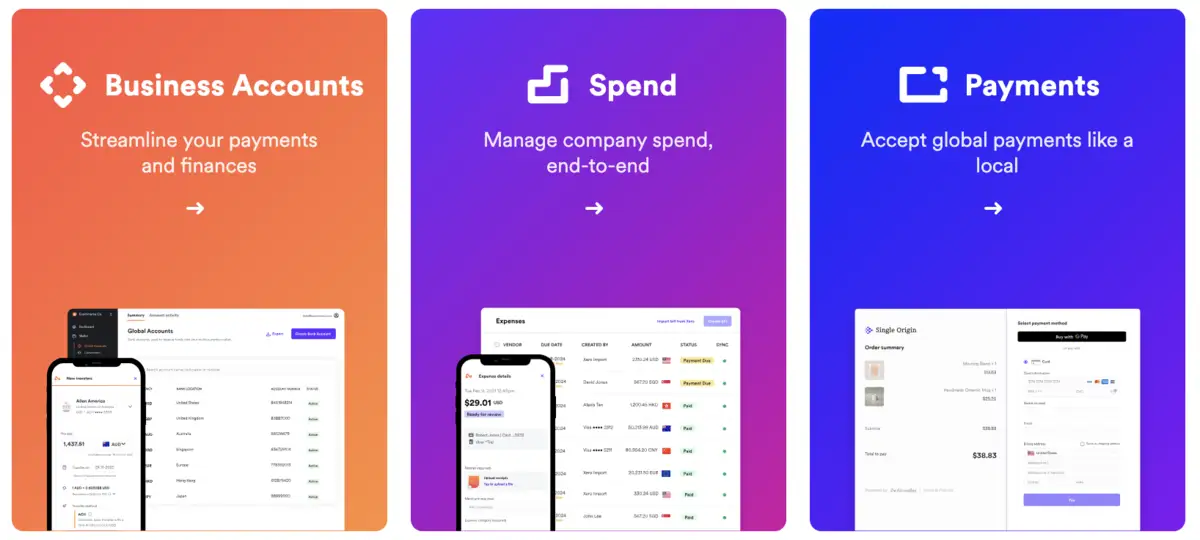
Airwallex turns cross-border payments into software. Born from a Melbourne café's FX headaches, it now processes billions through 150+ countries at an $8B valuation. ☕→🚀
Founders
Jack Zhang (CEO) and Max Li invested in a café together. The international supplier payments crushed their margins. In 2015, they teamed with Lucy Liu, Xijing Dai, and Ki-lok Wong. Pooled $1M of their own cash. Melbourne origins, now dual-headquartered in Singapore and San Francisco.
Product
Proprietary payments network connecting 60+ banking partners across 60 currencies. Multi-currency business accounts let companies collect locally without foreign subsidiaries. Card issuing, spend management, treasury APIs. The real play: embedded finance infrastructure for platforms. Shein and Qantas already run on it. Now adding AI agents for autonomous treasury operations.
Competition
Crowded ring. Wise owns transparent FX branding. Stripe and Adyen dominate merchant acquiring. Revolut chases SMBs. Traditional banks move slowly but carry trust. Airwallex pitches itself as the cross-border specialist. Better FX control than Stripe. More infrastructure depth than neobanks. The Tencent connection draws political heat in Washington, though.
Financing
$1.25B raised across 13 rounds. Latest Series G: $330M at $8B valuation. New backers include T Rowe Price and Robinhood Ventures. Tencent diluted below 10%, lost its board seat. Strategic repositioning for US market credibility. IPO targeted within 3-4 years. Annualized revenue around $720M.
Future ⭐⭐⭐⭐
Strong fundamentals, real revenue growth, capital for years of AI investment. The geopolitical scrutiny won't vanish. But if the AI-powered treasury vision delivers, Airwallex becomes the quiet operating system beneath global trade. The café problem scaled nicely.


