IMPLICATOR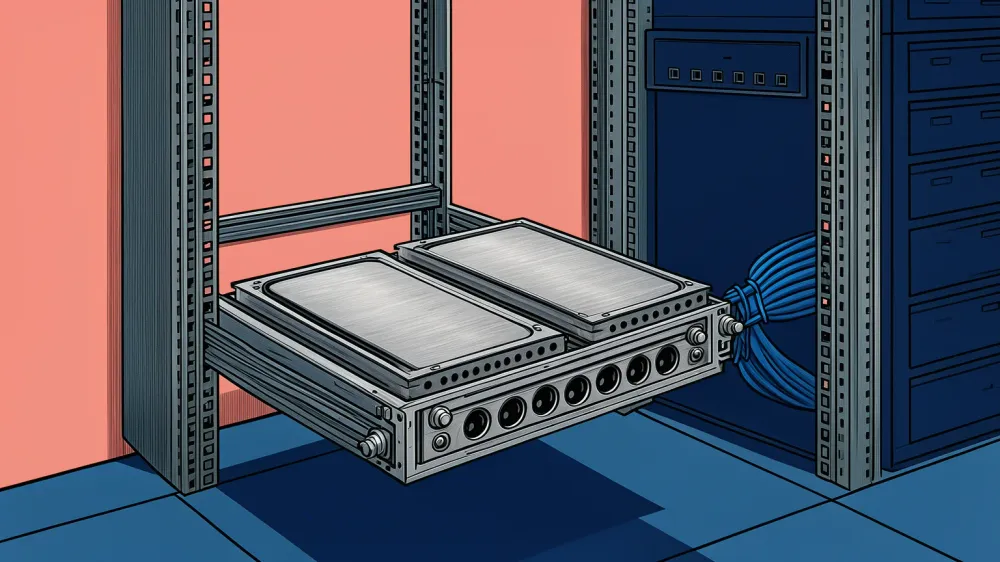
Apple is weighing a return to selling servers with a rack-mounted product built around its future M8 Ultra chip, and it has discussed using Nvidia’s NVLink Fusion interconnect. The prospective line would include two models carrying either two or four M8 Ultra chips, with no release planned before 2029. Intended buyers would include “AI developers, other businesses and governments,” and the product would put Nvidia networking inside Apple hardware.
What Changed
- Apple is weighing a return to selling servers with a rack-mounted line built on its future M8 Ultra chip, in two models carrying two or four chips, with nothing planned before 2029.
- Apple has discussed using Nvidia's NVLink Fusion interconnect, which Nvidia now licenses to MediaTek, d-Matrix, AWS, Qualcomm, Arm, Fujitsu and Marvell on undisclosed terms.
- Intended buyers would include AI developers, other businesses and governments. Apple has not publicly confirmed the plan, which comes from a single report.
- In June 2026, Apple extended Private Cloud Compute to Google Cloud on Nvidia Blackwell GPUs, and its most capable server model was optimized for Nvidia GPUs.
AI-generated summary, reviewed by an editor. More on our AI guidelines.
The proposed servers
The Information reported the plans on Wednesday. The M8 Ultra remains at a very early stage of development. New Apple CEO John Ternus has backed the server project since it began about a year ago, and Apple would have to secure expensive components in large quantities well before any launch.
The project would revive Apple’s external server business after the company stopped selling its Xserve line. Its prospective customers overlap with Xserve’s corporate and government market while adding AI developers.
The details come from a single report. Apple has not publicly confirmed the project, and a product tied to an early-stage chip years from release could change or be canceled.
Apple already makes servers for its own data centers. It began shipping Private Cloud Compute hardware from a 250,000-square-foot Houston factory in October 2025, ahead of its 2026 target. Those systems support Apple Intelligence, but Apple refuses requests for outside access to the hardware.
FREE WEEKDAY MORNING BRIEFING
Follow who builds the machines AI runs on.
The Implicator Morning Briefing filters the AI news cycle to the stories worth your attention and explains their consequences. From San Francisco, every weekday at 4:45 a.m. Pacific, 7:45 a.m. Eastern.
About five minutes. No hype. No spam.
Nvidia’s interconnect
NVLink Fusion is Nvidia’s high-bandwidth, low-latency connection technology for linking processors and AI accelerators across a rack. Once limited to Nvidia hardware, it is now licensed so chips made by other companies can connect to Nvidia-based systems.
Partners can slot their own compute blades into existing Nvidia racks built on its MGX designs.
MediaTek adopted the technology on Aug. 31, 2026, alongside Nvidia’s $3.5 billion investment in MediaTek convertible bonds. D-Matrix followed on Sept. 10, 2026, and expects to offer systems with up to 144 Raptor accelerators connected by a single NVLink fabric by the end of 2027. AWS plans to use it with Trainium chips, while Qualcomm, Arm, Fujitsu and Marvell have also joined the program.
The licensing terms have not been disclosed. “There will be some licensing elements in place,” said Dion Harris, Nvidia’s senior director of high-performance computing and AI infrastructure. Nvidia can also sell CPUs, NVSwitch appliances and networking equipment when another company supplies the accelerator, retaining business inside racks that use non-Nvidia compute chips.
Know someone who'd find this useful? ✉️ Email it to a friend in one click, or they can subscribe free here.
A thaw in relations
Apple’s relationship with Nvidia has been frosty for years. A Steve Jobs-era dispute involved defective parts and allegations over trade secrets, and Apple’s support for Nvidia hardware has been poor for more than a decade.
Loop Capital analyst Ananda Baruah estimated in March 2025 that Apple was ordering about $1 billion of Nvidia GB300 NVL72 systems. That estimate equaled roughly 250 servers priced at $3.7 million to $4 million each. Apple never confirmed the purchase, and the claim was questioned at the time.
In June 2026, Apple extended Private Cloud Compute to Google Cloud using Nvidia Blackwell GPUs with Nvidia Confidential Computing. Its most capable server model, AFM 3 Cloud Pro, was optimized for Nvidia GPUs.
Nvidia on Apple
Harris declined to say whether Apple is an NVLink Fusion customer. “We would always rather sell something than nothing,” he said, adding that “Apple has always been a great customer and partner of ours.”
Frequently Asked Questions
What server is Apple reportedly considering?
A rack-mounted product line built around the future M8 Ultra chip, in two models carrying either two or four of the chips. The M8 Ultra remains at a very early stage of development, and no release is planned before 2029.
What is NVLink Fusion?
Nvidia's high-bandwidth, low-latency technology for linking processors and AI accelerators across a rack. Once limited to Nvidia hardware, it is now licensed so chips made by other companies can connect to Nvidia-based systems.
Who would buy the servers?
The intended buyers would include AI developers, other businesses and governments. Apple already builds servers for its own data centers in Houston but refuses requests for outside access to that Private Cloud Compute hardware.
Has Apple confirmed the plan?
No. The details come from a single report, and a product tied to an early-stage chip years from release could change or be canceled.
Is Apple an NVLink Fusion customer?
Nvidia's Dion Harris declined to say whether Apple is a customer. He said Apple has always been a great customer and partner of Nvidia's.
AI-generated summary, reviewed by an editor. More on our AI guidelines.



Marcus Schuler
Editor-in-Chief and founder of Implicator.ai. Former ARD correspondent and senior broadcast journalist with 10+ years covering tech. Writes daily briefings on policy and market developments. Based in San Francisco. E-mail: editor@implicator.ai