IMPLICATOR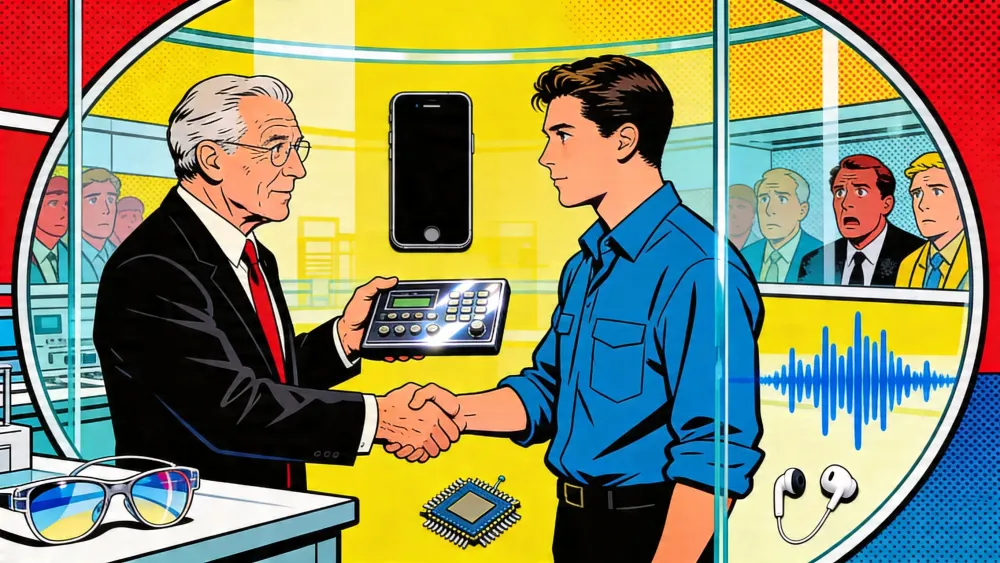
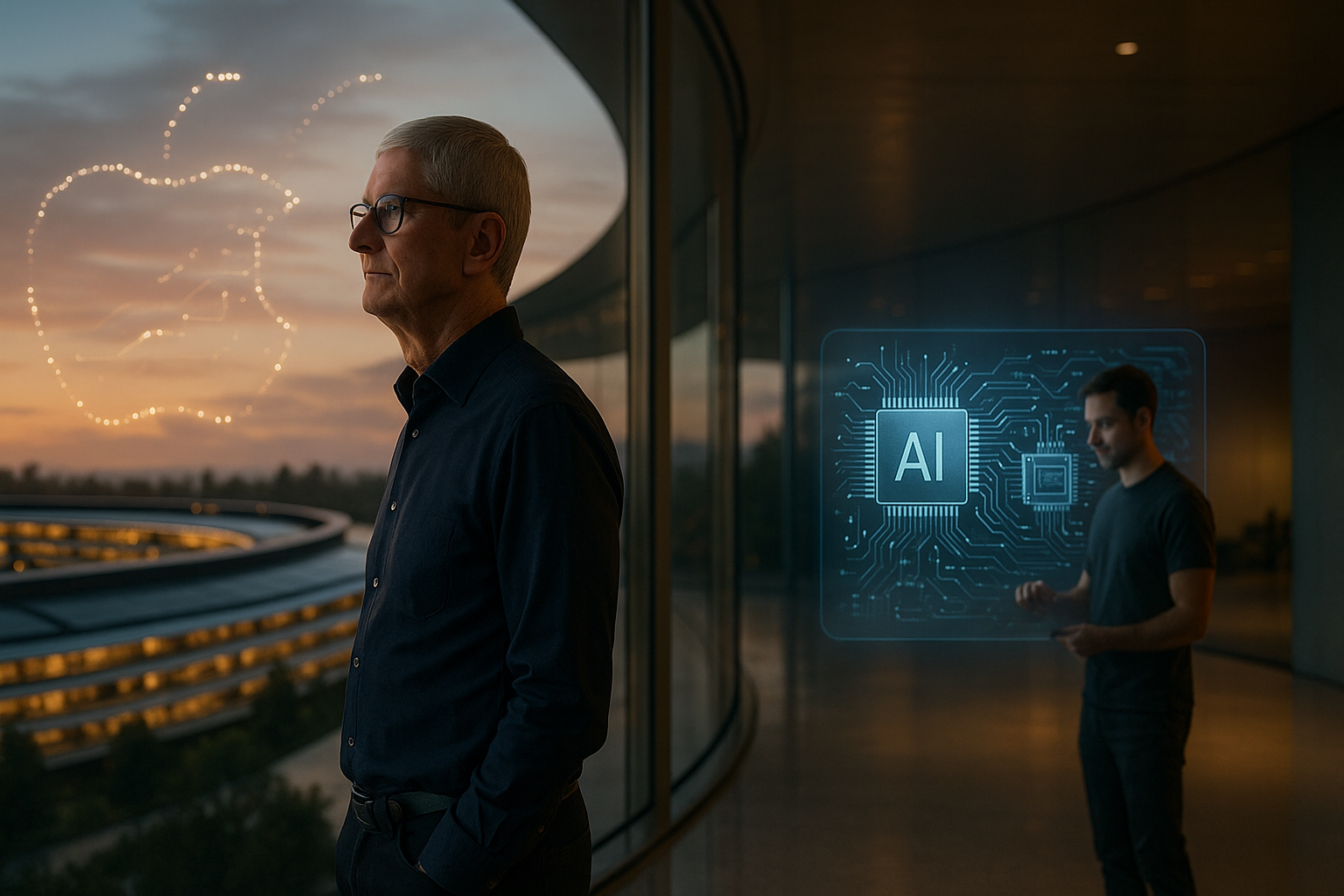
Apple named John Ternus, its senior vice president of hardware engineering, as its next chief executive on Monday, ending Tim Cook's nearly 15-year run as CEO and moving Cook into the role of executive chairman on Sept. 1.
That is the news. The more useful read is a division of labor. Cook is not disappearing. He is moving to the boardroom and the diplomatic circuit, where Apple still needs a trusted hand with tariffs, China, Washington, and supply chain politics. Ternus is moving into the daily operating chair, where Apple needs a product leader who can turn a defensive AI story into devices people actually want. CNBC reported that Ternus will join Apple's board when he becomes chief. Arthur Levinson becomes lead independent director. Johny Srouji gets a larger hardware role.
So Apple is not throwing out Cook's machine. It is putting an engineer at the controls.
That distinction matters. Cook leaves behind one of the great operating records in American business. Apple's own announcement says market value rose from about $350 billion when Cook became CEO in 2011 to $4 trillion, while annual revenue rose from $108 billion to more than $416 billion. The New York Times wrote that annual profit more than quadrupled to over $110 billion. The rough math is almost absurd: Apple added about $3.65 trillion in market value during Cook's tenure, or close to $250 billion for each CEO year.
That was not luck. It was not only the iPhone. Parts arrived when Apple needed them. Factories shifted. Margins held. Services grew. Political fights got handled before they reached the keynote. The worry inside Apple is blunt: the same machine that made products reliable may have taught the company to sand off surprise.
Key Takeaways
- John Ternus inherits daily control, but Cook remains Apple’s policy shield.
- Cook’s legacy is a scale machine: $4 trillion value and $416 billion revenue.
- Ternus shifts Apple’s AI answer toward devices, sensors, silicon, and form factors.
- The first tests are Siri, one necessary new device, and faster product tradeoffs.
AI-generated summary, reviewed by an editor. More on our AI guidelines.
Cook made Apple larger than the Jobs myth
Cook did not follow a normal act. He followed Steve Jobs while trying to keep Apple's magic from turning into museum culture. He did not become Jobs. That criticism followed him for years, sometimes fairly and often lazily. But he did something rarer. He made Apple less dependent on a single taste-maker without letting the company become ordinary.
Under Cook, Apple turned the iPhone from a hit product into a financial engine. It built the Watch and AirPods into daily objects. It pushed Apple silicon through the Mac, a change that gave the company more control over performance, battery life, and product timing. It took services past $100 billion a year, by Apple's count, which means Cook created a business inside Apple that would sit among the largest companies in America by itself.
That deserves respect. It also explains why the board looks relieved rather than reckless. Cook is not leaving after a collapse. He is stepping aside after proving that Apple can grow without Jobs onstage. He also made Apple more publicly political, often because the business required it. Privacy became a product claim and a Washington argument. Accessibility and lower-carbon design moved closer to the center of product planning. China became both a factory base and a market vulnerability. Tariffs turned the CEO calendar into a diplomatic schedule.
You can dislike the cautious product years and still admit the scale of the achievement. Cook kept the machine running long enough for Apple to become infrastructure in people's pockets, wrists, ears, homes, and payments. That is his record.
The weakness is the same shape as the strength. A machine built for global reliability starts to fear surprise.
Ternus changes where authority lives
Ternus does not arrive as a celebrity outsider or a software rebel. He joined Apple's product design team in 2001. Hardware engineering vice president came in 2013. The executive-team seat came in 2021. Apple's announcement credits him with work across iPad, AirPods, iPhone, Mac, and Apple Watch. Bloomberg's profile described him as a steady engineer with wider control over design, robotics, and new device work, and as the leader over devices that still drive most of Apple's revenue.
That profile cuts both ways. Ternus is not the person you choose if you want a clean break from Apple culture. He is the person you choose if you think Apple's next act still has to pass through hardware. That is a serious bet. It says the board does not believe Apple wins the AI era by copying OpenAI's chat box, Microsoft's office assistant, or Google's search answer machine. It believes Apple wins by turning intelligence into something embedded in the device, hidden in the sensor stack, bound to the camera, tuned by silicon, and made invisible enough that customers call it normal.
Maybe that works. Maybe it is too late.
The first real change under Ternus should be internal, not theatrical. Product arbitration moves closer to engineering. When hardware, software, design, operations, privacy, and services fight over a device, the CEO will now be someone who grew up in those rooms, arguing about tolerances, battery budgets, thermal limits, display choices, and repairability. That does not guarantee bolder products. It does change which objections carry weight.
Cook could decide, but Cook was never sold as the person who lived inside the prototype lab. Ternus is.
That gives the transition a practical map. Governance changes on Sept. 1. Product authority starts shifting now. AI changes only if Siri and the next devices make the delay feel worth it. The iPhone-services model, the bank underneath everything else, changes last.
That may make Apple faster on product tradeoffs. It may also make it more stubborn. Engineers can mistake elegant constraints for strategy. A technically beautiful product can still miss the market. Vision Pro proved that Apple can ship a remarkable object and still leave customers unsure why they need it.
AI becomes a device problem
The biggest test for Ternus is not whether he can present a cleaner iPhone keynote. It is whether he can make Apple's AI delay feel like patience rather than paralysis.
Apple has spent the last two years looking awkward in the race investors keep returning to. Siri slipped. Apple Intelligence arrived with less force than promised. Rivals trained users to expect assistants that summarize, plan, write, search, remember, and act across services. Apple answered with privacy, on-device processing, and careful integration, all good arguments that sounded defensive once the product lag became visible.
Get The Apple Transition Brief
Strategic AI news from San Francisco. No hype, no "AI will change everything" throat clearing. Just what moved, who won, and why it matters. Daily at 6am PST.
No spam. Unsubscribe anytime.
The Gemini partnership changes the story, but not cleanly. MacRumors reported on Cook's earnings-call comments that Google technology would help power the next personalized Siri while Apple kept work on device and in Private Cloud Compute. That is practical. It is also uncomfortable. Apple, the company that sells control, now has to explain why a core assistant needed help from one of its main platform rivals.
Ternus can turn that embarrassment into a product strategy only if he refuses to treat AI as a floating software feature. Apple does not need to win chatbot benchmarks in a vacuum. It needs a personal device loop that feels local: camera sees, chip processes, model reasons, app acts, user trusts the result. The Watch, AirPods, iPhone, Mac, and whatever replaces the failed first Vision Pro story all become test benches.
That is where a hardware CEO makes sense. If AI is just a cloud service, Ternus is an odd choice. If AI becomes a reason to redesign the phone, glasses, earbuds, home devices, cameras, and health sensors, he is the obvious one.
But obvious is not the same as safe. The board can feel relieved that Ternus knows the company. Investors can still be nervous that he has not yet proven he can force a software culture to move at AI speed. Apple's problem is no longer only product fit. It is tempo.
Cook stays as the shock absorber
Cook's executive chairman role is more than an honorific. It is a shock absorber.
Apple says Cook will help with certain areas, including engagement with policymakers. That detail tells you what the company fears. Ternus gets the product chair, but Cook keeps part of the external shield. Washington wants more manufacturing. Beijing wants bargaining power. Europe wants platform concessions. Courts and regulators want changes to the App Store. Memory prices and AI-chip demand threaten device costs. A CEO transition could make all of that feel unstable.
Cook reduces the wobble.
This is one reason the transition looks less dramatic than the headline. The same board approved it. The same culture promoted from within. The same services model pays the bills. The same supply chain has to balance China, India, Vietnam, the United States, and whatever tariff map exists by autumn. The same iPhone base remains the bank. If you expected Ternus to march in and tear up Cook's playbook, wrong company.
What could change is how much risk Apple tolerates in product form. A foldable phone, a new home device, camera-equipped AirPods, lighter headsets, health features, and more AI-forward wearables all fit a Ternus-led Apple better than a pure services push. Bloomberg has reported that Ternus has had a hand in several of those areas. Apple's Srouji move also matters. By elevating Srouji, Apple keeps silicon authority strong while freeing Ternus from running the whole hardware org directly.
That creates a cleaner chain: Cook handles part of the outside world, Srouji owns more of the hardware engine, and Ternus sits above product choices that need hardware, software, design, and AI to stop behaving like separate kingdoms.
The question is whether Apple can live with the mess that comes from real change. The company loves finished objects. AI products often arrive half-trained, corrected in public, and improved through use. That makes Apple uncomfortable. Under Ternus, discomfort becomes unavoidable.
The first tests are plain
The Ternus era starts before Sept. 1, because the market will judge the transition from now through the next product cycle. The first test is Siri. Not the architecture slide. The daily experience. Asked to plan a trip, find a photo, explain a message thread, change a setting, and finish a task across apps, does Siri finally feel useful?
The second test is whether Ternus can make one new device feel necessary. Apple does not need another beautiful proof of engineering. It needs a product whose purpose survives outside Apple Park. That could be a foldable iPhone, a home hub, AI AirPods, a lighter spatial device, or something less familiar. The form matters less than the answer to a basic question: does the product make the iPhone more central, or does it merely decorate the installed base?
The third test is how Ternus handles tradeoffs in public. Cook made restraint sound responsible. Ternus has to make restraint look like taste, not fear. If every delayed feature is framed as quality control, customers will hear caution. If one shipped product feels meaningfully ahead, the same patience will look earned.
The fourth test is personnel. Apple's top bench has already been moving: exits, new titles, and reporting-line shifts. Federighi has software. Srouji has chips and hardware. Cue has services. O'Brien has retail. Khan has operations. Design still has its own gravity. Ternus has to stop that from becoming committee polish. That is not a soft skill. At Apple, it is the product.
For Cook, the ending is unusually clean. He proved Apple could outgrow its founder without losing its discipline. For Ternus, the beginning is harder. He inherits a company that is rich, admired, anxious, defensive about AI, and still capable of moving the consumer market when it gets the object right.
Cook built the machine. Ternus now has to prove it can still surprise the people who already live inside it.
Frequently Asked Questions
When will John Ternus become Apple CEO?
Apple says John Ternus will become CEO on Sept. 1, 2026. Tim Cook will remain CEO through the summer and then become executive chairman.
What is Tim Cook’s legacy at Apple?
Cook turned Apple into a larger operating machine. Apple says market value rose from about $350 billion to $4 trillion and fiscal revenue climbed from $108 billion to more than $416 billion during his CEO run.
Why did Apple choose John Ternus?
Ternus is a long-serving Apple hardware leader. The choice suggests Apple still sees its next growth phase as a device problem, not just a software or cloud AI problem.
What could change under Ternus?
Product authority may move closer to engineering. Ternus could push harder on AI-ready hardware, foldable devices, home products, AirPods, cameras, and sensors, while Cook keeps a policy role.
What probably will not change quickly?
The iPhone-services model, privacy posture, supply chain caution, and internal promotion culture are unlikely to change fast. Ternus inherits Cook’s machine before he can redirect it.
AI-generated summary, reviewed by an editor. More on our AI guidelines.
Free AI briefing · Weekdays
The AI stories that matter, sourced and explained.
Join the Morning Briefing. It goes out every weekday at 4:45 a.m. Pacific, with later sends for the East Coast, Berlin and Tokyo.
Free when you sign up: The Paperclip Compendium, our tested guide to running AI agents.
Free. Unsubscribe in one click.

Marcus Schuler
Editor-in-Chief and founder of Implicator.ai. Former ARD correspondent and senior broadcast journalist with 10+ years covering tech. Writes daily briefings on policy and market developments. Based in San Francisco. E-mail: editor@implicator.ai