Implicator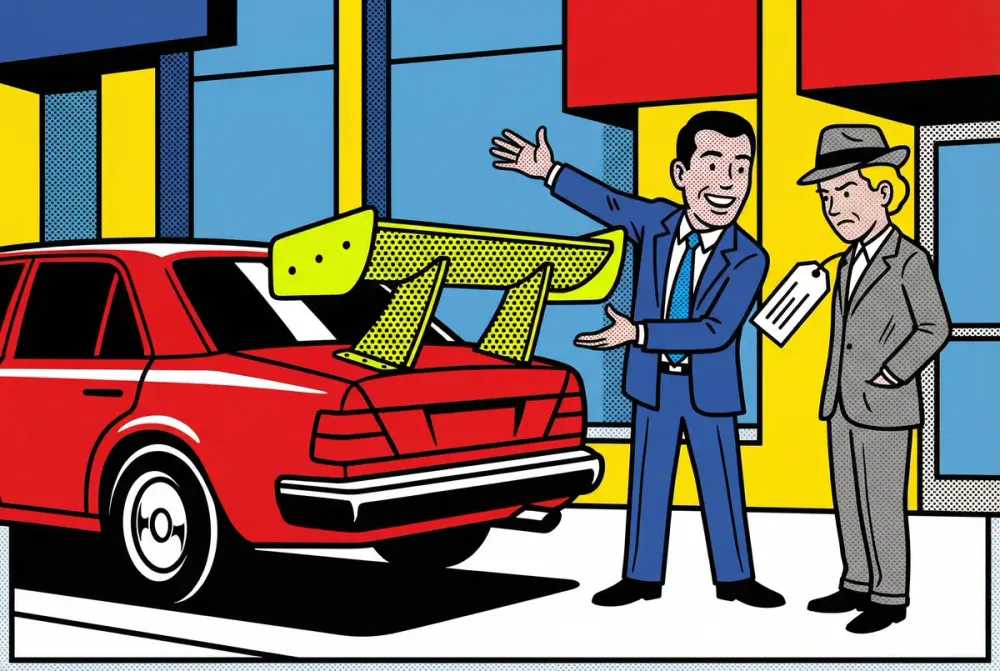
The robots at CES 2026 moved slowly. One dealt poker cards with the deliberation of a retiree learning a new hobby. Another folded towels like it was defusing a bomb. A humanoid from Boston Dynamics, unveiled in partnership with Hyundai, won't reach factory floors until 2028. Two years out. That's the timeline for a machine the company calls "production-ready."
Against this backdrop of cautious progress, Arm Holdings announced something that sounded more urgent. A complete reorganization around a concept called "Physical AI." The British chip architecture firm, whose designs power most of the world's smartphones, now operates three business units. Cloud and AI. Edge. And Physical AI, which combines robotics and automotive under Drew Henry.
Jensen Huang supplied the keynote quote Arm needed. "The ChatGPT moment for physical AI is here." Henry told Reuters the technology could "fundamentally enhance labor" and deliver "considerable impact on gross domestic product." The company's blog post declared an "inflection point."
The stock moved 0.3 percent.
If you're looking for substance behind the announcement, that number is your tell. Arm didn't acquire anything. Didn't reveal a product. Didn't disclose new customers. What it did was redraw org charts, borrow a phrase from the zeitgeist, and position itself at the center of a trend that may take a decade to generate meaningful revenue.
The Breakdown
• Arm created a "Physical AI" division combining its existing automotive business with nascent robotics ambitions under executive Drew Henry
• The stock moved 0.3% on the news, signaling Wall Street sees rebranding rather than a genuine strategic shift
• Arm won't disclose automotive revenue separately, hiding whether the segment justifies a dedicated division
• Boston Dynamics' production-ready humanoid won't reach factories until 2028, underscoring the long timeline for robotics royalties
The old business gets a new name
Strip away the branding and examine what Arm actually combined. On one side sits automotive, a business the company has cultivated for years. Arm likes to cite market share numbers here. Sixty-five percent of advanced driver-assistance systems, they say. Eighty-five percent of in-vehicle infotainment. The figures sound commanding until you ask what they're actually worth in royalties. More on that later.
Mercedes-Benz and Rivian build on Arm-based platforms. So do dozens of other automakers whose names never make the press releases. NVIDIA's DRIVE AGX Thor, the compute system behind autonomous vehicle stacks, runs on Arm Neoverse. Qualcomm's Snapdragon Digital Chassis does too.
None of this is new. Arm has been winning in automotive for the better part of a decade. The relationships exist. The design wins are locked in. Royalty checks arrive quarterly.
On the other side of the new division: robotics. Here the picture changes. Arm doesn't disclose robotics revenue because there isn't much to disclose. The company "plans to add staff" to focus on the sector, according to Chief Marketing Officer Ami Badani. Plans to add staff. Not "we've doubled headcount." Not "we're investing $500 million." Plans.
The reorganization staples a cash cow to an aspiration and calls the combination something that sounds like the future. It's the corporate equivalent of bolting a racing spoiler onto a sedan. The sedan runs fine. The spoiler doesn't make it faster. But it photographs well in the parking lot.
Borrowing NVIDIA's vocabulary
Why now? Arm went public in September 2023. The IPO raised $4.87 billion and valued the company at $54 billion. Then came the AI fever. The stock doubled. For a moment, Arm looked like a winner in the GPU gold rush, even though it doesn't make GPUs.
The fever cooled. Arm's valuation now prices in growth that smartphones alone can't deliver. CEO Rene Haas has spent his tenure looking for ways to charge more. Arm has hiked prices on its latest designs. Floated the idea of building its own chips. The company needs new stories, and "Physical AI" is the freshest one available.
The term comes straight from NVIDIA's marketing playbook. It echoes the "ChatGPT moment" language that investors associate with exponential growth. It positions Arm at whatever excitement CES generates around humanoid machines, even though Arm's actual role sits several layers removed from the robots themselves.
And here's where the economics get uncomfortable. NVIDIA builds Jetson Thor, a computer for humanoid robots. Qualcomm builds Dragonwing IQ10 processors for industrial machines. Both use Arm architectures under license. When Boston Dynamics shows off Atlas, Arm can claim a piece of the platform. But Arm doesn't build robots. Doesn't write AI models. Doesn't manufacture chips. It collects royalties when partners ship silicon.
Does the "Physical AI" reorganization change how much Arm earns per robot? Nothing in the CES announcement suggested new pricing models or expanded licensing terms. The reorg concentrates expertise. More importantly, it concentrates narrative.
Daily at 6am PST
The AI news your competitors read first
No breathless headlines. No "everything is changing" filler. Just who moved, what broke, and why it matters.
Free. No spam. Unsubscribe anytime.
The numbers Arm won't show you
Arm's public filings create a convenient fog. Last quarter's royalty revenue was up 25 percent year over year. Sounds healthy. But scroll through the earnings PDF and you'll notice something missing. The breakdown between automotive and mobile isn't there. The row simply doesn't exist. You cannot determine how much growth came from cars versus phones versus data centers.
This matters. The "Physical AI" thesis assumes automotive and robotics will become large enough to move the needle. If automotive revenue remains a small fraction of the total, the reorganization is premature at best. Those market share claims, 65 percent of ADAS, 85 percent of infotainment, sound impressive until you realize they describe design wins, not dollars. A chip in a dashboard entertainment system generates far less royalty than a chip in a flagship smartphone. Volume and price point determine what Arm actually earns.
The opacity is defensive. Disclosing automotive separately would let analysts benchmark Arm against competitors and calculate the addressable market precisely. It would also reveal how far the company has to go. Arm knows this, and the anxiety shows in what the filings omit. By keeping numbers aggregated, the company can tell the Physical AI story without showing its current size.
Even CES participants admit the hype
Robert Playter, CEO of Boston Dynamics, told Reuters there was "a bit of a hype cycle around humanoids at this point in time." He noted his company has "put thousands of quadruped robots out in the market and actually made money." The emphasis on "actually" carries weight. Most robotics companies lose money. Their humanoid projects are research experiments, not products.
Playter's candor cuts against the breathless framing elsewhere at the show. Robots that clean toilets. Robots that deal poker. Robots that dance. The demonstrations impressed audiences. They did not demonstrate viable unit economics. A humanoid that takes three minutes to fold a single towel does not compete with a human worker earning minimum wage. The math requires either massive hardware cost reductions, dramatic AI improvements, or applications where speed doesn't matter.
Arm's position is that it doesn't need to solve those problems. It just needs partners to ship enough silicon. But the timeline matters. If humanoid robots remain niche through 2030, the Physical AI division will carry automotive alone. And automotive faces its own complications. Electric vehicle sales have slowed. Traditional automakers are cutting software investments. The autonomous vehicle industry has consolidated around a handful of players after years of overpromising.
Partners hold the cards
Arm's competitive position rests on relationships it doesn't fully control. NVIDIA could, in theory, design its own CPU architecture. The company has the engineering talent and the money. It chose Arm because switching costs run high and the ecosystem runs deep. Decades of software, as Arm's blog post emphasizes, are built for Arm-based systems. Changing architectures would require rewriting code, retraining developers, rebuilding toolchains.
That moat is real. Not permanent, though. RISC-V exists. It's open-source, which means no licensing fees. Chinese chipmakers have piled into it, partly to escape dependence on Western IP. If the trade war escalates, Arm's position in Asia gets harder to defend.
In the Physical AI context, partner dependency cuts both ways. Arm needs NVIDIA to ship Jetson Thor in volume. Needs Qualcomm to win robotics design wins. Needs automakers to keep specifying Arm-based systems rather than exploring alternatives. The reorganization gives Arm a single executive focused on these relationships. It doesn't give Arm more power within them.
What would have to happen
For the Physical AI division to justify its billing, humanoid robots need to reach commercial scale. Not as curiosities but as productive machines companies buy in quantity. Autonomous vehicles need to proliferate beyond pilot programs. And Arm needs to capture more value per unit than it does today.
That last point is where Haas has focused. Arm's latest architectures come with higher licensing fees. The company has explored building reference designs, complete chip layouts customers can manufacture directly. It has considered entering the chip business itself, competing with customers who currently pay for licenses. Each move would change Arm's economics but risk alienating partners.
Physical AI, as a division, doesn't resolve these tensions. It reorganizes them. Drew Henry now owns both the established automotive revenue and the robotics aspiration. He can point to NVIDIA's announcements and Qualcomm's roadmaps as evidence of momentum. He can cite Boston Dynamics partnerships and Hyundai's factory plans. What he cannot demonstrate is a business that materially changes Arm's financial trajectory.
Not yet, anyway. The robots at CES dealt cards slowly. Arm's timeline for monetizing them may move even slower.
Frequently Asked Questions
Q: What is Arm's new Physical AI division?
A: A reorganization combining Arm's existing automotive business with its nascent robotics efforts under one executive, Drew Henry. The division also houses Arm's work on autonomous vehicles and industrial machines.
Q: Does Arm make robots or chips?
A: Neither. Arm designs chip architectures and licenses them to companies like NVIDIA and Qualcomm, who build the actual processors. Arm collects royalties when partners ship silicon. It doesn't manufacture hardware.
Q: How much revenue does Arm earn from automotive?
A: Unknown. Arm doesn't break out automotive revenue separately in public filings. The company claims 65% market share in ADAS and 85% in infotainment, but these figures describe design wins, not dollar amounts.
Q: What is RISC-V and why does it matter to Arm?
A: RISC-V is an open-source chip architecture that requires no licensing fees. Chinese companies have adopted it to reduce reliance on Western IP. It represents a potential long-term threat to Arm's licensing business model.
Q: When will humanoid robots reach commercial scale?
A: Unclear. Boston Dynamics' production-ready Atlas won't reach Hyundai factories until 2028. The company's CEO acknowledged a "hype cycle" around humanoids. Most robotics companies still lose money.

Marcus Schuler
Senior broadcast journalist and former ARD correspondent for Europe's largest public broadcaster. Covering the tech industry from San Francisco for 10+ years. Founded implicator.ai for independent, rigorous AI reporting. E-mail: [email protected]