


San Francisco | January 23, 2026
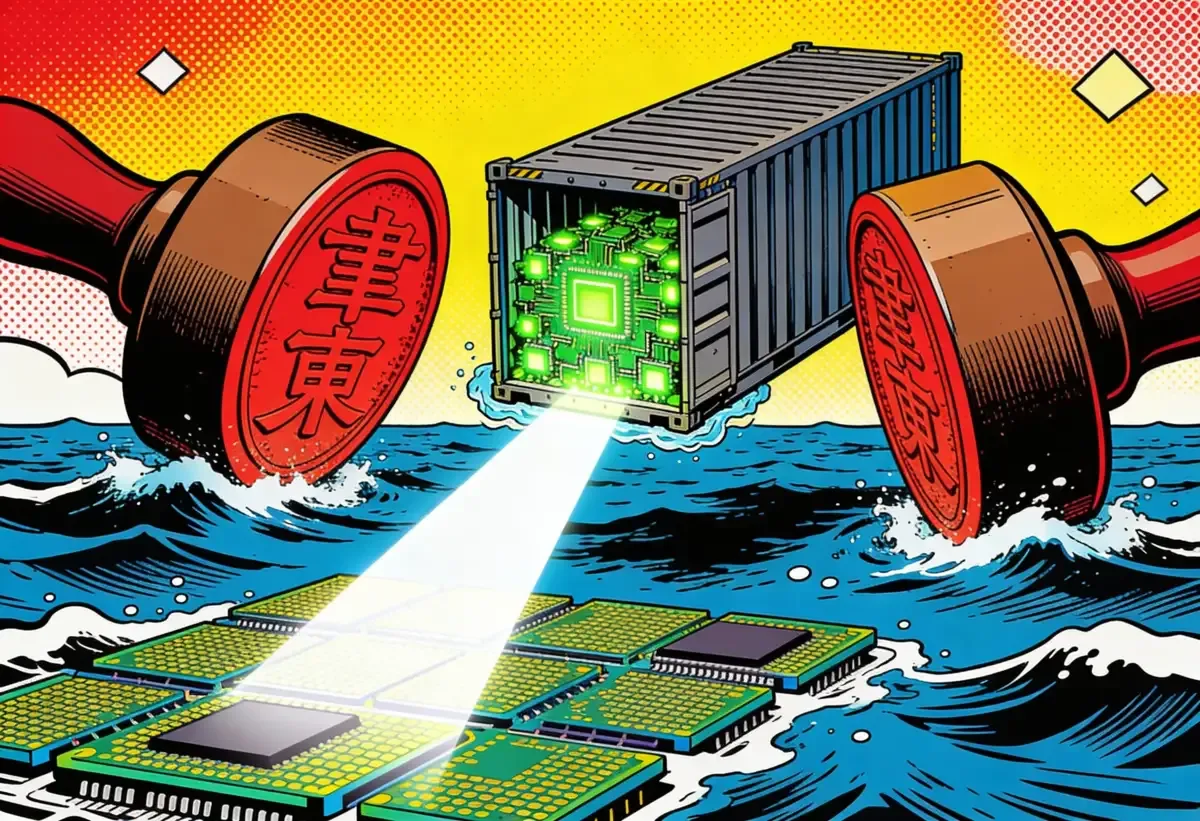
Both governments said yes. Alibaba, ByteDance, and Tencent lined up $54 billion in H200 orders. Washington shifted to case-by-case reviews. Beijing greenlit purchases. And not a single chip has crossed the Pacific.
Two parallel approval systems, zero coordination, and a 3:1 demand-to-supply ratio that makes the paperwork academic. Jensen Huang told investors to expect purchase orders, not press releases. Right now he has neither.
Meanwhile, a Duke spinout called Neurophos thinks the GPU arms race misses the point. Its photonic chip claims 100x Nvidia's best. Bill Gates and Microsoft put $118 million behind the physics.
Stay curious,
Marcus Schuler
Beijing Greenlights Nvidia Orders. The Chips Haven't Moved.
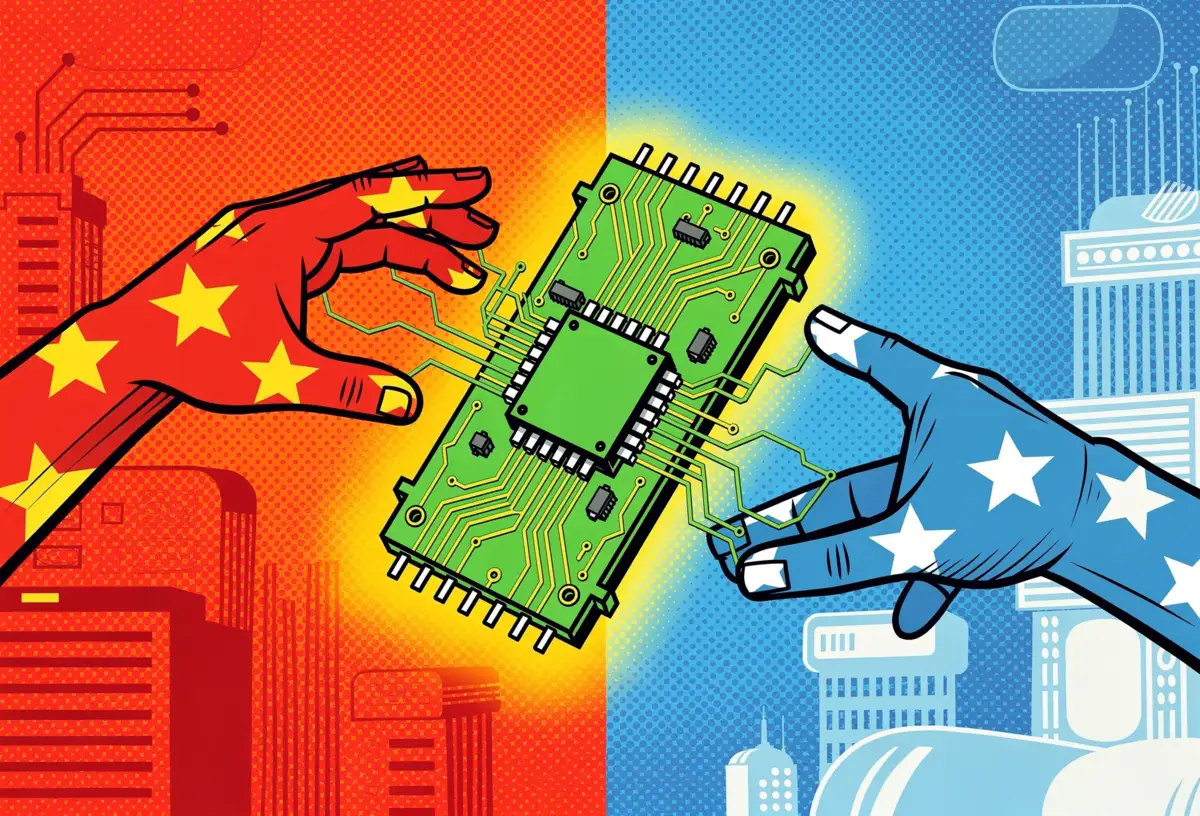
Both governments approved the sale. Over $54 billion in H200 orders are lined up. And not a single chip has shipped, because two parallel bureaucracies forgot to coordinate.
Alibaba, ByteDance, and Tencent each want 200,000+ H200s at roughly $27,000 per unit. Washington shifted from presumption of denial to case-by-case review in January, with a 50% allocation cap and 25% revenue fee. Beijing responded the same week with in-principle purchase approvals for its major tech firms.
Then Beijing blocked customs clearance.
The lever: an unset domestic-chip purchase ratio requiring concurrent Huawei orders alongside every foreign buy. Until Beijing names that number, nothing clears. Nvidia sits on roughly 700,000 units against 2 million+ in demand.
The performance gap explains the urgency. H200 delivers 6x the export-legal H20. Huawei's Ascend 910C lags the H200 by 32% in processing and 50% in bandwidth. For Chinese AI labs racing on frontier models, there is no domestic substitute.
Jensen Huang told investors to expect "purchase orders, not press releases." He has approvals that function as neither.
Why This Matters:
- Dual-approval dysfunction creates a structural freeze with neither government incentivized to blink first, leaving $54B in limbo indefinitely.
- TSMC's Q2 production ramp will test whether inventory pressure forces political resolution before Nvidia's next earnings call.
✅ Reality Check
What's confirmed: Washington approved case-by-case H200 exports with a 50% cap and 25% fee. Beijing issued in-principle purchase approvals to Alibaba, ByteDance, and Tencent. No chips have shipped.
What's implied (not proven): The freeze is temporary bureaucratic friction, not a deliberate stalling mechanism by either government to extract concessions.
What could go wrong: Beijing's unset domestic-purchase ratio functions as a permanent regulatory lever, turning "approved" into indefinite limbo with no resolution timeline.
What to watch next: Whether Beijing publishes the domestic-chip ratio, and whether TSMC's Q2 production creates enough inventory pressure to force action.
A Photonic Chip Bets Against Nvidia's Entire Paradigm
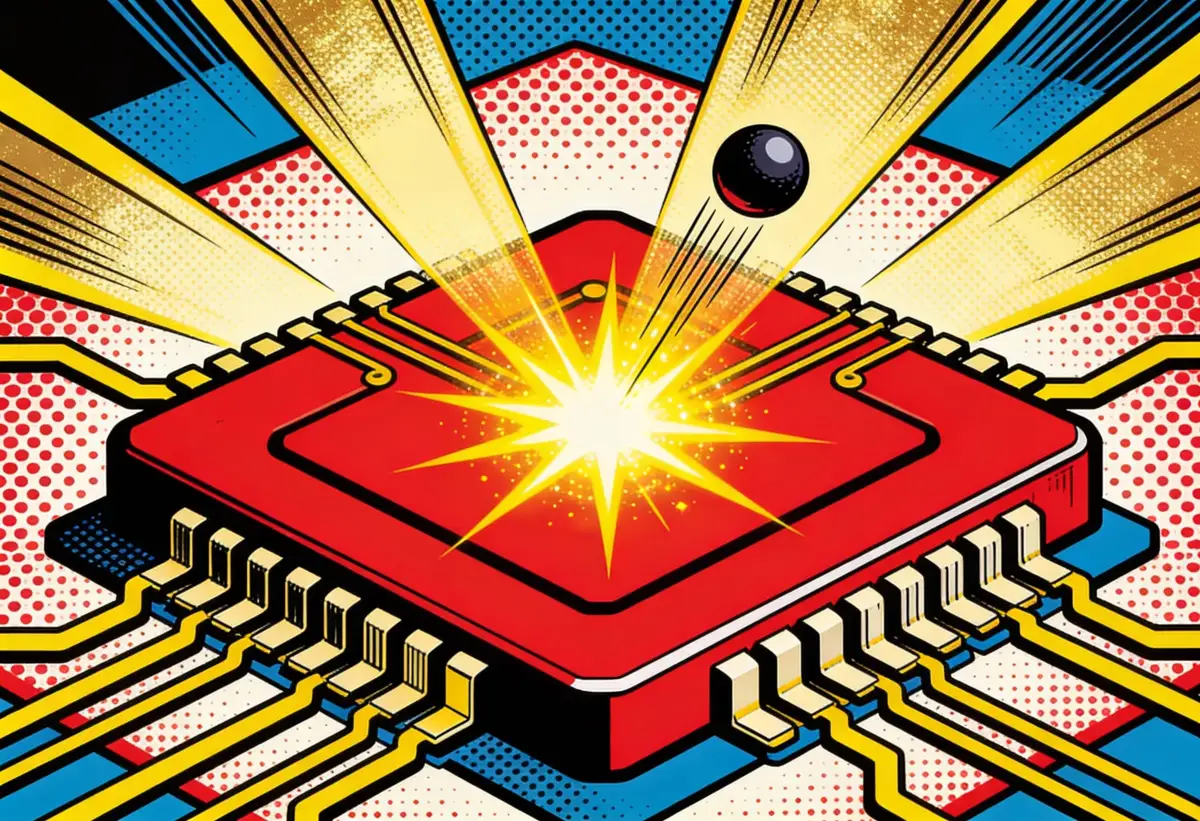
A Duke University spinout claims its photonic chip delivers 100x the performance of Nvidia's best GPU. $118 million from Bill Gates and Microsoft says the physics works. Fabrication reality says: prove it.
Neurophos started in a Duke basement in 2019, where founder Patrick Bowen and metamaterials pioneer David R. Smith figured out how to shrink optical modulators by a factor of 10,000. The technique uses metamaterials to manipulate light at subwavelength scale, where photon-switching speeds exceed what electron-based transistors can achieve.
The physics has cleared peer review. The money has arrived. What hasn't arrived: a single paying customer.
The competitive challenge is a moving target. Neurophos must solve fabrication at scale while Nvidia ships new architectures every 12 months. A 100x advantage against today's GPU means less if tomorrow's GPU closes half the gap.
Gates and Microsoft aren't betting on today's benchmarks. They're betting the physics scales before the silicon ceiling becomes real.
Why This Matters:
- If photonic computing works at scale, it breaks the power-and-heat wall that limits GPU-based AI infrastructure, reshaping the $1.4T data center buildout.
- Nvidia's moving target means Neurophos has a finite window before GPU improvements erode the 100x claim into a marginal one.
AI Image of the Day

Prompt: A striking fashion photograph of a young woman with platinum blonde hair cut in a sharp, geometric bob with straight-cut bangs, captured from a slightly elevated angle. She wears oversized rectangular sunglasses with bright fuchsia pink frames and transparent rose-tinted lenses. Intricate black ink tattoos adorn her exposed left shoulder and collarbone, delicate floral motifs cascading down her shoulder blade and fine line art extending gracefully up her neck, complementing a single pearl drop earring. Soft, directional natural light illuminates her fair skin and bare shoulder, creating sculptural shadows against a pristine white minimalist background.
What To Watch Next (24-72 hours)
- Microsoft Q2 Earnings: Tuesday after close. Azure AI revenue breakdown is the number everyone's waiting for. Copilot adoption and enterprise AI spend will set the tone for the sector. Expect cloud stocks to move on guidance.
- ASML Q4 Earnings: The Dutch chip equipment giant reports Tuesday morning (European time). EUV machine orders signal whether the AI infrastructure buildout is accelerating or hitting capex limits.
- ICML 2026 Paper Deadline: Tuesday AoE. The machine learning research community's most important submission window closes. Watch for pre-prints and early leaks on reasoning breakthroughs.
The One Number
8.6% — The share of companies with AI agents actually deployed in production. Meanwhile, 63.7% report no formalized AI initiative at all. Everyone talks about agentic AI. Almost no one ships it. The gap between conference demos and enterprise reality remains enormous.
Source: Netguru Enterprise Survey
🧩 Workflow of the Day
Workflow of the Day: "Prep for a negotiation in 20 minutes"
Who: Anyone walking into a salary discussion, vendor contract, or partnership deal.
Problem: You know what you want but haven't mapped the other side's constraints. You react instead of lead.
Workflow (with Claude):
- Brief Claude on the situation: who you're negotiating with, what you want, what you know about their position.
- Ask: "What are their likely constraints and priorities? What concessions cost them little but matter to me?"
- Request 3 opening anchors ranked by aggressiveness: stretch, target, floor.
- Generate rebuttals for the 3 most likely objections they'll raise.
- Ask for a walkaway signal: "What should I listen for that indicates they won't move further?"
- Review and internalize the key points. Don't read from notes in the room.
Payoff: You enter with a map of the terrain. Confidence shows. Better outcomes follow.
Gotcha: Claude doesn't know the relationship history. Adjust tone based on whether you need this person long-term.
Tools: Claude
Better Prompting... Today: Competitive Intelligence
Your competitors publish more than they realize. These prompts help you read between the lines.
The Job Posting Decoder
"Here are recent job postings from [competitor]: [paste or link]. Read between the lines. What are they building? What capabilities are they missing? Where are they feeling pain? What does their hiring velocity in [area] tell me about their next 12 months?"
Best on: Perplexity (can fetch current postings) or Claude (pattern recognition in text)
The Earnings Call Translator
"Here's the transcript from [competitor's] latest earnings call: [paste]. Strip out the PR language. What are they actually worried about? Where did they deflect? What did they conspicuously not mention? What question made them nervous?"
Best on: Claude (subtext detection, handles long transcripts) or ChatGPT (good at corporate language decoding)
The Strategy Reverse-Engineer
"Based on [competitor's] last three product launches, pricing changes, and public statements, what strategy are they running? Model their decision-making: what tradeoffs are they making, what do they believe about the market that we might not, and where does their strategy create openings for us?"
Best on: Perplexity (for gathering recent moves) then Claude (for strategic synthesis)
Competitive intelligence isn't about what competitors say. It's about what their actions reveal.
🧰 AI Toolbox

How to Generate 3D Models from Photos with Trellis AI
Trellis converts 2D images into 3D models instantly. Upload a product photo, character design, or object and get a rotatable 3D asset ready for games, AR, or visualization.
Tutorial:
- Access Trellis through Hugging Face Spaces or run locally
- Upload a clear image of the object you want to convert to 3D
- Wait 30-60 seconds for the model to generate geometry and textures
- Rotate and inspect the 3D model in the preview window
- Export as GLB or OBJ format for use in other software
- Import into Blender, Unity, or AR applications
- Use multiple angles of the same object for higher quality results
URL: https://huggingface.co/spaces/JeffreyXiang/TRELLIS
AI & Tech News
OpenAI API Adds $1 Billion in Monthly Revenue
Sam Altman revealed OpenAI's API business added over $1 billion in ARR in the past month alone, separate from ChatGPT consumer revenue. The enterprise and developer side of the business is now a substantial revenue engine on its own.
China Orders Review of Meta's Manus Acquisition
Beijing has launched a formal review of Meta's proposed acquisition of Chinese AI startup Manus, citing concerns over "selling young crops" and premature transfer of cutting-edge technology. The investigation signals growing scrutiny of foreign acquisitions involving advanced Chinese AI companies.
ByteDance Keeps TikTok Algorithm, Licenses Instead of Selling
ByteDance secured the right to retain ownership of its recommendation algorithm and license it to TikTok's US operations rather than selling it outright. The Washington compromise allows the Chinese company to maintain control of its core intellectual property.
World Labs Seeks $5 Billion Valuation
Fei-Fei Li's AI startup is in active funding discussions at a $5 billion valuation, representing a fivefold increase from $1 billion in 2024. The round would raise hundreds of millions in new capital for the spatial intelligence company.
Intel Can't Meet AI Chip Demand, Misses Forecast
Intel disclosed it has been unable to meet demand for its AI server chips while issuing Q1 2026 guidance below expectations. Supply constraints continue to plague the chipmaker even as it tries to compete in the AI accelerator market.
Anthropic Publishes Hiring Test That Claude Kept Solving
Anthropic revealed its engineering take-home assessment had to be redesigned three times after Claude consistently solved it. The company released the original test publicly, highlighting the growing challenge of evaluating human candidates in an era of capable AI.
Netflix Confident in Warner Bros. Discovery Bid
Netflix co-CEO Greg Peters dismissed a competing Paramount bid for WBD as something that "doesn't pass the sniff test." The deal would significantly reshape Hollywood's streaming landscape if it closes.
Pokémon Blue Becomes AI's New Benchmark
Anthropic, OpenAI, and Google are all streaming Pokémon Blue gameplay on Twitch to test their AI models' reasoning and decision-making abilities. The classic Nintendo game has emerged as a surprisingly effective evaluation tool for strategic thinking in complex environments.
Google Invests in Japan's Sakana AI
Google made a strategic investment in Sakana AI, the Japanese startup valued at $2.6 billion in November 2025. The partnership gives Sakana access to Google's language models while boosting Gemini's presence in Japan.
Malaysia Lifts Ban on Musk's Grok
Malaysia ended its temporary ban on xAI's Grok chatbot after the company implemented new safety measures. The platform remains under ongoing government monitoring for compliance.
🚀 AI Profiles: The Companies Defining Tomorrow
Nessie Labs (Nessie)
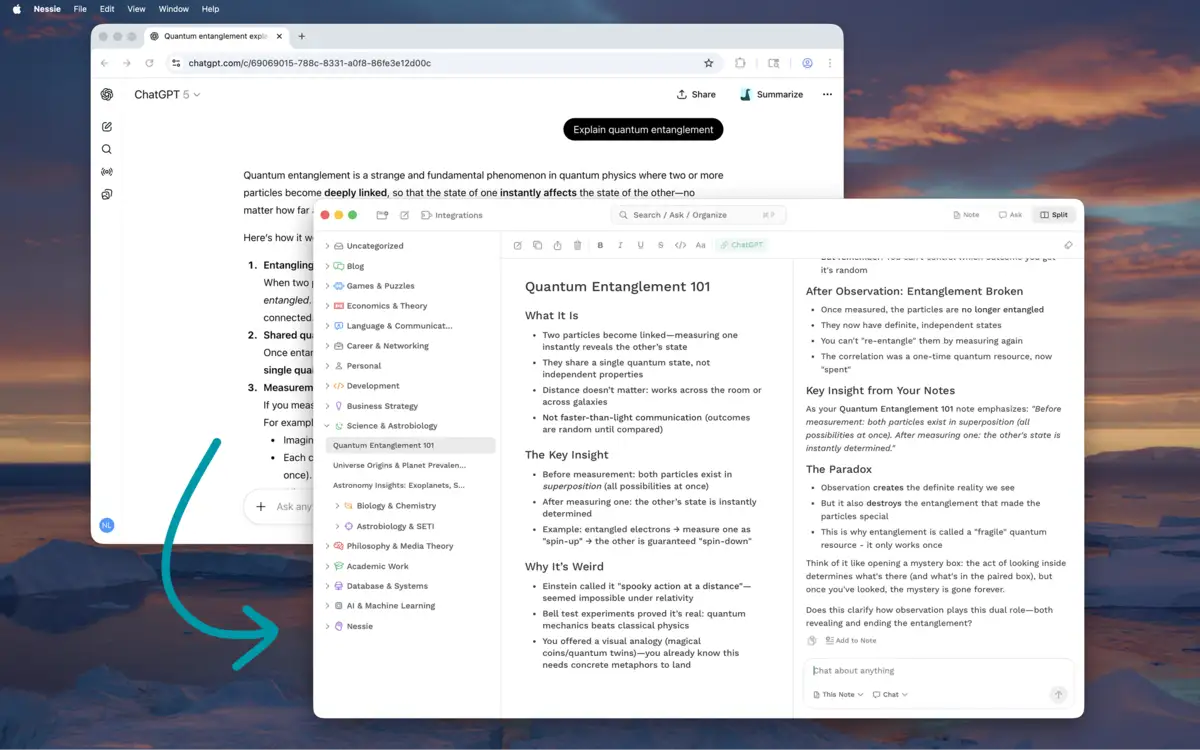
Nessie wants to turn your AI chats into a searchable second brain. The San Francisco company imports conversations from ChatGPT, Claude, and others, then distills them into structured, shareable notes. 🧠
Founders
Anna Zhang and Tiger Wang launched Nessie in 2025 and joined YC's Fall batch. Their origin story: AI conversations had become a primary thinking medium, yet ideas remained trapped in chat logs. They hit context limits, watched research disappear into scrollback, and built a tool to fix it.
Product
A local-first "AI brain" that imports chat histories, distills them into structured notes organized by topic, and enables search and conversation over your personal knowledge base. The sharing model treats curated context as a portable asset. A reporter could share a topic brain with an editor. A founder could share a product brain with a teammate.
Competition
Notion AI, Obsidian plus plugins, Mem, Readwise, and Rewind-style personal recall products. The biggest threat: if ChatGPT, Claude, or Gemini add better export and organization, they reduce the need for a separate tool. Nessie differentiates by focusing on AI chat as primary input and enabling cross-platform imports.
Financing 💰
YC-backed. Public funding not disclosed. For consumer productivity tools, distribution can matter as much as cash. Early traction metrics include imported conversations and user growth soon after launch.
Future ⭐⭐⭐
Nessie's future depends on whether AI chat remains a dominant thinking interface. If people keep using chat to draft and research, durable memory products grow. The witty ending: Nessie wants to pull hidden ideas from deep water and make them searchable. Success means users gain a memory. Failure means they keep scrolling back like sailors scanning the horizon. 🌊


