



San Francisco | December 11
China spent 15 years wiring the grid while Silicon Valley burned cash on training runs. The math is cold: Chinese data centers pay 3 cents per kilowatt-hour, American ones pay 7 to 9. Morgan Stanley projects 400 gigawatts of spare Chinese capacity by 2030. America faces a 44-gigawatt shortfall.
While Washington debates kilowatts, Microsoft published data that undermines its own sales pitch. The Copilot Usage Report shows 100 million weekly users want health advice and emotional support, not productivity tools. Queries spike between 2 AM and dawn. Redmond built a spreadsheet companion. Users showed up looking for a confidant.
Stay curious,
Marcus Schuler.
China Built the Grid. America Built the Models. Guess Who's Winning.
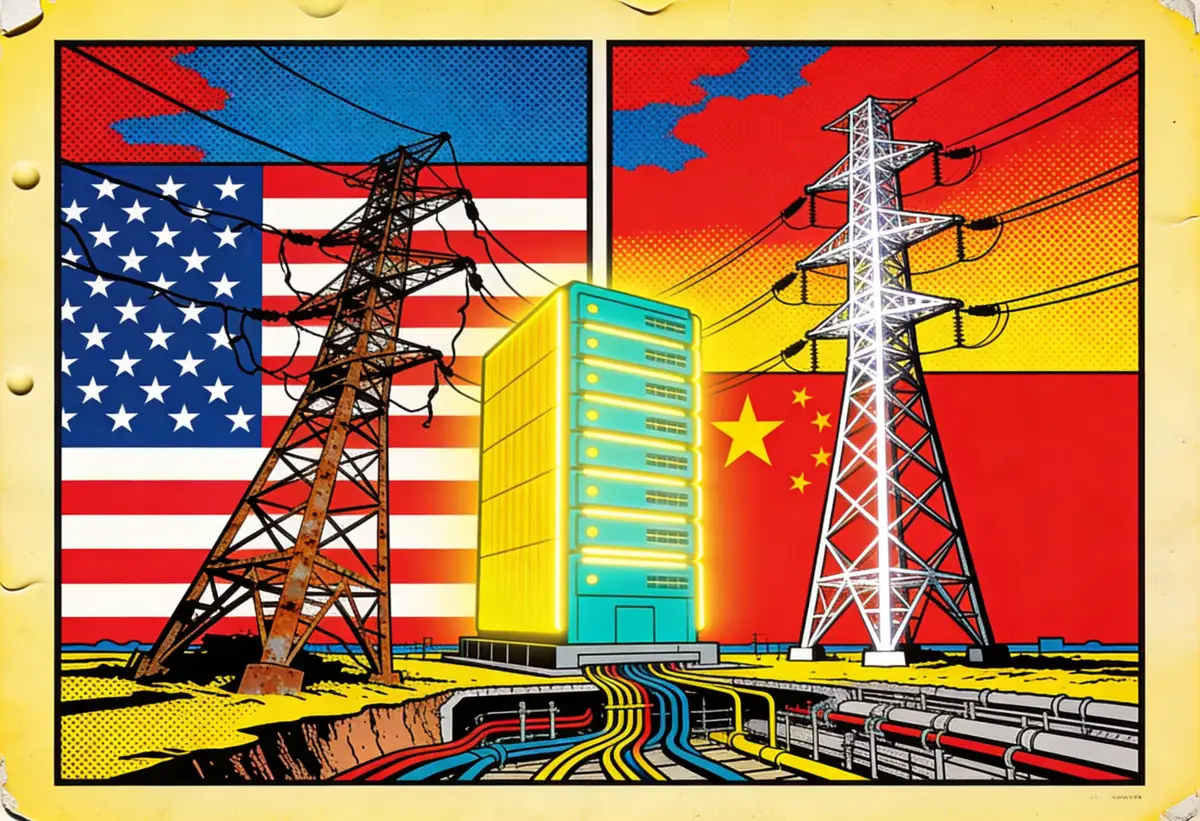
Silicon Valley poured billions into training AI models while Beijing spent 15 years building power plants.
The results are now measurable. Chinese data centers pay 3 cents per kilowatt-hour; American ones pay 7 to 9 cents. That differential compounds monthly.
Morgan Stanley projects China will have 400 gigawatts of spare capacity by 2030—three times global data center demand. America faces a 44-gigawatt shortfall in the same timeframe. OpenAI calls this the "electron gap."
The bind gets worse. Over 85% of US utilities use Chinese-made inverters to convert solar power. In November 2024, one Chinese manufacturer remotely disabled US devices during a contract dispute. Banning them slows the energy buildout America needs.
Meanwhile, US investors ignore congressional warnings. Alibaba is up 80% this year. Morgan Stanley reports 90% of investor meetings want more China exposure. Capital flows where returns are.
DeepSeek proved Chinese companies can match American models at a fraction of the compute. Open-source optimization reduces power needs further. China doesn't need better AI—just cheaper electricity and more efficient code.
Why This Matters:
- US permitting delays now cost more than chip export controls. Every blocked substation extends China's advantage.
- Infrastructure gaps compound annually. The 2030 power shortfall may prove harder to close than the model gap.
 Maria Garcia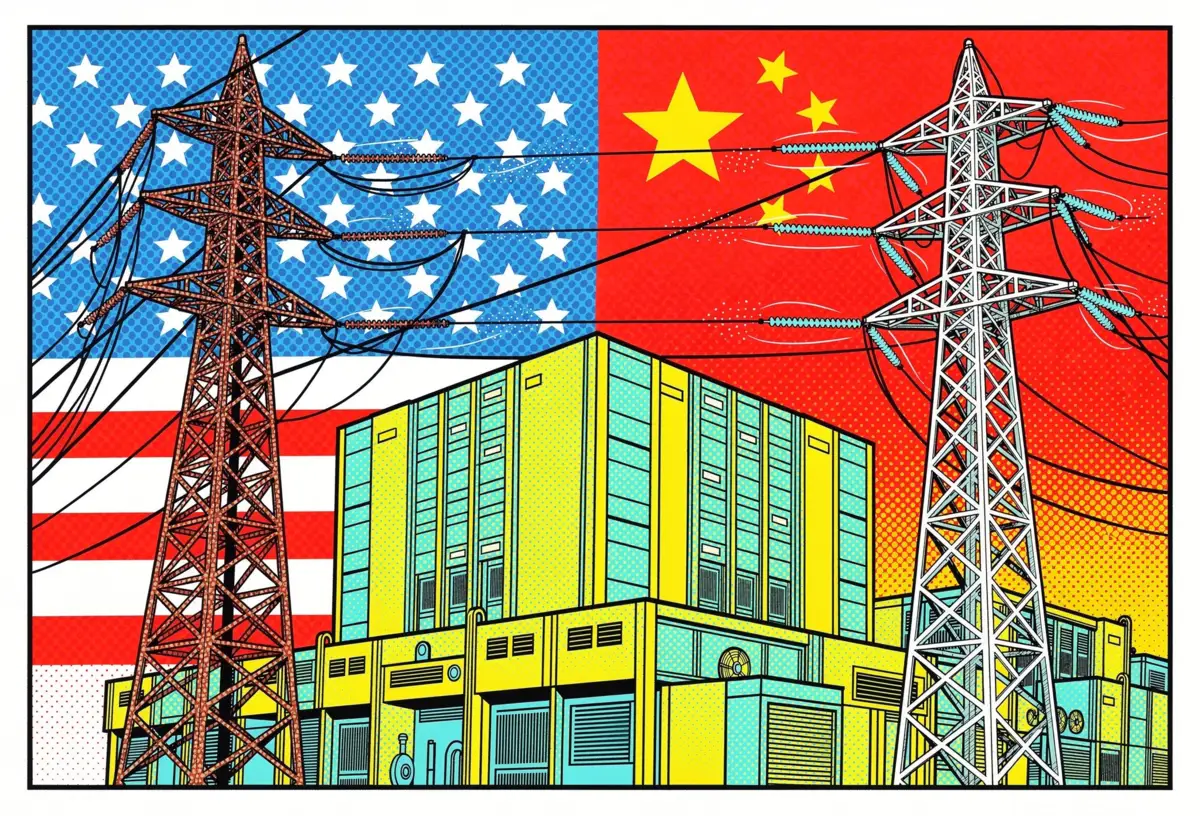
AI Image of the Day

Prompt:
beautiful blond hair goddess Venus holding a baby,flowers and baby angels flying around
Microsoft's AI Usage Data Contradicts Its Own Sales Pitch

Four weeks after Mustafa Suleyman announced Microsoft's superintelligence push, the company published data that tells a different story.
The Copilot Usage Report 2025 analyzed 37.5 million consumer conversations and found health and fitness dominated mobile usage across every hour, day, and month of the study.
Programming's share collapsed as mainstream users replaced early-adopter developers. "Religion and Philosophy" queries spike between 2 AM and dawn. The primary intent tag was technically "Information Seeking," but health queries at 3 AM aren't about calorie counts. Users want reassurance, not productivity tools.
Suleyman admitted as much in November: "AIs provide high quality emotional support increasingly." Microsoft built a productivity tool and discovered demand for a confidant.
Why This Matters
• The gap between enterprise marketing (coding, productivity) and actual consumer behavior (health, emotional support) creates regulatory exposure nobody has priced in
• 100 million weekly users chose companionship over spreadsheets, suggesting consumer AI monetization won't follow enterprise SaaS models
 Robert Brown
🧰 AI Toolbox
How to Create Ultra-Realistic AI Voiceovers in Minutes
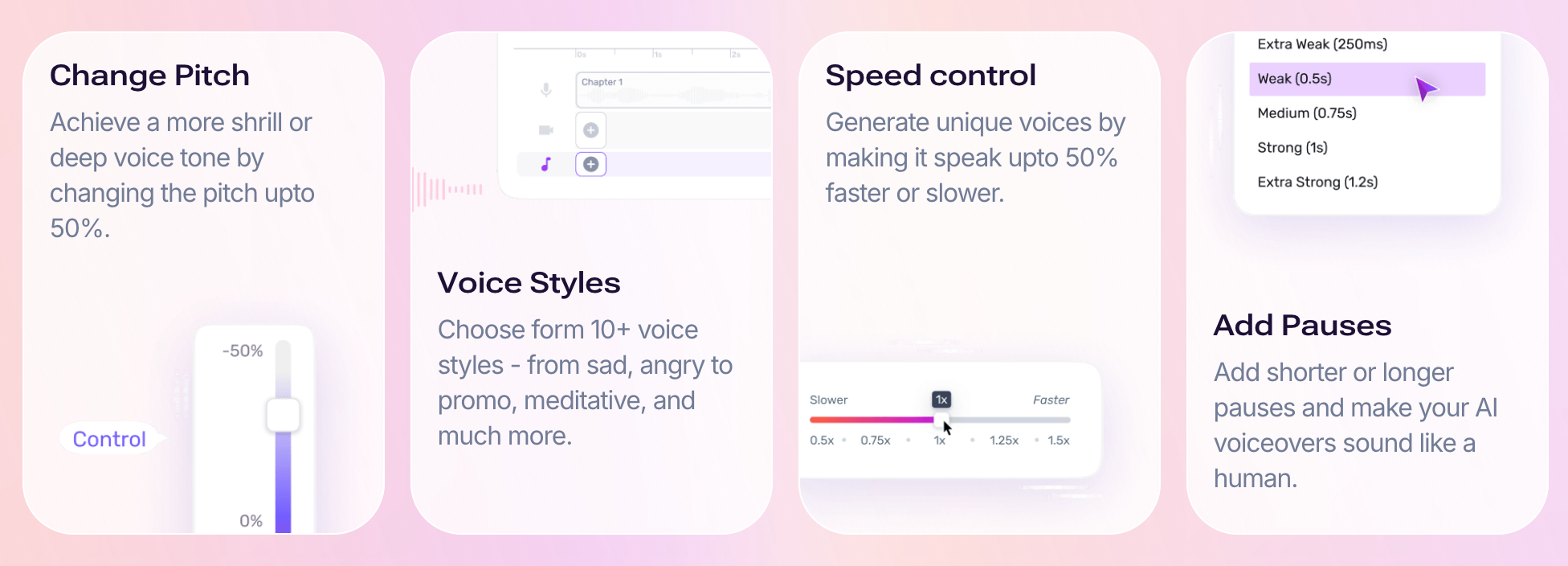
Murf AI transforms written text into natural-sounding speech using 200+ AI voices across 20+ languages. Customize pitch, speed, tone, and pronunciation to create professional voiceovers for videos, presentations, e-learning content, and podcasts. The platform offers 99.38% pronunciation accuracy and commercial usage rights.
Tutorial:
- Go to the Murf AI website
- Enter or paste your script into the text editor
- Browse 200+ AI voices and select one that matches your project's tone
- Customize the voiceover by adjusting pitch, speed, emphasis, and pauses
- Use "Say It My Way" to record your own delivery and have the AI mimic your style
- Preview the audio and generate multiple variations to find the perfect take
- Download studio-quality voiceovers and skip expensive voice actor fees
URL: https://murf.ai/
AI & Tech News
AI Researcher Challenges AGI Predictions, Citing Physical Computing Constraints
Tim Dettmers, a research scientist at the Allen Institute for AI (Ai2), has published a provocative analysis arguing that artificial general intelligence, as it is commonly conceived in the tech industry, will not emerge due to fundamental physical limitations of computation. In his detailed blog post, Dettmers contends that popular AGI predictions fail to account for the physical realities that constrain computing systems, challenging the prevailing narratives around superintelligence and the future trajectory of AI development.
OpenAI Sued for Wrongful Death After ChatGPT User Killed His 83-Year-Old Mother
The estate of Suzanne Eberson Adams, an 83-year-old woman killed by her son, has filed a wrongful death lawsuit against OpenAI, alleging that the company's ChatGPT chatbot played a role in the tragedy. According to the Wall Street Journal report, the son had engaged in delusion-filled conversations with the AI system before the fatal incident, with the victim's grandson now speaking publicly about the case for the first time.
Model Context Protocol Evolves from Anthropic Side Project to Linux Foundation Industry Standard
The Model Context Protocol (MCP), which began as a passion project developed by Anthropic employees, has grown over the past 18 months into an industry-wide standard now managed by the Linux Foundation. The protocol represents a rare moment of consensus among major AI companies, who have quietly aligned on this shared approach to building the next generation of artificial intelligence systems.
Google Brings Gemini AI to Chrome Browser on iPhone and iPad
Google has expanded its Gemini AI capabilities to Chrome browser users on iPhone and iPad, following the earlier rollout on desktop and Android platforms in 2025. The AI-powered features, launching first in the United States in English, can summarize web pages, generate FAQs on topics, and customize recipes based on dietary requirements.
Investor Gavin Baker Shares Insights on AI Economics and Emerging Tech Trends
In a wide-ranging interview on the Invest Like The Best podcast, investor Gavin Baker of Atreides Management discussed critical topics shaping the technology sector, including the economics of artificial intelligence, the potential for data centers in space, and common errors software-as-a-service companies are making as they integrate AI into their offerings. The conversation with host Patrick O'Shaughnessy provided investors and industry observers with Baker's perspective on navigating the rapidly evolving AI landscape and identifying opportunities amid technological transformation.
AI Developer Platform Runware Secures $50M Series A Funding
Runware, a developer tool platform that enables real-time generation of images, video, and audio using AI, has raised $50 million in Series A funding from Dawn Capital and Comcast Ventures, bringing its total funding to $66 million. The company was founded in 2023 by Flaviu Radulesc, who identified an opportunity to address the slow generation speeds that plagued existing text-to-image AI technology despite its powerful capabilities.
Port Raises $100M to Challenge Spotify's Developer Tool Dominance
Israeli startup Port has secured $100 million in Series C funding at an $800 million valuation, positioning itself as a major competitor to Spotify's popular open-source developer tool Backstage. The company offers a proprietary developer portal solution that rivals Backstage, which Spotify created as a platform for building developer portals and has gained significant traction in the tech industry despite being a side venture for the music streaming giant.
Inito Secures $29M to Expand At-Home Health Testing with AI Technology
Fertility startup Inito has raised $29 million in Series B funding to scale its at-home health diagnostics platform. The company plans to leverage AI-designed antibodies to develop new diagnostic tests, expanding beyond its current fertility monitoring offerings into broader at-home health testing capabilities.
Tencent Launches Aggressive AI Talent Raid on ByteDance
Tencent has been aggressively recruiting AI researchers from rival ByteDance in recent months, reportedly offering to double their salaries as part of a major push to strengthen its artificial intelligence capabilities. The Chinese tech giant, which had previously appeared to take a backseat in China's AI race, has also reorganized its AI team as competition in the sector intensifies.
EU Probes Chinese Firms Temu and Nuctech Over Suspected Beijing Subsidies
The European Union has launched formal investigations into Chinese e-commerce platform Temu and airport security scanner manufacturer Nuctech to determine whether the companies received unfair subsidies from Beijing that helped them penetrate European markets. The European Commission is examining whether this alleged state support gave the Chinese firms an improper competitive advantage over rivals operating in Europe under the bloc's foreign subsidies regulations.
Harness Secures $240 Million Series E at $5.5 Billion Valuation
Harness, an AI-powered DevOps platform that automates code testing, verification, security, and governance, has raised $240 million in Series E funding led by Goldman Sachs, valuing the company at $5.5 billion. Founded in 2017 by serial entrepreneur Jyoti Bansal, the company is on track to exceed $250 million in annual recurring revenue in 2025, signaling strong growth in the AI-driven software development tools market.
🚀 AI Profiles: The Companies Defining Tomorrow
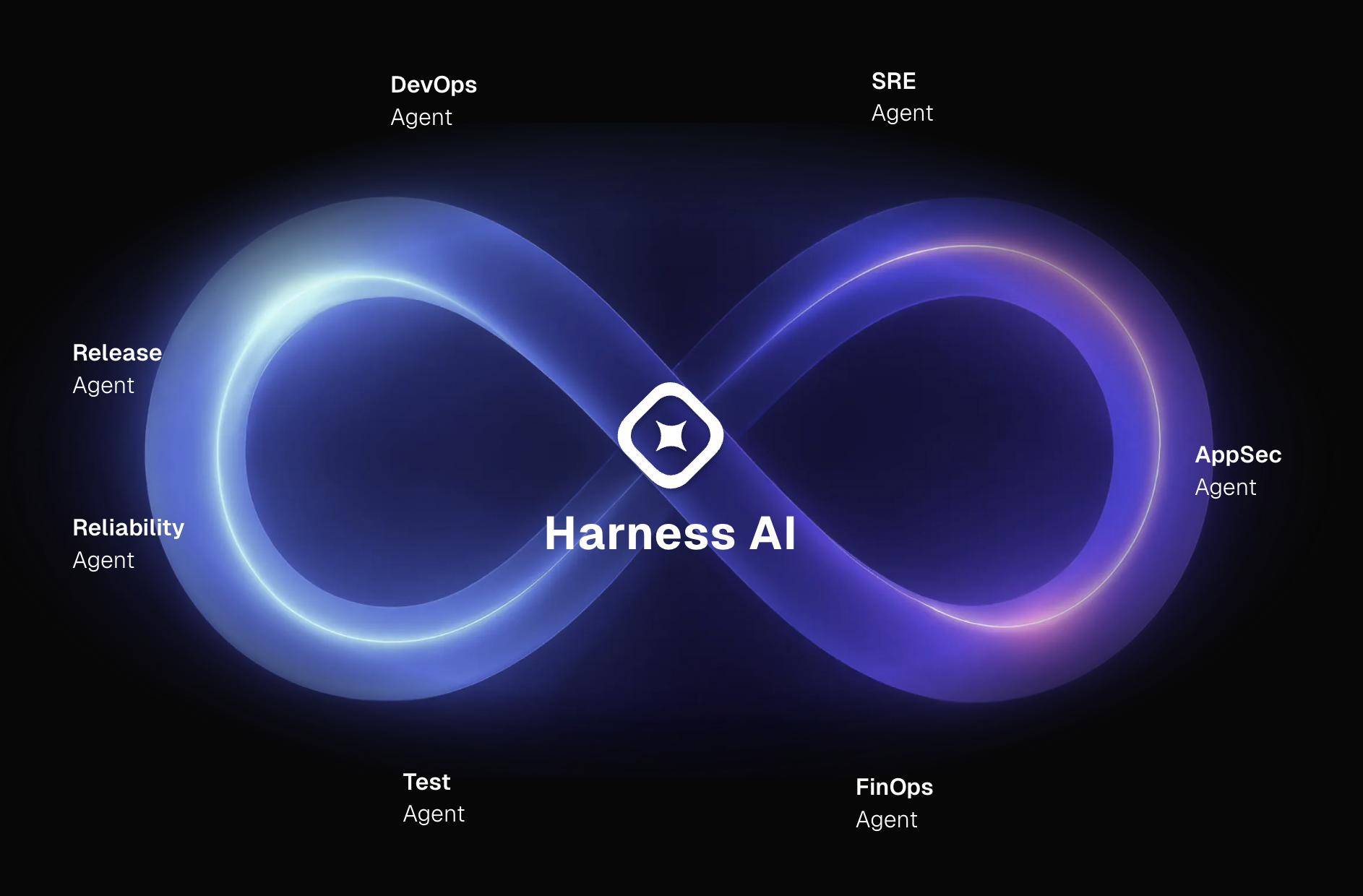
Harness automates everything that happens after developers write code. The company merged with API security startup Traceable in 2025 to build what it calls an "AI-native DevSecOps platform." 🚀
Founders
Jyoti Bansal founded Harness in 2017 after selling AppDynamics to Cisco for $3.7 billion. He recruited Rishi Singh, former DevOps architect at Apple, as co-founder and CTO. The San Francisco-based company now employs 1,200+ people, with a third working from India.
Product
Harness built a "Software Delivery Knowledge Graph" that maps code changes, deployments, tests, and costs across customer toolchains. AI agents sit on top, automating pipeline generation, test creation, incident triage, and cost optimization. The platform spans CI/CD, feature flags, chaos engineering, cloud cost management, and now API security via Traceable. Claims 1,000+ enterprise customers including United Airlines, Morningstar, and National Australia Bank. Bold stat: 128 million deployments processed.
Competition
Crowded space. GitHub Actions and Copilot eat from one side. GitLab offers integrated DevSecOps. Jenkins refuses to die. AWS CodePipeline and Azure DevOps bundle with cloud contracts. LaunchDarkly owns feature flags. Harness differentiates through breadth and its knowledge graph, connecting signals most rivals treat as separate silos.
Financing
Goldman Sachs led a $240M Series E in December 2025. Valuation: $5.5 billion. Total equity raised: ~$570M. Investor roster reads like a VC hall of fame. Norwest, Menlo, IVP, GV, Battery, Citi Ventures, J.P. Morgan, ServiceNow Ventures. Projects $250M ARR for 2025, up 50% year-over-year.
Future ⭐⭐⭐⭐
Strong positioning in the "after-code" gap that AI coding assistants are making worse. Repeat founder with credibility. But platform sprawl risks spreading engineering thin, and hyperscalers keep bundling DevOps features with cloud contracts. IPO likely, timeline fuzzy.


