

Build Your Own AI for Five Bucks. Engineers Build Fleets.
Clawdbot turns $5 VPS into personal AI assistant. Boris Cherny runs 5-10 AI agents to write code. Microsoft hands encryption keys to FBI.
Clawdbot turns $5 VPS into personal AI assistant. Boris Cherny runs 5-10 AI agents to write code. Microsoft hands encryption keys to FBI.

Google's Paul Kinlan argues browsers' 30-year security model could sandbox AI agents without container overhead. Here's how Co-do proves the concept.
Apple signed a multiyear deal with Google to power Siri using Gemini AI after failed talks with Anthropic and OpenAI. Two major updates coming in 2026.

Clawdbot turns $5 VPS into personal AI assistant. Boris Cherny runs 5-10 AI agents to write code. Microsoft hands encryption keys to FBI.

San Francisco | January 26, 2026
Clawdbot is spreading through Discord like wildfire. The open-source project lets anyone spin up a personal AI assistant on a $5 VPS or old Raspberry Pi. Persistent memory, proactive messaging, full computer access. One user burned through 180 million tokens in a week. "There's no going back," they say. Apple spent a billion on Siri and got less.
Boris Cherny at Anthropic now runs 5-10 AI agents in parallel to write his code. 100% of his production work over two months came from Claude Code. Entry-level engineering roles are already shrinking.
And Microsoft? It stores your BitLocker encryption keys unencrypted. When the FBI came knocking, Microsoft handed them over.
Stay curious,
Marcus Schuler
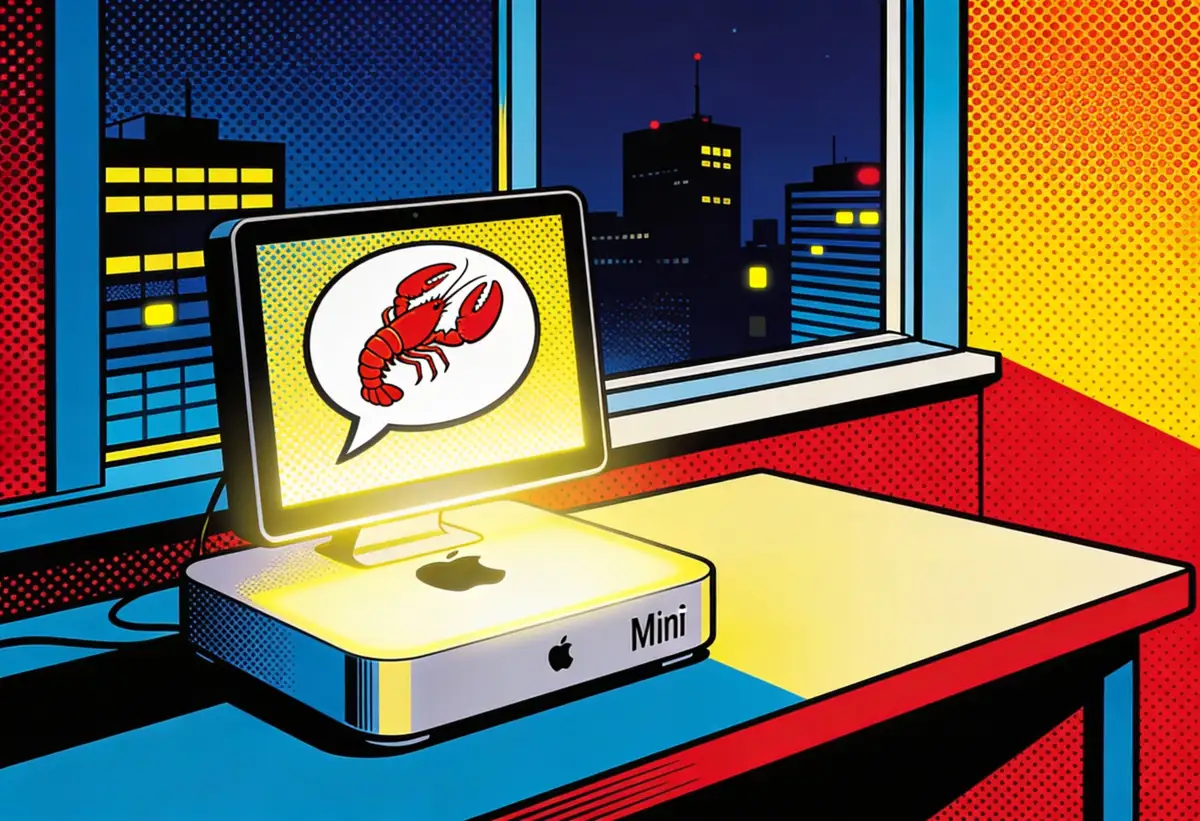
An open-source project is turning $5 VPS servers and dusty Raspberry Pis into personal AI assistants that outperform billion-dollar corporate offerings.
The numbers tell the story: 1GB RAM, 500MB disk space, and a Claude subscription. That's all Clawdbot needs. The Discord community pushes updates hourly. Early adopters report capabilities that make Siri look like a toy: persistent memory across conversations, proactive messaging that anticipates needs, and full shell access to your machine.
One user burned through 180 million tokens in the first week. The security tradeoffs are real, since your AI gets root access. But the community treats configuration like a craft, sharing hardening scripts and sandboxing techniques.
The contrast with institutional AI is stark. Apple's billion-dollar Siri investment delivered incremental improvements. Clawdbot delivered a paradigm shift for the cost of a coffee.
Why This Matters:
Reality Check
What's confirmed: Clawdbot runs on minimal hardware (1GB RAM, 500MB disk) and provides persistent memory, proactive messaging, and shell access via Claude API.
What's implied (not proven): That DIY assistants will meaningfully displace commercial offerings for mainstream users, not just technical early adopters.
What could go wrong: Shell access plus persistent memory creates attack surface for prompt injection or credential theft from downloaded files.
What to watch next: Whether enterprise security teams start blocking Clawdbot deployments, and if Anthropic adjusts API terms for autonomous agents.
 Marcus Schuler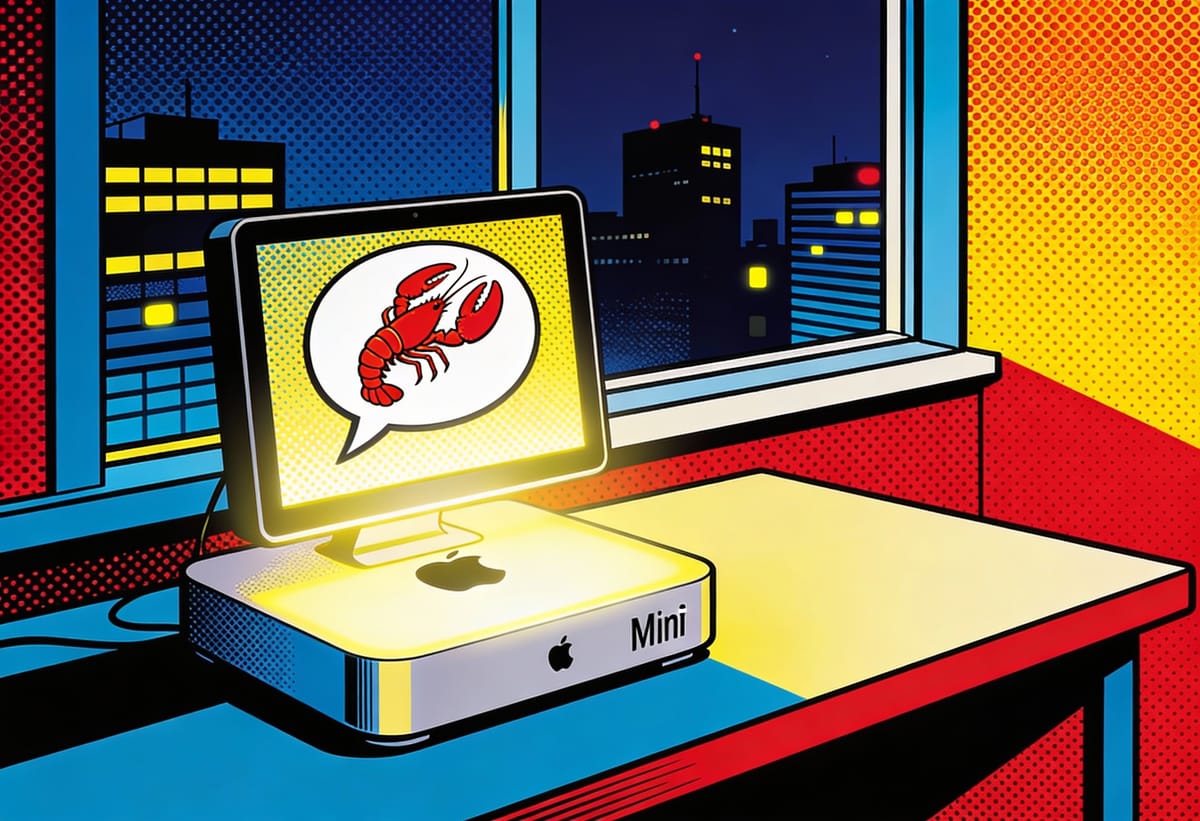

The architect behind Claude Code treats software development like fleet command in a real-time strategy game. The productivity gains are staggering. The workforce implications are uncomfortable.
Boris Cherny leads Claude Code at Anthropic. Over the past two months, he claims 100% of his production code came from AI agents. Not copilot suggestions. Not autocomplete. Full autonomous coding across 259 pull requests and 497 commits in a single 30-day period.
His workflow looks nothing like traditional programming. He runs 5-10 agents simultaneously, each tackling different parts of a codebase. The bottleneck shifts from typing to judgment: knowing which tasks to delegate, when to intervene, and how to verify output.
Anthropic reports 70% productivity gains per engineer since adopting Claude Code internally. Teams maintain shared CLAUDE.md files documenting AI mistakes to prevent repetition.
The uncomfortable question: if one engineer can do the work of several, what happens to entry-level roles? Job postings for junior developers are already declining as AI-generated code increases.
Why This Matters:


Prompt: a black-and-white photograph of an elegant woman sitting in a train, wearing headphones, gazing out the window with a look of loneliness on her face, surrounded by empty seats. the scene is captured from behind as she sits alone at one end of the carriage, lost in deep thought while listening to music.
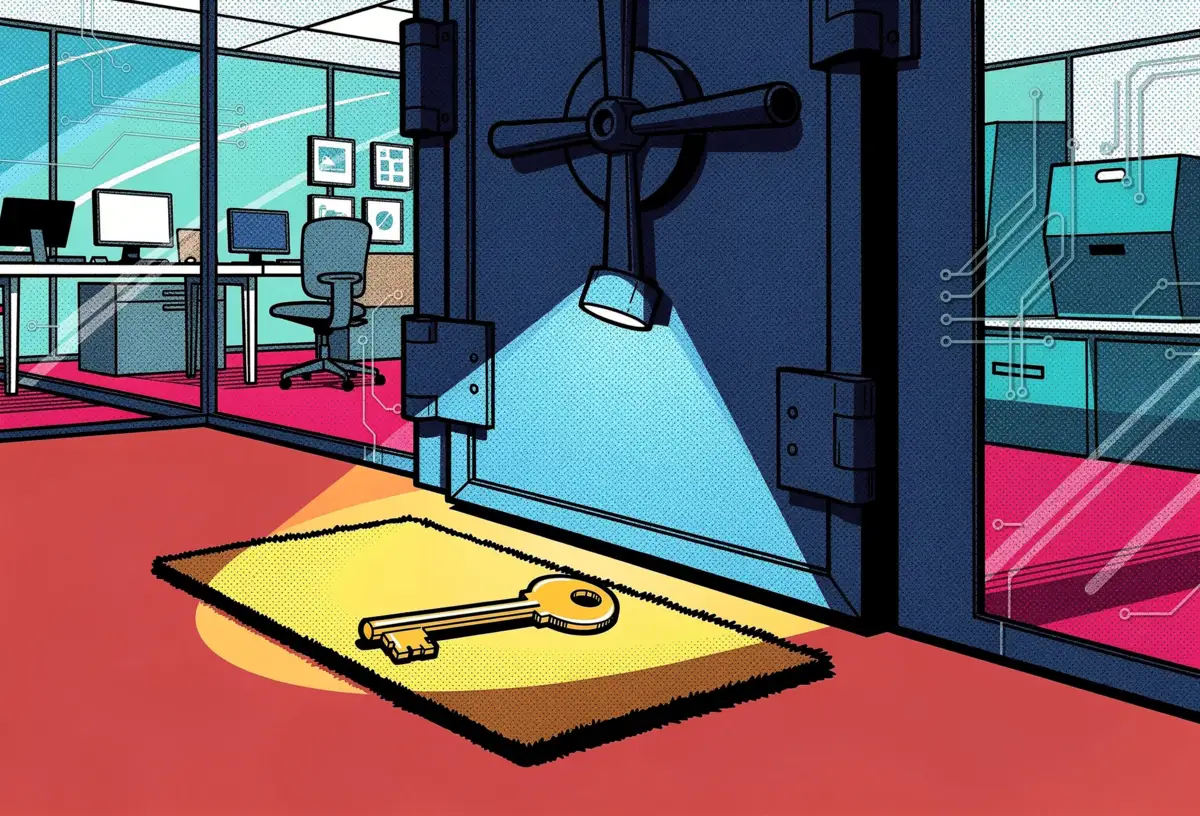
When the FBI requested BitLocker recovery keys in a Guam fraud case, Microsoft handed them over. The company's architectural choice prioritizes convenience over privacy.
BitLocker recovery keys are 48-digit codes that unlock encrypted Windows drives. Microsoft stores them unencrypted on its servers by default and syncs them automatically when users sign in with a Microsoft account. The company receives approximately 20 law enforcement requests for these keys annually.
The Guam case marks the first publicly confirmed instance of the FBI obtaining encryption keys from Microsoft. Unlike Apple, Google, and Meta, which employ zero-knowledge encryption that prevents even the companies themselves from accessing stored keys, Microsoft made a different choice.
Senator Ron Wyden called it "irresponsible for tech companies to ship products in a way that allows them to secretly turn over users' encryption keys." Security experts warn that this architecture invites mission creep across federal agencies.
Users can check for stored keys at account.microsoft.com/devices/recoverykey and delete them manually. But the default remains: convenience over sovereignty.
Why This Matters:
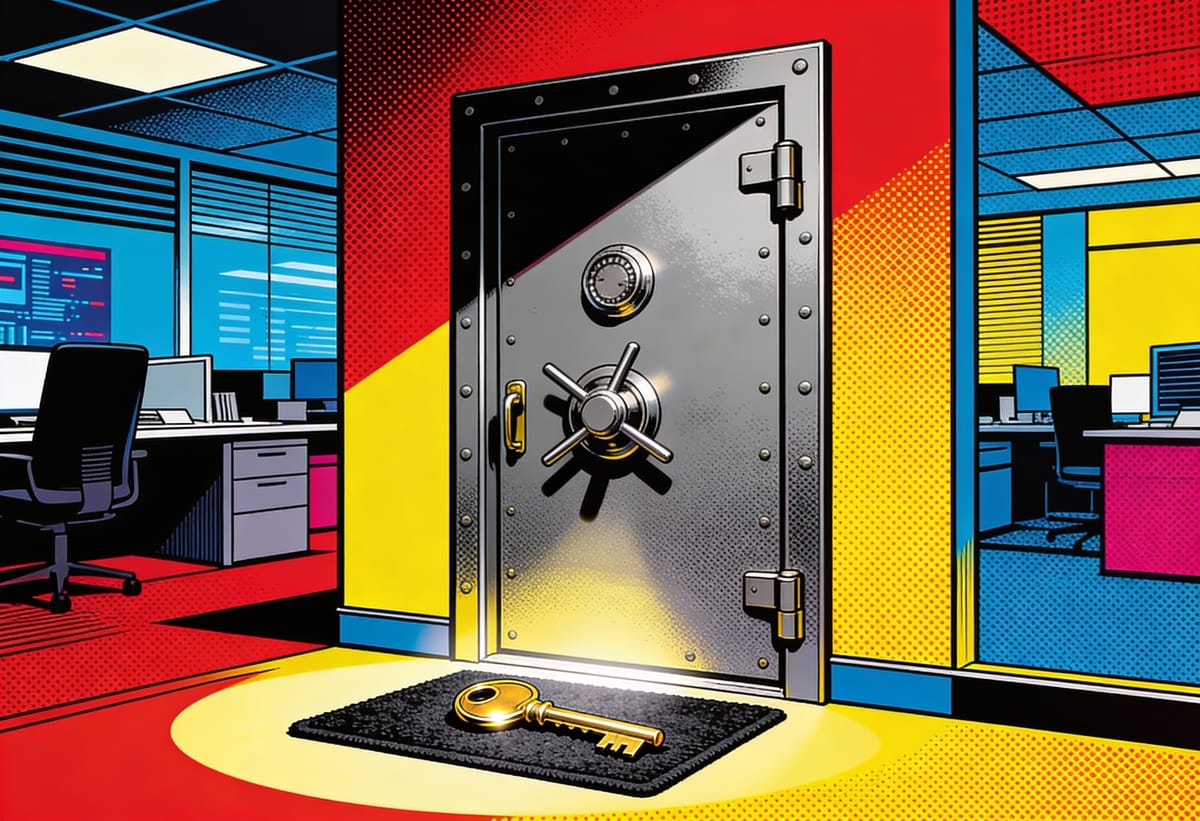
49% — Nearly half of U.S. workers say they never use AI on the job, according to Gallup's Q4 workplace survey. Among those who do, usage is deepening: daily AI use rose from 10% to 12%, and frequent use hit 26%. The workforce is splitting into two camps. One is integrating AI into daily routines. The other hasn't started.
Source: Gallup
Workflow of the Day: "Audit a contract for risk clauses in 90 minutes"
Who: In-house counsel, startup founder, or ops lead reviewing vendor or client agreements without a legal team.
Problem: 50-page contracts hide liability. Manual review takes 10+ hours. You sign what you shouldn't.
Workflow (with Claude):
Payoff: Review time drops 75%. You catch the clause that would have cost you later.
Gotcha: Claude isn't your lawyer. Use this for first-pass triage, not final legal advice.
Tools: Claude
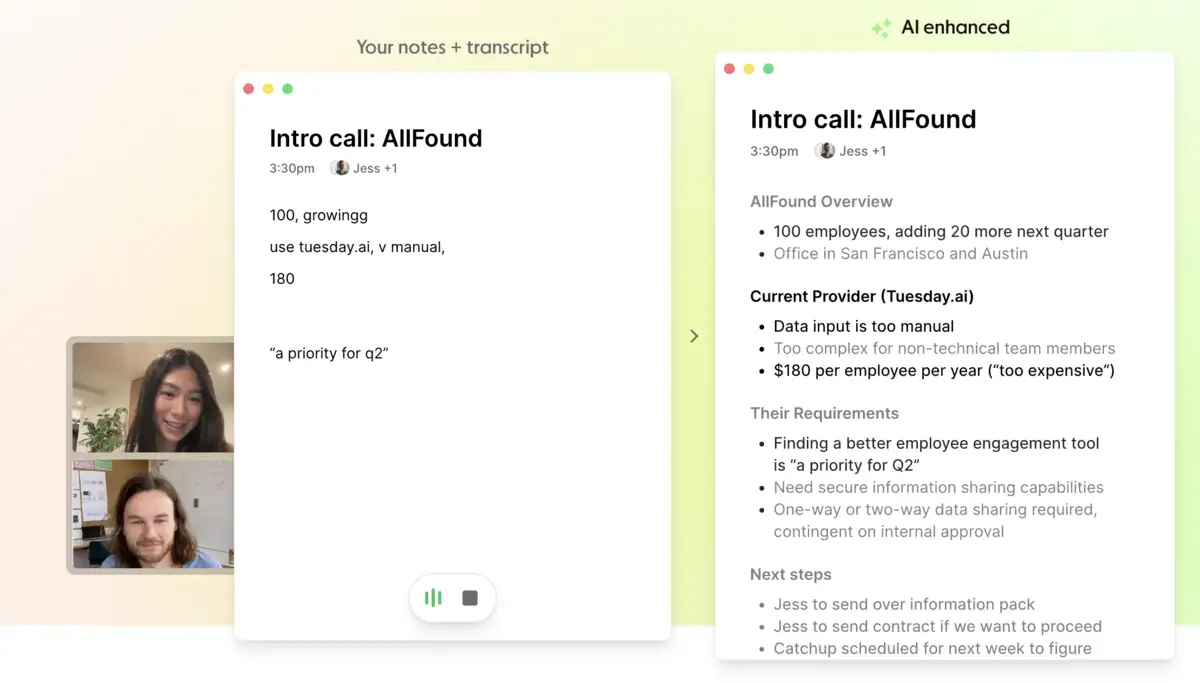
How to Stay Present in Meetings While AI Takes Notes with Granola
Granola is an AI notepad that listens to your meetings and captures everything discussed. You stay focused on the conversation while it handles the documentation, then add your own thoughts afterward.
Tutorial:
URL: https://granola.ai
Quantum computing company IonQ is buying US chipmaker SkyWater Technology for approximately $1.8 billion at $35 per share. SkyWater will operate as a subsidiary, strengthening IonQ's government ties and manufacturing capabilities.
SoftBank has halted negotiations to acquire data center operator Switch, dealing a blow to CEO Masayoshi Son's Stargate infrastructure ambitions. The collapse leaves a major gap in the company's AI and cloud computing expansion plans.
European regulators have launched a formal probe under the Digital Services Act into Elon Musk's xAI over concerns that Grok generated sexualized images of women and children. The company faces potential fines of up to 6% of global revenue.
London-based AI video startup Synthesia raised $200 million in Series E funding led by GV, nearly doubling its valuation from $2.1 billion a year ago. The company is reportedly preparing to develop AI video agents.
Former Google researchers secured $335 million at a $4 billion valuation for Ricursive, which automates advanced chip design using AI. Sequoia, Radical Ventures, and Lightspeed led the round.
Morgan Stanley analysis shows UK companies experienced 8% net job losses attributable to AI over the past 12 months, the highest among major economies. The US was the only country to record net job gains at 2%.
Documents reviewed by WSJ reveal China's military is developing AI systems to control drone swarms and robot dogs, studying how hawks hunt and coyotes chase prey to create coordinated autonomous weapons.
Major operators Digital Realty, QTS, and NTT Data warn that more than 24 US projects were blocked in January alone. Companies are planning increased advertising spending to counter community resistance.
New York-based Tandem Technology raised $100 million at a $1 billion valuation, using AI to automate prescription paperwork. The Series B round marks the healthcare startup's entry into unicorn territory.
OpenAI reports that approximately 1.3 million users discuss advanced science topics on ChatGPT each week, generating 8.4 million messages on scientific subjects in January. AI is increasingly serving as a research collaborator.
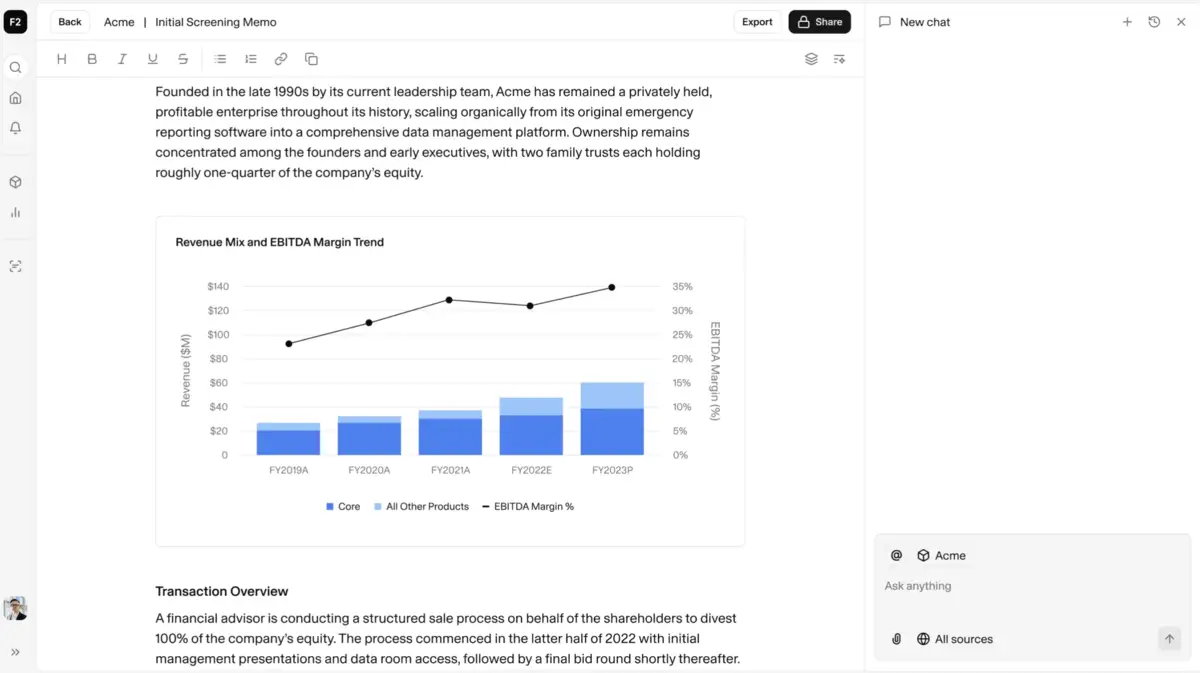
F2 wants to be the Bloomberg Terminal for private markets. The New York company turns data room chaos into structured financial analysis and investment memos. 💼
Founders
Don Muir built F2 inside Arc Technologies before spinning it out. Arc runs cash management and capital markets tooling. F2 started as an internal effort to automate underwriting and diligence for Arc's private credit business. As usage expanded, it became its own company. The origin inside a real underwriting business gave F2 a test bed and baseline of actual deal flow.
Product
An AI platform that reads data room files (Excel, PDF, PowerPoint) and produces structured, audit-ready outputs resembling investment memos. Traceability is central: every number links to source documents. The system retains historical context across deals so prior underwriting logic compounds. That creates switching costs resembling a data platform, not just a tool.
Competition
PitchBook and Capital IQ provide data. AlphaSense and Tegus provide research. DealCloud and Dynamo manage workflows. Hebbia and other AI doc-analysis startups query dense documents. F2 differentiates by focusing on private markets and full-fidelity financial analysis, not generic Q&A.
Financing 💰
$10M equity round in September 2025 at spin-out. Arc's existing investors led, including NFX, Left Lane Capital, and Y Combinator. No valuation disclosed. The round buys time to harden the platform and expand enterprise sales.
Future ⭐⭐⭐⭐
F2's future depends on becoming indispensable to deal teams. Bloomberg succeeded because it became the place where work started. The risk is trust: one wrong number destroys credibility. Private markets love optionality but pay for certainty. F2 must make AI feel certain enough for people who bet billions on spreadsheets. 📈

Beijing and Washington both approve $54B in H200 sales but zero chips ship. Duke spinout Neurophos bets photonic computing can deliver 100x Nvidia's best GPU.

Executives claim AI saves 8 hours weekly. Workers report under 2. Apple bets on wearable AI. Anthropic publishes 80-page philosophy for Claude.

San Francisco | Wednesday, January 21, 2026 Six months after forming Superintelligence Labs, Meta has its first models. Andrew Bosworth calls

San Francisco | January 20, 2026 Trump's Greenland tariffs just made the EU reach for its "economic nuclear
Get the 5-minute Silicon Valley AI briefing, every weekday morning — free.