IMPLICATOR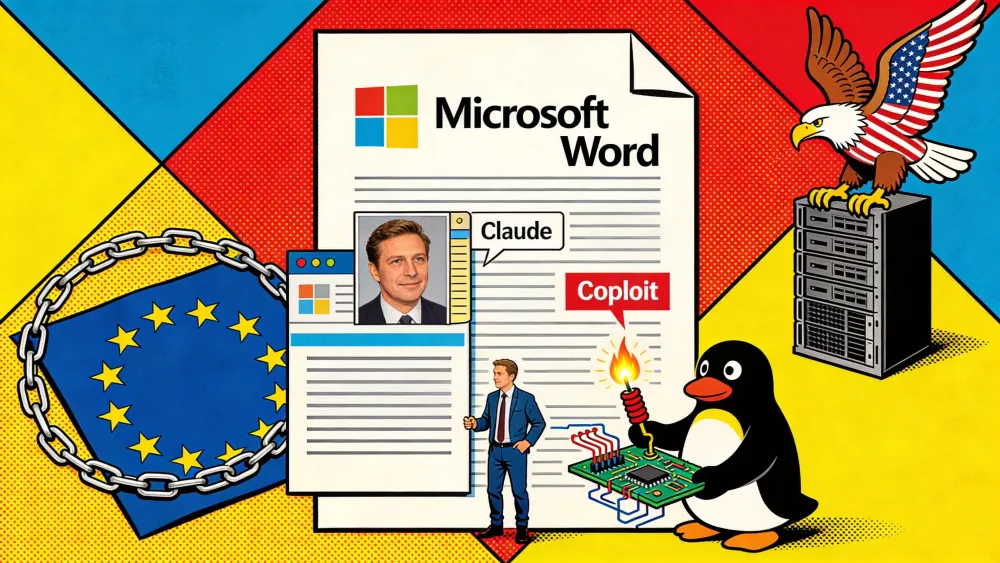
San Francisco | April 13, 2026
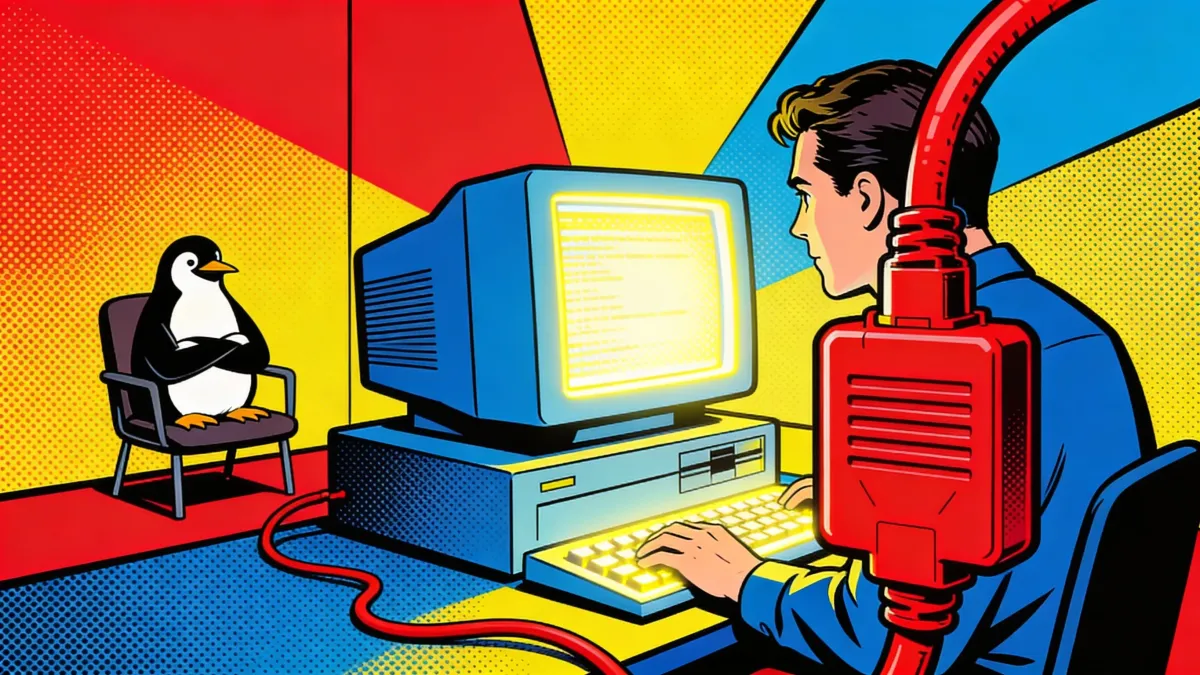
Anthropic parked Claude inside Microsoft Word on Saturday. A $25 Claude seat now sits beside Redmond's $30 Copilot in the same sidebar, contract review is the wedge, and Microsoft is somehow the landlord. Over on the kernel, Linux merged a 59-line policy that permits AI code and makes the human submitter legally responsible for every line. Signed-off-by is still a person's name.
In Brussels, 84 percent of Europeans now say they distrust US tech with their data. The reason is not Trump. It is the 2018 CLOUD Act, which turns every AWS Frankfurt rack into a US subpoena target. One sentence in Europe's upcoming CADA bill will decide the next decade.
Stay curious,
Marcus Schuler
Know someone drowning in AI noise? Forward this briefing. They can subscribe free here.
Anthropic Ships Claude for Word, Undercuts Microsoft Copilot by $5 Inside Its Own App
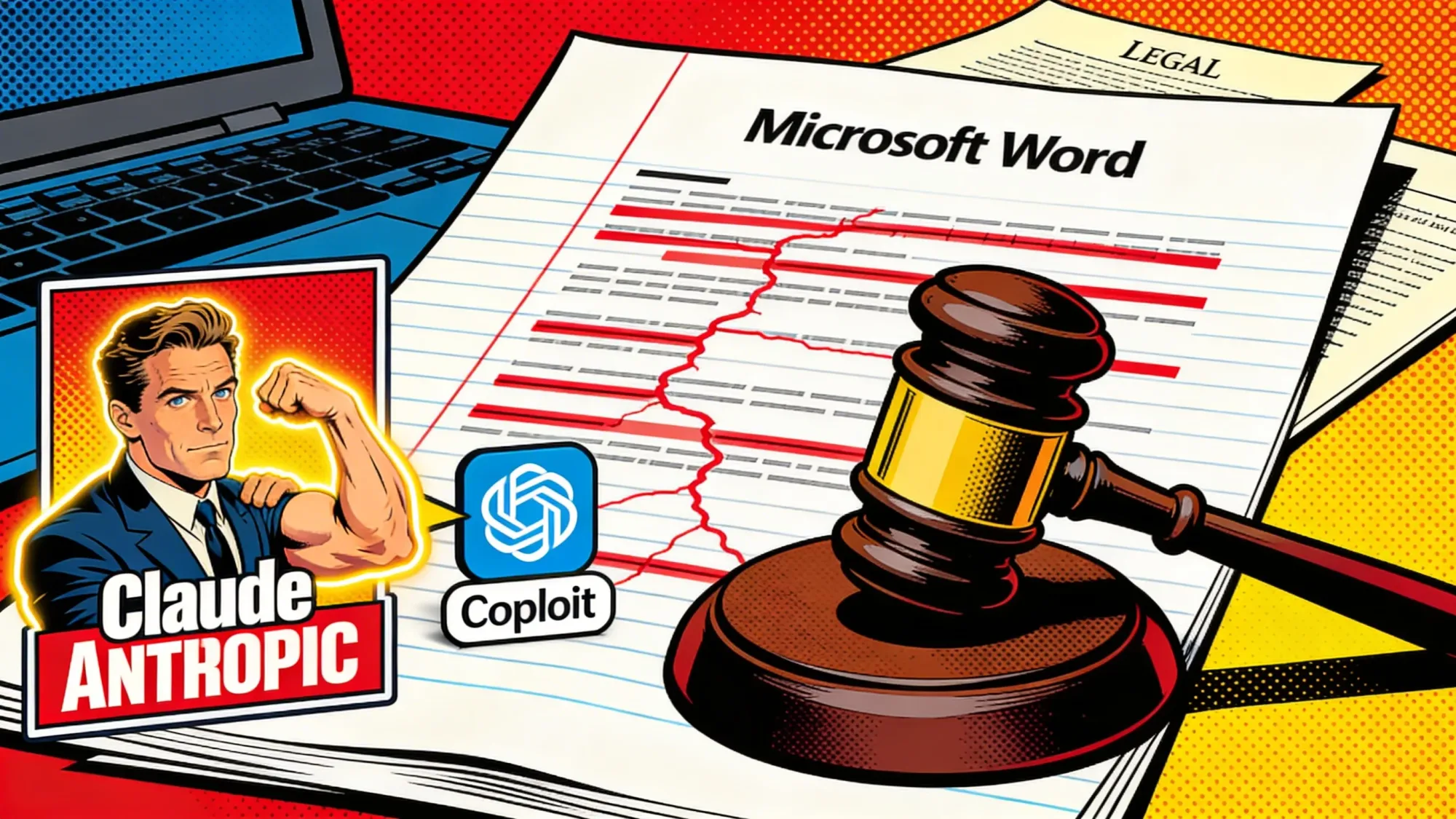
Anthropic parked Claude inside Microsoft Word on Saturday. The sidebar sits next to tracked changes, the seat costs $25 a month, and it lives inside the same app Microsoft sells Copilot through for $30.
The launch completes a three-app march through Office after Excel's Agent Mode and Copilot's Researcher function. Contract review is the wedge, the $1 trillion legal market is the prize, and early users describe Claude's tracked-changes output as cleaner than what Copilot currently delivers. Legal tech vendors lost roughly $285 billion in market value the day Anthropic rolled out its standalone legal plugin in February.
The strategic twist: Microsoft handed Anthropic the keys. Enterprise traffic routes through AWS Bedrock, Vertex AI, or Azure, so Redmond collects hosting fees either way. Menlo Ventures puts Anthropic at 32 percent enterprise LLM market share against OpenAI's 25. The pressure now moves to procurement. Why pay for both?
Why This Matters:
- Microsoft's Office moat was supposed to be distribution, not model quality. Anthropic just used the AppSource store to prove the moat works better for the cleaner model.
- Legal AI no longer exists as a standalone vendor category. Claude-in-Word collapses three years of purpose-built legal tech budgets into one sidebar toggle.
Reality Check
What's confirmed: Claude for Word beta launched April 10, 2026 via Microsoft AppSource, $25 per seat Team plan, native Word sidebar with tracked-changes integration.
What's implied (not proven): That cleaner Claude output translates into procurement wins at firms already locked into Copilot annual contracts.
What could go wrong: Microsoft bundles Copilot features into E5 at no extra charge, re-absorbing the price gap before Anthropic lands its first AmLaw 100 standard.
What to watch next: The first AmLaw 100 firm publicly disclosing a dual Copilot plus Claude for Word standard. That signals the split is real, not pilot-tier.
The One Number
48% — Jump in the spot-market hourly cost to rent one Nvidia Blackwell GPU in two months, from $2.75 to $4.08, according to the Ornn Compute Price Index. The surge reflects a capacity crunch that has forced Anthropic to meter Claude token use between 5 a.m. and 11 a.m. Pacific on weekdays, pushed OpenAI to scrap Sora to free resources for its Spud model, and driven CoreWeave to hike prices more than 20% while extending minimum contracts from one year to three. OpenAI API token consumption rose from 6 billion per minute in October to 15 billion by late March. Anthropic's Claude API logged 98.95% uptime over the last 90 days, well below the 99.99% that enterprise software contracts typically promise. "The power that's available through 2026 is already all spoken for," said Vultr CEO J.J. Kardwell.
Source: WSJ, April 12, 2026
Linux Merges 59-Line AI Code Policy, Pins Legal Liability on Human Submitter
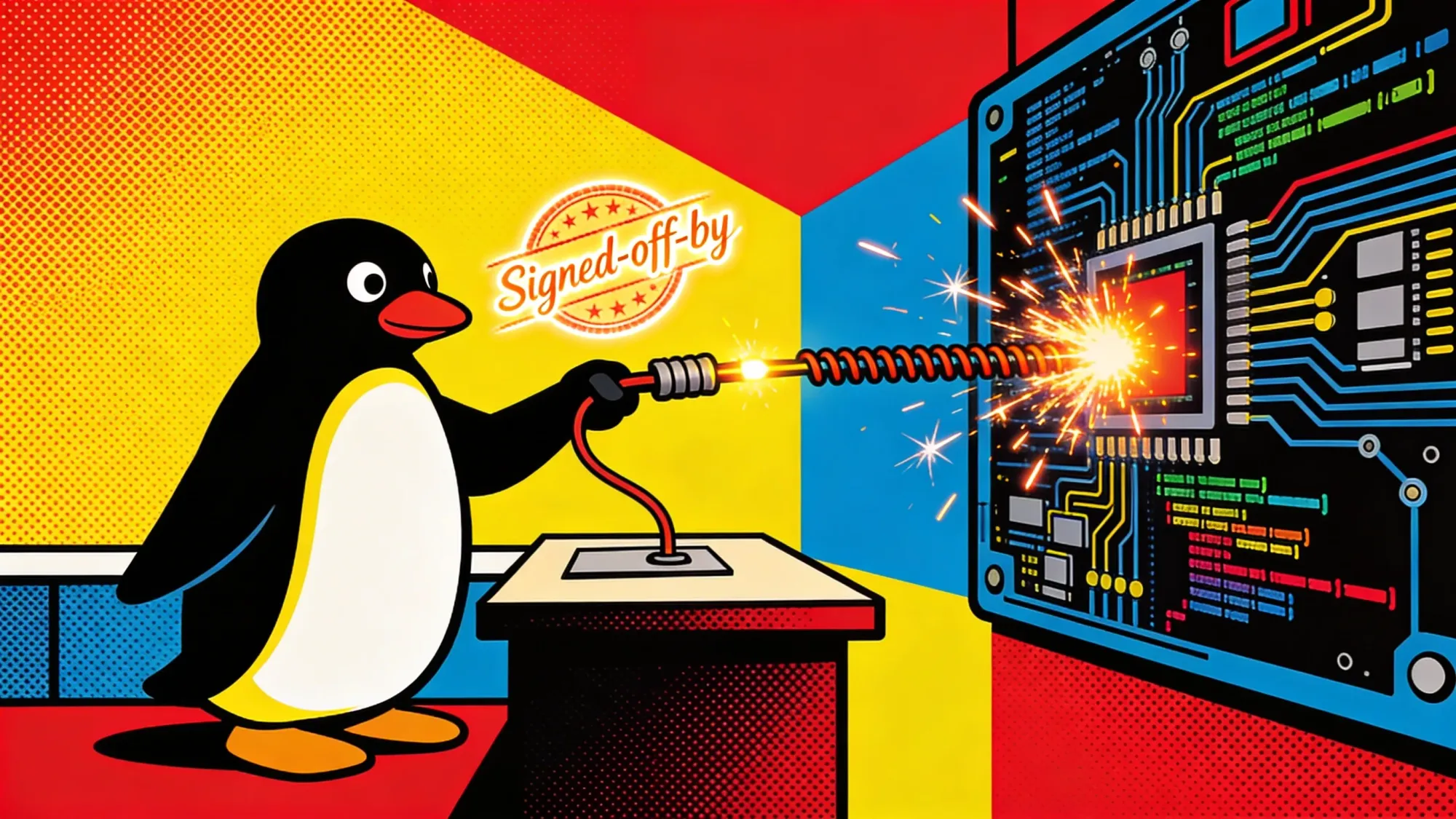
Linux merged its first AI coding assistants policy this month. Only humans can sign their name to a patch, and the signoff now carries full legal responsibility for every line the model wrote.
Maintainer Jonathan Corbet authored the 59-line document after months of debate. The Signed-off-by line is reserved for humans, certifying the Developer Certificate of Origin. A secondary Assisted-by tag records the model name and version, functioning as forensic instrumentation for tracking which tools correlate with which bugs.
The policy is only possible because Linux ships under GPL-2.0-only: GPL-trained models cannot contaminate what is already GPL. BSD-licensed projects like NetBSD and Gentoo face one-way contamination risk and have banned AI contributions outright.
Why This Matters:
- Linux did not build new accountability for AI. It kept the old one and made the submitter the fuse, a scarier deterrent than any review checklist.
- The GPL-2.0 license trick quietly became a competitive moat against BSD-based kernels that cannot legally accept the same contributions.
AI Image of the Day

Prompt: a black cat reading a book on the bed, with a coffee mug beside it and green striped pillows around it. a cute painting in the style of [artist name].
84% of Europeans Distrust US Cloud Providers, POLITICO Survey Finds
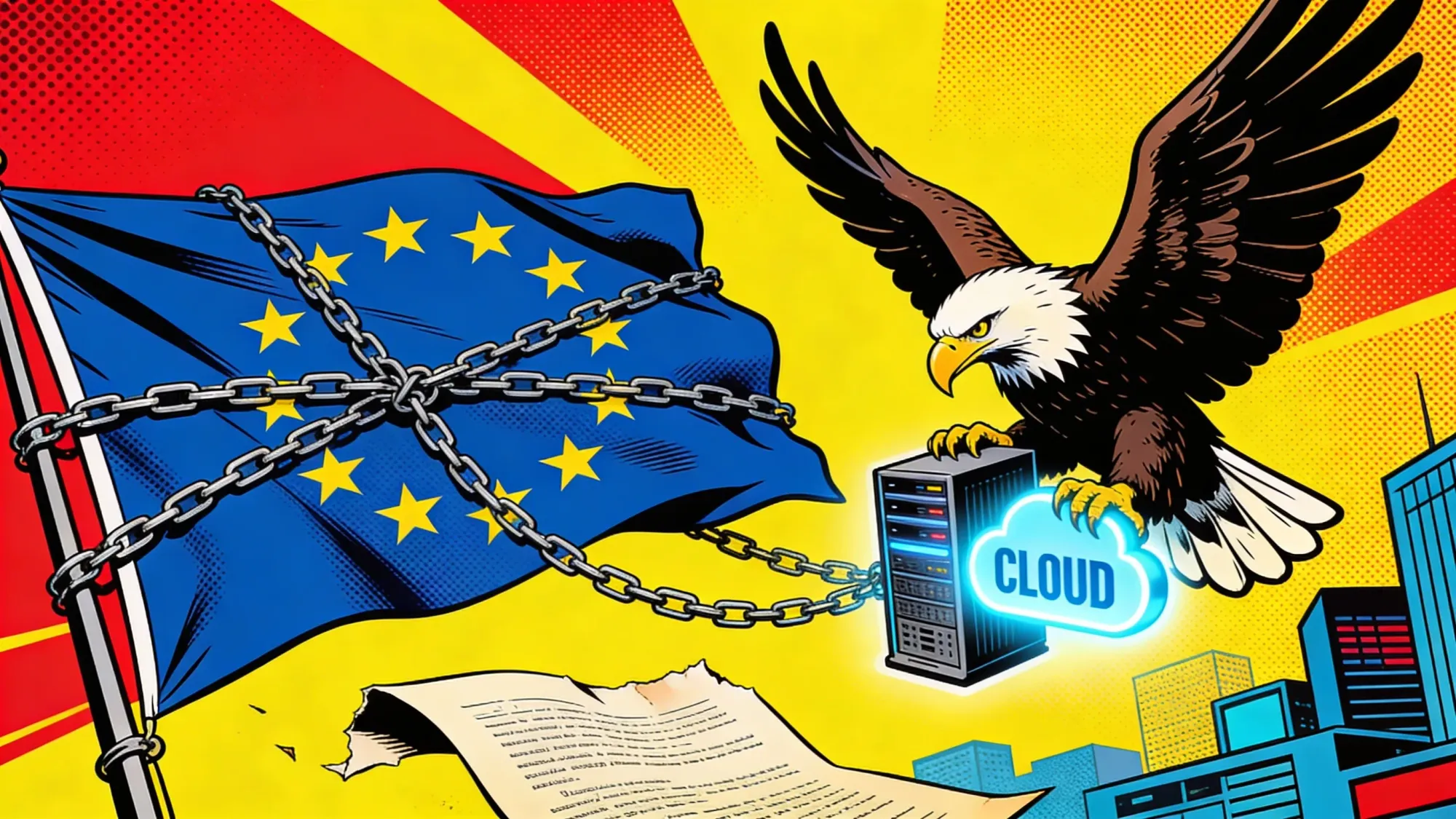
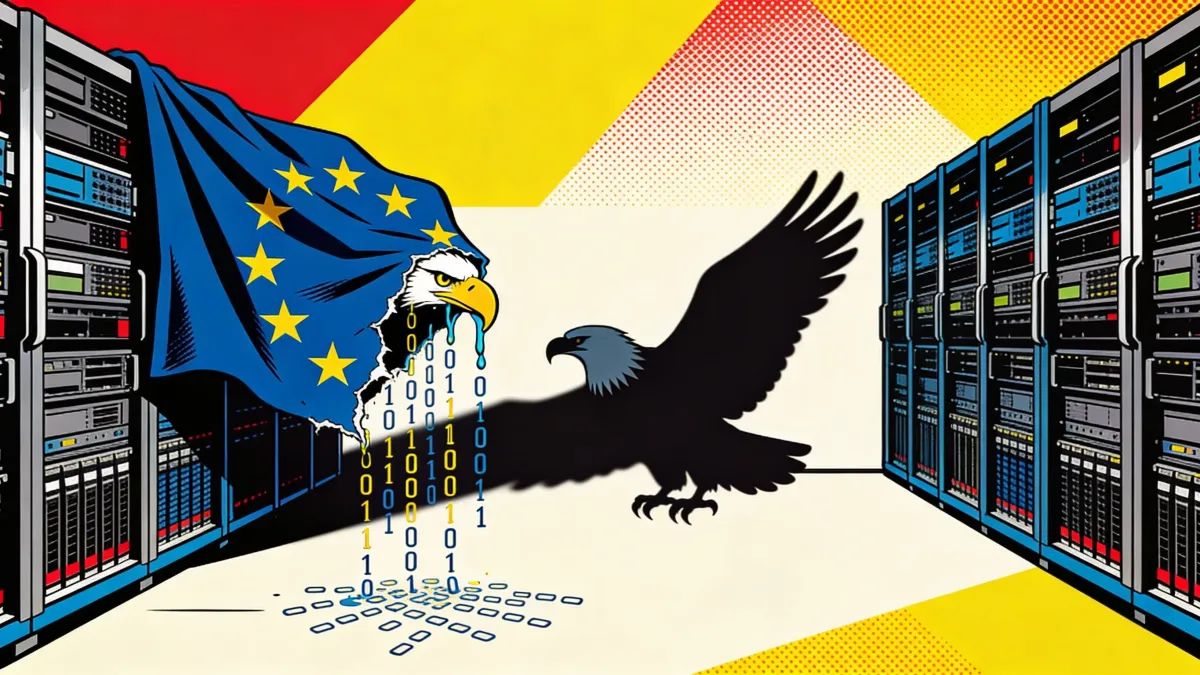
Eighty-four percent of Europeans now say they distrust American tech firms with their data, according to a POLITICO European Pulse survey. The number is not a Trump mood. It is the 2018 CLOUD Act filtering into public opinion.
The survey, fielded March 13 to 21, found 91 percent of Germans distrustful of US firms. The cause is structural. The CLOUD Act lets US authorities compel American companies to surrender customer data wherever it is physically stored, which Microsoft conceded in a French court in 2024.
AWS, Azure, and Google Cloud still hold 70 percent of the European market. OVHcloud, the largest European alternative, earned under €1 billion last year. AWS earns that in a week.
Why This Matters:
- Europe's upcoming CADA bill will decide whether sovereignty means control (excluding US-parented firms) or presence (any EU data center). One sentence.
- Forrester projects zero European enterprises will fully migrate off US providers in 2026. The real fight is the May CADA draft.

🧰 AI Toolbox
How to Let an AI Agent Write, Run, and Debug Code Across Your Entire Project with Windsurf
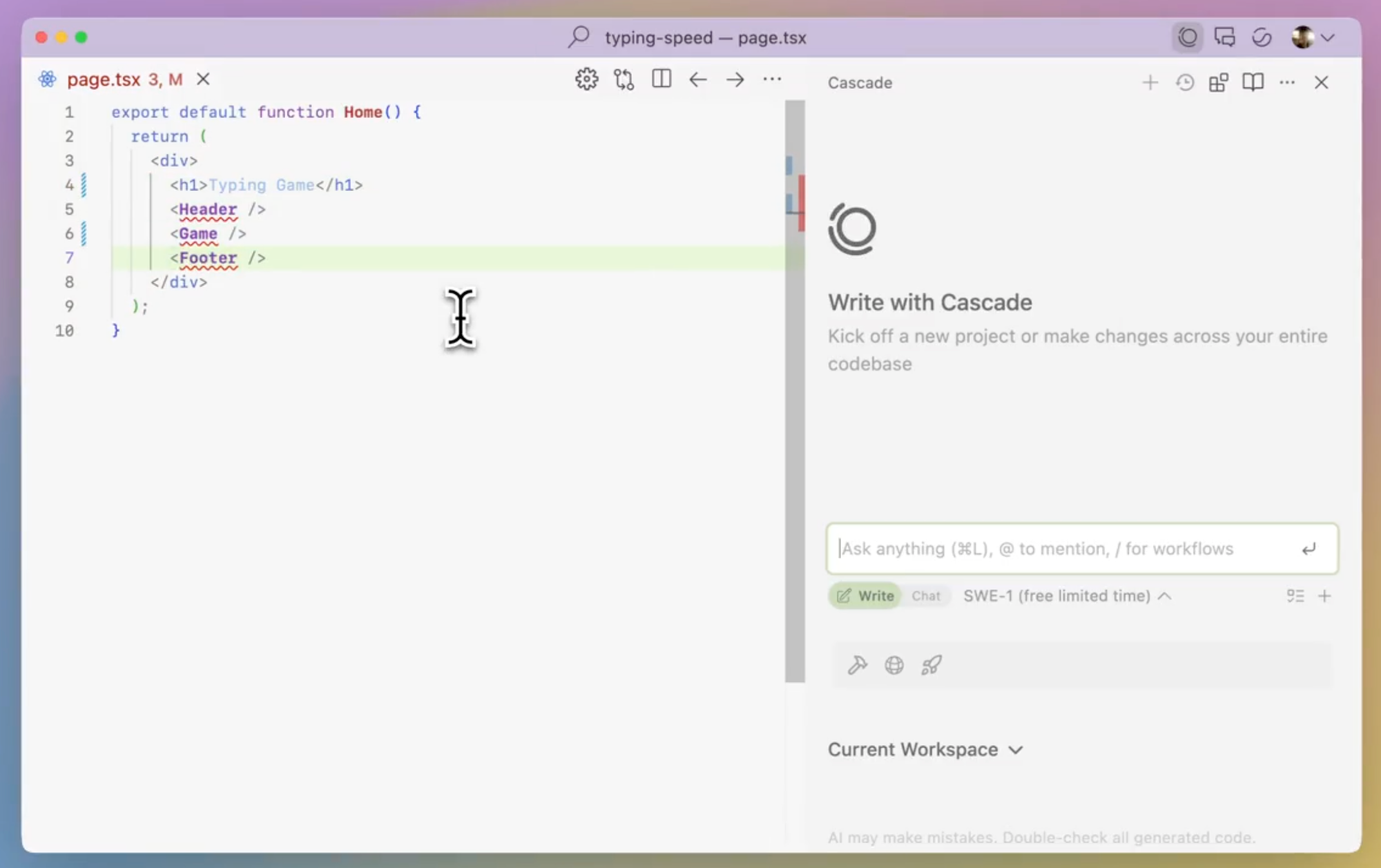
Windsurf is an AI-powered code editor built around an agent called Cascade that tracks everything you do, including file edits, terminal commands, and conversation history, then uses that shared timeline to plan and execute multi-file changes. Tell it to add a feature and it creates the files, writes the code, runs the commands, and iterates on errors without losing context between steps. The editor supports its own SWE-1.5 model alongside Claude, GPT, and Gemini. Free tier available with limited AI usage.
Tutorial:
- Download Windsurf from windsurf.com for Mac, Windows, or Linux and create a free account
- Open an existing project or ask Cascade to scaffold one from scratch: "Create a Next.js app with Tailwind and a dark mode toggle"
- Create a
.windsurfrulesfile in the project root to define your stack and conventions, Cascade reads it on every interaction - Give Cascade a task that spans multiple files: "Add user authentication with a login page, API route, and database model"
- Watch it plan the steps, create files, edit code, and run terminal commands while explaining its reasoning at each stage
- Try dragging a screenshot or Figma export into the chat and ask Cascade to build the UI from the image
- Click "Preview" to see your changes rendered live in the built-in browser without leaving the editor
URL: https://windsurf.com
What To Watch Next (24-72 hours)
|
||
|
||
|
🛠️ 5-Minute Skill: Turn Last Week's Slack Noise Into Monday Morning Priorities
It is Sunday night. You have 400+ unread Slack messages from the week. Monday morning you need to know what actually matters before your 9 AM standup, not what everyone was chatting about.
Your raw input:
#general: 120 messages
#eng-team: 85 messages, threaded decision on database migration
#product: 60 messages about Q2 roadmap
Direct messages: 35 unread, including two from VP
@mentions: 18 across channels
The prompt:
From this Slack backlog, give me: (1) anything that requires
a decision or response from me today, (2) one decision my team
already made without me, (3) one thread I need to reply to
before standup. Skip general chatter. Under 100 words.
The output:
- Needs you today: VP asked Friday 4 PM if you are joining the customer escalation call at 10:00. No reply yet. Respond now.
- Team decided without you: Engineering picked Postgres over DynamoDB for the migration. Check the thread if you disagree.
- Before standup: Product wants your Q2 roadmap sign-off by 9:30. Scan the proposal.
Why this works:
Slack rewards volume, not signal. The AI cuts 400 messages to three actions filtered by what needs you, rather than what happened.
What to use:
Claude handles long contexts best, paste the entire backlog. ChatGPT works for shorter dumps. Save the prompt and reuse it every Monday.
📖 AI Alphabet
|
C
|
📖 AI Alphabet Context Window The context window is the amount of text, code, or data a model can hold in mind at one time. A larger context window lets it consider more material before answering. |
AI & Tech News
US, China, and Russia Race to Field AI-Driven Autonomous Weapons
Washington, Beijing, and Moscow are rapidly expanding military AI programs covering drone swarms, predictive targeting, and automated command systems. International observers warn the pace of deployment is outstripping any agreement on accountability or escalation controls.
Sam Altman's Home Targeted in Second Attack Within 48 Hours
Police are investigating a second suspected attack on Sam Altman's San Francisco residence after gunfire was reported early Sunday from a vehicle near the property. The incident follows an initial attack two days earlier, raising concerns about targeted threats against frontier AI executives.
UK Regulators to Brief Banks on Claude Mythos Cyber Risks Within Two Weeks
The Bank of England and the FCA are preparing to warn banks, insurers, and exchanges about security vulnerabilities tied to Anthropic's Claude Mythos Preview. Regulators fear the model's social engineering and authentication-bypass capabilities could reshape financial-sector threat models.
Anthropic Delays Mythos Preview Release as Outside Analysts Question Claims
Anthropic confirmed it will not release Claude Mythos Preview to the public in the near term, per analysis by Zvi Mowshowitz. The delay sparks debate over whether the headline vulnerability counts hold up to independent replication and what the timing says about the lab race.
Trump's AI Chip Export Push Stalled by BIS Bottleneck
The Bureau of Industry and Security is struggling to process AI chip export licenses as staff attrition and unclear policy guidance pile up at the agency. Manufacturers and allied buyers face growing approval delays, undercutting the administration's push to make American silicon the global default.
FTC Nears Settlement with Ad Firms Over Alleged X Boycott
The Federal Trade Commission is in active settlement talks with multiple advertising companies over an antitrust probe into coordinated boycotts of Elon Musk's X. The inquiry turned on whether the firms illegally steered client spend away from the platform in violation of competition law.
China's Victory Giant Targets $2.2 Billion Hong Kong Listing on April 21
Server PCB maker Victory Giant Technology plans to raise up to $2.2 billion in its Hong Kong IPO next Tuesday. The Shenzhen-listed supplier was valued at $37 billion as of April 10, one of the richest marks for a private Chinese hardware firm serving the AI build-out.
Google's TurboQuant Compression Could Boost, Not Cut, Memory Chip Demand
Analysts argue Google's new TurboQuant compression algorithm for large language models will expand rather than shrink memory demand. Compressed models still require high-bandwidth memory for real-time inference, and broader adoption offsets per-model savings at the system level.
Flipkart and Amazon Squeeze India's Quick Commerce Startups
Walmart-owned Flipkart and Amazon are aggressively entering India's booming quick commerce market, pressuring smaller players already fighting thin margins. Some local firms report order volumes more than doubling, but profitability remains elusive as the two giants scale ultra-fast delivery.
Bloomberg Reporter Drops 20 Pounds Training for the Paris Marathon With ChatGPT
A Bloomberg journalist trained for the Paris Marathon using a ChatGPT-generated plan, logging a 20-pound weight loss and a faster race time over six months. The honest postmortem flags the limits of AI coaching: trial and error, human oversight, and injury judgment still carry most of the work.
🚀 AI Profiles: The Companies Defining Tomorrow
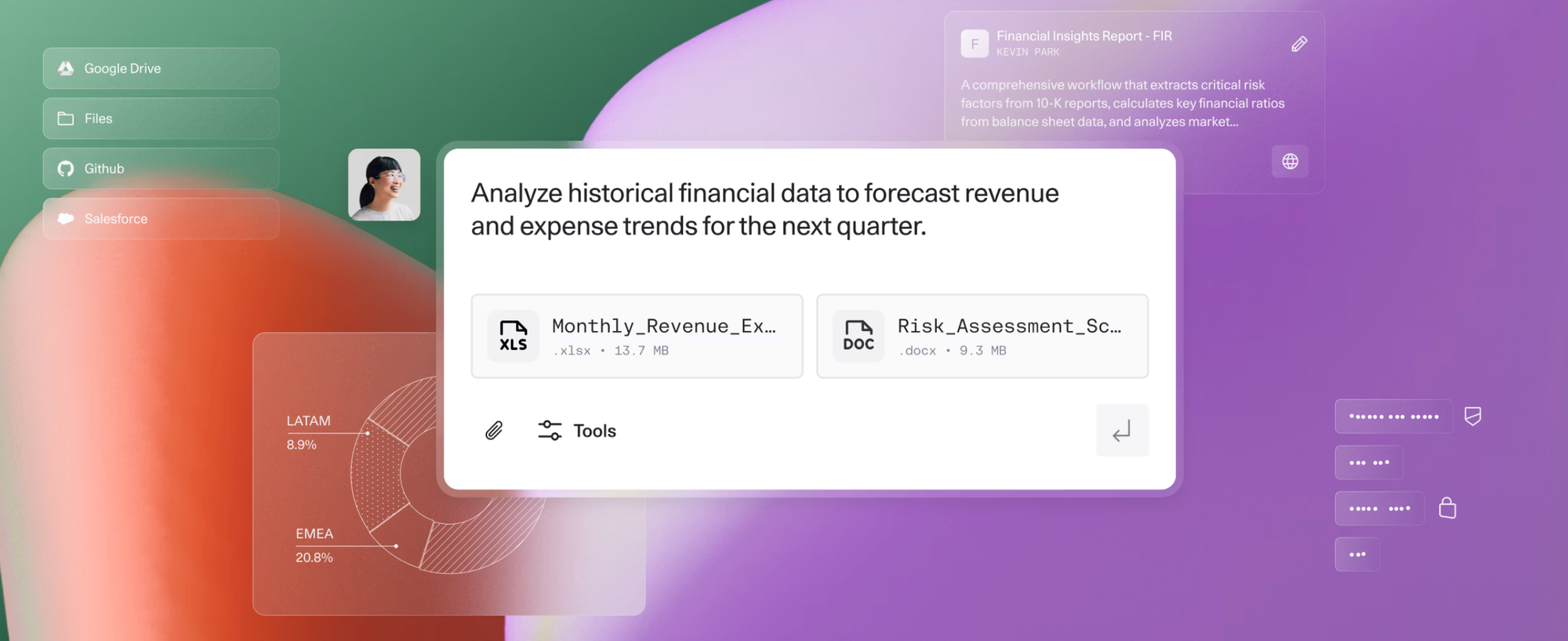
Cohere sells sovereign enterprise AI to banks, telecoms, and governments that refuse to park their data inside a Silicon Valley cloud. 🍁
Founders
Aidan Gomez co-authored the 2017 "Attention Is All You Need" paper that created the transformer, then left Google Brain in 2019 to start Cohere in Toronto with Ivan Zhang and Nick Frosst. Headcount sits around 600 across Toronto, San Francisco, London, and New York.
Product
Command A is a 111-billion-parameter model with a 256,000-token context window, tuned for enterprise workloads rather than chatbot hype. North, the flagship agent platform, spent 18 months in development and is now live with RBC in banking, Dell in tech, Ensemble Health Partners in healthcare, and Bell in telecom. Compass handles enterprise search, Model Vault covers air-gapped deployments, and the Tiny Aya family runs multilingual inference on edge devices.
Competition
OpenAI and Anthropic dwarf Cohere on raw frontier model scores. Databricks, Writer, and Mistral crowd the enterprise lane. Cohere's wedge is regulated industries that cannot put sensitive data into an American hyperscaler. This month the company confirmed advanced merger talks with Germany's Aleph Alpha, backed by Berlin, aimed at creating a dual Toronto-Germany sovereign vendor with the German government as anchor customer.
Financing 💰
$500 million in August 2025 at a $6.8 billion valuation, plus a $100 million extension in September that lifted the mark to roughly $7 billion. Investors include Radical Ventures, Inovia Capital, AMD, Nvidia, Salesforce Ventures, Cisco, and Canada's PSP Investments. Annual recurring revenue hit $240 million by the end of 2025, beating a $200 million target, with quarter-over-quarter growth above 50%.
Future ⭐⭐⭐⭐
New CFO François Chadwick, ex-Uber, was hired to take Cohere public in 2026. Former Meta AI boss Joelle Pineau runs the research agenda. A Berlin merger would cement Cohere as the non-American option for regulated enterprise buyers, a category growing faster than the frontier wars suggest. The risk is the middle: too small to outspend OpenAI, too expensive to undercut open models. 🏢
🔥 Yeah, But...
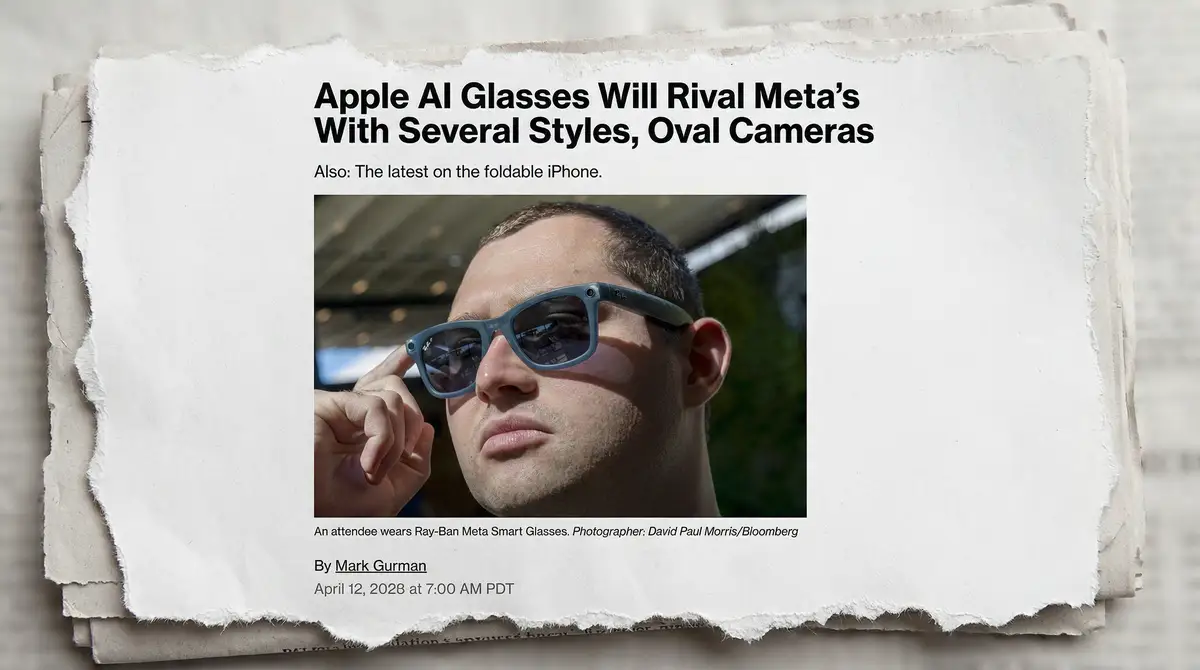
Apple is developing display-free smart glasses under the code name N50, with four frame styles in testing and a planned 2027 release, pitching vertically oriented oval camera lenses as its answer to Meta's circular ones. On the same day, Bloomberg reports former AI chief John Giannandrea is ending his "rest and vest" period, his last day timed to the April 15 stock vesting date.
Source: Bloomberg, April 12, 2026
Our take: Apple originally promised true AR glasses in 2022. It is now 2026, Meta has spent three years actually selling Ray-Bans to human beings, and Cupertino's considered response is the shape of the camera housing. Vertical. Oval. Not, under any circumstances, circular.
Four frame styles are reportedly in testing, including rectangular Wayfarers, slim rectangles modeled on Tim Cook's preference, large ovals, and smaller ovals. One imagines the committee meetings: grown adults, paid executive salaries, comparing the curvature of plastic while the market moves on without them. The colors include ocean blue and light brown, which is the kind of detail a company leaks when it has nothing else to say.
This is a company that once rewrote entire categories arriving fourth to this one and insisting, with great dignity, that its lens geometry constitutes a vision. Somewhere on the other side of the campus, the former AI chief is running out the clock to his April 15 vesting date like a man politely waiting for the elevator. Arguably the most honest product Apple has shipped all year.

Marcus Schuler
Editor-in-Chief and founder of Implicator.ai. Former ARD correspondent and senior broadcast journalist with 10+ years covering tech. Writes daily briefings on policy and market developments. Based in San Francisco. E-mail: [email protected]