 IMPLICATOR
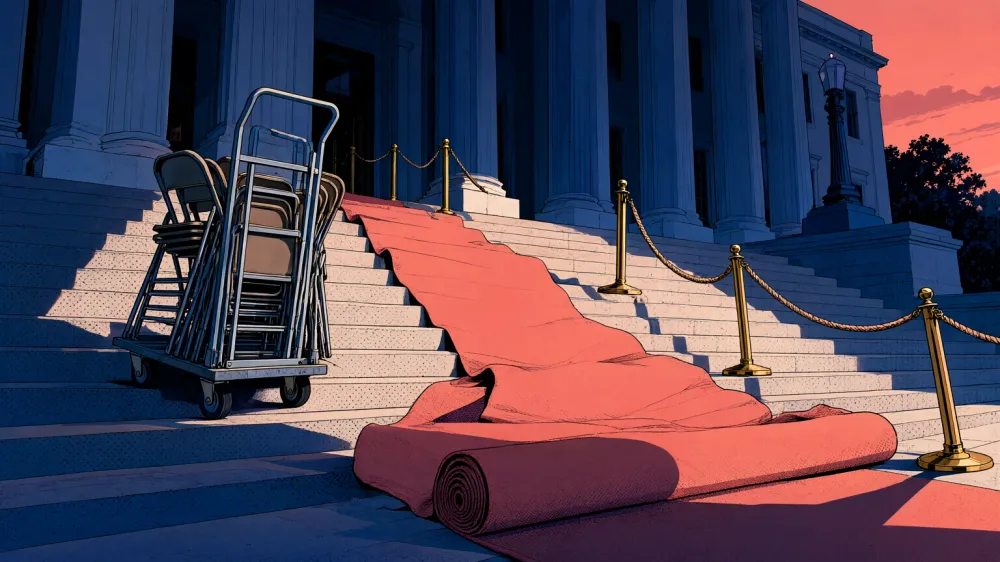
Nick Clegg, Meta’s former president of global affairs, called Silicon Valley’s alliance with President Donald Trump “a near-total failure” in an essay published Tuesday. He assessed the partnership against the industry’s stated goals of beating China in AI, easing public concern about the technology and resisting foreign regulation. Democrats take control of both chambers of Congress on Jan. 3 and with them the committees that can compel executives to testify.
The Breakdown
- Nick Clegg, Meta's former president of global affairs, called Silicon Valley's alliance with President Trump "a near-total failure" in an essay published Nov. 10.
- He scored the alliance against three industry goals: beating China in AI, easing public concern about the technology and resisting foreign regulation.
- Democrats take control of both chambers of Congress on Jan. 3, and with them the committees that can compel executives to testify.
- Chamber of Progress chief Adam Kovacevich said the vote was an anti-Trump wave, not an anti-tech mandate.
AI-generated summary, reviewed by an editor. More on our AI guidelines.
Clegg’s scorecard
Writing in The Atlantic a week after the midterms, Clegg said China had narrowed America’s AI lead despite the promised benefits of closer cooperation between Washington and Silicon Valley. He wrote that China was moving faster in deploying open-weight models and training researchers and engineers at greater scale.
The essay is opinion and cites no data for its claims about China closing the gap or U.S. public attitudes toward AI; Clegg wrote that he played “a peripheral part in some of the discussions at the time,” and he called Mark Zuckerberg “my former boss.”
The partnership had also failed to reassure Americans about AI, Clegg wrote. He said public attitudes had become more negative than under President Joe Biden.
Clegg credited Commerce Secretary Howard Lutnick with helping technology companies fight European Union enforcement decisions. He wrote that hostility toward American technology had grown, with Canada, India, Germany and Brazil seeking to reduce their dependence on Silicon Valley’s products.
How executives followed Trump
Elon Musk, Mark Zuckerberg and Jeff Bezos were front and center at Trump’s January 2025 inauguration, and Musk spent more than $250 million to help elect Trump.
FREE · ABOUT FIVE MINUTES
Follow tech's reckoning with Washington.
Implicator cuts the flood to the developments worth your attention, with concise reporting on what changed and why it matters. Delivered every weekday at 4:45 a.m. Pacific, 7:45 a.m. Eastern.
From San Francisco. No spam. Unsubscribe anytime.
Clegg, a former U.K. deputy prime minister, wrote that he announced his departure from Meta shortly before Trump’s inauguration in 2025. He now works in venture capital.
He traced part of the industry’s shift to Musk’s election night at Mar-a-Lago in 2024. Seeing Musk alongside Trump made competing executives fear they would miss opportunities to strike deals with the incoming administration, Clegg wrote.
He also singled out venture capitalists Marc Andreessen and David Sacks. Their success backing cryptocurrency campaigns encouraged them to treat those victories as a guide for the wider technology industry, he wrote.
Executives had mistaken Trump’s reelection for a lasting political shift, Clegg wrote.
Democrats prepare investigations
An NBC News exit poll found that 56% of voters called AI and data centers a “crucial or major factor” in their vote for Congress on Nov. 3.
Rep. Greg Casar, chair of the Congressional Progressive Caucus, called for AI company chiefs to testify under oath. Sen. Ed Markey warned tech executives on election night: “They are going to need to plant new forests for all of the subpoenas we’ll be printing.”
Know someone who'd find this useful? ✉️ Email it to a friend in one click, or they can subscribe free here.
Clegg wrote that Democrats “now have every incentive to make life as uncomfortable as they can for Trump-supporting tech leaders.” Passing legislation would still require lawmakers to overcome divisions within their party and Trump’s veto power.
Industry pushback
Adam Kovacevich, chief executive of Chamber of Progress, a coalition funded by major technology companies, said: “Let’s not confuse an anti-Trump wave with an anti-tech mandate.” He said the results offered “little evidence of a voter mandate to crack down on AI or data centers.”
Sacks, Trump’s former AI czar, said on the All-In podcast on Nov. 8: “I believe that Democrats want to create a surveillance and censorship state that’s turbocharged by super intelligence.”
Rep. Sam Liccardo said Democrats would need to work with the industry to address voters’ concerns about AI.
“We won’t be forgiven two years from now, if all we did was: held hearings, piously poked our fingers in the air and blamed tech CEOs for all of our ills,” Liccardo said. “Congress has to act.”
Frequently Asked Questions
What did Nick Clegg say about Silicon Valley and Trump?
In an essay published Nov. 10 in The Atlantic, Clegg called the tech industry's alliance with President Trump "a near-total failure" when measured against the industry's own stated goals. He wrote that Democrats now have every incentive to make life uncomfortable for Trump-supporting tech leaders.
Who is Nick Clegg?
Clegg is a former U.K. deputy prime minister and Meta's former president of global affairs. He wrote that he announced his departure from Meta shortly before Trump's 2025 inauguration, called Mark Zuckerberg his former boss, and now works in venture capital.
What were the three goals Clegg measured the alliance against?
Beating China in AI, easing public concern about the technology, and resisting foreign regulation. Clegg wrote that China had narrowed America's AI lead and that public attitudes toward AI had turned more negative than under President Biden. He credited Commerce Secretary Howard Lutnick with helping fight European Union enforcement decisions.
Does the essay back its claims with data?
No. The essay is opinion and cites no data for its claims about China closing the gap or about U.S. public attitudes toward AI. Clegg also wrote that he played only a peripheral part in some of the discussions at the time.
How has the tech industry responded to the midterm results?
Adam Kovacevich, chief executive of Chamber of Progress, said the results should not be read as an anti-tech mandate. David Sacks, Trump's former AI czar, said on the All-In podcast on Nov. 8 that Democrats want a surveillance and censorship state. An NBC News exit poll found 56% of voters called AI and data centers a crucial or major factor.
AI-generated summary, reviewed by an editor. More on our AI guidelines.


Free AI briefing · Weekdays
The AI stories that matter, sourced and explained.
Join the Morning Briefing. It goes out every weekday at 4:45 a.m. Pacific, with later sends for the East Coast, Berlin and Tokyo.
Free when you sign up: The Paperclip Compendium, our tested guide to running AI agents.
Free. Unsubscribe in one click.

Marcus Schuler
Editor-in-Chief and founder of Implicator.ai. Former ARD correspondent and senior broadcast journalist with 10+ years covering tech. Writes daily briefings on policy and market developments. Based in San Francisco. E-mail: editor@implicator.ai