IMPLICATOR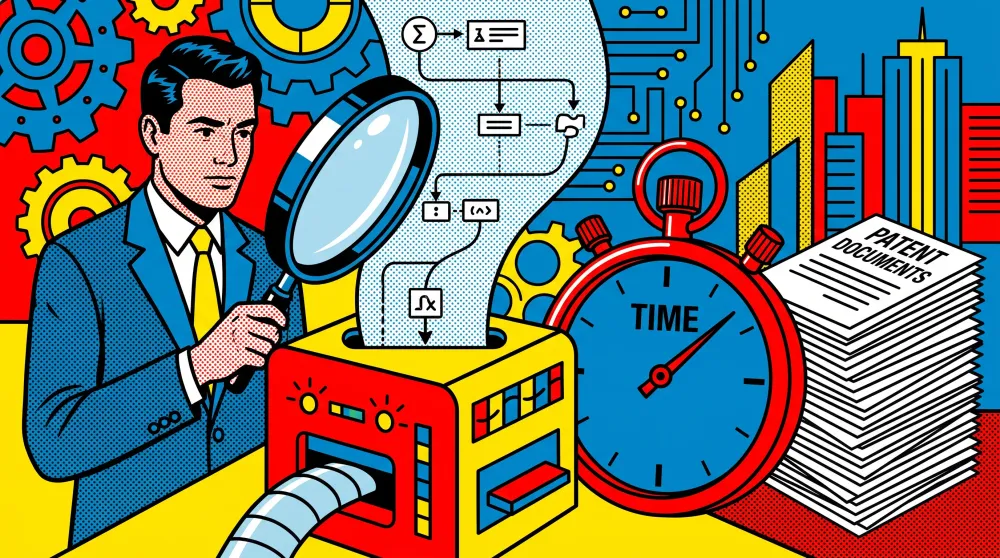
Toronto patent-research startup NLPatent has rebranded as Clerq and launched software it says can produce a full patentability analysis in about 10 minutes. The Aug. 18 release couples rapid screening with a cited report whose reasoning is reviewed by an attorney. Clerq is taking on research often assigned to junior associates or outside search firms, while leaving the lawyer responsible for the result.
What Changed
- Clerq says its full patentability report takes about 10 minutes and includes cited reasoning.
- Two workflows cover rapid invention triage and feature-by-feature patentability analysis.
- The USPTO keeps responsibility for AI-assisted facts, arguments and citations with the human practitioner.
- The launch and reviewed materials include no independent test of Clerq’s speed, citation completeness or report accuracy.
AI-generated summary, reviewed by an editor. More on our AI guidelines.
Two assignments
One workflow screens large volumes of invention disclosures for a quick go-or-no-go decision. The other conducts a full patentability review, producing feature-by-feature reasoning and references for each conclusion. Clerq says an attorney examines that reasoning before signing off.
For the full report, the software identifies key elements, builds search terms, plans a strategy and analyzes the results. A claim chart maps each element to cited prior art. The rapid option can run straight through, while the deeper report permits review gates.
The company describes the shift as a move from selling tools to performing work under professional direction. “This isn’t a smarter version of the same software-as-a-service model, it’s service as software,” Stephanie Curcio, Clerq's chief executive and co-founder, said. “Work that used to be delegated down or sent out now happens in minutes, under the direction of the professional accountable for it.”
The new name refers to a law clerk, who performs substantive work under an attorney’s direction. Clerq says its models operate in a private cloud, customer data is not used for training and reports include the passages and reasoning behind their conclusions.
The verification burden
The U.S. Patent and Trademark Office permits AI-assisted work, but its April 2024 guidance keeps responsibility with the human practitioner. Anyone submitting a paper must verify its facts, legal arguments and citations. The agency says simply relying on an AI tool’s accuracy is not a reasonable inquiry. It also warns that entering client information into third-party systems can create confidentiality, national-security and export-control risks.
Practitioners must also review every prior-art reference listed on an information-disclosure statement. The USPTO says irrelevant or marginally pertinent cumulative material should be removed before submission rather than passed along unchecked.
Get Implicator.ai in your inbox
Strategic AI news from San Francisco. No hype, no "AI will change everything" throat clearing. Just what moved, who won, and why it matters. Daily at 6am PST.
No spam. Unsubscribe anytime.
Prior-art comparison remains difficult for people and machines. In a 2025 novelty-evaluation study, one human classified 13 of 20 examples correctly using claims alone and 12 of 20 when cited prior art was added. Classification models scored near chance when asked to compare claims with cited text. The study used a small human sample and did not test Clerq.
Know someone who'd find this useful? ✉️ Email it to a friend in one click, or they can subscribe free here.
A separate 2025 survey found that patent descriptions average more than 11,000 tokens, based on a patent dataset, and described patent language as unusually technical and precise. It also noted that some deep-learning retrieval methods failed to beat BM25, a conventional ranking method, in patent search tests.
The launch materials and the materials reviewed for this article do not include an independent test of the 10-minute turnaround, citation completeness or report accuracy.
From search to agent
Stephanie Curcio and James Stonehill founded the company in 2021. It announced a $3 million financing round in November 2025, led by Draper Associates and Mighty Capital. The all-equity round had closed that September, and Clerq said the money would support product development and expansion in North America and Europe.
The rebrand extends a patent search and monitoring business into software that produces full patentability reports with feature-by-feature reasoning, cited prior art and attorney review. Clerq says invalidity research and freedom-to-operate analysis are next on its roadmap. Will those reports deliver the same speed and cited reasoning when attorneys examine the work?
Frequently Asked Questions
What did Clerq launch?
The company, formerly called NLPatent, launched a rapid triage workflow for invention disclosures and a full patentability workflow that produces feature-by-feature reasoning and cited prior art.
How fast does Clerq say the full report is?
Clerq says a full patentability analysis takes about 10 minutes. The launch and reviewed materials do not include an independent test of that turnaround, citation completeness or report accuracy.
Does an attorney review the AI output?
Clerq says an attorney reviews the reasoning before signing off. Its product materials also describe optional review gates during the deeper workflow.
What does the USPTO require when lawyers use AI?
Its April 2024 guidance says practitioners remain responsible for verifying facts, legal arguments and citations, and must consider confidentiality, national-security and export-control risks.
What is next on Clerq’s roadmap?
Clerq says invalidity research and freedom-to-operate analysis are the next workflows planned after the patentability launch.
AI-generated summary, reviewed by an editor. More on our AI guidelines.


Free AI briefing · Weekdays
The AI stories that matter, sourced and explained.
Join the Morning Briefing. It goes out every weekday at 4:45 a.m. Pacific, with later sends for the East Coast, Berlin and Tokyo.
Free when you sign up: The Paperclip Compendium, our tested guide to running AI agents.
Free. Unsubscribe in one click.

Marcus Schuler
Editor-in-Chief and founder of Implicator.ai. Former ARD correspondent and senior broadcast journalist with 10+ years covering tech. Writes daily briefings on policy and market developments. Based in San Francisco. E-mail: editor@implicator.ai