Implicator
San Francisco | February 19, 2026
Mark Zuckerberg told a Los Angeles jury that banning beauty filters on Instagram felt "overbearing." Eighteen of Meta's own experts disagreed. The case is the first of 1,600 to reach trial. Plaintiffs are running Big Tobacco's playbook: sue the product, not the content.
Phison's CEO calls himself a "memory beggar." AI data centers are devouring the global chip supply so fast that consumer electronics companies could go bankrupt by year-end. An 8GB module that cost $1.50 in early 2025 now runs $20.
OpenAI is closing a $100 billion round at an $850 billion valuation. Amazon alone may write a $50 billion check. Profitability is penciled in for 2029.
Stay curious,
Marcus Schuler
Zuckerberg Defends Beauty Filter Decision as First of 1,600 Cases Reaches Jury

Mark Zuckerberg told a Los Angeles jury that banning beauty filters on Instagram felt "overbearing." Eighteen of Meta's own experts had unanimously concluded the filters harmed teenage girls. The company lifted the ban anyway.
The trial, which opened Tuesday in Judge Carolyn Kuhl's courtroom, is the first of 1,600 consolidated child safety lawsuits to reach a jury. Plaintiff KGM, now 20, alleges Instagram's design features caused her depression and suicidal thoughts. TikTok and Snap settled before trial. Meta and YouTube chose to fight.
The legal strategy matters as much as the verdict. Plaintiffs framed Instagram as a defective product rather than a content platform, bypassing Section 230 entirely. The claim targets design features: infinite scroll, autoplay, beauty filters. Attorney Mark Lanier displayed a 50-foot collage of KGM's filtered selfies in the courtroom.
Internal documents show Zuckerberg set goals in 2015 to increase time spent on apps by 12% and "reverse teen trend." By 2017, an internal memo stated: "Mark has decided the top priority for the company is teens." Instagram's daily engagement target hit 40 minutes in 2023, climbing to 46 minutes by 2026. The company knew approximately 4 million children under 13 were using the platform but did not require birthdays until late 2019.
More than 350 families and 250 school districts have pending cases. Meta posted $60 billion in quarterly revenue. A plaintiff verdict would trigger a settlement wave.
Why This Matters:
- The product liability framing could create a legal template for holding platforms accountable for design choices, not content, across the entire social media industry.
- Over 1,599 additional cases are waiting. A loss turns Meta's legal exposure from theoretical to existential.
✅ Reality Check
What's confirmed: Zuckerberg overruled 18 internal experts on beauty filters. Internal documents show Meta targeted teens as a company priority starting in 2017.
What's implied (not proven): That Instagram's design directly caused the plaintiff's depression and suicidal thoughts, a causal link the jury must decide.
What could go wrong: The product liability framing collapses if the court rules design features are inseparable from protected editorial choices under Section 230.
What to watch next: Jury verdict timeline and whether Meta moves to settle the remaining 1,599 cases before more internal documents go public.

The One Number
4% — Average labor productivity gain from AI adoption across 12,000 European companies, according to a CEPR study published this week. Statistically robust but well below the revolution the industry keeps promising. The same study found zero evidence of job losses. AI is making workers slightly more productive without replacing them, the opposite of both the hype and the fear.
Source: CEPR via Trending Topics EU
Phison CEO Warns Memory Shortage Could Bankrupt Electronics Companies by End of 2026

An 8GB eMMC module cost $1.50 in early 2025. By December, the same chip cost $20. Phison CEO Pua Khein-Seng says the worst is ahead.
AI data centers are consuming memory at a pace that leaves consumer electronics companies fighting for scraps. Pua, whose company controls roughly 20% of the global SSD controller market and 40% of automotive storage, described himself as a "memory beggar" in a Taiwanese television interview. Phison can fill less than 30% of customer orders.
The numbers are stark. Samsung, SK Hynix, and Micron control 93% of global DRAM production and are prioritizing high-margin server memory over consumer chips. DRAM prices climbed 40% in Q4 2025. Analysts expect another 60% increase this quarter. At least one major NAND foundry now demands three-year prepayment commitments from buyers.
The downstream effects are visible. Smartphone production could drop 100 to 250 million units this year. Sony may push the PlayStation 6 to 2029. Nvidia's upcoming Vera Rubin platform alone could consume more than 20% of global NAND production. Dell's COO called it "the worst shortage I've ever seen."
Internal foundry estimates project the shortage lasting until 2030. Some analysts see it running a full decade.
Why This Matters:
- Consumer electronics companies face margin compression or bankruptcy as memory costs eat 20% of smartphone bills of materials, up from single digits on servers.
- AI infrastructure spending is creating a resource war where data center operators outbid every other industry for the same finite supply.

AI Image of the Day

Prompt: Design a vintage postcard background with aged paper textures, featuring classic postal elements like old-fashioned stamps, handwritten addresses, and postmarks from different countries. Include soft touches of travel symbols like vintage globes, suitcases, and envelopes. The color scheme should consist of muted browns, tans, and soft blues, giving a nostalgic feel of postcards from the past. white background --ar 2:3 --profile ah56914 --stylize 50
OpenAI Closes In on Record $100 Billion Round at $850 Billion Valuation
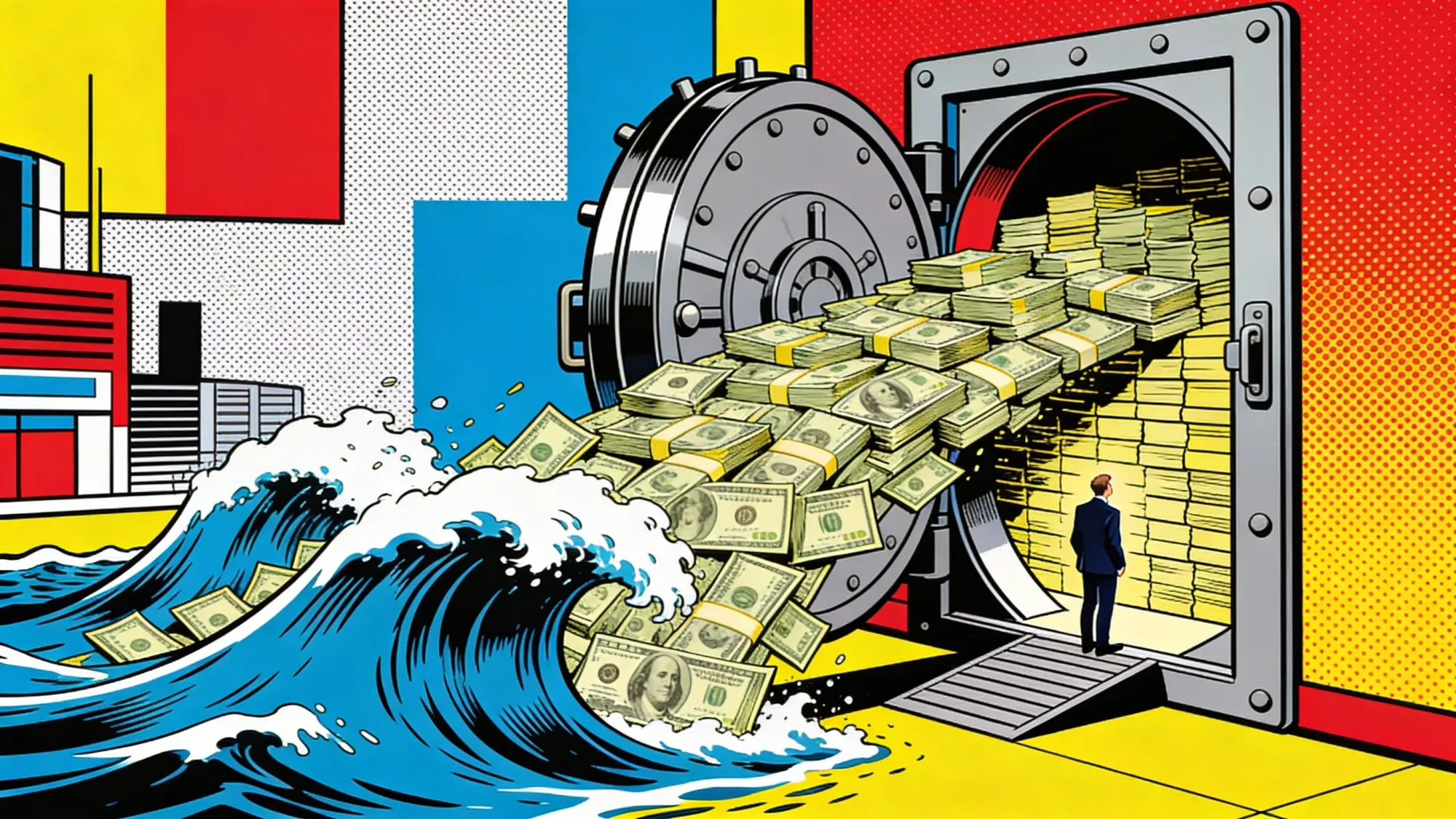
OpenAI is about to close the largest private funding round in history. Amazon may commit up to $50 billion. The company does not expect to turn a profit until 2029.
Bloomberg reports the round is nearing close by end of February, with Amazon leading at up to $50 billion, SoftBank committing up to $30 billion, and Nvidia adding roughly $20 billion. Microsoft rounds out the first tranche. The pre-money valuation sits at $730 billion, with the post-money figure expected to exceed $850 billion.
The numbers have lost all connection to traditional venture math. OpenAI's previous round closed in March 2025 at $41 billion. Anthropic raised $30 billion at a $380 billion valuation last week. In the first seven weeks of 2026, seventeen AI companies raised $100 million or more. Three exceeded $1 billion.
ChatGPT now reaches more than 800 million weekly users. Codex, the coding product, grows roughly 50% week over week. OpenAI employs about 4,000 people. Average stock compensation ran $1.5 million per employee in 2025. Sam Altman's salary: $76,001.
The company plans an IPO later this year. Altman told staff in early February that ChatGPT was "back to exceeding 10% monthly growth." The capital is earmarked for infrastructure that Altman has described as requiring "trillions."
Why This Matters:
- The round values OpenAI above all but a handful of public companies, before it has generated a single quarter of profit.
- An IPO at this valuation would be the largest tech debut in history and test whether public markets accept AI's growth-at-all-costs thesis.
🧰 AI Toolbox
How to Build a Full App From a Text Description with Base44
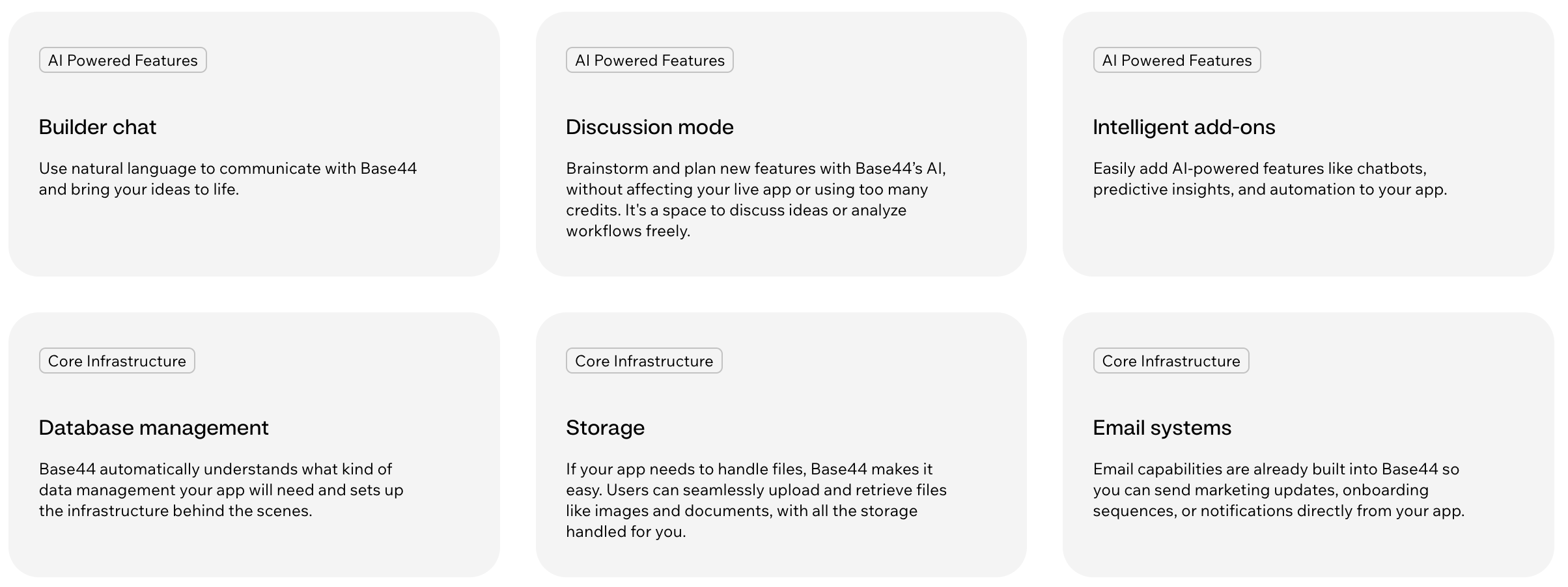
Base44 turns plain-language descriptions into working web apps with database, authentication, and hosting baked in. Describe what you need, the AI generates the code, structure, and backend. No deployment step required: your app goes live immediately. Wix acquired the company in early 2026, signaling that AI app building is moving from novelty to infrastructure. Free tier available.
Tutorial:
- Go to base44.com and sign up for a free account
- Click "Create New App" and describe what you want in conversational English ("A client portal where freelancers submit invoices and managers approve them")
- Add design preferences if you want ("clean, minimal, dark mode") or let the AI choose
- Review the generated app in the live preview, test the interface and data flow
- Refine through conversation: ask the AI to add features, change layouts, or connect integrations
- Configure user roles and permissions if your app needs login and access control
- Hit Publish to get a shareable link, or connect a custom domain on paid plans
URL: https://base44.com
What To Watch Next (24-72 hours)
- OpenAI Mega-Round: Bloomberg reports a $100 billion-plus funding round is nearing close, which would value the company above $850 billion. If confirmed, it shatters the record Anthropic set twelve days ago. Watch for a formal announcement by Friday.
- India AI Impact Summit: The summit wraps Saturday with the expo extended an extra day after record crowds. Google pledged $15 billion, Mukesh Ambani committed $120 billion. Final communique and deal tallies expected by end of week.
- Ineffable Intelligence: David Silver's new AI startup, led by the architect of AlphaGo, is reportedly raising $1 billion from Sequoia. If the round closes, it is the second pre-product AI startup this month to raise ten figures.
🛠️ 5-Minute Skill: Turn a Strategy Document Into a Board-Ready Slide Outline
Your team spent three weeks writing a 15-page strategy document. The board meeting is Friday. The CEO wants a 10-slide deck that tells the story in 20 minutes. You could spend four hours condensing, or you could let AI do the structural thinking.
Your raw input:
[Paste the full strategy document — the 12-20 page kind with
executive summary, market analysis, strategic pillars, financial
projections, risk assessment, and implementation timeline that
your team agonized over for weeks]
The prompt:
You are a management consultant preparing a board presentation.

From this strategy document, create a 10-slide outline where each
slide has:
1. **Slide title** (6 words max, action-oriented)
2. **One key message** (the single sentence the board should remember)
3. **Supporting data** (2-3 bullet points with specific numbers from the doc)
4. **Visual suggestion** (chart type or layout that makes the data land)

Structure:
- Slide 1: The strategic bet (what we're doing and why, in one sentence)
- Slides 2-3: Market context (only the data that justifies the bet)
- Slides 4-6: The plan (3 pillars max, each with one metric)
- Slide 7: Financial ask (investment needed, expected return, timeline)
- Slide 8: Risks (top 3, with mitigations — no more)
- Slide 9: Implementation milestones (quarterly, 12-month horizon)
- Slide 10: The decision (what you need the board to approve today)

Document:
[paste here]

Rules:
- Board members read at most 20 words per slide. Front-load the insight.
- If the document uses jargon, translate it. "Optimize go-to-market
  velocity" becomes "Sell faster in three new markets."
- Every slide must have at least one number. No slides with only text.
- Cut anything that is background context the board already knows.
What you get back:
Slide 1: We're Betting $40M on Enterprise AI Services
- Key message: Our consulting margins will compress 15% by 2027 unless we shift 30% of delivery to AI-augmented workflows.
- Supporting data: Current margin: 34%. Projected without AI shift: 19%. With AI shift: 31%.
- Visual: Single waterfall chart showing margin erosion vs. preservation.
Slide 2: The Market Moved Faster Than We Expected
- Key message: Enterprise AI services spending will hit $280B by 2028, up from $92B today.
- Supporting data: 3x growth in 4 years. Our addressable segment: $45B. Current share: 2.1%.
- Visual: Market sizing bar chart with our segment highlighted.
Slide 3: Clients Are Already Switching Providers
- Key message: 23% of our top-50 accounts ran AI pilots with competitors in the last two quarters.
- Supporting data: 12 accounts piloted with Accenture. 8 with Deloitte. 3 with boutique AI firms. Average pilot size: $350K.
- Visual: Competitive pilot tracker heat map.
[... continues through all 10 slides]
Slide 10: We Need Board Approval for Three Things
- Key message: Approve $40M investment, authorize 200 new AI specialist hires, greenlight the McKinsey partnership.
- Supporting data: Payback period: 18 months. First revenue from AI services: Q3 2026. Break-even on investment: Q1 2027.
- Visual: Simple three-item checklist with timeline.
Why this works
The prompt forces a narrative arc, not a document summary. Most strategy-to-deck conversions fail because they compress every section equally. This prompt makes structural choices: three slides for the plan, one slide for the ask, one slide for the decision. The "6 words max" title rule eliminates throat-clearing. And the "every slide needs a number" constraint prevents the vague assertion slides that make board members check their phones.
Where people get it wrong: Pasting the document and asking for "a slide deck summary." You will get 10 slides that read like 10 paragraphs. This prompt treats each slide as a self-contained argument with evidence, not a section header with bullets underneath.
What to use
Claude (Claude Opus 4.6): Best for long strategy documents. Handles 50-page inputs without losing thread. Particularly strong at the "translate jargon" instruction because it resists defaulting to corporate language. Watch out for: May add qualifications ("this assumes...") that weaken slide messaging.
ChatGPT (GPT-4o): Clean formatting. Consistent slide structure. Watch out for: Tends to be generous with the source material rather than cutting aggressively. You may get 12 slides instead of 10.
Gemini (Gemini 2.5 Pro): Strong at pulling specific numbers from dense documents. Good visual suggestions. Watch out for: Occasionally restructures the narrative arc in ways that lose the original argument's logic.
Bottom line: Use Claude for documents over 10 pages. Use ChatGPT if consistent formatting matters more than editorial judgment. The real value is slide 10: most decks forget to end with a clear ask, and this prompt won't let you.
AI & Tech News
Amazon Dethrones Walmart as World's Largest Company by Revenue
Amazon reported $717 billion in 2025 sales, edging out Walmart's $713.2 billion for the twelve months ending January 31. The milestone marks the first time a tech company has held the top revenue position globally.
Reliance Commits $110 Billion to AI Infrastructure Over Seven Years
Mukesh Ambani's Reliance plans to invest up to 10 trillion rupees in AI-related infrastructure, one of the largest single-company AI commitments globally. JioHotstar, the company's streaming platform, will integrate a ChatGPT-powered bot as part of the broader push.
Russia's Frontline Communications Hit by Starlink and Telegram Restrictions
Russian forces in Ukraine face a dual communications crisis as SpaceX restricts Starlink access and Telegram faces a simultaneous crackdown. The disruption highlights how modern military operations now depend on decisions made by private technology companies.
US Dismantles Internet Freedom Program That Spent $500 Million on Anti-Censorship Tools
Washington has effectively gutted its Internet Freedom program, which funded organizations building tools to help people circumvent government internet controls. The cuts leave anti-censorship groups without critical funding as authoritarian governments tighten online restrictions.
Atlassian Founders Lose $7.2 Billion as SaaS Selloff Deepens
Atlassian shares have dropped roughly 48% year-to-date, making TEAM the worst performer on the Nasdaq 100. The broader SaaS rout continues to punish enterprise software companies as AI agents threaten the per-seat subscription model.
ByteDance Recruits Nearly 100 AI Specialists Across Three US Cities
TikTok's parent company is hiring for its Seed AI division in San Jose, Los Angeles, and Seattle, focusing on large language models and drug discovery. The push signals ByteDance's intent to compete for top US AI talent despite ongoing geopolitical scrutiny.
India AI Summit Draws 250,000 Visitors and Billions in Pledges
The AI Impact Summit in New Delhi attracted more than 250,000 visitors, 300 exhibitors, and 500 sessions, positioning India as a global AI contender alongside the US and China. Google pledged $15 billion and Mukesh Ambani committed $120 billion during the event.
Altman and Amodei Refuse to Hold Hands at Modi's AI Summit Photo Op
Prime Minister Modi organized a symbolic group photo with tech leaders standing in a line holding hands, but OpenAI's Sam Altman and Anthropic's Dario Amodei declined to participate. The moment captured the intensity of the rivalry between the two leading AI companies.
Bill Gates Withdraws From India AI Summit Keynote Amid Epstein Controversy
The Gates Foundation pulled Gates from his scheduled keynote at the India AI Impact Summit after "careful consideration" amid ongoing controversy surrounding his ties to Jeffrey Epstein. The decision highlights how the association continues to affect Gates' public tech engagements.
Lego Unveils Sensor-Packed Smart Brick for Interactive Play
Lego's Creative Play Lab developed a Smart Brick with a custom chip and built-in sensors designed to add digital interactivity to existing building sets. The innovation represents Lego's strategy to blend digital technology with its iconic system without requiring new collections.
🚀 AI Profiles: The Companies Defining Tomorrow
World Labs

World Labs thinks AI should understand the physical world, not just read about it. Fei-Fei Li's startup builds spatial intelligence models that generate and reason about 3D environments from images, video, or text. 🌐
Founders
Fei-Fei Li co-founded World Labs in 2024 with three Stanford colleagues: Justin Johnson, Christoph Lassner, and Ben Mildenhall. Li directed the Stanford Human-Centered AI Institute and created ImageNet, the dataset that launched the deep learning revolution. She stepped back from the Stanford role to run the company full-time. The startup achieved unicorn status within four months of founding.
Product
Marble, World Labs' first public product, generates interactive 3D worlds from a single image. Upload a photo of a room, a landscape, or a product and the model builds a navigable 3D scene with consistent geometry and lighting. The technology works differently from standard AI image generators: instead of producing flat images, it reasons about spatial relationships, depth, and physics. Autodesk invested $200 million specifically to integrate spatial AI into its design and architecture tools. Applications span augmented reality, robotics, gaming, and industrial design.
Competition
Nvidia's Omniverse handles 3D simulation for enterprises. Luma AI and Matterport focus on 3D capture. Google DeepMind researches spatial reasoning internally. World Labs differentiates by building general-purpose spatial intelligence rather than task-specific tools. The risk: Nvidia and Google have the compute and data advantages to catch up fast.
Financing 💰
$1 billion round in February 2026. Investors include Nvidia, AMD, Autodesk ($200M), Emerson Collective, Fidelity, and Sea. Previous funding brought total raised above $1.5 billion. Valuation undisclosed but estimated well above $5 billion.
Future ⭐⭐⭐⭐
Li built the dataset that made modern AI possible, then started a company betting that AI needs to move beyond flat text and images. The investor list reads like an industrial policy document: chip makers, design software, sovereign wealth. If spatial intelligence becomes the foundation for robotics and AR, World Labs is years ahead. If it remains a niche research product, $1 billion was an expensive bet on a thesis. The Autodesk integration is the tell. When a $60 billion design company writes a $200 million check, it is not buying research. It is buying a roadmap. 🧭
🔥 Yeah, But...
Accenture told senior managers that promotion to leadership positions would require "regular adoption" of AI tools. The consulting firm started collecting data on individual weekly AI logins this month. Three executives at Big Four firms told the Financial Times that persuading partners to use AI has proven harder than getting junior staff on board.
Sources: Financial Times, February 19, 2026 | Irish Times, February 19, 2026
Our take: The company that charges $500 an hour to advise Fortune 500 firms on digital transformation cannot get its own senior staff to log into the AI tools. So management did what management does: tied it to promotions and started counting clicks. The irony is structural. Accenture rebranded its entire workforce as "reinventors" last year. Bought a billion-dollar AI startup last month. And the people selling the AI revolution to clients are apparently the hardest ones to convince. Somewhere a junior associate is explaining ChatGPT to a managing director for the fourth time this week, and billing the client for it.

Marcus Schuler
Tech translator with German roots who fled to Silicon Valley chaos. Decodes startup noise from San Francisco. Launched implicator.ai to slice through AI's daily madness—crisp, clear, with Teutonic precision and sarcasm. E-Mail: [email protected]