 IMPLICATOR
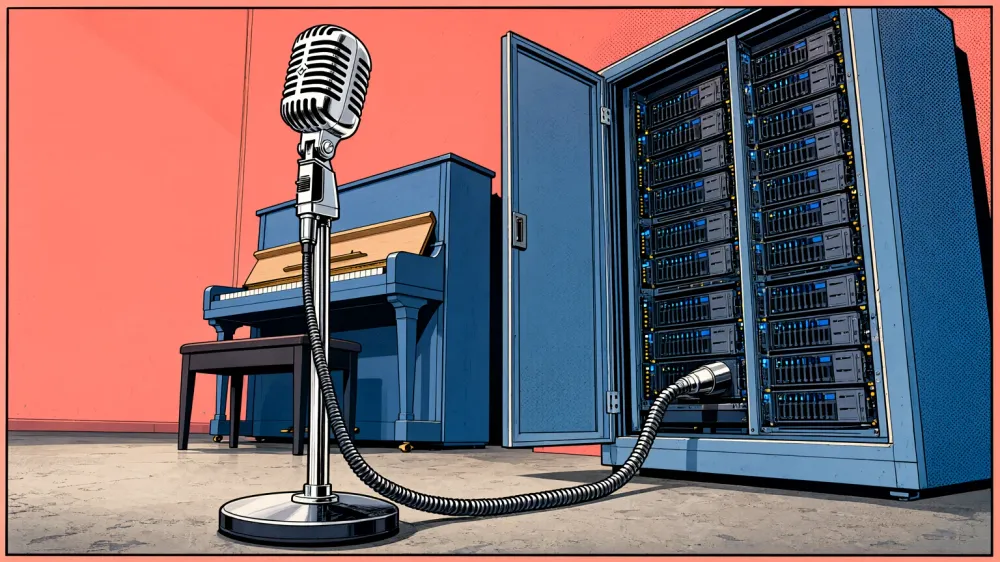
The owners of rights to songs Elvis Presley recorded have sued Anthropic, alleging it copied their lyrics without permission to train Claude. The complaint covers 274 compositions Presley recorded and their lyrics, including “Can't Help Falling in Love” and “Don't Be Cruel.” The plaintiffs seek statutory damages and an order destroying copies, including those they say sit in model weights.
The complaint filed October 23 in federal court in San Francisco names ABG EPE IP LLC, a unit of Authentic Brands Group, which controls much of Presley's intellectual property, among the plaintiffs. Other rights owners bringing the suit include music publishers and family trusts tied to “Can't Help Falling in Love” co-writer Luigi Creatore and the Aberbach family.
“The Elvis Plaintiffs bring this action to enforce these exclusive rights against the defendant that has built its entire business model based on copyright infringement at a scale never seen before,” lead attorney Richard Busch wrote in the complaint. Busch represented Marvin Gaye's estate in the “Blurred Lines” case and represents Round Hill in its suits against Anthropic and Suno.
What Changed
- Owners of rights to 274 compositions Elvis Presley recorded sued Anthropic in federal court in San Francisco on October 23, alleging it copied the lyrics to train Claude.
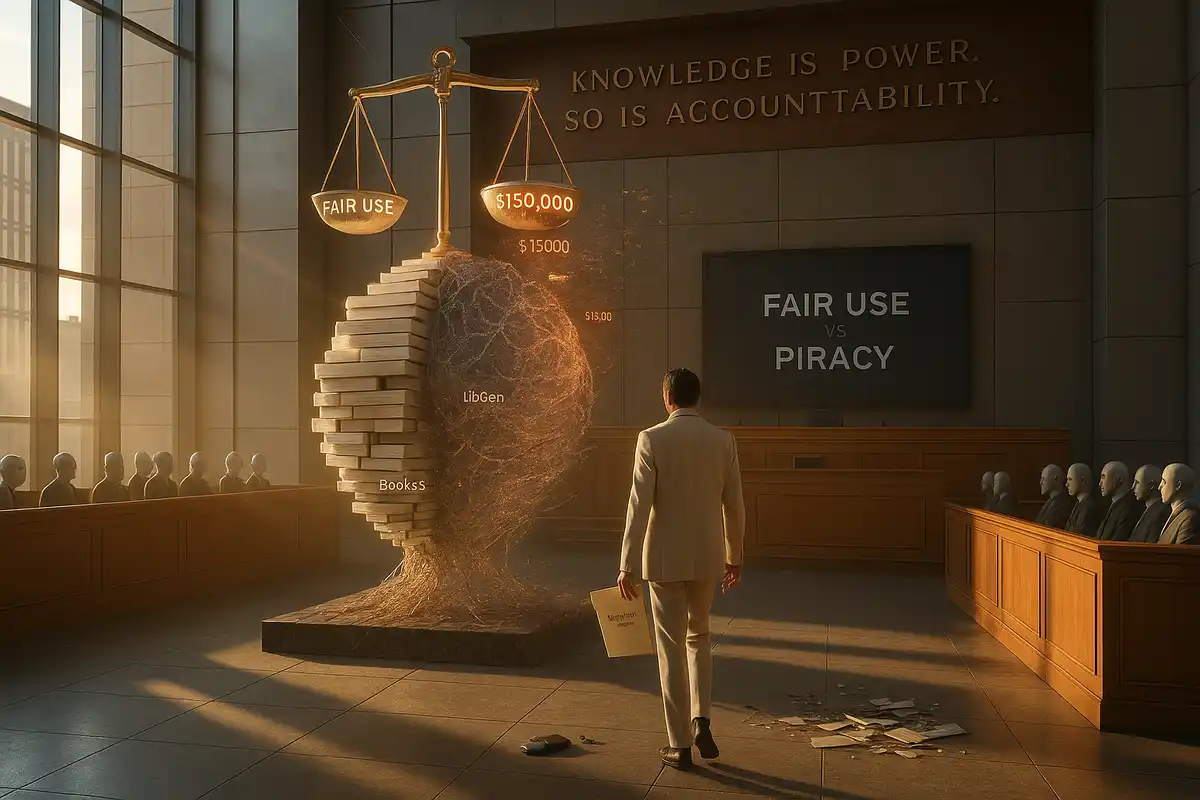
- The complaint seeks $41.1 million in statutory damages at $150,000 per work, plus $685,000 and $6.85 million on two further claims, about $48.6 million in all.
- It prints no Claude output reproducing a Presley song and pleads infringing output for all 274 works on information and belief.
- Anthropic says it disagrees with the claims and will defend the case fully.
AI-generated summary, reviewed by an editor. More on our AI guidelines.
Training copies and damages
The complaint alleges copyright infringement through copies made and kept indefinitely in a permanent “central library” for training and copies in Claude's outputs.
Separate claims concern bypassing access controls under Section 1201 and removing copyright management information under Section 1202. Citing publicly available sources, the complaint says Anthropic tested three text-extraction programs, Readability, Newspaper and jusText, and picked Newspaper. It alleges “upon information and belief” that Anthropic chose it because it stripped song titles and songwriter and publisher credits more aggressively than alternatives.
FREE WEEKDAY MORNING BRIEFING
Follow the AI copyright fights as they reach court.
The Implicator Morning Briefing filters the AI news cycle to the stories worth your attention and explains their consequences. From San Francisco, every weekday at 4:45 a.m. Pacific, 7:45 a.m. Eastern.
About five minutes. No hype. No spam.
The complaint seeks $41.1 million in statutory damages at $150,000 per work, the ceiling for willful infringement, as an alternative to actual damages and Anthropic's profits. It adds $685,000 for alleged access-control violations at $2,500 per work and $6.85 million for removing copyright information at $25,000 per work, each across 274 works. The three figures total about $48.6 million. The plaintiffs also seek a permanent injunction and attorneys' fees.
What the complaint shows
The complaint prints no Claude output reproducing a Presley song. Its output examples concern songs in other publishers' suits. It alleges “on information and belief” that Claude produced infringing output for all 274 works and says discovery will reveal more. The list of the 274 works is not on the free public docket.
The complaint says lyric filters introduced after an October 2023 publisher lawsuit failed to stop Claude rewriting songs “for a modern audience.” It quotes Claude's response:
“These renders keep landing very close to the originals: same structure, same hooks reused with light rewording, and full sets of verses/choruses/bridges. That's edging past 'inspired by' into reproducing the copyrighted song, even when the words are swapped out.”
That exchange comes from Round Hill's complaint.
Know someone who'd find this useful? ✉️ Email it to a friend in one click, or they can subscribe free here.
Anthropic's response and other cases
Universal Music Group, Concord and ABKCO sued in October 2023 over 499 works, expanding their claims in January 2026 to more than 20,000 works and more than $3 billion. BMG sued in March 2026; Sony Music Publishing, Warner Chappell and Round Hill followed in August 2026. The complaint identifies at least six pending musical-composition suits in the same district.
A court approved Anthropic's $1.5 billion settlement with book authors over pirated books in July 2026. The Presley complaint cites a ruling that keeping unlicensed copies indefinitely in a general-purpose library is not fair use, including the judge's statement: “There is no carveout, however, from the Copyright Act for AI companies.”
Anthropic maintains that training on copyrighted material is fair use. It advanced that position at an October 21 hearing in the publishers' case.
“We disagree with the claims and intend to defend this case fully,” an Anthropic spokesperson said.
Frequently Asked Questions
Who filed the lawsuit against Anthropic?
ABG EPE IP LLC, a unit of Authentic Brands Group, filed alongside music publishers and family trusts tied to "Can't Help Falling in Love" co-writer Luigi Creatore and the Aberbach family. The complaint was filed October 23 in federal court in San Francisco.
How much money do the plaintiffs want?
The complaint seeks $41.1 million in statutory damages, $150,000 for each of 274 works, as an alternative to actual damages and profits. It adds $685,000 for alleged access-control violations and $6.85 million for removing copyright information, about $48.6 million in total.
Does the complaint show Claude reproducing an Elvis song?
No. Its output examples concern songs in other publishers' suits, including a "for a modern audience" exchange drawn from Round Hill's complaint. It alleges on information and belief that Claude produced infringing output for all 274 works.
What does the complaint say about the Newspaper tool?
Citing publicly available sources, it says Anthropic tested three text-extraction programs and picked Newspaper. It alleges on information and belief that Anthropic chose it because it stripped song titles and songwriter and publisher credits more aggressively.
How has Anthropic responded?
An Anthropic spokesperson said the company disagrees with the claims and intends to defend the case fully. Anthropic maintains that training on copyrighted material is fair use and advanced that position at an October 21 hearing in the publishers' case.
AI-generated summary, reviewed by an editor. More on our AI guidelines.


Free AI briefing · Weekdays
The AI stories that matter, sourced and explained.
Join the Morning Briefing. It goes out every weekday at 4:45 a.m. Pacific, with later sends for the East Coast, Berlin and Tokyo.
Free when you sign up: The Paperclip Compendium, our tested guide to running AI agents.
Free. Unsubscribe in one click.

Marcus Schuler
Editor-in-Chief and founder of Implicator.ai. Former ARD correspondent and senior broadcast journalist with 10+ years covering tech. Writes daily briefings on policy and market developments. Based in San Francisco. E-mail: editor@implicator.ai