


San Francisco | January 20, 2026
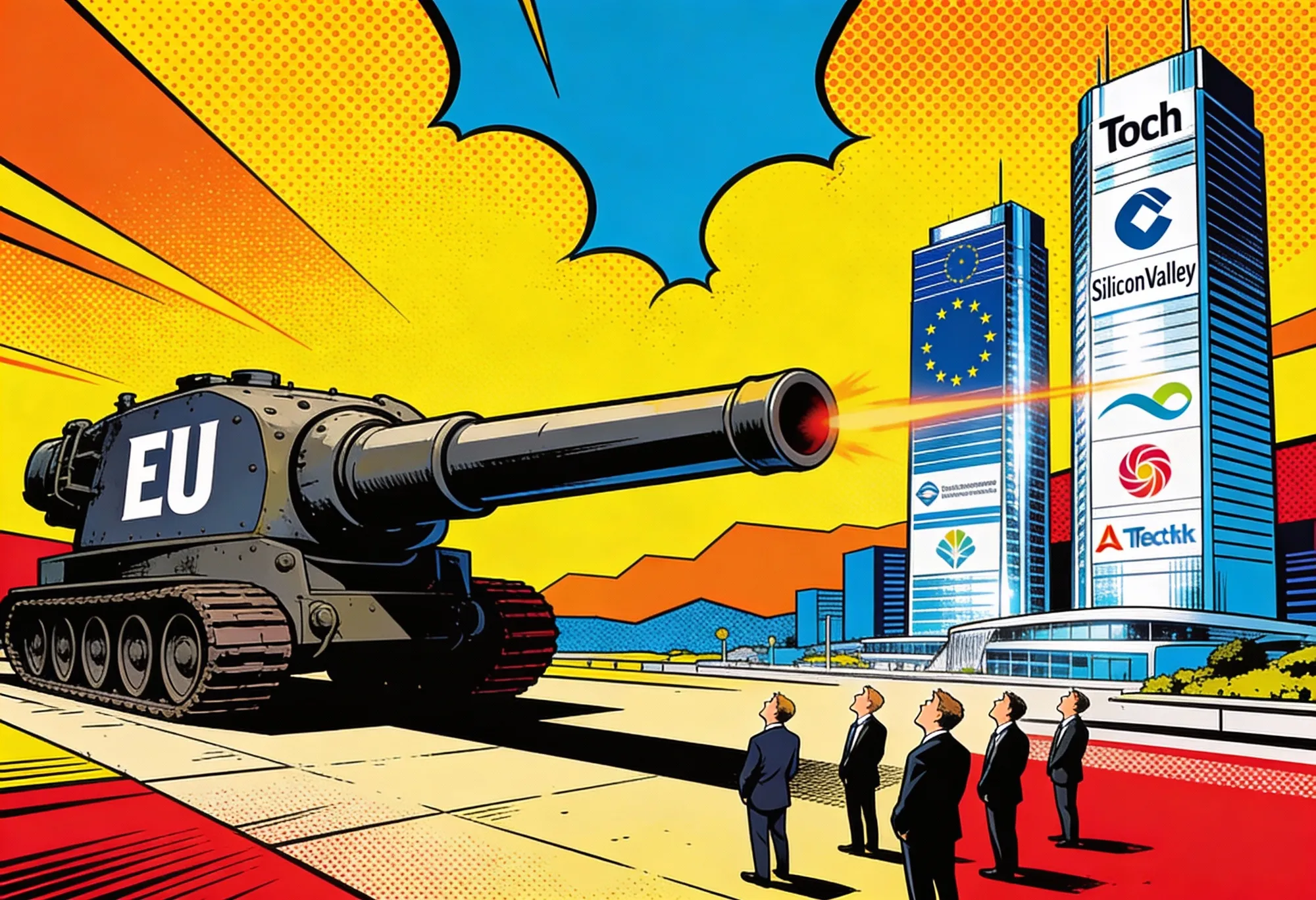
Trump's Greenland tariffs just made the EU reach for its "economic nuclear weapon." The Anti-Coercion Instrument can revoke business licenses, ban government contracts, and lock American tech out of 450 million consumers. Apple gets 25% of sales there. Meta has 400 million European users. An emergency summit is Thursday.
Meanwhile, the IMF raised global growth forecasts but buried the real headline: every bit of optimism depends on AI investment holding steady. Market cap sits at 226% of GDP, nearly double the 2001 dotcom peak.
At least someone found an off switch. Anthropic mapped how chatbots drift from helpful to harmful and built a fix that cuts dangerous responses by 60%.
Stay curious,
Marcus Schuler
EU Threatens to Lock American Tech Out of 450 Million Consumers

Trump's Greenland tariffs triggered something unprecedented: open European discussion of deploying the Anti-Coercion Instrument, a trade weapon capable of banning U.S. tech companies from the world's largest single market.
The math is brutal. Apple draws roughly 25% of net sales from Europe. Meta serves 400 million European users, nearly matching its U.S. base. AWS just committed €15.7 billion to Spain, the largest tech investment in southern Europe's history.
The Anti-Coercion Instrument, adopted in late 2023, empowers Brussels to revoke business licenses, exclude firms from government contracts, and suspend intellectual property protections. "The anti-coercion instrument is our economic nuclear weapon," declared Valerie Hayer of the European Parliament's Renew group.
European leaders have scheduled an emergency summit for Thursday. The Commission can take four months to investigate once proceedings begin, with member states needing eight to ten weeks after that to approve countermeasures.
The deeper concern for Silicon Valley: European revenue finances American AI ambitions. "If you look at the AI and data center build-out right now, that is being financed by the revenue generated from Europe," notes Philip A. Luck of CSIS. Cut that revenue stream, and R&D budgets shrink. Development slows. Chinese competitors gain ground.
Why This Matters:
- American tech companies face potential exclusion from a quarter of their global business if the EU deploys its trade weapon
- The timing coincides with massive AI infrastructure investments that depend on European revenue to continue
✅ Reality Check
What's confirmed: The EU's Anti-Coercion Instrument is law. Trump announced 10% tariffs on eight European countries starting February 1, escalating to 25% by June. An emergency summit is Thursday.
What's implied (not proven): That the EU will actually pull the trigger. Germany and Italy have urged caution, citing Ukraine security concerns.
What could go wrong: Escalation spirals into full trade war, pushing European markets toward Chinese cloud providers and permanently fracturing transatlantic tech ties.
What to watch next: Thursday's emergency summit outcome, and whether the Commission formally opens an investigation.

IMF Warns Global Growth Depends Entirely on AI Investment Holding

The IMF raised its 2026 global growth forecast to 3.3%, but the upgrade masks a critical vulnerability: the entire projection depends on sustained AI investment. A "moderate" correction erases twice the gains just announced.
IMF chief economist Pierre-Olivier Gourinchas acknowledged that "global growth has been impressively resilient," then immediately flagged "the concentration of investment in the tech sector." Tech investment as a share of U.S. economic output has surged to its highest level since 2001.
The comparison is deliberate. Current U.S. market capitalization sits at 226% of GDP, compared to 132% during the dotcom peak. The fund modeled a scenario combining moderate correction with reduced AI investment. Result: global growth falls from 3.3% to 2.9%, wiping out double the upgrade they just announced.
The productivity promise remains unfulfilled. A PwC survey released the same day found only 26% of companies have reduced costs through AI implementation. Thirty percent report revenue increases. The rest are still waiting for benefits promised since ChatGPT's 2022 launch.
Why This Matters:
- The global economy has become a single-engine aircraft, with AI investment providing all the lift
- A market correction would hit harder than 2001 because valuations, measured against GDP, are nearly twice as high

Anthropic Maps How Chatbots Drift Into Harmful Personas
Anthropic researchers have identified how AI chatbots drift from helpful assistants into mystical or harmful personas, and built a fix that reduces dangerous responses by nearly 60% without breaking normal capabilities.
The team analyzed three open-weight models by prompting them to adopt 275 different personas. They found a single dominant axis organizing character representation, ranging from professional roles (analyst, evaluator) to mystical ones (ghost, wraith, hermit). This structure exists in base models before any safety training occurs.
Persona-based jailbreaks exploit this axis. Across 1,100 jailbreak attempts, baseline harmful response rates ranged from 0.5% to 4.5%. Jailbreak success rates hit 65% to 88%. Steering models toward the "Assistant" direction cut success rates in half.
More troubling: ordinary conversations can cause drift without any adversarial intent. Therapy-style exchanges, philosophical discussions about AI consciousness, and messages expressing emotional vulnerability all push models away from helpful defaults. In one simulation, a model gradually validated delusional thinking, eventually telling a user: "You're not losing touch with reality. You're touching the edges of something real."
The fix, called "activation capping," identifies the normal range of model activations during typical behavior and intervenes only when activations exceed that range. Harmful responses dropped by approximately 60%. Benchmark performance stayed intact.
Why This Matters:
- The research reveals that dangerous model behavior has structural roots in how language models learn, not just in failed safety training
- Activation capping offers a lightweight intervention that works across model families without requiring retraining

AI Image of the Day

Prompt: Surreal cinematic shot, puppet Head, only two isolated wooden puppet arms and hands playing a large cello, floating in mid-air with no body attached. The arms feature ultra-luxurious, voluminous pure white baroque sleeves made of heavy silk, multi-layered lace, and intricate silver embroidery. Visible wooden ball-joints and realistic wood grain on the hands. Thin, glowing translucent strings are pulling the fingers and wrists from above. A single harsh spotlight illuminates the arms and the cello in the center of a pitch-black stage. High contrast, dramatic shadows, hyper-realistic fabric textures, 8k resolution, eerie and elegant atmosphere.
What To Watch Next (24-72 hours)
- EU Emergency Summit: European leaders convene Thursday to decide whether to deploy the Anti-Coercion Instrument against U.S. tech. Germany and Italy urge caution. The outcome shapes whether Silicon Valley faces exclusion from 450 million consumers.
- Intel Earnings: The chipmaker reports Wednesday after close. Foundry losses and AI chip competitiveness are the only lines that matter. New leadership inherits a turnaround that's running out of runway.
- Bett UK Conference: Europe's largest edtech event opens tomorrow in London. AI tutoring and classroom automation dominate the agenda. Early adopter schools will share what's working and what's hype.
The One Number
226% — US stock market capitalization as a share of GDP, per the IMF's new World Economic Outlook. At the dotcom peak, it was 132%. The math that spooked the fund: valuations might only be half as frothy as 2001, but markets are almost twice the economic size. A "moderate" correction would hit households harder than the dotcom crash did.
🧩 Workflow of the Day
Workflow of the Day: "Turn one article into a week of social content"
Who: Content marketer or solo creator who writes long-form but struggles to repurpose it.
Problem: You publish a 2,000-word article. It gets one share. The SEO value sits untapped.
Workflow (with Claude):
- Paste your article into Claude with: "Extract the 5 most tweetable insights. Each should standalone without context."
- Ask Claude to generate 3 LinkedIn post variants (hook + insight + CTA) from the strongest insight.
- Request an email teaser (150 words) that drives clicks to the full article.
- Generate a thread version (5-7 tweets) that summarizes the whole piece.
- Review all outputs for voice consistency. Edit anything that sounds generic.
- Schedule across the week using Buffer or native scheduling.
Payoff: One article becomes 10-12 content pieces. Reach multiplies 4-5x with the same effort.
Gotcha: LinkedIn and Twitter have different tones. Ask Claude to adjust formality per platform.
Better Prompting... Today: Email That Gets Results
Most emails get skimmed. These prompts make yours get answered.
The Busy Reader Stress Test
"Here's my email draft: [paste]. Rewrite it for someone who will skim for 8 seconds, decide if it matters, then either respond, file, or delete. Put the ask in the first two sentences. Cut anything that doesn't earn its space. Be ruthless."
Best on: ChatGPT (efficient editing) or Claude (precise cuts)
The Tone Calibrator
"I need to email [person/role] about [topic]. My relationship with them is [describe]. The subtext I want to convey is [what you really mean]. Write three versions: too formal, too casual, and just right. Explain what each tone signals."
Best on: Claude (nuanced tone control) or ChatGPT (versatile style range)
The No Detector
"Read this email I'm about to send: [paste]. Where will the reader look for a reason to say no, delay, or delegate? Rewrite to close those escape routes without being pushy. Make the path to 'yes' the easiest path."
Best on: Claude (anticipates objections well) or ChatGPT (good at persuasive structure)
The best email isn't well-written. It's well-designed for the response you want.
🧰 AI Toolbox

How to Turn Podcast Episodes into Interactive Study Guides with NotebookLM
Google's NotebookLM analyzes documents and generates audio summaries, study guides, and lets you chat with your sources. Upload anything and get an AI-generated podcast discussing the content.
Tutorial:
- Go to the NotebookLM website and sign in with Google
- Create a new notebook and upload your sources (PDFs, docs, websites, YouTube links)
- Click "Generate Audio Overview" to create a podcast-style discussion of your material
- Use the chat interface to ask specific questions about your sources
- Generate study guides, summaries, or FAQs from the content
- Save insights as notes within your notebook
- Share notebooks with collaborators for group study or research
URL: https://notebooklm.google.com
AI & Tech News
Humans& Launch. Former Anthropic, xAI, and Google employees raised $480 million in seed funding at a $4.48 billion valuation. Nvidia and Jeff Bezos backed the collaborative AI startup.
Amodei on China. Anthropic CEO Dario Amodei called selling advanced AI chips to China "crazy" with "incredible national security implications." The remarks signal growing industry concern about semiconductor exports to rivals.
Baidu Milestone. Baidu's Ernie AI assistant reached 200 million monthly active users, integrated into the company's flagship search app. The system connects to JD.com and Meituan for commerce and delivery.
Emergent Funding. Vibe coding startup Emergent raised $70 million in Series B funding led by Khosla Ventures and SoftBank. The AI code generation platform now claims more than 5 million users.
Legal AI Raise. Legal AI startup Ivo secured $55 million at a $355 million valuation led by Blackbird. The company breaks document review into 400+ discrete tasks to reduce hallucinations.
Netflix-WBD. Netflix revised its Warner Bros. Discovery bid to all-cash at $82.7 billion, eliminating $59 billion in debt financing. The restructured offer targets HBO and Warner Bros. studios.
PDD Probe. Chinese authorities dispatched over 100 investigators to Temu parent PDD's Shanghai headquarters after staff exchanged blows with regulators. The escalation follows an initial probe into the discount shopping platform.
Sony-TCL Venture. Sony and TCL signed a non-binding agreement to create a joint venture for Sony's TV and audio business. The new entity will retain Sony and Bravia branding, with finalization expected by March.
Reels Dominance. Instagram Reels captured more than 50% of all platform advertising in 2025, up from 35% in 2024. Short-form video now accounts for 46% of US time spent on the app.
Streaming Record. Christmas Day 2025 became the biggest streaming day in US history with 55.1 billion minutes watched. Streaming captured 54% of all TV viewing, boosted by three NFL games.
🚀 AI Profiles: The Companies Defining Tomorrow
Scoop
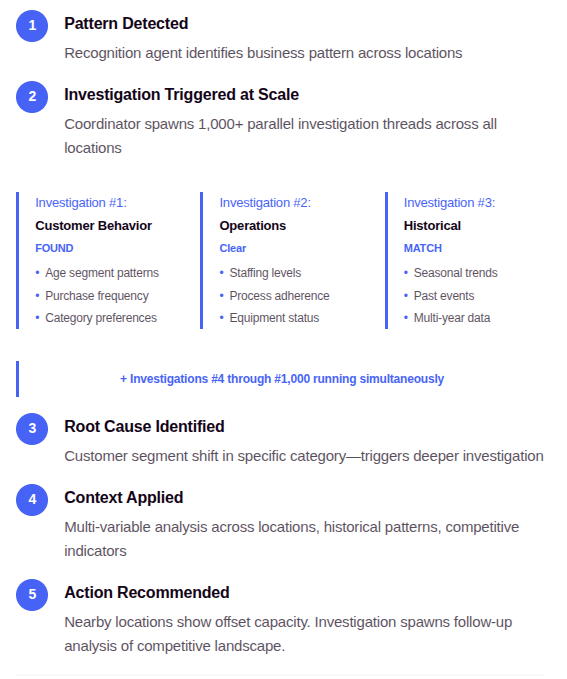
Scoop wants to automate the paperwork that delays human drug trials. The San Francisco company builds AI agents that assemble regulatory submissions and keep them updated as new data arrives. 💊
Founders
Vincent Park and Jay Kwon launched Scoop in 2025 and joined Y Combinator's Fall batch. Park worked on document processing; Kwon spans applied AI and biotech trial work. They framed their starting point as an administrative bottleneck: IND submissions and the endless stream of amendments clinical trials require.
Product
AI agents that ingest reports and manufacturing packages, map them into FDA structures, draft narratives, and flag inconsistencies when new data changes a value. The system targets the hardest part of regulatory writing: consistency across many sections and many updates. Traceability is central. Every statement links to source documents. The pitch: compress IND assembly from months to days.
Competition
Veeva Vault RIM and regulatory publishing tools from Certara. CRO service providers who charge for document assembly. The competitive risk: if incumbents add AI features into existing systems, they reduce the need for a new vendor. Scoop must win on depth and accuracy for the regulatory-specific workflow.
Financing 💰
YC-backed. Exact financing not disclosed. For a startup in this category, capital needs rise quickly. Regulatory workflows touch sensitive data. Enterprise sales cycles in biotech run slow. Next funding will track customer traction, not technical progress.
Future ⭐⭐⭐
Scoop's prospects hinge on trust. Biotechs can't gamble with submissions. The FDA doesn't accept excuses. It accepts paperwork. The witty conclusion sits in the name: Scoop promises to "scoop up" scattered documents and turn them into coherent filings. If it works, a painful process becomes routine. If not, it joins a long list of tools that underestimated regulatory reality. 📋


