Josh Woodward needed new tires for his Honda minivan. He asked Gemini for recommendations. No questions about the make. No questions about his commute or driving style. The chatbot just knew. It had crawled his Google Photos, spotted those road trip shots from Oklahoma, and figured out he needed all-weather rubber for the long haul.
Google calls this Personal Intelligence. Rolled out Wednesday, the feature hooks Gemini into Gmail, Photos, YouTube watch history, search logs, and about six other services. The pitch: an AI assistant that reasons across everything you've ever done online. No explaining yourself. No context-setting. Just ask.
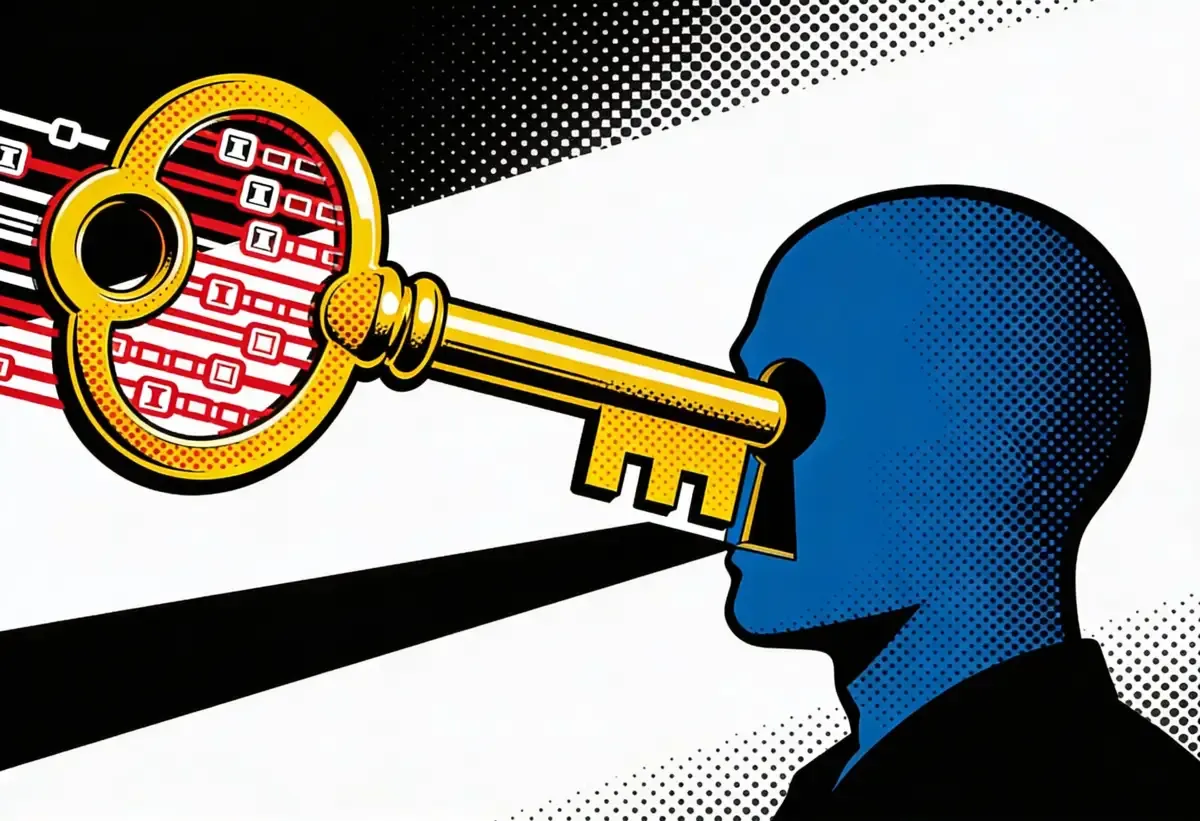
Google built a skeleton key. It fits every lock in your digital life.
The Breakdown
• Personal Intelligence connects Gemini to Gmail, Photos, YouTube, search history, and six other Google services for cross-app reasoning
• Gemini 3 processes up to 1 million tokens per prompt, using "context packing" to extract relevant data subsets
• Feature is opt-in, defaults to off, rolling out to U.S. AI Pro and Ultra subscribers this week
• Two days before launch, Google confirmed it will power Apple's upcoming Siri AI upgrade
Twenty years of exhaust becomes fuel
For two decades, your data was Google's exhaust. Search history. Email patterns. Location breadcrumbs. Shopping habits. That information fed advertising algorithms, generating the revenue that built a trillion-dollar empire. You were the product being sold to marketers.
Personal Intelligence flips the equation. Now your data becomes the fuel that powers a product sold back to you.
Gemini 3 can process up to one million tokens per prompt. That's roughly 750,000 words of context, enough to ingest years of email threads, photo metadata, and browsing patterns in a single conversation. Google's engineers solved the problem of analyzing even larger personal datasets through a technique they call "context packing," which extracts only the relevant subset of data for each specific query.
Want book recommendations? Gemini checks your YouTube binges, your recent searches, the newsletters piling up in your inbox. Dinner plans? It pulls your calendar, scans those grocery receipts buried in email, maybe even notes that Yelp rabbit hole you went down last week. Retrieval is old news. This is synthesis, the kind that makes you wonder how it knew.
OpenAI wants this. So does Microsoft. Anthropic too. Everyone's chasing an AI that genuinely knows who you are. But watch what they can actually see. ChatGPT remembers your chats. Period. Copilot reads your OneDrive. Claude Cowork shuffles your local folders. Your search history from last Tuesday? The flight deals you've been stalking? Which relatives skipped your kid's birthday based on who's missing from the photos? Blank. All of it.
Google already owns the geological survey of your life. Personal Intelligence lets Gemini start digging.
Join 10,000+ AI professionals
Strategic AI news from San Francisco. No hype, no "AI will change everything" throat clearing. Just what moved, who won, and why it matters. Daily at 6am PST.
No spam. Unsubscribe anytime.
Privacy theater, meet privacy engineering
Personal Intelligence is opt-in. Buried three taps deep in Settings, a toggle turns blue when you flip it. Pick your apps. Gmail, sure. Photos, maybe. YouTube history, probably not. The whole setup reeks of legal caution. Why? Because Google's AI track record includes tagging Black users as gorillas in Photos. Because "confidential mode" in Gmail turned out to be neither. The company remembers. The toggle starts off.
Josh Woodward, the vice president overseeing Gemini, was unusually candid about the system's limitations. "We've tested this beta version of Personal Intelligence extensively to minimize mistakes, but we haven't eliminated them," he wrote. Gemini might over-personalize, drawing connections between unrelated topics. It might struggle with timing, particularly around relationship changes. "Like divorces," Woodward added, presumably because someone's chatbot suggested a romantic dinner reservation for two after the papers were signed.
The privacy controls sound reasonable until you think about what they actually mean. Google says Gemini doesn't train directly on your Gmail inbox or photo library, only on "limited info, like specific prompts in Gemini and the model's responses." Translation: your raw data stays in place, but every question you ask and every answer the system generates becomes training material for the next version.
If you opt in, your conversations about tire recommendations and dinner reservations and book preferences get folded into the model. Google filters personal information before using that data, they say. But the filtering happens on their servers, according to their definitions of what counts as personal.
Apple's quiet surrender
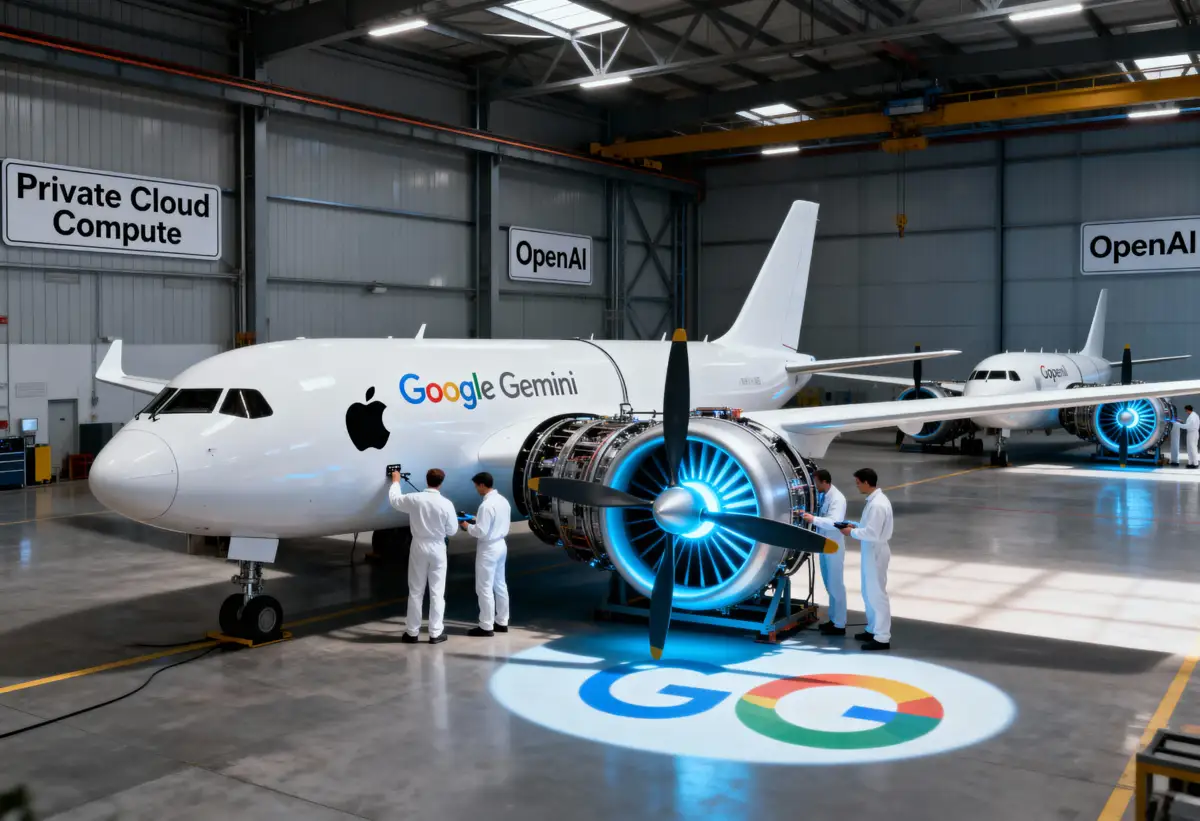
Two days before launching Personal Intelligence, Google confirmed a multiyear agreement to power Apple's AI features, including a major Siri upgrade expected later this year.
Apple spent years promising to build its own on-device AI capabilities. Those promises kept slipping. Delays stacked on delays. Then silence. When the company finally admitted it couldn't catch up, the announcement came not with a press conference but with a joint statement buried on a Monday morning. Apple didn't pivot. Apple folded.
Now Google is running the AI brains inside both Android and iOS devices. Personal Intelligence works across web, Android, and iOS platforms. For iPhone users who enable Gemini features, their data flows to the same system that serves Android users. Google's reach just got larger.
Apple Intelligence was supposed to compete with this. The company's personal AI system integrates apps to help with writing, image creation, and understanding context. But Apple built its version around privacy constraints that limited what the system could actually do. Google built its version around data access that makes the system genuinely useful.
One approach sounds better. The other approach works better. Apple bet on sounding better. Now it's licensing the one that works.
Daily at 6am PST
Don't miss tomorrow's analysis
No breathless headlines. No "everything is changing" filler. Just who moved, what broke, and why it matters.
Free. No spam. Unsubscribe anytime.
What the competitors can't copy
Microsoft has been expanding Copilot with features including long-term memory and the ability to book tickets and reservations on behalf of users. Anthropic launched Claude Cowork, a file-managing AI agent that works proactively within a user's local files. Both companies are moving toward the same destination Google reached first.
But neither can replicate Google's starting position. Microsoft knows your documents and emails if you use Outlook and OneDrive. Anthropic knows whatever you put in your Claude conversations. Neither company knows what you searched for, what videos you watched, what photos you took, or where you've been.
Personal Intelligence starts rolling out Wednesday to Google AI Pro and AI Ultra subscribers in the United States. Free tier access comes later, along with international expansion and integration into Google Search's AI Mode. The initial launch is narrow. The eventual reach is everyone who uses Google services, which means everyone.
Woodward closed his announcement with a thumbs-down button. Report mistakes. Flag the weird stuff. Tell us when we get it wrong. That's confidence dressed as humility. If most users never tap that button, Google wins.
Google isn't releasing Personal Intelligence because the technology is perfect. Google is releasing it because the technology is good enough, and the data advantage is too valuable to leave sitting in a database. The race to build AI that truly knows its users just narrowed to a single front-runner. Everyone else is playing for second place with incomplete information.
The skeleton key only works if you own all the locks.
Frequently Asked Questions
Q: What Google services does Personal Intelligence connect to?
A: Gmail, Google Photos, YouTube watch history, Search history, Shopping, News, Maps, Flights, Hotels, and Calendar. Users choose which apps to connect and can exclude specific services.
Q: How much data can Gemini 3 process at once?
A: Up to one million tokens per prompt, roughly 750,000 words. Google uses "context packing" to extract only relevant data subsets for specific queries rather than processing everything at once.
Q: Does Google train its AI models on my personal data?
A: Google says it doesn't train directly on your Gmail inbox or photo library. It uses "limited info, like specific prompts in Gemini and the model's responses" after filtering personal information on its servers.
Q: Who can use Personal Intelligence right now?
A: Google AI Pro and AI Ultra subscribers in the United States, rolling out over the next week. Free tier access and international expansion are planned but not scheduled.
Q: What's the connection to Apple's Siri upgrade?
A: Two days before launching Personal Intelligence, Google confirmed a multiyear deal to power Apple's AI features including a rebuilt Siri. Apple will pay Google about $1 billion annually for a custom 1.2-trillion-parameter Gemini model.