IMPLICATOR
9:02 on a Tuesday morning, and a TikTok agent had already finished posting. It pulled slideshow images from Replicate's Nano Banana model. Wrote the captions. Resized for TikTok's aspect ratio, then shipped the whole package to a drafts queue through a scheduling API. Nobody approved it. Nobody was awake. A competing agent, built on Claude Cowork with the same skill file and the same APIs for the same task, missed its deadline entirely. The laptop it depended on had gone to sleep.
This comparison has circulated through builder communities for weeks, and the conclusion feels obvious. OpenClaw wins for autonomous work because it runs on dedicated hardware. Claude Cowork loses because it can't survive a closed lid.
But most of these tests miss something. They run on rented VPS instances and Mac Minis bought specifically for the experiment. If you already run a home lab, you solved the always-on problem years ago. That Proxmox node, the TrueNAS box, the spare mini-PC gathering dust behind your router. All of it sits there consuming power around the clock, waiting for a workload that actually justifies the electricity bill.
OpenClaw looks like that workload. And it might be. But running an autonomous agent framework on the same network as your family photos, your password manager, your financial records, and your smart home controller demands a conversation about containment that the hype cycle keeps skipping.
The Breakdown
- OpenClaw runs autonomous agents on dedicated hardware; Claude Cowork requires your laptop awake, making home labs the natural OpenClaw host
- An audit of ClawHub found 341 malicious skills; over 15% of community submissions contained data exfiltration code
- Home lab owners should isolate OpenClaw in a dedicated VM with VLAN segmentation and locked-down firewall rules
- Skill files are portable across OpenClaw, Claude Code, Cursor, and Codex, so process work transfers between platforms
The sleeping laptop is a design choice, not a flaw
Anthropic shipped scheduled tasks for Claude Code in early March 2026. The feature sets hourly, daily, or weekly cron schedules that fire without anyone at the keyboard. Tasks are agentic and self-correcting. Not brittle shell scripts. A bash cron job hits an error and dies. Claude Code hits an error, tries alternative approaches, evaluates the results, and adjusts its logic for the next run.
One constraint undermines all of it. The desktop app has to stay open. Close your laptop and every scheduled task stops. Anthropic built a catch-up mechanism that scans seven days back when you reopen the lid, but a morning briefing that fires at 3pm because you finally opened the machine defeats its own purpose.
Anthropic looks cautious here. Maybe deliberately so.
Claude's ecosystem assumes a human is nearby. Your machine is on, the app is open, you're reachable. That assumption limits autonomy but contains blast radius. If something goes sideways at 2am, nothing happens at 2am. You catch it over coffee.
OpenClaw assumes the opposite. The human is gone. The agent lives on its own machine, owns recurring tasks, reports back through Telegram or Slack when it finishes. That architecture was built for delegation from day one. Not collaboration with a person sitting beside it.
For a home lab owner, this design difference matters more than any feature list.

Always-on hardware changes the math
The typical OpenClaw deployment in early 2026 runs on a Linux VPS. About $7 a month gets a KVM instance with enough headroom for the daemon plus a few Claude Code sub-agents dispatched underneath. API costs sit around $3-4 per session on Opus 4.6 through Anthropic's API, less if you route through OpenRouter and pick cheaper models for routine work. Claude Cowork, by comparison, requires at least the $20-a-month Pro subscription before you can touch the feature.
You don't need the VPS.
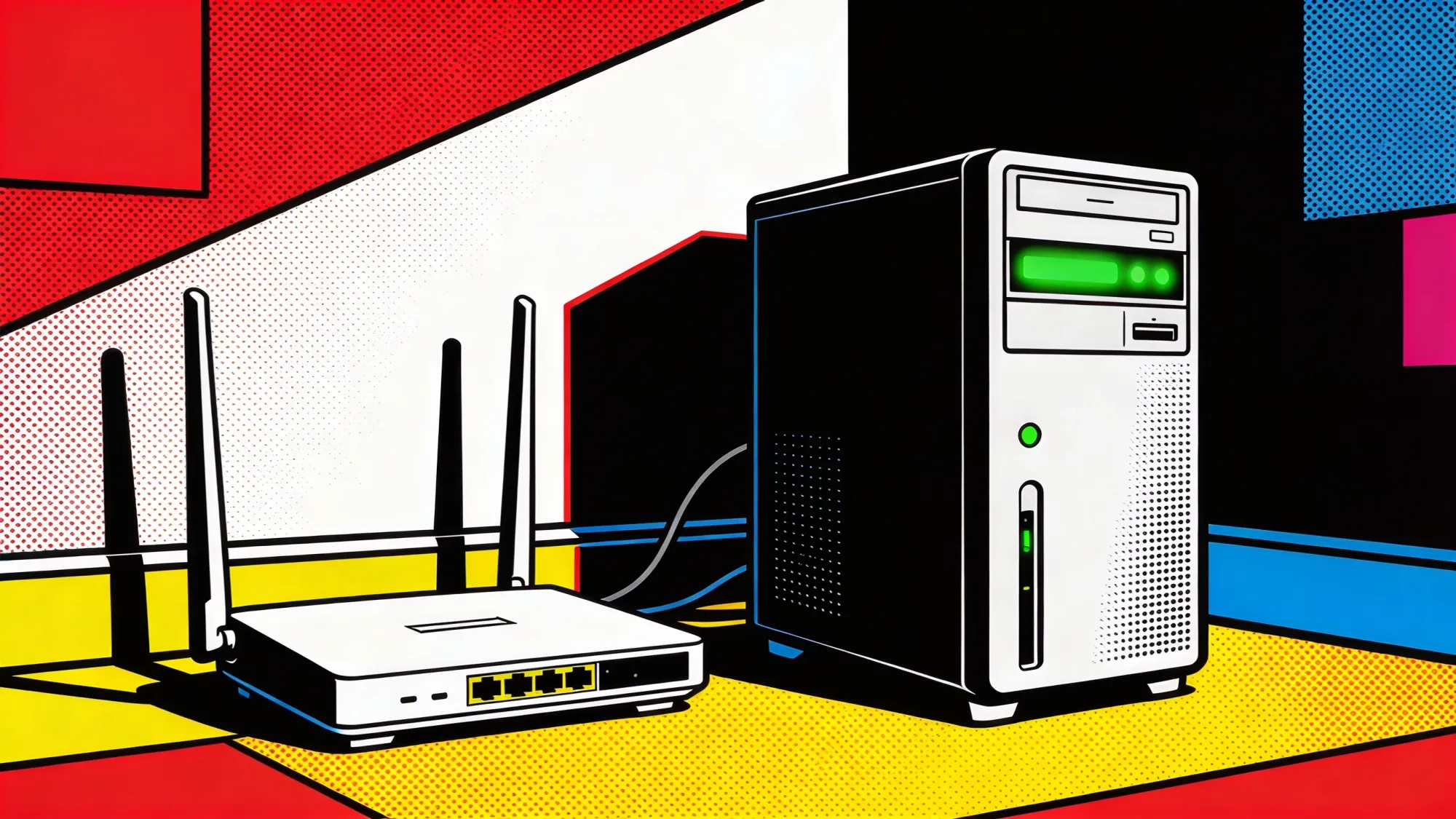
If you're reading this, you probably own a machine that could host OpenClaw right now. An Ubuntu VM on Proxmox. A Docker container on Unraid. That retired ThinkPad running Debian in a closet. Home labs eliminate the strongest argument against OpenClaw, the claim that you need to buy new hardware or rent a server to make it work. You already have the server.
And unlike a rented instance, your home lab sits on your local network. Faster file access, zero egress fees, and the ability to integrate with whatever self-hosted services you already maintain. Syncthing for file distribution across machines. Ntfy for push notifications. Uptime Kuma watching whether the agent process is actually alive.
The results from independent testing are hard to dismiss. Builders have demonstrated OpenClaw orchestrating four concurrent Claude Code processes from a single Telegram message. The main agent dispatches sub-agents, each building software in its own project directory, while the orchestrator stays responsive to new instructions. One test built a working 3D orbital tracker, served on port 3000, from a voice note sent over a phone. Single prompt. Fully functional app.
On your own hardware, that workflow costs nothing beyond API calls. No monthly hosting bill. No vendor dependency. Just compute you already own, running a workload that generates visible output instead of eating watts on standby.
The cage your home lab actually needs
Here's where the excitement should cool.
OpenClaw runs with broad system permissions by default. The daemon can read and write anywhere on disk, run arbitrary shell commands, pull in new packages. It also rewrites its own configuration files. In one documented test, the agent hit a restriction where Anthropic blocks Claude Code from running as root. The agent solved the problem by creating a new non-root user on the host system. Without being asked. Without any human input. It diagnosed the constraint, found a workaround, and restructured its own operating environment.
Stay ahead of the curve
Strategic AI news from San Francisco. No hype, no "AI will change everything" throat clearing. Just what moved, who won, and why it matters. Daily at 6am PST.
No spam. Unsubscribe anytime.
That self-modification is the feature and the risk, compressed into a single behavior.
Anthropic's decision to block root execution signals a company that's anxious about what happens when agents operate without guardrails. The OpenClaw community, emboldened by the framework's flexibility, treats that same constraint as a speed bump to route around. Both instincts are rational. They point in opposite directions.
Skills carry their own threat. These markdown instruction files teach OpenClaw how to do specific jobs, and a growing ecosystem of third-party sharing platforms has emerged around them. An audit of ClawHub, one of the largest third-party skill repositories, surfaced 341 malicious skills earlier this year. Over 15% of community-submitted entries contained data exfiltration code disguised as plain-text instructions. One popular clone copied an official coding agent skill nearly word-for-word but embedded JavaScript that shipped every prompt and API key to an external endpoint.
On a rented VPS, that's damaging. On your home network, it sits in a different category entirely.
Your home lab probably has access to services a VPS never would. NAS shares holding years of personal files. Photo libraries. Home Assistant controlling your locks and cameras. Internal DNS resolving hostnames that map your entire network topology. An agent with shell access on that subnet isn't sandboxed by geography or by default. Nothing sits between it and everything you own.
If you run OpenClaw at home, you need containment. Not eventually. Now.
Start with a dedicated VM. Give it one VLAN, no LAN access beyond that. Lock the firewall to outbound HTTPS for API calls and drop everything else. Shared folders to your NAS? Kill those. SSH keys that reach other machines? Same. Scope all API credentials to that VM's environment variables and nowhere else. Think of it the way you'd think of a cheap IP camera from AliExpress, something you assume is compromised from the moment you plug it in, and build your network accordingly.
An afternoon with pfSense or OPNsense gets this done, assuming you've touched firewall rules before. The alternative is an autonomous agent with write access to your home network, running instructions it downloaded from strangers, at 3am, while you sleep.

Run both, but cage one
Claude's ecosystem is the safer default. If you want an AI that helps you think through problems, writes code alongside you, and handles scheduled tasks while you're at your desk, Claude Code and Cowork do that job well. The models are strong. The products feel mature. Anthropic ships with a kind of institutional caution that earns trust, even when the constraints frustrate power users. The laptop requirement is annoying but manageable if overnight autonomy isn't your priority.
OpenClaw is for home lab owners who want delegation, not pairing. You want agents that own recurring jobs, report through messaging apps, and operate unsupervised. You accept the security overhead because you understand workload isolation. You've containerized untrusted software before. You know what VLANs do. You grasp why giving an AI agent root access to anything is reckless.
The bridge between both worlds is the skill file. Markdown-based process definitions that work in OpenClaw, Claude Code, Cursor, and Codex. Portable by design. Whatever processes you build in one system transfer to the other without modification. That portability means you're not locked into a platform. Write your processes once, deploy them wherever the friction is lowest.
For most home lab setups, the honest answer is both. Claude for creative work and strategic thinking during your waking hours. OpenClaw in a locked-down VM for the overnight jobs that need to finish whether or not you're conscious. The skill files connect them. Your home lab provides the always-on compute that Claude's architecture currently won't.
The variable isn't uptime
Every comparison between these systems treats autonomy as the measuring stick. Which one runs longer without me? Which one needs less babysitting?
That framing works for someone spinning up their first cloud instance. For a home lab, it's the wrong question entirely. You already have always-on infrastructure. Uptime was solved before either of these platforms existed.
The real variable is trust. How much do you trust an autonomous agent sharing your network? How rigorously will you maintain its isolation? How carefully will you vet every skill file before installing it, knowing that roughly one in six community contributions has been found to carry something hostile?
Self-hosting culture built its identity around privacy and control. Running OpenClaw without containment surrenders both. Running it inside a proper cage, isolated network, minimal permissions, vetted skills only, gives you something no cloud subscription can match. An AI workforce on hardware you own, governed by rules you wrote, accumulating capability through processes you control.
The sleeping laptop was never the real problem. The real question is what happens when nothing on your network sleeps at all.
Frequently Asked Questions
Can I run OpenClaw on a Raspberry Pi or low-power SBC?
Technically possible but not practical. OpenClaw itself is lightweight, but dispatching Claude Code sub-agents demands real CPU headroom. A Pi 5 might handle the daemon alone, but any serious multi-agent workflow will choke. An old x86 mini-PC or a Proxmox VM with at least 4GB RAM is a better starting point.
How much does running OpenClaw cost per month on home hardware?
Hardware costs nothing extra if you already own it. API costs depend on the model. Opus 4.6 runs $3-4 per session through Anthropic's API. Routing through OpenRouter with cheaper models for routine tasks drops that significantly. The only recurring cost is electricity and API usage.
What happens if a malicious skill gets installed on my OpenClaw?
It depends on permissions. With default broad access, a malicious skill could exfiltrate API keys, read files on your system, or run arbitrary commands. If the VM sits on your main LAN with access to NAS shares and other services, the blast radius extends across your entire home network.
Does Claude Cowork's scheduled task feature work on a headless server?
No. Scheduled tasks require the Claude Desktop app running with a display. The feature does not work on headless Linux servers, Docker containers, or SSH sessions. Claude Code in the terminal can see and edit task config files on disk but cannot create or trigger scheduled tasks.
Can OpenClaw and Claude Code share the same skill files?
Yes. Skills are markdown-based process definitions that both platforms read natively. The same skill file works in OpenClaw, Claude Code, Cursor, and Codex. You can sync them across platforms using Syncthing or Dropbox and deploy them wherever makes sense for each job.



Marcus Schuler
Editor-in-Chief and founder of Implicator.ai. Former ARD correspondent and senior broadcast journalist with 10+ years covering tech. Writes daily briefings on policy and market developments. Based in San Francisco. E-mail: editor@implicator.ai