IMPLICATOR
A quarter of startups in Y Combinator's current batch run on code they didn't write. Their software exists thanks to AI. These founders have embraced "vibe coding" - a term coined by AI researcher Andrej Karpathy to describe surrendering the keyboard to machines.
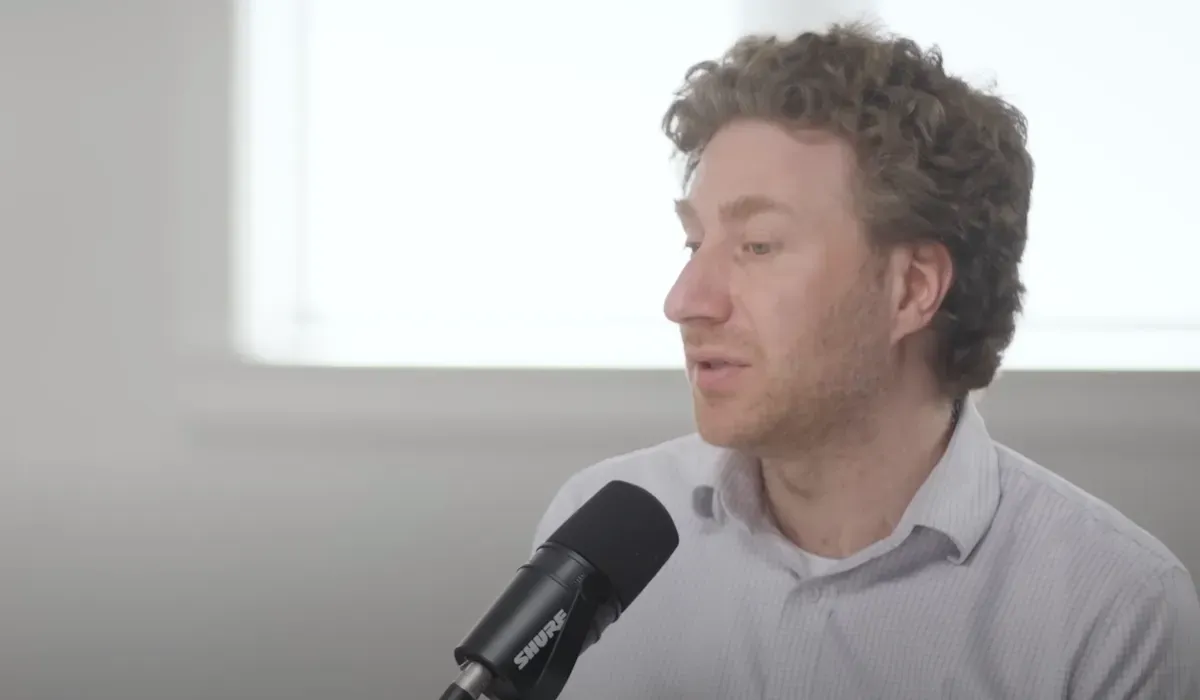
YC partners Gary Tan, Jared Friedman, and Diana Hu unpacked this phenomenon in a recent YouTube conversation called "The Lightcone" . The trio looked equally amazed and terrified at what they discovered.
YC partners surveyed their current batch about AI coding tools. The results shocked them. Multiple founders admitted their codebases are 95% AI-generated. Humans merely supervise. The era of the programmer hunched over a keyboard, manually typing each character, dies before our eyes.
"I don't write code much. I just think and review," confessed one technical founder from Asra. This comes from someone whose previous company built developer tools. The machines have converted even the true believers.
Blinding Speed of Transformation
The shift happened with blinding speed. One founder from Train Loop reported a "10x speedup" six months ago. Now he claims a "100x speedup." He declared: "I'm no longer an engineer. I'm a product person." The transformation took mere months.

Cursor dominates as the tool of choice. This AI coding assistant integrates directly into the development environment. Windsurfer follows as a fast-rising alternative. Its key advantage? It understands codebases without explicit guidance. Devs don't need to point it to specific files. It explores and comprehends on its own.
Debugging remains AI's weakness. The machines excel at creation but stumble when fixing broken code. Humans must still hunt bugs the old-fashioned way. But even this limitation spawns new behaviors. Why debug when you can rewrite?
"I am far less attached to my code now," explained RB from Copycat. "Since I can code three times as fast, it's easy for me to scrap and rewrite if I need to." The disposable code era has arrived. Why fix what you can replace in seconds?
Some founders run multiple AI instances simultaneously. Yoav from CIX admits: "I write everything with Cursor. Sometimes I even have two windows open in parallel and prompt them on different features." One brain, multiple AI assistants, all coding in concert.
The Emerging Product Engineer
This shift transforms more than workflows. It reshapes professional identities. The "product engineer" emerges as coding's new archetype. Technical ability now takes a backseat to product intuition and user empathy. As one founder put it: "Human taste is now more important than ever as coding tools make everyone a 10x engineer."
The skills gap narrows between technical and non-technical founders. When machines handle implementation details, vision and product sense matter more than algorithm knowledge. The founder who understands users outperforms the coding virtuoso.
This parallels existing divisions between front-end and back-end developers. Front-end work increasingly resembles product management. These engineers function as "ethnographers" exploring underserved markets and translating user needs into features. Back-end specialists focus on architecture and infrastructure - areas where AI still struggles.
Y Combinator's Jared Friedman sees this pattern in hiring. Beyond a baseline technical threshold, what matters is whether engineers want to talk to users. Some thrive on user feedback and rapid iteration. Others prefer pure technical challenges without human complications.
Two Distinct Specializations
The AI coding revolution won't eliminate engineers. It creates two distinct specializations. Product engineers leverage AI to rapidly build user-facing features. Systems architects design the infrastructure that supports millions of users without collapsing.
This mirrors art history. Picasso mastered traditional techniques before creating revolutionary abstract works. Similarly, the best systems architects understand fundamentals before designing AI-assisted architectures. As one YC partner noted: "You need to know how things work under the hood or you'll create something that falls over when it scales."
The Future of Hiring and Development
Hiring practices must evolve. Traditional algorithm interviews become meaningless when AI solves those problems instantly. Companies must decide whether to allow AI during technical screens or create entirely new assessments. The skills that matter change when machines write the code.
For now, YC founders ride the AI acceleration curve. They build faster than any previous generation. But the true test awaits. Will these AI-generated codebases scale? Will they maintain stability under pressure? The proof will come a year from now, when these systems face millions of users.
The programmer-as-typer disappears. The coder transforms into conductor, directing AI assistants rather than writing each line. For startups racing to market, this shift creates unprecedented advantage. They build in days what once took months.
For the programmer contemplating their future, the message rings clear: embrace the vibes or face obsolescence. The keyboard no longer serves as the programmer's primary tool. The prompt becomes the new command line.
Why this matters:
- Software development just experienced its "Gutenberg moment." When AI writes 95% of the code, the bottleneck shifts from implementation to imagination. The limiting factor isn't typing speed but vision clarity.
- The 10-year coding bootcamp graduate and the CS PhD now compete on more equal footing. Technical gatekeeping crumbles when machines handle implementation. Product sense and user empathy become the new career accelerants.
Read on, my dear:

Marcus Schuler
Editor-in-Chief and founder of Implicator.ai. Former ARD correspondent and senior broadcast journalist with 10+ years covering tech. Writes daily briefings on policy and market developments. Based in San Francisco. E-mail: editor@implicator.ai