IMPLICATOR
Japan's government invested ¥100 billion ($640 million) in Rapidus and secured a "golden share" granting veto power over the semiconductor startup, the Ministry of Economy, Trade and Industry announced Friday. Combined with ¥167.6 billion from 32 private companies including Sony, Toyota, and SoftBank, the round totals ¥267.6 billion ($1.7 billion) and exceeds the ¥130 billion private-sector target Rapidus had set for the fiscal year. The government initially holds 11.5% of voting shares but retains the right to convert non-voting stock into a majority stake if the company hits financial trouble.
Friday's round reshapes who controls Rapidus, the Hokkaido-based foundry that has drawn equal parts national ambition and industry derision since its founding in August 2022. Japan once controlled more than half the global semiconductor market. Now it can't mass-produce anything below 40 nanometers. Rapidus wants to close that gap by skipping straight to 2 nanometers. Even TSMC and Samsung haven't finished scaling their own 2nm lines.
The Breakdown
- Japan invested ¥267.6 billion ($1.7B) in Rapidus from government and 32 private companies, exceeding the ¥130B target
- A "golden share" gives Tokyo veto power, with conversion rights that could reach 60% voting control
- Rapidus needs ¥4 trillion total for 2nm mass production; about ¥1.7 trillion raised so far
- Sixty prospective clients in talks, but no binding purchase orders yet for the 2nm line
Thirty-two companies, one bet
Private money came in faster than Tokyo expected. Canon, Fujitsu, megabanks MUFG and Sumitomo Mitsui, and 28 other companies put up ¥167.6 billion. Rapidus had asked for ¥130 billion. Economy minister Ryosei Akazawa called it proof that "expectations for the project are clearly mounting."
Still a fraction of what Rapidus actually needs. About ¥1.7 trillion of the estimated ¥4 trillion required for mass production through fiscal 2029 has been raised, according to METI. Japanese megabanks are planning staged loans totaling ¥2 trillion from fiscal 2027 onward, but those loans depend on Rapidus proving it can actually produce working chips first.
Prime Minister Sanae Takaichi has pledged ¥3 trillion in total support for Rapidus as part of a broader push to quadruple the economy ministry's semiconductor budget to ¥1.23 trillion for the upcoming fiscal year. Emboldened by private-sector enthusiasm, she is not relying on Rapidus alone. Earlier this month, Takaichi secured TSMC's agreement to upgrade its second Japanese facility in Kumamoto to 3-nanometer production, giving Japan a parallel path to advanced chipmaking through a manufacturer that has actually done it before.
The leash inside the lifeline
Tokyo's governance structure tells as much of the story as the cash. The government holds 11.5% of voting shares today. If it converts all non-voting stock, that figure jumps to 40%. After the next ¥150 billion tranche budgeted for fiscal 2027, conversion rights would give the government roughly 60% of the votes.
Beyond voting rights, the golden share grants veto power over major corporate decisions, including dissolution, specifically to guard against economic security risks and foreign influence. This is not a passive investment. Tokyo built a kill switch into the deal.
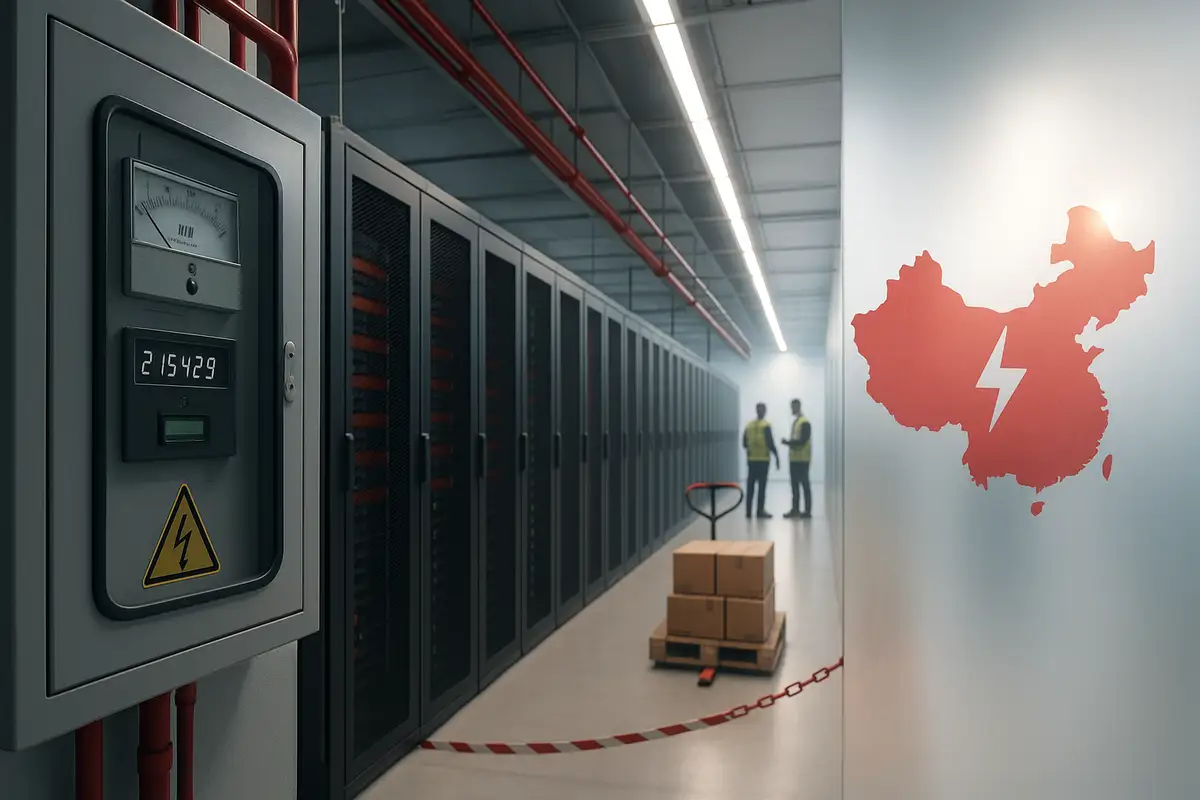
A pattern is forming across chip-producing nations. Washington explored taking an equity stake in Intel last year to accelerate domestic production. Beijing subsidizes electricity costs for data centers that buy domestic chips. All three are tightening control over chip supply chains. Tokyo is just the most explicit about it. The golden share isn't a backdoor. It's printed on the term sheet.
Stay ahead of the curve
Strategic AI news from San Francisco. No hype, no "AI will change everything" throat clearing. Just what moved, who won, and why it matters. Daily at 6am PST.
No spam. Unsubscribe anytime.
The demand question nobody has answered
Money and governance are the easy parts. Customers are harder.
Rapidus CEO Atsuyoshi Koike said the company is in talks with more than 60 prospective clients looking to design chips for AI, robotics, and edge computing. "Since the start of the year, customers' demands for cutting-edge chips have surged," Koike said at a press conference Thursday. The company began distributing its process design kit to initial customers in early February, according to South Korean outlet Chosun Biz, a step that lets fabless chip designers evaluate whether to commit production runs to Rapidus's 2nm line.
But distributing a PDK and winning binding purchase orders are very different things. Rapidus started pilot production at its Chitose plant last April using 2nm gate-all-around transistor technology transferred from IBM. Prototype transistors are hitting targeted electrical characteristics. Mass production is slated for the second half of fiscal 2027, with an IPO targeted around fiscal 2031.
Skeptics have history on their side. Japan's government-backed semiconductor ventures follow a pattern of generous funding and commercial failure. Elpida Memory ate through its subsidies and collapsed in 2012. Japan Display has burned through billions without achieving stable profitability. Both had government money and corporate backers. Neither solved the demand problem.
Rapidus faces the same structural trap. You can build the factory. You can fill it with ASML's latest extreme ultraviolet lithography machines and staff it with engineers relocated to Hokkaido. But until chip designers commit multi-year production volumes at prices that cover operating costs, the fab runs below capacity. Low utilization raises unit costs. Rising costs push customers toward TSMC or Samsung. The subsidy cycle restarts.
Koike's 60-company pipeline could break that loop. Or it could be a list of polite meetings that never convert to purchase orders. The answer depends on whether Rapidus can demonstrate stable yields at 2nm, something no foundry outside TSMC has done at any advanced node.
Japan's ¥4 trillion bet sits in a clean room in Chitose, Hokkaido, surrounded by prototype transistors and government veto clauses. The golden share guarantees Tokyo holds the leash. Whether the asset can produce chips anybody wants to buy is the question that ¥4 trillion can't answer on its own.
Frequently Asked Questions
What is Rapidus and why does Japan care about it?
Rapidus is a semiconductor foundry founded in 2022 in Chitose, Hokkaido, with the mission of producing 2-nanometer chips domestically. Japan lost its semiconductor manufacturing lead decades ago and can't currently mass-produce chips below 40 nanometers. The government views Rapidus as essential for economic security and reducing dependence on TSMC's fabs in Taiwan.
What is a golden share and how does it work?
A golden share gives its holder veto power over major corporate decisions regardless of its voting percentage. In Rapidus's case, Japan's government can block dissolution, ownership changes, and decisions that pose economic security risks. It functions as an override, ensuring Tokyo retains ultimate control even if its voting stake stays below 50%.
How much funding does Rapidus still need?
Rapidus estimates it needs about ¥4 trillion ($26 billion) to reach mass production of 2nm chips through fiscal 2029. About ¥1.7 trillion has been raised so far. Japanese megabanks MUFG, Sumitomo Mitsui, and Mizuho plan staged loans up to ¥2 trillion starting fiscal 2027, contingent on Rapidus demonstrating production viability.
What technology is Rapidus using for its 2nm chips?
Rapidus uses gate-all-around (GAA) transistor technology licensed from IBM. The company began pilot production at its Chitose plant in April 2025 and has confirmed targeted electrical characteristics on prototype transistors. It started distributing process design kits to initial customers in early February 2026.
Why are skeptics doubtful about Rapidus?
Japan has a track record of government-backed semiconductor failures. Elpida Memory went bankrupt in 2012 despite support, and Japan Display has struggled for years. Critics question whether Rapidus can achieve stable yields at 2nm and convert prospective client interest into binding multi-year purchase orders.



Harkaram Grewal
Freelance correspondent reporting on the India-U.S.-Europe AI corridor and how AI models, capital, and policy decisions move across borders. Covers enterprise adoption, supply chains, and AI infrastructure deployment. Based in New Delhi.