 IMPLICATOR
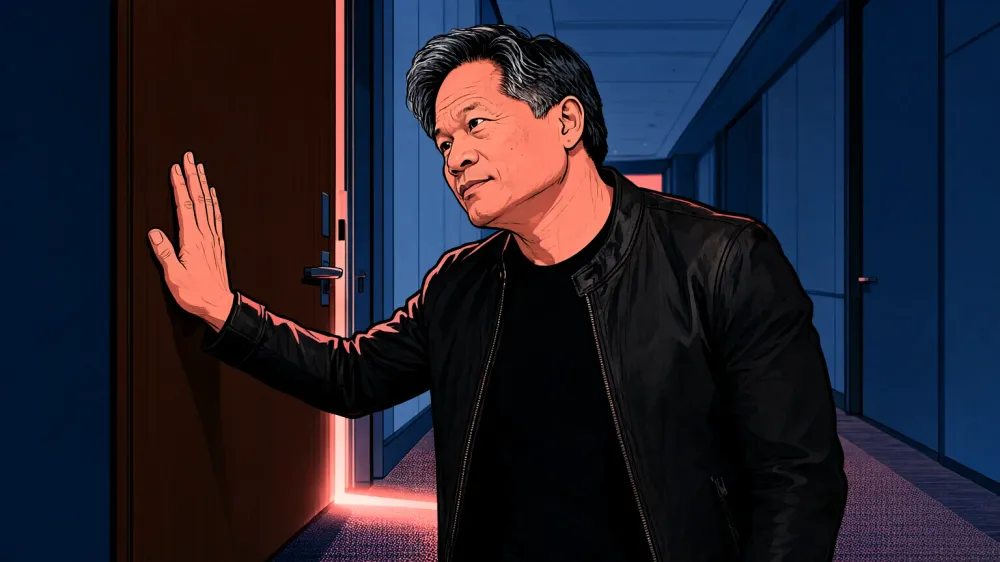
Nvidia’s board is not considering bringing Jensen Huang back as CEO and is not discussing a return, a person familiar with the matter said on Nov. 16. The directors are focused on their investigation into his conduct. Huang’s supporters have assembled a campaign around a different outcome: nearly 180,000 petition signatures by Nov. 16, 2026, prominent technology executives backing reinstatement and a letter from investors asking the board to keep his return possible. Nvidia announced Huang’s resignation on Nov. 12 after 33 years as CEO, following his admission of an affair and reports of other relationships.
The campaign turns on four conditions: the independent investigation clears Huang of compromising national security or company secrets; the board wants him back; shareholders can compel the board; Washington accepts a return. A favorable investigation could give the directors grounds to reconsider. But on Nov. 12, the board began searching for a permanent successor, making its willingness to bring Huang back the weakest condition and the one that decides his return.
What would have to be true
What a Jensen Huang return to Nvidia would need
Claim under test: the campaign to reinstate Huang as CEO, nearly 180,000 petition signatures as of Nov. 16, 2026
-
Open
The investigation clears him
Joon H. Kim and Wachtell Lipton retained Nov. 10; no findings and no published timeline
-
Shaky
The board wants him back
Successor search began Nov. 12; a person familiar with the matter says no return is under consideration
-
Fails
Shareholders can compel the board
The two letter funds held about 0.04% of shares and left the decision to the board
-
Shaky
Washington accepts a return
Trump "would not mind"; Bessent wants an outside CEO; Congress asked Huang to appear Dec. 1
Nvidia board statements, the Gerstner-Baker letter, remarks by Trump and Bessent, as of Nov. 16, 2026
The Argument
- A campaign with nearly 180,000 petition signatures wants Jensen Huang back as Nvidia CEO; a person familiar with the matter said Nov. 16 the board is not considering it.
- Four things have to hold: the Wachtell Lipton investigation clears him, the board wants him back, shareholders can compel it, and Washington accepts a return.
- The board is the weakest condition: it began a successor search on Nov. 12, and the investors who wrote to it left the decision to the board.
- The first dated test is the board's answer to Treasury Secretary Scott Bessent's 10-day demand, due around Nov. 25, before Huang's Dec. 1 congressional interview.
AI-generated summary, reviewed by an editor. More on our AI guidelines.
The investigation has to clear him
Joon H. Kim has the assignment that could change the campaign’s factual basis. On Nov. 10, Nvidia’s independent directors said they had retained the former acting U.S. Attorney for the Southern District of New York and his firm, Wachtell, Lipton, Rosen & Katz, to investigate whether Huang’s conduct compromised company secrets or national security.
The directors had said on Nov. 8 that they had no reason to believe either had been compromised. That statement matters: the board’s own starting position leaves room for findings favorable to Huang. It also preceded the inquiry’s completion.
The petition asks the board to disclose the inquiry’s scope and expected timeline and give Huang a meaningful opportunity to respond. Those demands identify information supporters themselves lack. It asks for his return while the investigation runs, not afterward, but the board is focused on that investigation, per the person familiar with the matter, making its findings material to the directors’ choice. A finding that no secrets or security interests were compromised would satisfy this condition, while leaving the directors to assess his conduct as chief executive. Without completed findings or a published delivery date, the investigation condition remains open.
The board has to want him back
Harvey C. Jones became Nvidia’s first board chair on Nov. 12. His appointment came with a leadership transition that gave finance chief Colette Kress the interim CEO role and began a search for a permanent successor, considering internal and external candidates. A regulatory filing says the directors accepted Huang’s resignation on Nov. 11. Reinstatement would require them to reverse the direction they chose.
Jones’s public statement on Nov. 12 gave Kress and the leadership team the board’s full confidence. Kress retained her finance responsibilities while taking the interim job.
There is room in the timetable for reconsideration. On Nov. 13, the board was still selecting a search firm and said it had not formally engaged potential candidates. Yet the person familiar with the matter said on Nov. 16 that the directors were neither considering Huang’s return nor discussing it. The record cuts against a reversal, but the account of the board’s present position comes from one anonymous person, not an on-the-record statement, leaving the board condition shaky as of Nov. 16.
The campaign has to carry shareholder power
The condition here is that shareholders can compel the board through a vote, a special meeting or new directors. Brad Gerstner of Altimeter Capital and Gavin Baker of Atreides Management sent the board a letter on Nov. 13; both funds held Nvidia shares. As of June 30, Altimeter held 9,413,589 Nvidia shares and Atreides held 1,249,291. Those holdings would have been worth about $1.74 billion together at the Nov. 13 close, representing roughly 0.04% of Nvidia’s shares. Their disclosed ownership gives them a financial stake in the outcome but little direct power to compel it.
The funds’ letter also stops short of seeking that power. Its requests concern process; it does not ask for reinstatement, a vote, new directors or a special meeting. If the board concludes that a return would not serve shareholders, the letter says, “that is the Board’s prerogative.” The investors have chosen persuasion and expressly left the decision with the people they are trying to persuade.
The petition has support from Elon Musk, Y Combinator CEO Garry Tan and Epic Games CEO Tim Sweeney. Its nearly 180,000 signatures reported on Nov. 16 measure participation in a campaign whose affiliations are self-reported and unverified. The website says neither Nvidia nor Huang has endorsed it. That count cannot establish how much stock the signatories control or how they could vote.
Leo KoGuan pledged to stop buying on Nov. 13: “No further investment without Jensen.” His pledge concerned future purchases; he did not say he would sell existing holdings. The shareholder condition fails: the two funds behind the only investor letter expressly left the decision to the board, and the petition carries no verified ownership.
Washington has to accept a return
President Donald Trump said on Nov. 16 that he “would not mind” Huang’s return and thought Huang had learned a “big lesson.” Asked about national security, Trump said: “It was not put at risk, and our country is now stronger than ever before.” That was the President’s assertion, not an investigative finding. Allies were reportedly assembling a “war room” of Silicon Valley executives to seek White House backing. Trump’s remarks give that effort a receptive starting point.
Treasury Secretary Scott Bessent had taken a different position the previous day. On Nov. 15, he said the directors “need to go outside the company” for a CEO and accused Nvidia of a “culture of noncompliance.” His concern extended to the business: “I want to keep coming back to what was the culture at Nvidia, and were they pressing these seemingly illicit sales to goose their revenues and their earnings?”
That is an allegation requiring answers, and Bessent directed his demand to the board and outside counsel. “I think we need answers in the next 10 days from the board and from the outside counsel,” he said on Nov. 15.
Congress has its own appointments to seek. Committees asked Huang to sit for a closed-door interview on Dec. 1 and testify at a Senate hearing on Dec. 3. House chairs asked general counsel Tim Teter to appear Dec. 2. The President’s welcome sits alongside the Treasury Secretary’s demand for outside leadership and the congressional committees’ scrutiny still ahead, leaving the acceptance condition shaky.
Know someone who'd find this useful? ✉️ Email it to a friend in one click, or they can subscribe free here.
The case for keeping a return possible
“There are more questions about recent events than answers,” Gerstner and Baker wrote on Nov. 13. They said the board “should avoid a rush to replace Jensen that undermines and thwarts the best interests of shareholders.” Their request was for “a slow, measured, and deliberate process regarding the future leadership of Nvidia that leaves all options on the table, including the potential return of Jensen Huang.”
The sequence supports that argument. The board said it had not formally engaged candidates, and Kress was available to lead during the search. Waiting for Kim’s findings could prevent a permanent appointment from foreclosing a choice the evidence might later justify. The petition states the fairness claim directly: “Suspicion or association alone is not a sufficient basis for ending Jensen's leadership.” Its demand is to “bring Jensen back while an independent investigation establishes the facts.”
Musk, whose SpaceX is a major Nvidia customer, said many deals were “a handshake with Jensen, not a written contract,” supporting the argument that Nvidia’s supply deals depend on Huang personally.
Jay Goldberg, a senior analyst at Seaport Research Partners, gave the comeback case its necessary condition: “If he can get through the legal trouble, I think we'll have a second act from him.” Favorable findings would strengthen the argument that the board should consider Huang again, especially while its search remains at an early stage.
The record still leaves the directors more to decide. The inquiry covers Huang’s conduct, and subsequent reports added alleged relationships with two Nvidia employees. Bessent is demanding answers about company practices from the same board. Even the funds advocating an open search accept that the directors may conclude reinstatement is against shareholders’ interests. Clearance on security would remove a major obstacle without deciding whether Jones and his fellow directors want Huang running Nvidia again.
The account of the board’s present position comes from one person speaking anonymously, the directors have not stated it on the record, and the Wachtell inquiry has no published timeline.
Bessent's deadline is the first test
Kress’s first earnings call as interim CEO on Nov. 17 is the next time the company speaks publicly, and anything it says about the search’s timing matters.
The first dated test is the board’s and outside counsel’s response to Bessent’s Nov. 15 demand for answers within 10 days, taking that window to about Nov. 25. Huang’s requested Dec. 1 interview and Dec. 3 Senate testimony follow. If those proceedings produce findings favorable to Huang, a board statement that a return is under consideration or a pause in the successor search would show the directors reopening the question. If the board answers Washington by about Nov. 25 and keeps searching for a successor, the campaign will have failed to move the board before Huang’s Dec. 1 interview.
Frequently Asked Questions
Is Nvidia's board considering bringing Jensen Huang back?
Not according to a person familiar with the matter, who said on Nov. 16 that the board is not considering a return and is not in discussions about one. The board is focused on its investigation. Directors have not stated this on the record.
Who is investigating Huang?
Nvidia's independent directors retained Joon H. Kim, former acting U.S. Attorney for the Southern District of New York, and Wachtell, Lipton, Rosen & Katz on Nov. 10 to examine whether Huang's conduct compromised company secrets or national security. No timeline has been published.
Can shareholders force Huang's reinstatement?
Not on the current record. Altimeter and Atreides, which sent the board a letter on Nov. 13, held about 0.04% of Nvidia's shares and left the decision to the board. The petition's affiliations are self-reported and unverified.
What has Washington said about a Huang return?
President Trump said on Nov. 16 he would not mind a return. Treasury Secretary Scott Bessent said on Nov. 15 the board should look outside the company and wants answers within 10 days. Congressional committees asked Huang to appear Dec. 1 and testify Dec. 3.
Who is running Nvidia now?
Colette Kress, the finance chief since 2013, is interim CEO and keeps the CFO role. Harvey C. Jones became the board's first chair on Nov. 12. Kress leads the Nov. 17 earnings call, her first as interim CEO.
AI-generated summary, reviewed by an editor. More on our AI guidelines.


Marcus Schuler
Editor-in-Chief and founder of Implicator.ai. Former ARD correspondent and senior broadcast journalist with 10+ years covering tech. Writes daily briefings on policy and market developments. Based in San Francisco. E-mail: editor@implicator.ai