Implicator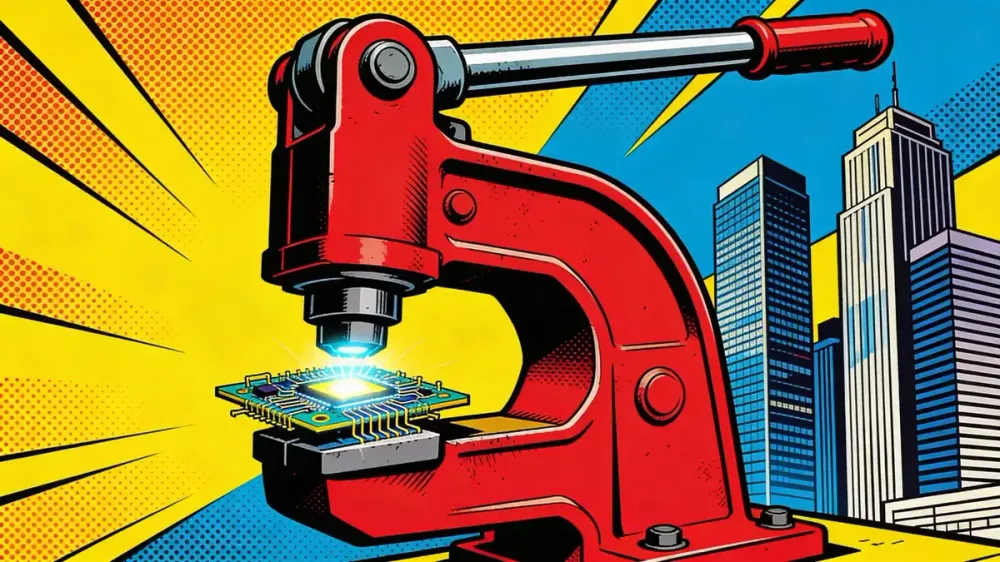
When Anthropic released Claude Code Security on Friday, the market punished the obvious targets. CrowdStrike dropped 8%. Cloudflare fell 8.1%. SailPoint shed 9.4%. The Global X Cybersecurity ETF hit a level it hadn't touched since November 2023.
But the sharpest blow landed on JFrog. Down nearly 25% in a single session, a software supply chain company that most people outside dev tooling have never heard of lost a quarter of its market value between the opening and closing bells. Wall Street processed the threat to JFrog faster than it processed the threat to CrowdStrike, and that asymmetry tells you something.
Nobody at Anthropic claims they can replace your firewall, and they can't. What matters more is what happens to the companies building the layer between AI code generation and production deployment. Companies like Entire, Thomas Dohmke's startup, which raised $60 million at a $300 million valuation ten days before Anthropic's announcement. The largest seed round ever for a developer tools company. And the ground just shifted beneath it.
The Breakdown
- JFrog lost 25% after Claude Code Security launched, the sharpest drop in Friday's cybersecurity selloff
- Entire raised $60M at $300M valuation ten days before Anthropic built security scanning into the model layer
- Opus 4.6 found 500+ vulnerabilities in production codebases that human reviewers missed for years
- Model providers are absorbing developer tool functions quarterly, squeezing startups in the middleware layer
The middleware bet
Dohmke spent four years running GitHub from inside Microsoft, watching 180 million developers migrate from typing code to managing AI output. His thesis at Entire is clean. Existing developer infrastructure assumes humans write code. Line by line, function by function, with pull requests and code reviews designed around human authorship and human comprehension. That assumption broke sometime in the past eighteen months.
Eighty percent of new GitHub developers now use Copilot in their first week. Some software projects are already 90% written by AI, according to Dohmke himself. The bottleneck moved. Writing code is no longer the constraint. Understanding, reviewing, and governing the code that machines produce is the constraint.
Entire's first product, Checkpoints, is an open-source command-line tool that records the reasoning chain behind AI-generated code. When an agent modifies authentication logic or deploys a change, Checkpoints logs the triggering prompt, the decision steps, and the reasoning forks. A developer reviewing that code six months later gets the full transcript explaining design choices, not just bare diffs. Think of it as git blame for AI decisions, a ledger of why the machine did what it did.
The bet is that a governance layer needs to exist between AI models and shipping software. Security is the obvious use case. Traceability, compliance, and the basic organizational question of knowing why your codebase looks the way it does when no human wrote most of it matter just as much.
Investors agreed. Felicis led the round. Madrona and Microsoft's M12 participated. Jerry Yang, Garry Tan, and Datadog CEO Olivier Pomel wrote personal checks. Smart money, clear thesis, defensible product. Then Anthropic went and built the security part of that governance layer into the model itself.
The vice tightens from above
Here's what separates Friday from the usual product announcement cycle. Claude Code Security doesn't sit alongside the AI coding workflow. It absorbs part of it.
Anthropic's Frontier Red Team, roughly 15 researchers, ran Opus 4.6 through production open-source codebases and found over 500 vulnerabilities that had escaped expert human review for years. Some for decades. Opus 4.6 wasn't scanning for known exploit signatures. Static analysis tools do that. Instead it followed data flows through applications and caught business logic flaws that rule-based scanners skip right over, the kind of bugs that survive code review because they live in the interaction between components, not inside any single function.
That's not a feature you bolt on. Different animal. Logan Graham leads Anthropic's Frontier Red Team. He put it in competitive terms when speaking to Fortune: Opus 4.6 pursues leads "comparable to junior security researchers but at significantly faster speeds." The defensive framing is deliberate. Anthropic knows that the same scanning capability could help attackers find exploits. But the product implication cuts in a different direction, one the cybersecurity incumbents noticed immediately.
And Anthropic isn't working this territory alone. OpenAI launched its own cybersecurity tool, Aardvark, roughly four months earlier, with similar vulnerability scanning plus sandbox-based exploit testing. Two of the three major foundation model providers now treat code security as a built-in function of the model layer. Not as an integration. Not as a partnership. As a feature.
For startups building standalone tools in this space, the arithmetic gets uncomfortable fast. If the model that generates your code can also review it, scan it, explain its reasoning, and suggest patches, the independent tooling layer gets thinner by the quarter. How many separate line items on a DevOps budget survive when the model provider bundles those functions into the subscription you already pay for?
Raymond James analyst Mark Cash told Investors Business Daily that enterprises "may perceive reduced need for downstream package-level controls" if AI code-level quality improves. That's a careful way of describing what happened to JFrog. A quarter of its value erased because investors drew a line from Anthropic's scanning capability to JFrog's core curation product.
Stay ahead of the curve
Strategic AI news from San Francisco. No hype, no "AI will change everything" throat clearing. Just what moved, who won, and why it matters. Daily at 6am PST.
No spam. Unsubscribe anytime.
Where the moat might hold
None of this means Dohmke picked the wrong problem. The problem is real, and Claude Code Security actually validates the premise. Anthropic didn't release this tool because code security is going great. It released it because machine-written code is outpacing every existing review mechanism. The anxious energy around AI-generated vulnerabilities is what makes both Anthropic's product and Entire's product necessary.
But validating the problem doesn't guarantee the independent solution survives. That depends on what the middleware layer does that the model provider won't.
Entire's strongest card is vendor neutrality. Checkpoints works with Claude Code, Gemini CLI, and plans to support additional agents. Dohmke told Implicator.ai in December that "massive volumes of code are being generated faster than any human could reasonably understand." His team built the product to be model-agnostic by design, a deliberate bet that no single provider will own the entire AI coding stack. In a world where enterprises run two or three AI coding platforms simultaneously, a governance layer that works across all of them carries real weight. No single model provider will build deep integrations with its competitors' agents. That gap is structural.
Reasoning-chain logging also sits in territory Anthropic hasn't touched. Claude Code Security finds bugs and suggests fixes. It doesn't record why an AI agent chose a particular architecture, why it forked at a decision point, or how its reasoning evolved across a multi-step build. Entire captures that institutional memory. For audit trails, compliance requirements, and the kind of organizational knowledge that large engineering teams accumulate over years, that matters. Regulated industries will pay for it. Financial services firms can't tell their auditors "the AI decided," and neither can defense contractors or healthcare platforms.
Still. You can probably name the cloud monitoring startups that thrived right up until AWS, Azure, and GCP built equivalent dashboards natively. Platform absorption is the oldest pattern in enterprise software, and the companies caught in it rarely see the timeline clearly until they're living it. The moat that looks structural in a pitch deck can look optional once the platform ships a 70%-as-good version for free.
Who gets squeezed
Friday's market action told one story. Anthropic threatens cybersecurity vendors. The more interesting story plays out across 2026.
Incumbent security companies will absorb this. CrowdStrike and Palo Alto Networks have moats in endpoint protection, identity management, network security, real-time threat intelligence gathered from millions of deployed sensors. Code scanning touches a fraction of what they sell. Palo Alto Networks CEO Nikesh Arora said earlier this week that he's "confused why the market is treating AI as a threat" to cybersecurity. For his company specifically, the confusion is warranted.
The iShares Expanded Tech-Software Sector ETF dropped 23% in 2026, its worst quarterly pace since 2008, but much of that is panic pricing, not precision.
The squeeze lands hardest on the companies in between. Not the incumbents with diversified product lines and billions in recurring revenue. Not the foundation model providers expanding their feature surface with every release. The startups in the middle. The ones raising seed rounds right now to build developer workflow tools for code review, security scanning, dependency management, deployment governance. Each of those functions becomes a target the moment a model provider decides it belongs inside the platform. GitLab dropped 8% on Friday too, and it has a $3 billion market cap and years of enterprise contracts behind it. Imagine that kind of repricing hitting a company with fifteen employees and a product still in beta.
Jefferies analyst Joseph Gallo framed it bluntly. LLM providers "will announce more products and compete for incremental cyber budget dollars." Swap "cyber" for "developer tools" and the warning gets broader. Security scanning today. Code review tomorrow. CI/CD integration next quarter. The model providers are emboldened, and the cadence of feature absorption is accelerating.
The clock that matters
JFrog processed its 25% decline in an afternoon. Public markets move fast when the threat is legible. For companies like Entire, the timeline stretches longer and the feedback arrives quieter. No stock ticker records the moment a potential customer decides the model's built-in scanner is good enough.
Dohmke has the right read on the problem. His team already shipped a working product. Most competitors are still circulating pitch decks. The investor roster reflects genuine conviction in developer infrastructure for the AI era. And the former GitHub CEO knows the platform playbook better than almost anyone, having watched Microsoft absorb and expand GitHub's surface area for four years from the inside.
Fifteen employees across four time zones, building against a deadline they didn't set.
None of that changes the structural reality. Model providers are absorbing adjacent functions at a pace nobody in the startup ecosystem predicted twelve months ago. The window between "we identified the right problem" and "the platform absorbed our product" is shrinking with every blog post from San Francisco.
Entire's $60 million buys speed. At $300 million, someone is betting that's enough. The next Anthropic blog post will test that bet.
Frequently Asked Questions
What is Claude Code Security?
Anthropic's AI-powered code security tool using Opus 4.6 to find vulnerabilities in codebases. The Frontier Red Team found over 500 bugs in production open-source projects that escaped expert human review, some for decades. It reasons about component interactions rather than pattern-matching known exploits.
What is Entire and what does Checkpoints do?
Entire is a startup founded by former GitHub CEO Thomas Dohmke that builds governance tools for AI-generated code. Checkpoints, its first product, logs the reasoning chain behind AI coding decisions, recording prompts, decision steps, and reasoning forks so developers can understand why code was written months later.
Why did JFrog lose a quarter of its value?
Investors concluded Anthropic's code-level scanning could reduce enterprise demand for JFrog's software supply chain curation products. Raymond James analyst Mark Cash noted enterprises may perceive reduced need for downstream package-level controls if AI improves code quality at the source.
How does OpenAI Aardvark compare to Claude Code Security?
OpenAI launched Aardvark roughly four months before Claude Code Security, offering vulnerability scanning plus sandbox-based exploit testing. Two of the three major foundation model providers now treat code security as a built-in model function rather than a separate integration.
Can large cybersecurity companies survive this threat?
Large incumbents like CrowdStrike and Palo Alto Networks have diversified product lines spanning endpoint protection, identity management, and network security. Code scanning covers only a fraction of their revenue. The deeper threat targets startups and mid-cap companies focused narrowly on developer workflow tools.

Harkaram Grewal
Maps the India–Germany–U.S. AI triangle from New Delhi. Background in cross-market operations and business development. Writes about supply chains, enterprise adoption, and talent—the unsexy forces that actually move global AI.