IMPLICATOR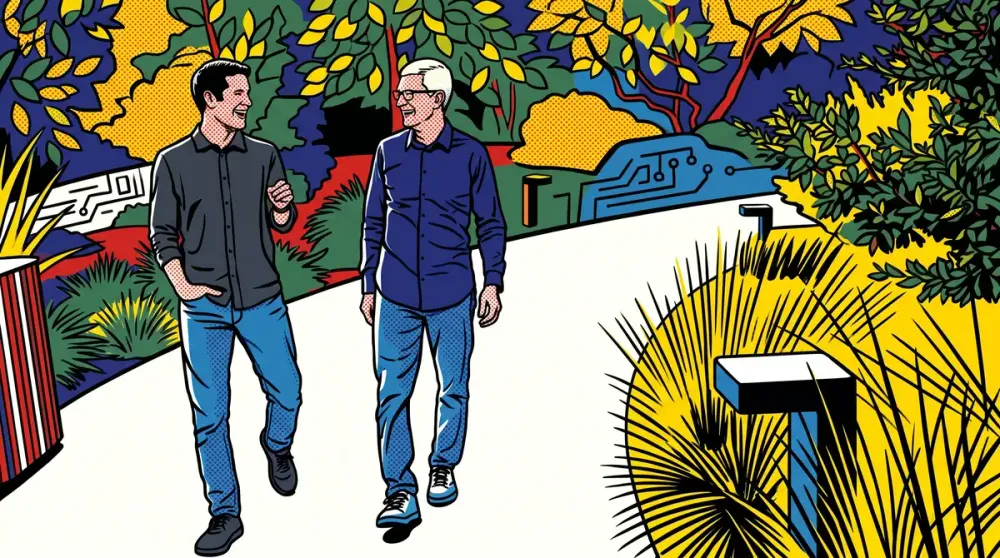
Short answer first. On April 21, 2026, Tim Cook still has the CEO badge. Apple says John Ternus takes it on September 1, while Cook moves upstairs to executive chairman. The pause is the point: Apple wants the handoff to look boring before Ternus tries to make it matter.
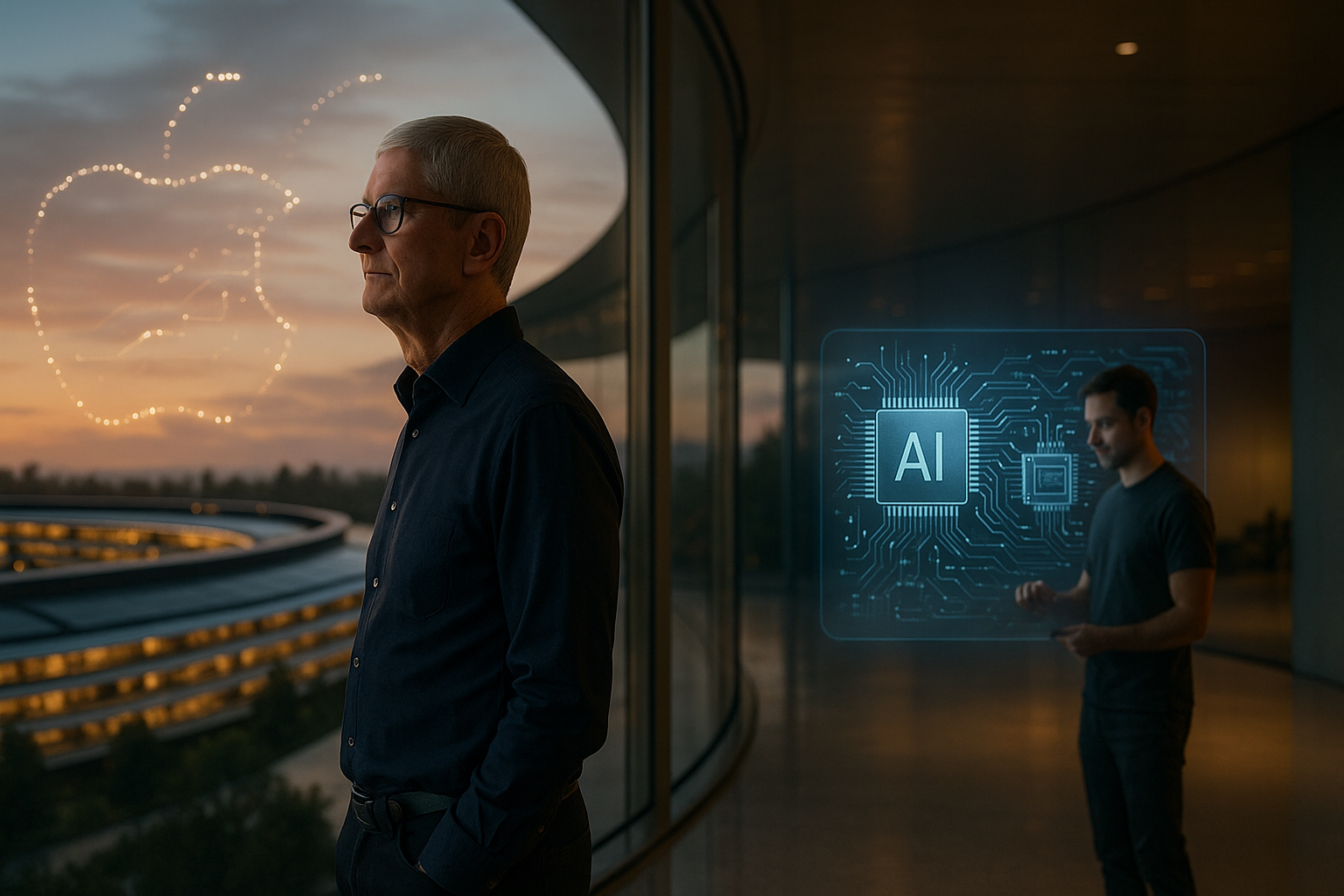
The transition image did the work. Cook and Ternus walking at Apple Park, dark shirts, blue jeans, Apple Watches, two faces of the same company. The picture promised continuity. The profile that matters is more useful: a hardware engineer who can make decisions inside a company famous for making decisions slowly.
That is the real bet. Apple is not asking Ternus to become Jobs. It is asking him to be the hinge between a machine that almost never misses and a product culture that now has to move before every edge is polished.
Key Takeaways
- Tim Cook remains Apple CEO until September 1, when John Ternus takes over.
- Apple is betting on decisiveness from a hardware engineer, not a Jobs-style product prophet.
- Ternus inherits Siri delays, AI trust problems, and a culture that fears messy calls.
- The first test is whether one new device or Siri interaction feels necessary.
AI-generated summary, reviewed by an editor. More on our AI guidelines.
The answer changes on September 1
Apple chose the cleanest possible succession design. Cook stays through the summer. Ternus joins the board when he becomes CEO. Arthur Levinson moves from non-executive chairman to lead independent director. Johny Srouji, Apple's chip leader, becomes chief hardware officer and takes over the hardware engineering group Ternus ran.
Nothing about that arrangement suggests revolt. It suggests board relief. Cook gets a dignified exit without actually leaving the room. Ternus gets daily control without inheriting every foreign-policy fire on day one. Srouji gets more authority over silicon, batteries, cameras, modems, displays, and the hardware technologies that will define Apple's next devices.
The numbers explain the caution. CNBC reported that Apple's market value rose more than twentyfold during Cook's tenure, closing near $4 trillion after the announcement. Apple's release gives the revenue bookends: $108 billion in fiscal 2011, above $416 billion in fiscal 2025. Do the ugly arithmetic. Cook's Apple created about $3.65 trillion of market value, around $250 billion for each CEO year.
That is not a CEO record you throw overboard. That is a ship you turn without alarming the crew.
Decisiveness is the product claim
Ternus's profile is almost anti-mythic. He is 50, a Penn mechanical engineer, and an Apple employee since 2001 after a stint at Virtual Research Systems. The official ladder is plain: hardware engineering vice president in 2013, executive team in 2021. His product trail runs through iPad, AirPods, iPhone, Mac, and Apple Watch.
That is not a savior biography. Fine. Ternus offers something duller and more needed: a reputation for product arbitration.
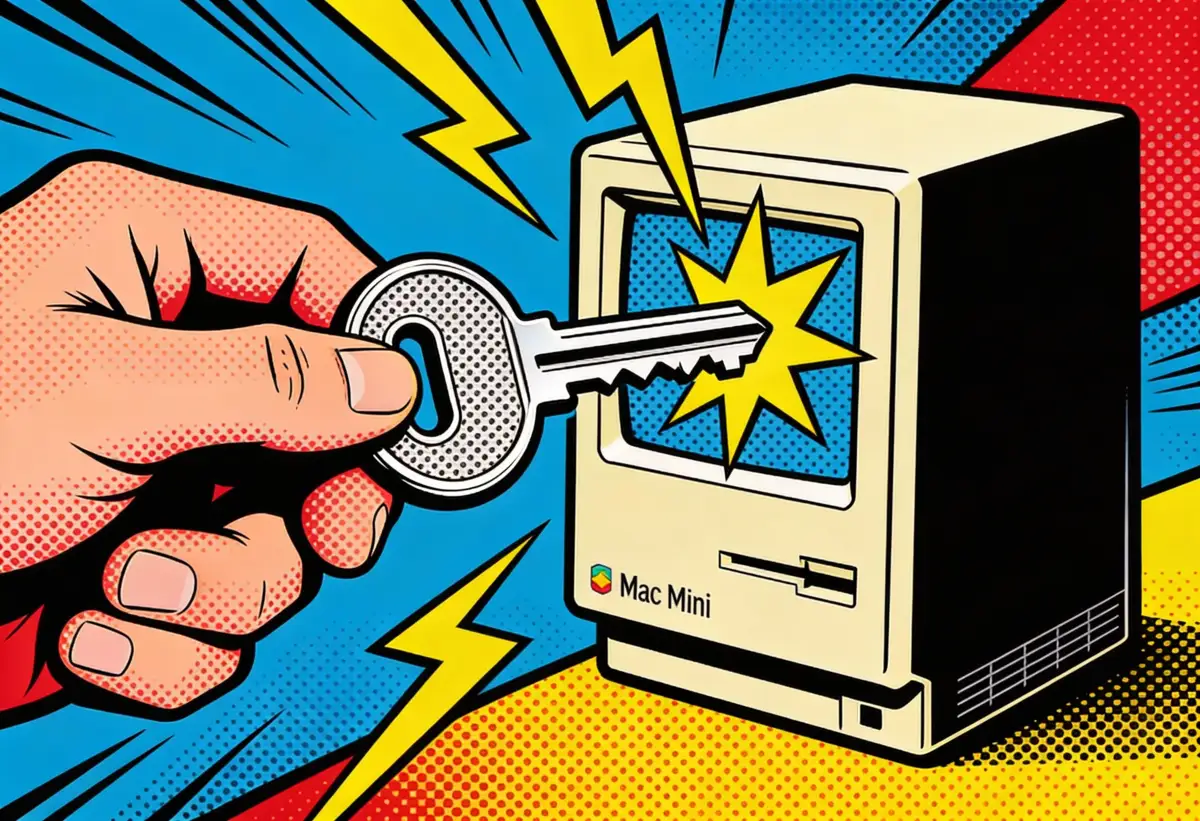
The Journal's Mac Mini anecdote makes the point. Ternus saw a product that needed updated chips and decided the enclosure did not need a major redesign, avoiding a detour through Jony Ive's industrial design group. That sounds small until you remember how Apple actually works. At Apple, delay often arrives wearing the costume of taste.
Bloomberg's profile adds the sharper contrast. Colleagues describe Ternus as a clearer caller than Cook in product debates. Cook asks questions. Ternus chooses. The institutional emotion here is anxiety, not excitement. Apple wants decisiveness, but it fears the mess that comes with faster calls.
That is why the hinge metaphor fits. A hinge does not invent the door. It decides whether the door moves.
The hardware engineer inherits a software injury
Ternus's advantage is also his exposure. Apple picked a hardware executive while the company's most visible weakness sits in AI software.
The board can defend that choice. Apple still sells devices first. Bloomberg has reported that Ternus championed the $599 MacBook Neo, a cheaper and more colorful machine that quickly sold out after launch. He will also begin with high-profile product moments: a first foldable iPhone, a Siri reset, AI home devices, camera-equipped wearables, and the search for a post-iPhone product category that does not repeat Vision Pro's awkward start.
But the software injury remains. Apple's delayed Siri rebuild has turned from an engineering schedule problem into a trust problem. MacRumors reported on Cook's January comments that Google technology would help power the next personalized Siri while Apple kept processing on device and in Private Cloud Compute. Implicator has already treated Siri as a distribution problem. Ternus now has to make it feel like a product again.
Get The Apple Transition Brief
Strategic AI news from San Francisco. No hype, no "AI will change everything" throat clearing. Just what moved, who won, and why it matters. Daily at 6am PST.
No spam. Unsubscribe anytime.
This is where Ternus either matters or becomes a caretaker. If AI is a cloud chatbot pasted onto iOS, a hardware CEO looks like the wrong answer. If AI becomes a camera, earbud, watch, home, Mac, and phone problem, Ternus becomes a logical answer. He can force the question Apple keeps dodging: what should intelligence feel like when it is built into an object?
You should watch for that, not for keynote adjectives. Does Siri finally complete tasks across apps? Do AirPods with cameras solve a real problem? Does a foldable iPhone change behavior, or only raise the price? Does a home display work because Apple built an assistant worth talking to?
The risk is not caution. It is committee polish.
There is a fair case against Ternus. People familiar with his tenure told the Journal he is not known for taking big, risky swings. Bloomberg reported that his instincts were more cautious on Vision Pro and Apple's scrapped car project, opposing the initiatives to different degrees. That history can read two ways.
The positive version is discipline. Vision Pro consumed years and billions, then struggled to find a mass market. The car reportedly burned about $10 billion before Apple killed it. A leader who can stop expensive daydreams has value.
The negative version is smaller. Apple may have promoted the executive best suited to refine existing hardware just as the company needs a new reason for customers to care. That is investor anxiety in one sentence. Ternus may kill bad ideas faster than Cook did. He still has to back one good idea hard enough that Apple feels less defensive.
That is not a personality test. It is a structural test. Apple organizes by function, not by product business lines. Hardware, software, design, services, operations, privacy, retail, and finance all pull on the same object. A weak CEO lets the object become committee polish. A strong CEO forces the tradeoff.
Cook's genius was keeping the object shippable at world scale. Ternus's job is harsher. He has to keep the scale while giving the object a sharper purpose.
The first test will look ordinary
The first proof will not be a moonshot. It will be a plain product moment that tells customers the company is no longer hiding behind patience.
The easiest candidate is Siri. Ask it to find the receipt in Mail, summarize the thread in Messages, change the setting, create the calendar item, compare two photos, and send the right file. Not as a demo. In daily use. If it works, Ternus can argue that Apple waited because it wanted the assistant to live inside the device stack, not because it lost the race. If it fails, the Gemini deal and the CEO handoff will look like two different forms of delay.
The second test is physical. Apple needs one new object that feels necessary, not merely admirable. The foldable iPhone has the best chance because it can start from behavior users already understand. The home display has the harshest test because voice must carry the experience. Wearables sit in the middle. The device must answer a blunt question: why should this exist in Apple's ecosystem now?
Cook's final gift to Ternus is time. The installed base is huge. The services business is rich. The brand still buys patience. Cook also stays as executive chairman, absorbing some regulatory and geopolitical pressure while Ternus learns the political side of running a $4 trillion company.
But time is not the same as permission. Apple already had years to fix Siri. It already had years to explain Vision Pro. It already had years to decide whether AI is a product layer, a services toll, or a new interface. The handoff now creates a cleaner line of accountability.
Back at Apple Park, the transition photo tried to make Cook and Ternus look like continuity in motion. Maybe that is true. But a hinge only proves itself when weight lands on it.
Apple does not need Ternus to be Jobs. It needs him to make the hinge move.
Frequently Asked Questions
Who is the CEO of Apple right now?
As of April 21, 2026, Tim Cook remains Apple CEO. Apple says John Ternus will become CEO on September 1, 2026, while Cook moves to executive chairman.
Why did Apple choose John Ternus?
Ternus has spent most of his career inside Apple hardware engineering. His promotion suggests Apple wants faster product arbitration from someone who understands its devices, silicon constraints, and prototype culture.
What did Tim Cook leave behind?
Cook leaves Apple with far greater scale. Apple says annual revenue grew from $108 billion in fiscal 2011 to more than $416 billion in fiscal 2025, while market value reached about $4 trillion.
What is the main risk for Ternus?
Apple chose a hardware engineer while its most visible weakness sits in AI software. Ternus has to make Siri, AI devices, and new form factors feel like one product answer.
What should readers watch first?
Watch Siri's daily performance, the foldable iPhone, and any home or wearable device tied to AI. The issue is whether Apple ships something necessary, not just polished.
AI-generated summary, reviewed by an editor. More on our AI guidelines.
Free AI briefing · Weekdays
The AI stories that matter, sourced and explained.
Join the Morning Briefing. It goes out every weekday at 4:45 a.m. Pacific, with later sends for the East Coast, Berlin and Tokyo.
Free when you sign up: The Paperclip Compendium, our tested guide to running AI agents.
Free. Unsubscribe in one click.

Marcus Schuler
Editor-in-Chief and founder of Implicator.ai. Former ARD correspondent and senior broadcast journalist with 10+ years covering tech. Writes daily briefings on policy and market developments. Based in San Francisco. E-mail: editor@implicator.ai