Implicator
San Francisco | Wednesday, March 25, 2026
A New Mexico jury needed less than a day to find Meta liable for harming children. The penalty: $375 million. The market's response: a 5% stock bump. Investors ran the numbers and moved on. They shouldn't have. The fine was never the point.
In San Francisco, a federal judge told the Pentagon its campaign against Anthropic looks like "an attempt to cripple" the company. The government's own lawyer contradicted his boss in open court. A ruling lands this week.
And OpenAI killed Sora, the video app that burned $15 million a day to earn $2.1 million in its entire lifetime. Disney found out thirty minutes after a working session. Strategy, it turns out, is subtraction.
Stay curious,
Marcus Schuler
Meta Hit With $375 Million Child Safety Verdict as 40 State AGs Gain Tested Legal Playbook
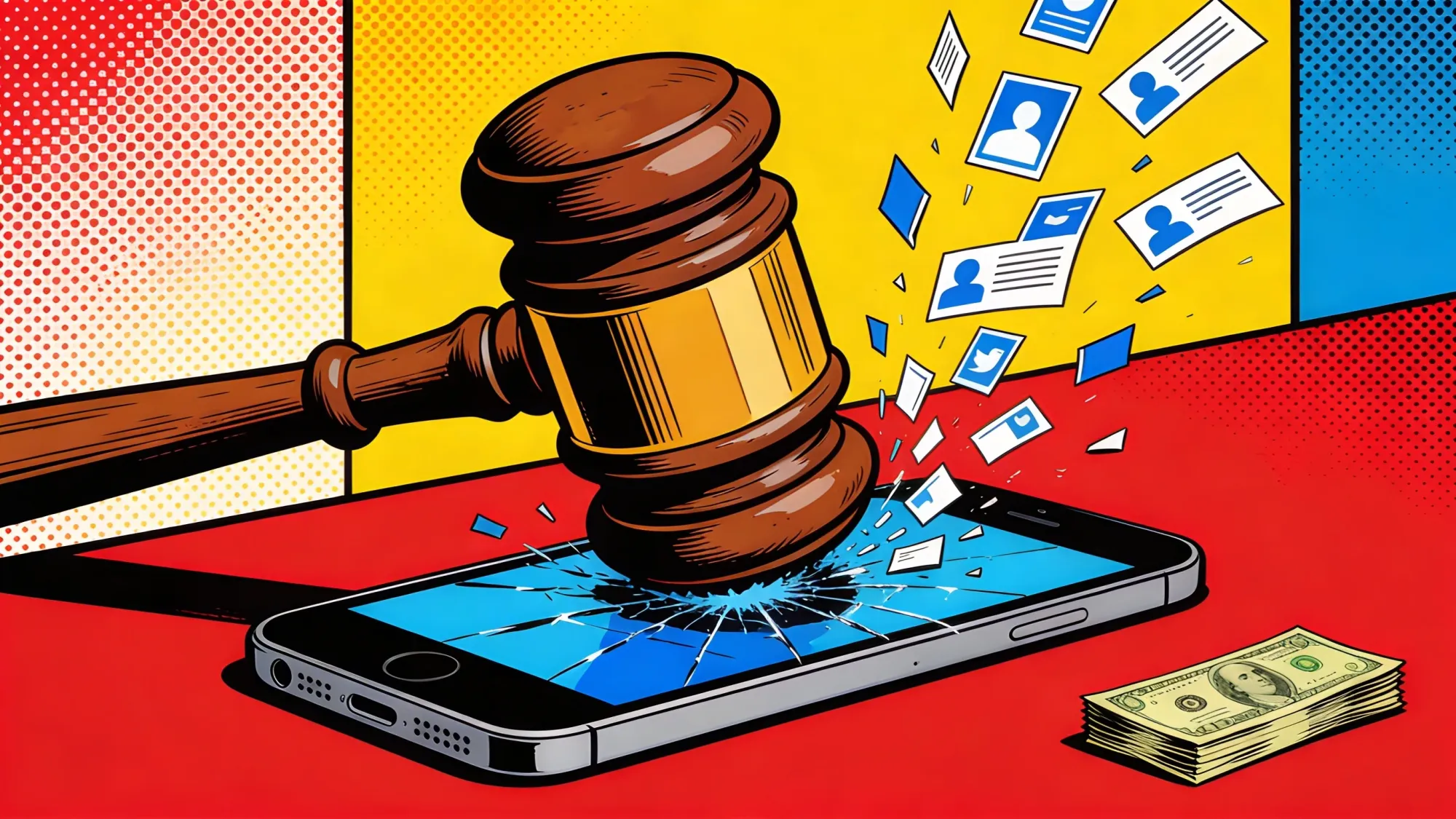
A New Mexico jury found Meta liable on every count, awarding the maximum $375 million for child endangerment and concealing sexual exploitation on Instagram and Facebook. Meta's stock rose 5%. Investors priced in the fine and missed the precedent.
Attorney General Raul Torrez built the case as a products-liability claim, arguing the platforms themselves were defective. That framing sidesteps Section 230, the law that shielded social media for three decades. A judge agreed at the motion-to-dismiss stage. A jury confirmed it Tuesday.
More than 40 state attorneys general now have a tested courtroom playbook. Internal documents and whistleblower testimony entered the public record. A bench trial expected in May won't ask how much Meta should pay. It will ask what Meta must change: age verification, predator removal, modifications to encrypted messaging.
The $375 million is 0.19% of Meta's revenue. Court-ordered product redesigns across 50 states are the figure the stock price hasn't priced in.
Why This Matters:
- The verdict hands 40+ state attorneys general a tested legal playbook that bypasses Section 230, opening Meta to coordinated litigation nationwide
- A May bench trial could force Meta to redesign products, not just write checks, creating compliance pressure across multiple jurisdictions
Reality Check
What's confirmed: Jury found Meta liable on all counts. $375M awarded. Products-liability theory survived both dismissal and trial.
What's implied (not proven): Other states will replicate New Mexico's legal approach and courts will order product changes, not just fines.
What could go wrong: Meta appeals, wins a reversal, and the products-liability theory dies before other states can test it.
What to watch next: The May bench trial ruling on remedies, and whether any of the 40+ pending AG suits adopt the same legal framework.

The One Number
9x — The projected increase in AI-attributed layoffs this year compared to 2025, according to a Duke University and Federal Reserve survey of 750 CFOs. Employers reported 55,000 AI-related job cuts last year; the survey projects roughly 502,000 in 2026. The catch: that still represents just 0.4% of all U.S. jobs, and fewer than half of CFOs plan any AI cuts at all. The researchers also found a persistent gap between perceived and actual productivity gains from AI, what economists call the productivity puzzle: the technology appears everywhere except in the economic data.
Federal Judge Calls Pentagon Anthropic Blacklist 'an Attempt to Cripple,' Ruling Due This Week
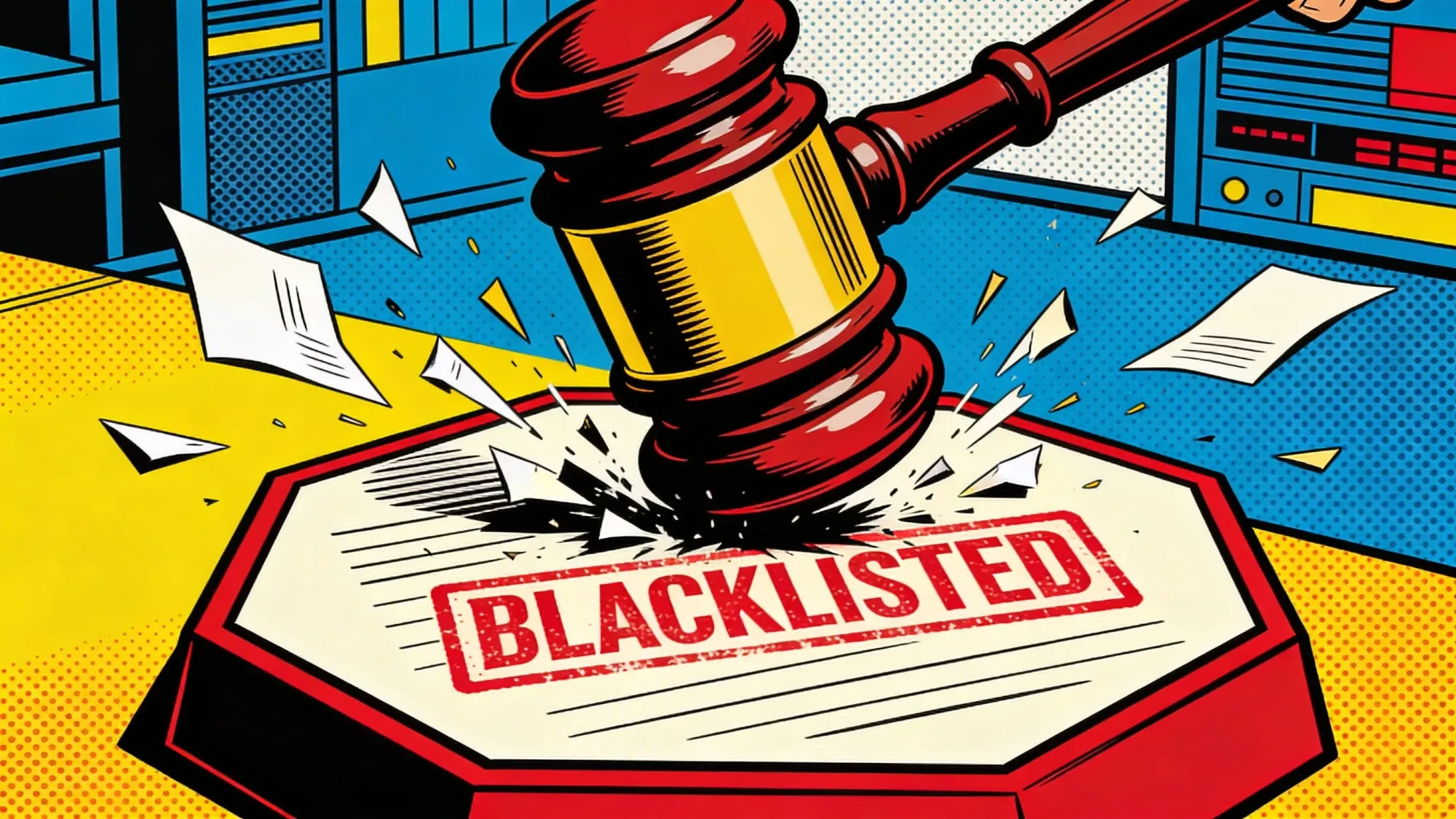
U.S. District Judge Rita Lin told the Pentagon its campaign against Anthropic looks like "an attempt to cripple" the company. The government's own lawyer contradicted Defense Secretary Hegseth in open court. A ruling on whether the supply chain risk label survives lands this week.
During a 90-minute hearing, Lin pressed the Pentagon on Hegseth's post declaring no contractor may work with Anthropic. Deputy Assistant AG Eric Hamilton conceded the post carried "no legal weight." Lin's response: "You're saying, 'We said it, but we didn't really mean it.'"
Microsoft, OpenAI researchers, and retired military officers filed briefs opposing the designation. Anthropic estimates the commercial damage could reach billions. Congress wrote the supply chain statute for foreign adversaries like Huawei. The Pentagon used it against a domestic AI lab that wanted two contract lines.
Why This Matters:
- A ruling against the Pentagon would pause the first supply chain risk label ever applied to an American company, setting precedent for government tech procurement
- If the label survives, technology firms selling to Washington face a new calculus: disagree with a contract term and risk classification alongside Huawei
AI Image of the Day

Prompt: A hyper-realistic front-facing close-up portrait of a little bird sitting still, only the head visible, perfectly centered in frame. The animal is wearing a tiny black barber cape. A human barber's hands enter the frame from both sides, gently combing and trimming the hair on top of the head. Strong ring light reflection in both eyes, cinematic shallow depth of field, dark blurred background, viral TikTok aesthetic.
OpenAI Kills Sora Video App Six Months After Launch, Blindsides Disney Mid-Session

OpenAI discontinued Sora on Tuesday, killing a product that cost an estimated $15 million per day in compute and earned $2.1 million in its entire lifetime. Disney learned the news thirty minutes after a joint working session ended.
The shutdown collapsed a $1 billion Disney licensing deal before a dollar changed hands. Downloads peaked at 3.3 million in November and fell to 1.1 million by February. About two in three Americans told pollsters they disapproved of AI-generated video.
Fidji Simo, now titled "CEO of AGI Deployment," told staff the company could no longer afford "side quests." OpenAI also killed Instant Checkout, its shopping feature. The pattern: strip consumer experiments, redirect compute to enterprise tools where revenue lives.
Why This Matters:
- The shutdown signals OpenAI is pivoting from a product catalog to an IPO-ready company, concentrating resources on enterprise AI where Anthropic has gained ground
- AI video generation moves "behind the scenes" to train robots, meaning consumer access to the technology shrinks while corporate applications expand

🧰 AI Toolbox

How to Apply AI to Everyday Tasks Directly from Your Terminal with fabric
fabric is an open-source tool that runs AI prompts from the command line using curated "patterns" for common tasks. Pipe in a YouTube transcript, article, or meeting notes and get a summary, key insights, or a study plan in seconds. Over 100 community-built patterns handle everything from extracting wisdom to analyzing security reports. Works with OpenAI, Anthropic, or local models. Free and open source.
Tutorial:
- Install fabric from github.com/danielmiessler/fabric using
go installor clone the repo - Run
fabric --setupand connect your API key for OpenAI, Anthropic, or a local model - Try your first pattern:
echo "your text" | fabric --pattern summarize - Browse available patterns with
fabric --listfor extractors covering wisdom, writing improvement, security analysis, and more - Chain patterns together: pipe a YouTube transcript through
ytthen intoextract_wisdomfor structured takeaways - Create your own patterns by adding a markdown file to the patterns directory
- Use
fabric --streamfor real-time output on longer documents
URL: https://github.com/danielmiessler/fabric
What To Watch Next (24-72 hours)
- SpaceX: Elon Musk's rocket company could file its IPO prospectus with the SEC as early as this week, according to The Information. Advisers predict the offering will try to raise more than $75 billion at a $1.75 trillion valuation, which would shatter Saudi Aramco's record as the largest public listing ever.
- Friday Data Dump: The Bureau of Economic Analysis releases Q4 GDP third estimate, PCE price index, personal income, and personal spending on Friday morning. The University of Michigan publishes its final March consumer sentiment reading the same day. Together these numbers will test whether the oil shock from the Iran conflict is filtering into household behavior.
- SK Hynix: The world's top supplier of AI high-bandwidth memory chips filed a confidential F-1 with the SEC for a US ADR listing, confirmed Wednesday at its annual shareholders meeting. The company is targeting $10 billion or more in proceeds to fund next-generation HBM4 production capacity.
🛠️ 5-Minute Skill: Turn a Competitor's Pricing Page Into a Positioning Cheat Sheet
A competitor redesigned their pricing page. Sales has a call tomorrow and needs to know how your positioning compares.
Your raw input:
Competitor pricing: Free / Pro $29/mo / Enterprise "contact us."
Free caps at 3 users and 1GB. Pro includes API access, 10 users,
SSO. Enterprise adds dedicated support and custom integrations.
The prompt:
From this pricing page, produce: (1) their target buyer at each
tier, (2) what they consider premium, (3) one gap our sales team
can exploit tomorrow. Under 100 words.
What you get back:
Free: Solo users and evaluators. 3-user cap forces upgrade fast.
Pro: Mid-market teams. SSO and API gated at $29/seat, so security-conscious buyers pay extra for basics.
Enterprise: Custom pricing hides margin. No self-serve path.
Exploit: They charge for SSO at every tier. If you include it free, lead with that. IT directors hate paying extra for a security feature.
Why this works
Pricing pages reveal what a company values most. Gating SSO tells you they sell to teams that need it badly enough to pay.
What to use
Claude: Spots what is missing from the page.
ChatGPT: Sharper competitive framing.
AI & Tech News
OpenAI Finishes Next Model Pretraining, Names Fidji Simo CEO of 'AGI Deployment'
OpenAI CEO Sam Altman announced the company's next AI model has finished pretraining while unveiling a sweeping reorganization that moves Safety under Research and creates a new division led by Fidji Simo. The restructuring signals OpenAI's accelerating push to commercialize its most advanced systems ahead of a prospective IPO.
Arm Confirms First In-House Data Center Chip, TSMC to Fabricate
Arm CEO Rene Haas confirmed the company is producing its own data center processor for the first time, a chip fabricated by TSMC in collaboration with parent company SoftBank. The move into direct chip production could alienate Arm's vast ecosystem of licensing partners including Qualcomm, MediaTek, and Apple.
European Tech Worth $1.4 Trillion Left for Foreign Markets Over Past Decade
A joint study by EQT and McKinsey found that European tech companies with a combined value of $1.4 trillion either listed overseas or were acquired by foreign buyers between 2014 and 2025. The findings expose deep structural challenges in European capital markets and their inability to retain homegrown innovation.
Intel and AMD CPU Shortages Compound Memory Chip Crunch
Worsening supply constraints in Intel and AMD processors are compounding difficulties for manufacturers already grappling with a severe memory chip shortage. The dual crunch threatens to further disrupt production and availability of computers and servers across the industry.
AI Note-Taker Granola Hits $1.5 Billion Valuation With $125 Million Round
Granola, the AI note-taking startup popular among Silicon Valley professionals, raised $125 million led by Index Ventures at a $1.5 billion valuation. The company plans Anthropic Claude integrations and agentic AI features over the next year.
Corporations 'Vibe-Code' Custom AI Apps, Keep Core Enterprise Software Intact
Large US corporations are not replacing core enterprise software with AI alternatives but instead using AI to build smaller custom applications and internal tools, the Wall Street Journal reports. Corporate tech leaders are using the growing promise of AI to pressure existing vendors for better deals.
X Overhauls Revenue Sharing to Deter Foreign Accounts Posing as Americans
X updated its revenue-sharing program to weight engagement from a user's home region more heavily, targeting foreign accounts that pose as Americans to capture US ad revenue. The change follows exposure of dozens of pro-Trump accounts operating from outside the United States.
🚀 AI Profiles: The Companies Defining Tomorrow
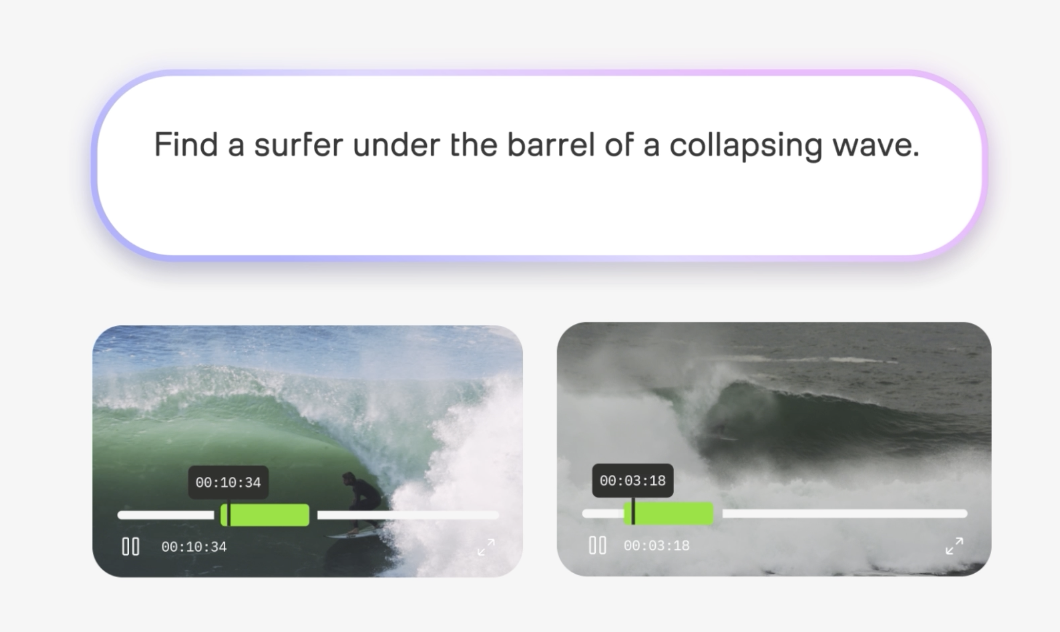
Twelve Labs trains AI that watches videos the way humans do, understanding actions, objects, speech, and context at once. The San Francisco company sells video intelligence APIs to enterprises that need to search, analyze, and generate insights from footage. 🎬
Founders
Jae Lee co-founded Twelve Labs in 2021 and serves as CEO. Lee studied computer science at UC Berkeley and previously served as lead data scientist at South Korea's Ministry of National Defense, where he applied machine learning to national-scale challenges. The team spans San Francisco and Seoul.
Product
Two core models power the platform. Marengo analyzes every frame, action, and spoken word inside a video and maps it into searchable data. Pegasus converts that analysis into natural language summaries. Together they let enterprises search millions of hours of video by describing what they want to find, not by tagging clips manually. Databricks and Snowflake are integrating Twelve Labs directly into their data pipelines. A video agent combining both models launches Q2 2026.
Competition
Google's Gemini handles video natively but lives inside Google's walled garden. OpenAI added video understanding to GPT-4o. Amazon built Nova for internal video processing. Twelve Labs differentiates by selling infrastructure, not finished products: the APIs let any developer build video intelligence into existing workflows. The risk: if Google or OpenAI open their video models as standalone APIs, Twelve Labs loses its technical lead.
Financing 💰
Multiple rounds totaling over $107 million. Strategic investors include Nvidia, Databricks, Snowflake Ventures, SK Telecom, HubSpot Ventures, and In-Q-Tel (the CIA's venture arm).
Future ⭐⭐⭐
The world generates 500 hours of YouTube video every minute, and most of it is unsearchable. Twelve Labs fixes that. Databricks and Snowflake integrations signal that enterprise video data is becoming a first-class asset alongside structured databases. The In-Q-Tel investment suggests government interest in video intelligence at scale. But Google has more video data than anyone alive, and Gemini already processes video natively. Twelve Labs needs to become the default video layer for enterprise data platforms before the hyperscalers decide to own it. 📹
🔥 Yeah, But...
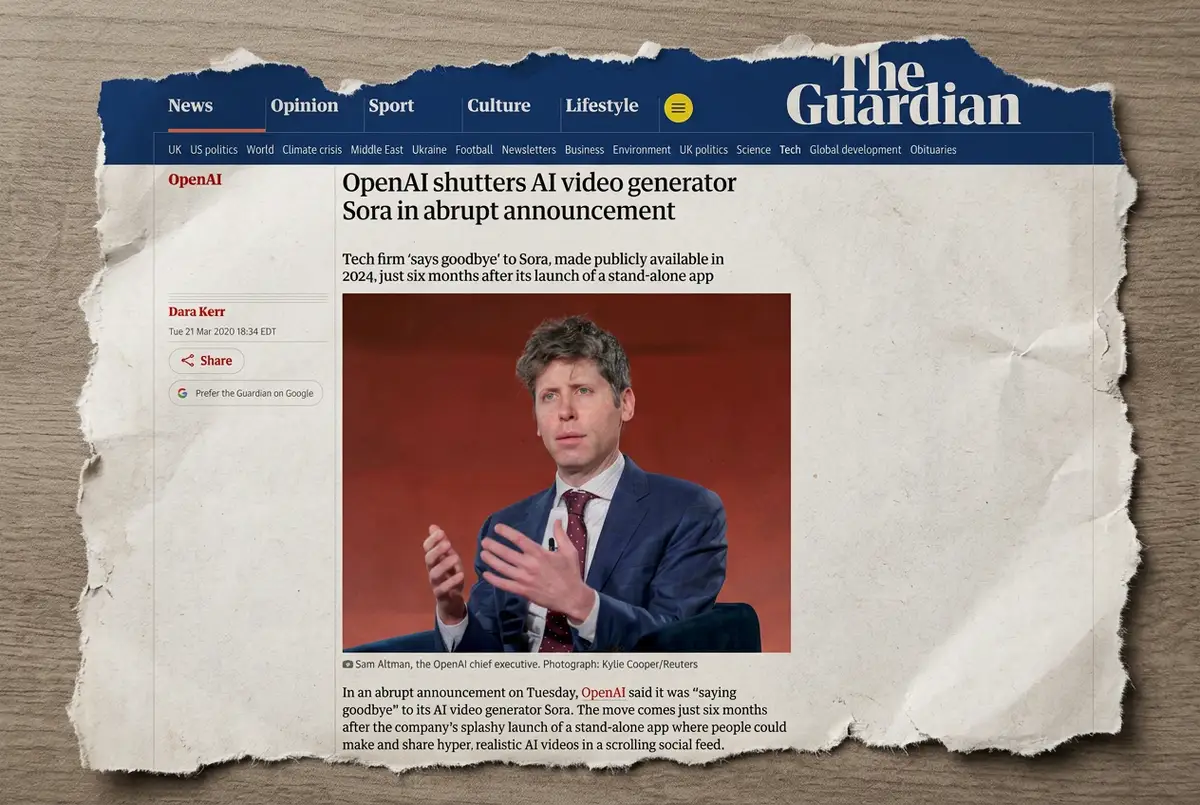
OpenAI Published a Sora Safety Blog on Monday. It Killed Sora on Tuesday.
The Guardian, March 24, 2026
OpenAI abruptly announced it is shutting down Sora, the AI video generator it launched six months ago. The closure kills a three-month-old deal with Disney worth $1 billion in licensing and investment. One day before the announcement, OpenAI published a blog post titled "Creating with Sora safely," detailing new teen protections and content guardrails. Members of the Sora team told Reuters they were surprised by the decision.
Our take: There is something almost poetic about spending your Monday writing a safety blog for a product your employer plans to kill on Tuesday. It is the corporate equivalent of ironing your shirt before a funeral.
OpenAI signed a billion-dollar Disney deal in December, let artists build communities around the tool, then pulled the plug to tidy up the books before an IPO.
The official line is that video generation will continue "behind the scenes" to train robots. So Sora did not die. It got reassigned to a role with no title, no desk, and no public-facing responsibilities. In most industries, we just call that a layoff.

Marcus Schuler
Tech translator with German roots who fled to Silicon Valley chaos. Decodes startup noise from San Francisco. Launched implicator.ai to slice through AI's daily madness—crisp, clear, with Teutonic precision and sarcasm. E-Mail: [email protected]