



San Francisco | Wednesday, January 21, 2026
Six months after forming Superintelligence Labs, Meta has its first models. Andrew Bosworth calls them "very good." Not great. Not groundbreaking. Very good. The hedged language tells you everything about internal confidence after Llama 4's bruising reception from researchers who expected more from the company's flagship release.
Meanwhile, Anthropic's CEO compared Nvidia selling H200 chips to China to "nuclear weapons to North Korea." The Trump administration approved those exports anyway, with a 25% tariff. DeepMind's Hassabis says Chinese labs now trail the frontier by just six months.
OpenAI launched behavioral age detection for ChatGPT's 800 million weekly users. The system profiles when you log in, how long you stay, and what you type. Adult mode arrives in Q1.
Stay curious,
Marcus Schuler
Meta's Superintelligence Labs Ships First Models After Six-Month Sprint

Meta's internal AI lab has working models. The company's measured reaction says more than any benchmark.
Superintelligence Labs, the elite unit Meta carved out six months ago, delivered its first internal models this week. CTO Andrew Bosworth described them as "very good" and acknowledged "a tremendous amount of work" remains on post-training before anything ships externally.
The careful language follows a bruising stretch for Meta's AI ambitions. Llama 4 drew criticism from researchers who expected frontier performance and got something closer to incremental improvement. Yann LeCun's departure from day-to-day research signaled deeper disagreement about whether LLM-focused approaches can reach superintelligence at all.
Two projects are in development: "Avocado," a text-based model targeting Q1 2026, and "Mango," focused on image and video. Bosworth framed the infrastructure spending as a 30-year bet, telling analysts the investment will "absolutely" pay off on that timeline.
Meta's advantage remains distribution. Three billion daily active users across its apps generate training signal that no competitor can match, especially as wearables like Ray-Ban Meta glasses capture real-world context.
Why This Matters:
- Meta's hedged confidence suggests internal benchmarks haven't yet matched the hype around superintelligence claims
- The 30-year payoff timeline gives leadership cover for years of spending before proving the thesis
✅ Reality Check
What's confirmed: Superintelligence Labs delivered internal models after six months. Bosworth called them "very good" and emphasized post-training work remains.
What's implied (not proven): Meta is on a credible path to superintelligence and will catch up to OpenAI and Anthropic despite Llama 4's lukewarm reception.
What could go wrong: LeCun's skepticism about LLM scaling proves correct, leaving Meta's massive infrastructure bets stranded on the wrong technical approach.
What to watch next: Whether "Avocado" ships in Q1 2026 as planned, and how external benchmarks compare to Llama 4's performance.

OpenAI Launches Behavioral Age Detection Ahead of Adult Mode

ChatGPT now profiles how you use it to guess if you're a minor. Adult content is coming for everyone else.
OpenAI rolled out age prediction globally on Tuesday, analyzing login times, session length, account age, and stated age to estimate whether users are under 18. Adults flagged as minors can verify their age through Persona using a selfie and government ID.
The system gates access to content involving violence, self-harm, sexual roleplay, and dangerous challenges. It also sets the stage for "adult mode," expected in Q1 2026, which will unlock explicit content for verified adults.
OpenAI framed the move as child safety. Critics see infrastructure for surveillance. The company disclosed no accuracy metrics for its prediction system, and privacy advocates warn that behavioral profiling creates risks beyond age verification.
The stakes are substantial. ChatGPT has 800 million weekly users. OpenAI's annualized revenue hit $20 billion in 2025, up from $6 billion the year before. Surveys show 86% of students use AI tools, with half employing them for homework.
Why This Matters:
- OpenAI is building verification infrastructure that enables adult content while claiming child protection as the motive
- Without disclosed accuracy rates, false positives will lock legitimate adult users out of features until they hand over ID

Anthropic CEO Compares Nvidia China Sales to Nuclear Proliferation
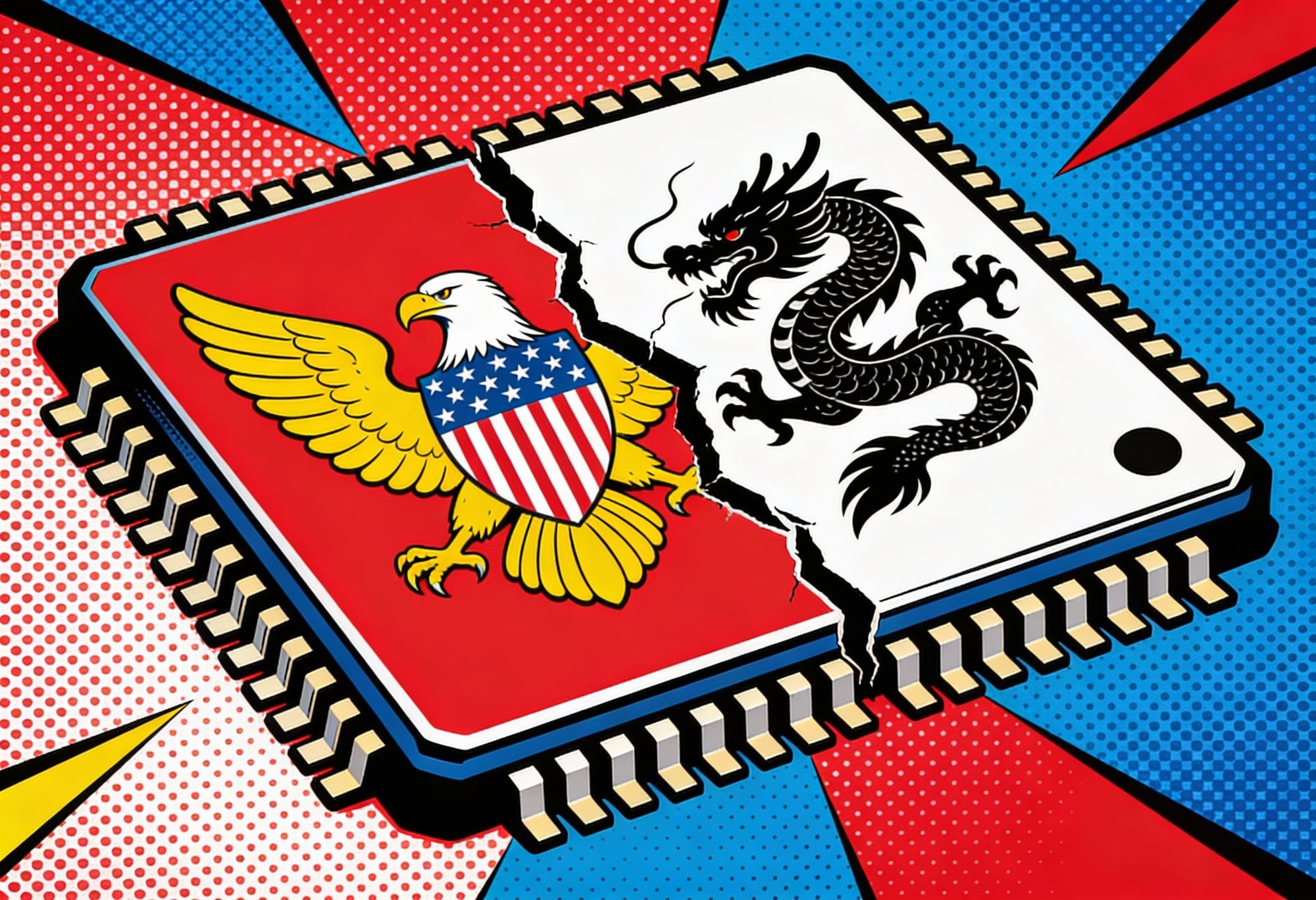
Dario Amodei warned that selling H200 chips to Beijing is "a bit like selling nuclear weapons to North Korea." The Trump administration approved the sales anyway.
Anthropic's CEO delivered his most pointed comments yet on chip exports during a conversation with Google DeepMind's Demis Hassabis. Amodei argued that every month of delay in Chinese AI progress extends America's strategic window. Accelerating their timeline, he said, trades long-term security for short-term commercial gain.
Hassabis offered a more measured view. Chinese labs trail Western frontier models by roughly six months, down from two years in 2022. But Hassabis noted they've "yet to show they can innovate beyond the frontier," excelling at replication rather than breakthrough research.
The Trump administration approved H200 exports with a 25% tariff, splitting the difference between hawks and commerce interests.
Both CEOs acknowledged a more immediate disruption: AI is already reducing junior-level hiring at their own companies. Amodei predicted 50% of entry-level white-collar jobs could disappear within one to five years.
Why This Matters:
- The six-month gap Hassabis cited represents a razor-thin margin if Chinese labs master replication at frontier speed
- Lab executives admitting they're cutting junior hiring signals the job displacement isn't theoretical anymore
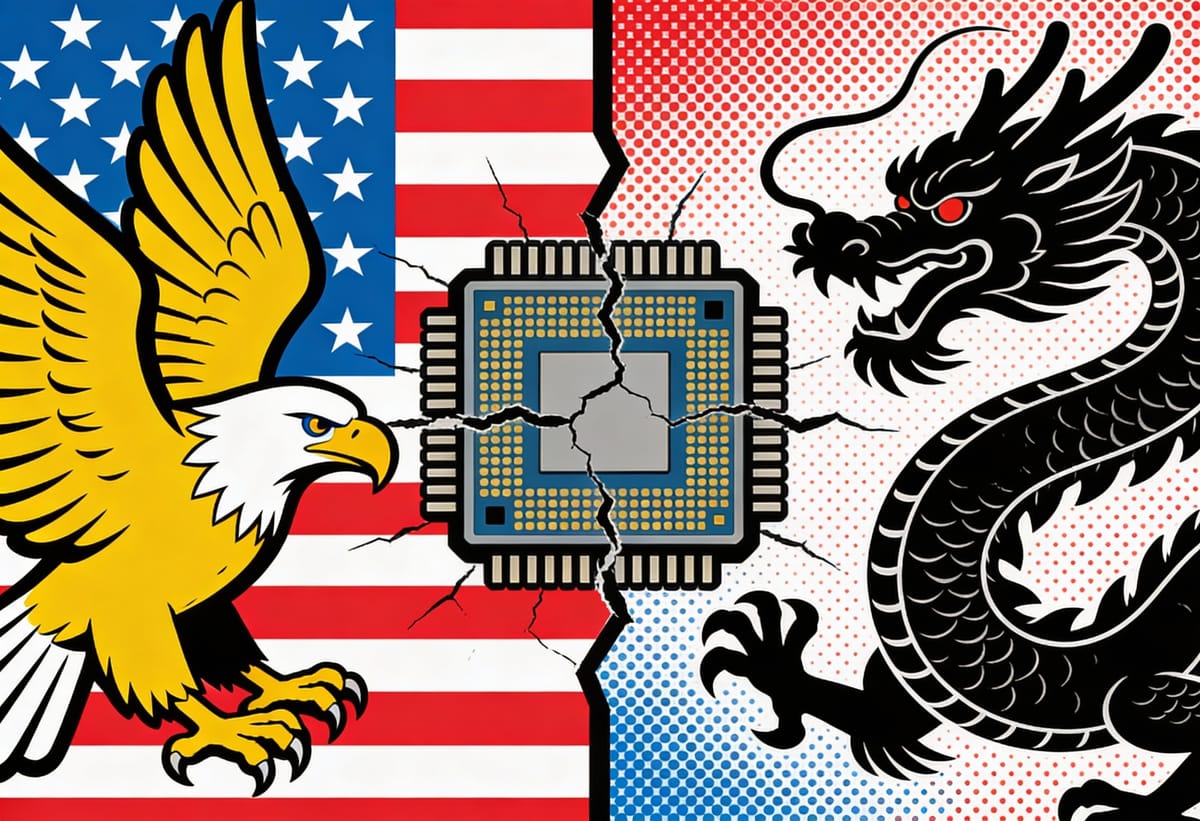
AI Image of the Day

Prompt: A selfie-style photo of the Canadian Rockies. A cat in clothes and sunglasses is taking the selfie in front of the iconic Rockies from cat height. The cat should be alone, no other cats or people in the frame.
What To Watch Next (24-72 hours)
- World Economic Forum Day 3: Davos shifts from speeches to backroom deals. Watch for AI governance announcements and any surprise partnerships between tech CEOs and regulators. The real news happens at dinner.
- Microsoft AI Tour New York: Redmond showcases Azure AI and Copilot roadmap to enterprise buyers today. Pricing signals and customer case studies will reveal whether the "AI for every worker" pitch is landing.
- Bett UK Conference: Europe's largest edtech event opens in London. AI tutoring and classroom automation dominate the agenda. Early adopter schools will share what's working and what's hype.
The One Number
$2.52 trillion — Global AI spending projected for 2026, up 44% from last year's $1.65 trillion. Gartner released the forecast this week, just as Davos convenes to discuss AI governance. The money is moving faster than the rules.
Source: Gartner
🧩 Workflow of the Day
Workflow of the Day: "Score 100 customer feedback entries in 30 minutes"
Who: Product manager drowning in survey responses, support tickets, and NPS comments.
Problem: Feedback sits in spreadsheets. Themes are guesses. Roadmap decisions lack data backing.
Workflow (with Claude + Google Sheets):
- Export feedback to CSV from your survey tool, support system, or app store reviews.
- Upload to Claude with: "Categorize each entry by theme (onboarding, pricing, feature request, bug, praise). Add a sentiment score: positive, neutral, negative."
- Ask Claude to output as a table: Original text | Theme | Sentiment | Key phrase.
- Paste into Google Sheets and create pivot tables by theme and sentiment.
- Identify the top 3 pain points by volume and negativity.
- Generate a 1-page summary with specific customer quotes for your next roadmap meeting.
Payoff: Data-driven prioritization in 30 minutes. Support ticket volume drops when you fix root causes.
Gotcha: Claude may miscategorize edge cases. Spot-check 10% of entries before presenting.
Tools: Claude | Google Sheets
Better Prompting... Today: Interview Mastery
Whether you're hiring or being hired, preparation beats improvisation.
The Question Behind the Question
"I have an interview for [role] at [company type]. For these common questions: [list 3-5 questions], tell me what the interviewer is actually trying to learn. Then give me answers that address the real question, not just the surface one."
Best on: Claude (reads subtext well) or ChatGPT (broad interview knowledge)
The Weakness Reframe
"My genuine weaknesses for this role are: [list honestly]. Don't give me fake weaknesses. Help me talk about these real ones in a way that shows self-awareness and growth without torpedoing my candidacy. Include what I'm actively doing about each."
Best on: Claude (honest and nuanced) or ChatGPT (good at professional framing)
The Reverse Interview Prep
"I'm interviewing candidates for [role]. I'll have 45 minutes. Design five questions that reveal: who can actually do the job vs. who interviews well, who will stay vs. who's just escaping something, and who will raise the bar vs. who will merely fill the seat."
Best on: Claude (behavioral question design) or ChatGPT (wide range of interview frameworks)
Interviews reward those who've done the thinking before they enter the room.
🧰 AI Toolbox
How to Create Viral Short-Form Videos with Pika 2.0
Pika 2.0 generates and edits videos with new "Pikaffects" that add cinematic effects like explosions, melting, or crushing to any footage. Perfect for meme-worthy content and creative shorts.
Tutorial:
- Visit pika.art and create an account
- Upload an existing video clip or generate one from a text prompt
- Browse "Pikaffects" and choose an effect (crush, explode, melt, inflate, etc.)
- Apply the effect to your video and adjust intensity
- Preview the result and regenerate if needed
- Download in vertical format optimized for TikTok/Reels/Shorts
- Combine multiple effects across clips for longer edits
URL: https://pika.art
AI & Tech News
OpenAI Pitches Advertisers on ChatGPT Ads
OpenAI has begun pitching advertising opportunities inside ChatGPT to dozens of brands, seeking commitments under $1 million. The company will use cost-per-impression pricing rather than pay-per-click, marking its first move into ad revenue.
OpenEvidence Hits $12 Billion Valuation
The AI medical startup dubbed "ChatGPT for doctors" raised $250 million from Thrive and DST Global. OpenEvidence's valuation has surged twelvefold in less than a year, from $1 billion in February 2025 to $12 billion now.
Lightning AI and Voltage Park Merge in $2.5B Deal
The startup behind PyTorch Lightning merged with compute provider Voltage Park to form a combined AI cloud company. The new entity controls over 35,000 Nvidia GPUs across six data centers.
Mobile App Spending Tops Games for First Time
Global consumer spending on mobile apps hit $85 billion in 2025, up 21% year-over-year. Generative AI apps drove the historic shift, with non-game apps generating more revenue than games for the first time ever.
Nvidia CEO Dismisses AI Bubble Fears at Davos
Jensen Huang defended continued AI investment at the World Economic Forum, arguing the technology is already delivering economic returns. He acknowledged bubble fears but called for more funding to expand AI across developed and emerging economies.
Universities Deploy AI to Score College Essays
Virginia Tech and Georgia Tech are using AI to evaluate admissions applications, with Virginia Tech reporting 8,000 hours saved. Some schools are also deploying AI to detect AI-generated content in student submissions.
Chinese AI Firm Zhipu Limits Coding Assistant Access
Overwhelming demand forced Zhipu to cap new subscriptions for its GLM Coding Plan at 20% of current volume starting January 23. The restrictions highlight strained compute capacity as coding assistants surge in popularity.
GlobalWafers Plans $4 Billion Texas Expansion
Taiwanese wafer maker GlobalWafers will invest an additional $4 billion in its Texas semiconductor plant. The phase two expansion signals continued momentum in U.S. chip manufacturing buildout.
AI Geothermal Startup Zanskar Raises $115 Million
The Salt Lake City company uses AI to identify overlooked geothermal fields, bringing total funding to $180 million. Zanskar aims to address growing U.S. electricity demand with untapped clean energy sources.
DataRails Closes $70M Series C at $700M Valuation
The Israeli fintech startup raised from One Peak to expand its Excel-enhancing financial planning software. The round values the company between $600 million and $700 million.
🚀 AI Profiles: The Companies Defining Tomorrow
Humans&

Humans& bets $4.5 billion that AI should ask questions, not replace questioners. The San Francisco startup rejects autonomous agents in favor of tools that make teams smarter together. 🚀
Founders
Eric Zelikman (CEO) helped build Grok at xAI. Andi Peng ran post-training for Claude at Anthropic. Yuchen He is another xAI veteran. Georges Harik was Google's seventh employee, the architect behind its advertising systems. Noah Goodman teaches psychology and computer science at Stanford with a DeepMind stint on his resume. The team of 20 draws from OpenAI, Meta, Anthropic, xAI, AI2, and MIT.
Product
No product yet. The vision: AI that integrates into workflows like "Slack with a brain," using multi-agent reinforcement learning and persistent memory to understand users across conversations. Where chatbots answer questions, Humans& wants to build systems that ask them. The pitch is collaborative intelligence, not autonomous replacement.
Competition
Anthropic, OpenAI, and xAI all chase agentic AI that acts independently. Humans& swims against that current. The contrarian bet: humans plus AI beats AI alone. The problem: competitors have 10-100x the compute. Humans& must prove collaboration-focused AI justifies premium pricing when autonomous alternatives keep getting cheaper.
Financing 💰
$480 million seed at $4.48 billion valuation. SV Angel led, co-led by Harik himself. Nvidia, Jeff Bezos, Google Ventures, Emerson Collective, Forerunner, DCVC, Felicis, and CRV joined. Anne Wojcicki and Marissa Mayer invested personally. The round is massive for a company with no product.
Future ⭐⭐⭐⭐
Humans& has pedigree, capital, and a thesis. The risk is execution against labs with more firepower. The bet: human-AI collaboration creates value autonomous systems cannot. If teams adopt it, the valuation makes sense. If not, it becomes the most expensive philosophy experiment in AI history. 🤝


