Implicator
San Francisco | Thursday, April 9, 2026
Meta released Muse Spark and the benchmark crowd declared it an also-ran. They missed the point. The model trails on coding. It excels at entity recognition, the exact skill smart glasses need to identify the product you are holding and surface the creator who reviewed it. Underneath: AI conversations feeding ads across 3.58 billion daily users, one-tap checkout inside Instagram, and $135 billion in capex pointed at commerce, not leaderboards.
Google's Gemma 4 landed the other side of the argument. Seven benchmark points behind Claude. Runs on a $500 GPU for free. For 70% of enterprise workloads, the invoice won.
OpenAI shipped the missing manual for Codex. Five systems that turn a chatbot into an engineering workflow.
Stay curious,
Marcus Schuler
Meta's Muse Spark Feeds AI Conversations to Its Ad Engine Across 3.58 Billion Daily Users

Meta launched Muse Spark from its $14.3 billion Superintelligence Lab, and it trails Claude and GPT on coding. That is the benchmark story. The business story is different.
Since December, Meta harvests AI conversations across Facebook, Instagram, Messenger, and WhatsApp as ad-targeting signals. No opt-out exists outside the EU, UK, and South Korea. At Shoptalk last month, the company launched creator affiliate links, AI product summaries, and one-tap checkout through PayPal and Stripe. The buyer never leaves Instagram.
The model's standout benchmark is entity recognition, the ability to identify objects in images and video. Coding does not need that. Commerce does. Smart glasses that watch you hold a product, find the price, and surface the creator who reviewed it need exactly that skill.
Meta does not need the best model. It needs the most distributed one. And with $135 billion in planned 2026 capex, it is building a closed commerce loop that no rival, not OpenAI, not Anthropic, not Google, can replicate without a social graph, a creator network, and hardware on people's faces.
Why This Matters:
- Meta is converting AI conversations into purchase-intent signals at a scale no competitor can match, reshaping the ad industry's data pipeline
- The commerce-first strategy means Muse Spark's real competition is Shopify and Amazon, not Claude or ChatGPT
Reality Check
What's confirmed: Muse Spark launched with commerce tools and a December policy change feeding AI conversations to Meta's ad engine across all apps. One-tap checkout is live in 22 countries.
What's implied (not proven): Meta's benchmark positioning is strategic misdirection. The real product is a closed commerce loop, not a chatbot.
What could go wrong: Privacy regulators expand EU-style restrictions globally, cutting off the AI-to-ad pipeline. Creators ignore affiliate tools and the tollbooth has no traffic.
What to watch next: Shoptalk affiliate adoption numbers in Q2 earnings and any FTC response to the 36-organization petition.

The One Number
$3 billion — The amount individual investors committed to OpenAI through private placements ahead of its IPO, triple the $1 billion the company originally targeted. JPMorgan, Morgan Stanley, and Goldman Sachs brokered the deal, which all three banks called the largest private placement they have ever done. Retail investors typically receive 5% to 10% of shares in a public offering. CFO Sarah Friar told CNBC that OpenAI plans to reserve a portion of its IPO allocation for individual investors. The company may file with regulators as soon as the second half of this year at a valuation approaching $1 trillion.
Source: CNBC, April 8, 2026; Reuters
Google's Gemma 4 Runs on a $500 GPU and Handles 70% of Enterprise AI Workloads

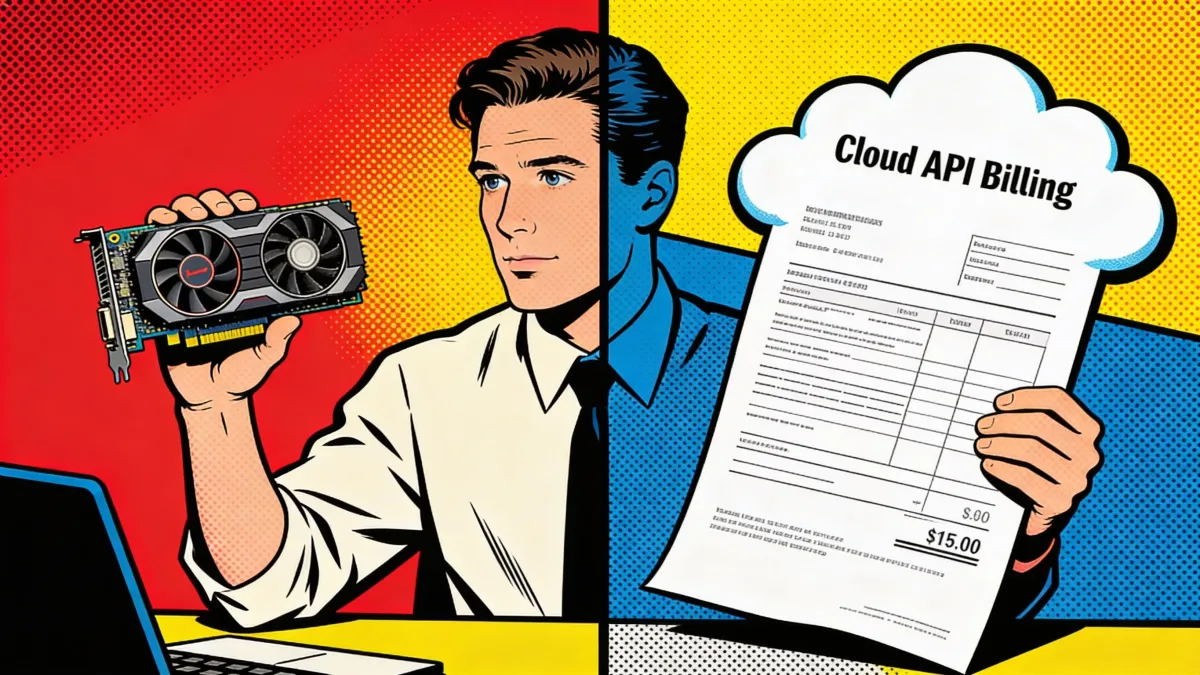
Google released Gemma 4 under Apache 2.0, the same license as Linux. It trails Claude Opus by seven to ten benchmark points. It also runs on a refurbished GPU that costs less than a month of API bills.
The 31B dense model scores 84.3% on graduate-level science reasoning where Opus hits 91.3%. In blind user tests, most people cannot tell the difference on routine tasks. FoodTruck Bench data shows the model delivering 1,144% ROI at a fraction of API costs. The smallest variant fits on a Raspberry Pi.
The cracks are real. Gemma 4 entered infinite tool-calling loops in coding tests where Claude finished cleanly. Speed lags behind Alibaba's Qwen 3.5 by a wide margin. Fine-tuning tooling shipped broken on day one. For complex agentic work, frontier APIs remain necessary.
The smart play is a split stack: Gemma 4 for summarization, translation, and document Q&A locally. Claude or GPT for the hard cases via API. One analysis estimates 70% of typical enterprise workloads fall within what open models handle well.
Why This Matters:
- Enterprise teams can cut cloud AI spend by 60% by routing routine tasks to local models while keeping frontier APIs for complex work
- Two Apache 2.0 model families now trade blows at quality levels that were proprietary-only 18 months ago
AI Image of the Day

Prompt: a Korean girl standing still, three realistic sheep floating horizontally across their face and eyes like a living blindfold, expression calm and distant, surreal sleep theme, minimal composition, soft diffused lighting, dreamy realism, quiet uncanny atmosphere, pastel beige and dusty cream tones, cinematic stillness
Five OpenAI Codex Systems That Prevent the Architecture Decay Most Developers Hit

Most developers hit the same wall with Codex. The first week feels electric. Then the codebase grows. Fixes land in the wrong layer. Architecture quietly degrades.
The gap between casual Codex use and productive Codex use comes down to five systems. AGENTS.md gives the agent persistent project rules that survive across sessions. Skills package repeatable workflows into bundles any team member can run. Git worktrees let multiple agents work on the same repo in parallel without merge conflicts. Plan mode forces architectural alignment before code gets written. Verification gates catch regressions before they ship.
AGENTS.md works across tools. The same file is read by Cursor, Copilot, Gemini CLI, Windsurf, and over 60,000 open-source projects. Write once, every coding agent follows the same rules.
Why This Matters:
- The five systems work across every major AI coding tool, not just Codex, making the investment portable
- Teams that add structure early avoid the compounding architecture debt that makes AI coding assistants a liability at scale
🧰 AI Toolbox
How to Run Multiple AI Coding Agents on the Same Repo at Once with Parallel Code
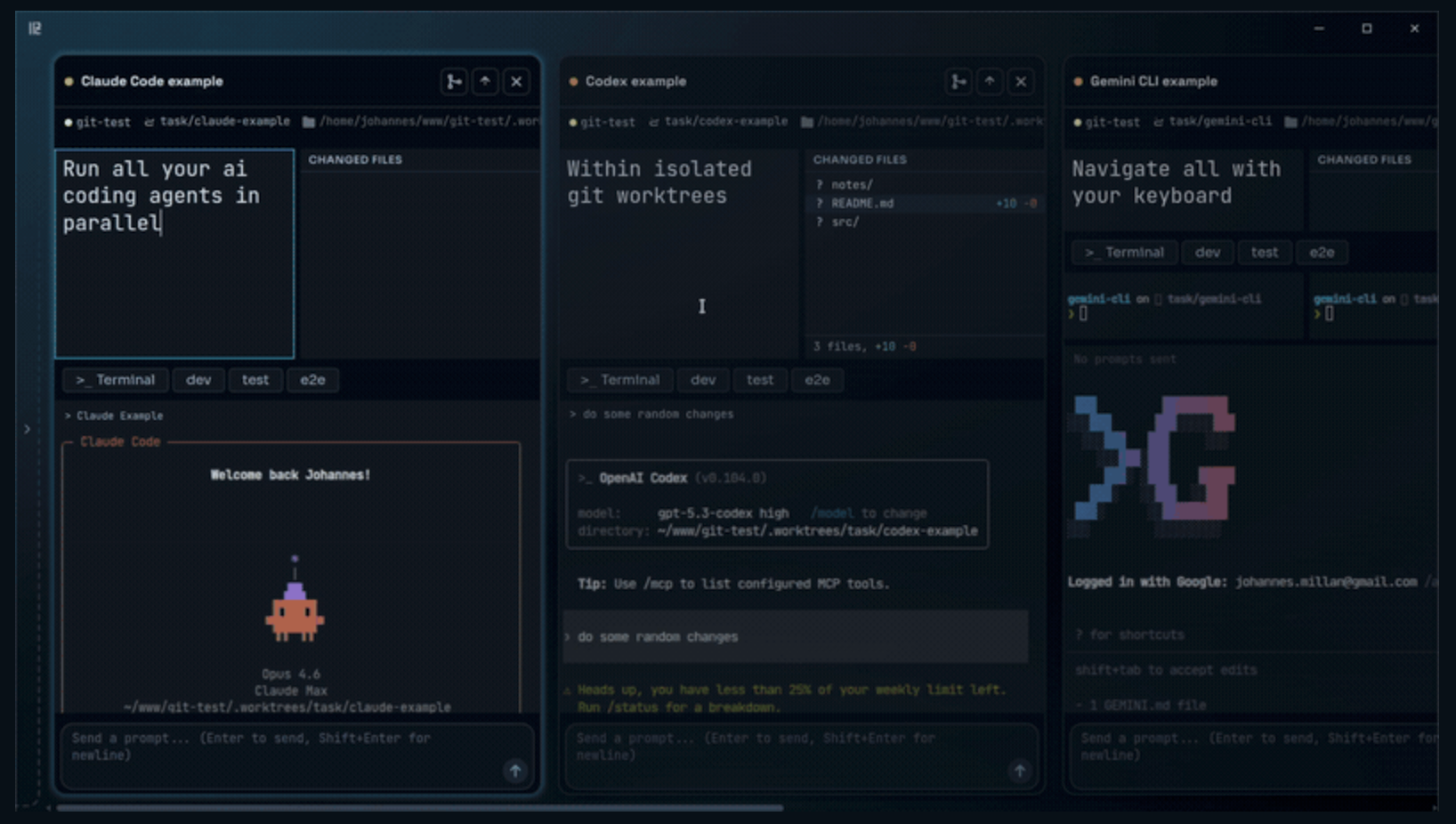
Parallel Code is a free, open-source desktop app that runs Claude Code, Codex CLI, or Gemini CLI side by side on the same repository. Each agent gets its own isolated git branch and worktree, so ten tasks can run simultaneously without merge conflicts. A built-in diff viewer lets you review changes per task and merge the results back to main with one click. Available for macOS and Linux.
Tutorial:
- Download the latest release from github.com/johannesjo/parallel-code and install the app
- Open the app and point it at a local git repository
- Click "New Task" and type an instruction: "Add dark mode support to the settings page"
- Select which CLI agent to use (Claude Code, Codex CLI, or Gemini CLI) and launch the task
- Add more tasks in parallel, each gets its own branch and worktree created automatically
- Watch all agents work simultaneously in tiled terminal panels, drag to reorder
- When a task finishes, open the diff viewer to review changes and click "Merge" to fold the branch back into main
URL: https://github.com/johannesjo/parallel-code
What To Watch Next (24-72 hours)
- ASML Q1 earnings (April 15): The world's sole maker of extreme ultraviolet lithography machines reports before the market opens Tuesday. Analysts expect $7.2 earnings per share on $9.7 billion in revenue. The results arrive one day before TSMC's own Q1 print, making ASML the first read on whether AI chip capital spending is holding. Two crosscurrents collide: SK Hynix just placed a $7.9 billion multi-year EUV order, the largest single disclosed purchase in ASML's history, while a new bill from Rep. Michael Baumgartner would restrict exports of older DUV machines to China, threatening 10-15% of annual sales. Bookings data will matter more than revenue.
- TED 2026 (April 13-17, Vancouver): The final TED conference in Vancouver before the flagship event relocates to San Diego in 2027. The theme is "All of Us," and the program is heavy on AI and society. TED talks don't move markets directly, but the ideas that land well here tend to shape executive and policymaker framing for months. Worth tracking which AI narratives gain traction and which get pushback from a room that skews toward cautious optimism.
- LEAP 2026 (April 13, Riyadh): Saudi Arabia's flagship tech conference opens Sunday with a focus on sovereign AI infrastructure and Gulf investment in compute. The event has become a deal-making venue for chipmakers, cloud providers, and AI startups courting Middle Eastern capital. With Western governments tightening AI export controls and Gulf states building their own data center capacity, LEAP is where the next round of sovereign AI partnerships will be announced.
🛠️ 5-Minute Skill
Turn a List of Ingredients Into Tonight's Dinner
It is 6:30 PM. You do not want to go to the store. You open the fridge and see what you have. You need one recipe, not a Pinterest board of options.
Your raw input:
Fridge: chicken thighs, bell peppers, half an onion, garlic,
soy sauce, rice. Pantry: olive oil, cumin, chili flakes.
Constraint: 30 minutes, two people, no dairy.
The prompt:
From these ingredients, give me one dinner recipe. Include exact
quantities, cook times, and step-by-step instructions. No
substitutions, no alternatives, no "you could also try." Feeds
two, under 30 minutes, dairy-free.
What you get back:
Chili-Garlic Chicken Stir-Fry (25 min)
Dice 2 chicken thighs into 1-inch cubes. Slice 1 bell pepper and half an onion. Mince 3 cloves garlic. Cook rice per package directions. Heat 1 tbsp olive oil in a skillet on high for 2 minutes. Sear chicken 5 minutes until browned. Add vegetables, cook 3 minutes. Add 2 tbsp soy sauce, ½ tsp cumin, pinch of chili flakes. Toss 1 minute. Serve over rice.
Why this works
Recipe searches return 40 options that each need ingredients you do not have. The prompt eliminates choice paralysis by demanding one answer that fits your actual constraints.
What to use
Claude: Better at realistic cook times and proportions.
ChatGPT: Faster and more creative with limited ingredients.
📖 AI Alphabet
|
A
|
📖 AI Alphabet Agent An agent is an AI system that does things, not just answers questions. It can take goals, choose steps, use tools, and sometimes act across multiple apps or workflows. |
AI & Tech News
D.C. Appeals Court Rejects Anthropic's Bid to Block Pentagon Supply Chain Designation
A three-judge panel denied Anthropic's emergency request to pause the Pentagon's "supply chain risk" label, saying the company failed to meet the standard for relief. The ruling contradicts a California judge who blocked a separate Pentagon order in March, leaving Anthropic simultaneously vindicated in one court and blacklisted in another.
Hacker Claims Theft of 10 Petabytes From China's National Supercomputing Center
A hacker using the handle "HNK" posted claims of stealing classified defense documents and missile schematics from the Tianjin supercomputing facility. CNN cited open-source intelligence and forum posts but could not independently verify the data, and Chinese authorities have not acknowledged the incident.
Anthropic Launches Claude Managed Agents in Public Beta for Enterprise Developers
The new platform gives developers an agent harness and deployment tools to build production-grade AI agents at scale. Managed Agents integrates with Anthropic's Claude models and aims to lower the technical barrier for enterprises building autonomous workflows.
OpenAI Foundation Commits $100 Million to Accelerate Alzheimer's Research
The foundation plans to distribute grants across six institutions this month to apply AI and computational approaches to therapeutic development. The initiative targets one of medicine's most expensive diseases, which costs the U.S. healthcare system over $345 billion annually.
OpenAI CFO Confirms Retail Investor Allocation for Upcoming IPO
Sarah Friar told CNBC the company will reserve IPO shares for individual investors after a private placement drew $3 billion from retail participants, triple the target. JPMorgan, Morgan Stanley, and Goldman Sachs called it the largest private placement they have ever brokered.
Anthropic Completes $350 Billion Tender Offer as Employees Hold Shares Ahead of IPO
The secondary sale fell short of its $6 billion target as many employees retained equity in anticipation of a public listing. The tender priced Anthropic at $350 billion, reflecting the company's revenue run rate above $30 billion.
Greece to Ban Social Media for Children Under 15 Starting January 2027
Prime Minister Mitsotakis announced the nationwide ban and called for coordinated EU-level action on youth digital safety. The move cites mental health risks and data privacy concerns, adding Greece to a growing list of countries restricting minors' platform access.
John Deere Pays $99 Million and Opens Repair Tools in Right-to-Repair Settlement
The deal requires Deere to share diagnostic software and technical documentation with independent farmers and repair shops for 10 years. The settlement resolves a 2022 class-action lawsuit and marks the largest concession by an ag-equipment manufacturer on digital repair access.
xAI Appoints SpaceX SVP as President After Engineering Reorganization
Michael Nicolls, a SpaceX senior vice president, takes the newly created president role after an internal memo acknowledged xAI is "clearly behind" its development timeline. The reorganization comes as SpaceX prepares for a 2026 IPO that could be the largest in history.
Neo VC Turns $150 Million Into $1.2 Billion on Early Bets in Cursor and Kalshi
Ali Partovi's venture firm generated returns far exceeding 2021 vintage benchmarks through concentrated early-stage investments. The performance highlights a widening gap between top-tier VCs and the broader market as success concentrates in fewer firms.
🚀 AI Profiles: The Companies Defining Tomorrow
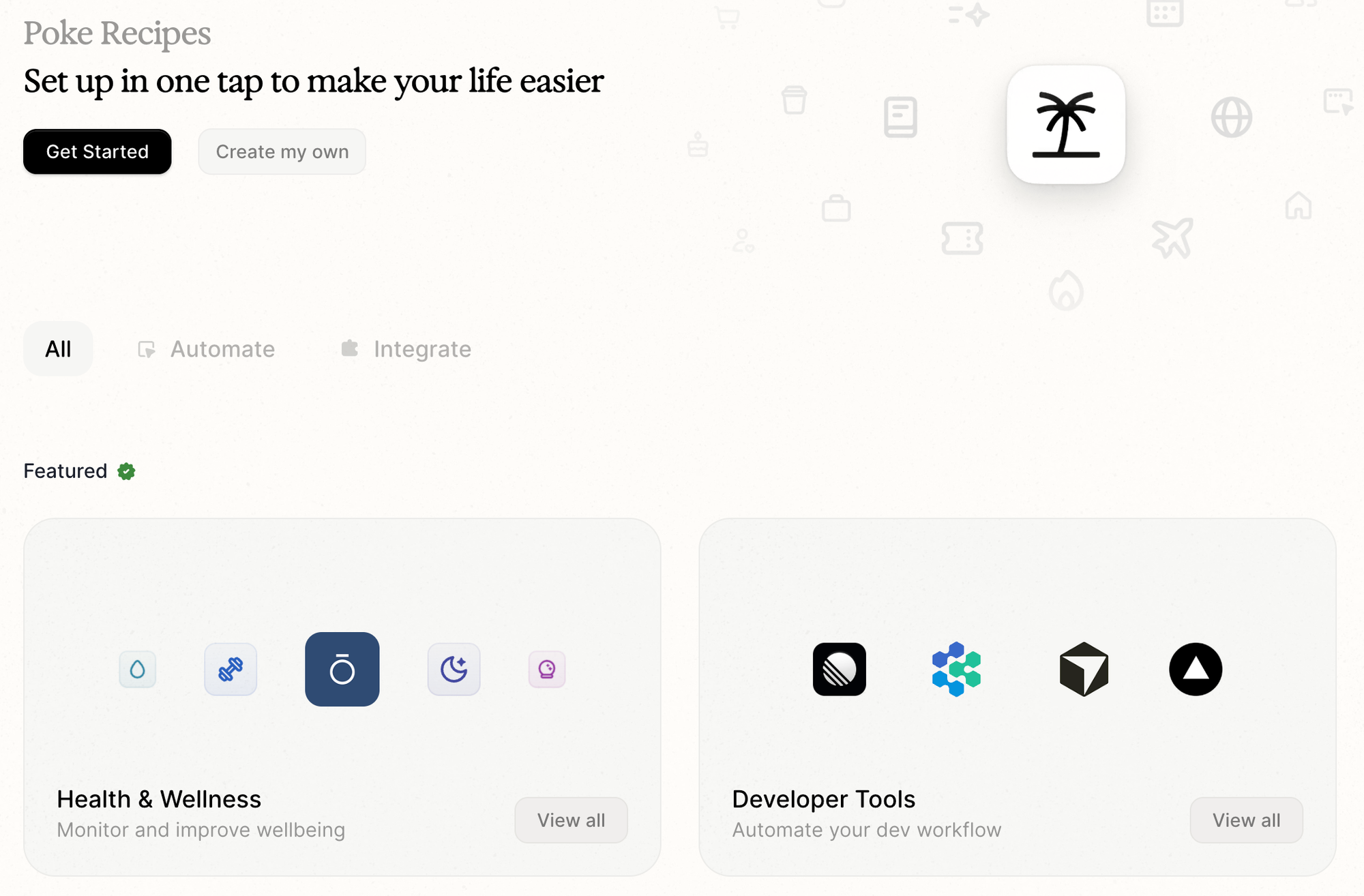
Poke 📱
Poke bets that the best AI agent interface is the one 5 billion people already use: a text message.
Founders
Marvin von Hagen and Felix Schlegel, both 25, co-founded The Interaction Company of California in Palo Alto. The pair started with an AI email assistant roughly a year ago, then noticed beta testers were ignoring email entirely and asking the bot for medication reminders, weather updates, and sports scores. They pivoted to a general-purpose agent delivered through messaging. During the summer of 2025, around 6,000 Silicon Valley insiders, including staff at Dropbox, Google, OpenAI, Anthropic, Figma, and Founders Fund, tested the product before its public launch in September 2025. The team remains at 10 people.
Product
Users visit Poke.com and enter a phone number. No app download, no account creation beyond the number. Poke works across iMessage, SMS, Telegram, and in some markets WhatsApp. It handles calendar management, smart home control, restaurant recommendations based on other users' reviews, medication reminders, and morning news briefings. Users can write custom automations in plain English and share them with friends. The company says its user base has grown 10x over the past couple of months, and Poke recently topped Vercel's AI Gateway leaderboard.
Competition
The pitch is "OpenClaw for the rest of us," targeting non-technical consumers who find agentic AI platforms intimidating. That puts Poke adjacent to Siri, Google Assistant, and a growing wave of agent startups, but the SMS-native approach sidesteps the app-install friction that limits most competitors.
Financing 💰
$15 million seed at a $100 million valuation led by General Catalyst, with Village Global and Earlybird VC. A recent $10 million follow-on from Spark Capital pushed the post-money valuation to $300 million. Angels include the Collison brothers (Stripe), Logan Kilpatrick (DeepMind), Joanne Jang (OpenAI), Scott Wu (Cognition), and Fred Ehrsam (Coinbase).
Future ⭐⭐⭐
Impressive angel roster and viral beta adoption suggest real pull. The risk is structural: SMS-based agents depend on carrier reliability, message limits, and platform rules that Poke does not control. Monetization is unclear, and the moat is thin when any lab can ship a texting bot next quarter. The 10x growth claim lacks a base number, which is the oldest trick in startup math. 📱
🔥 Yeah, But...
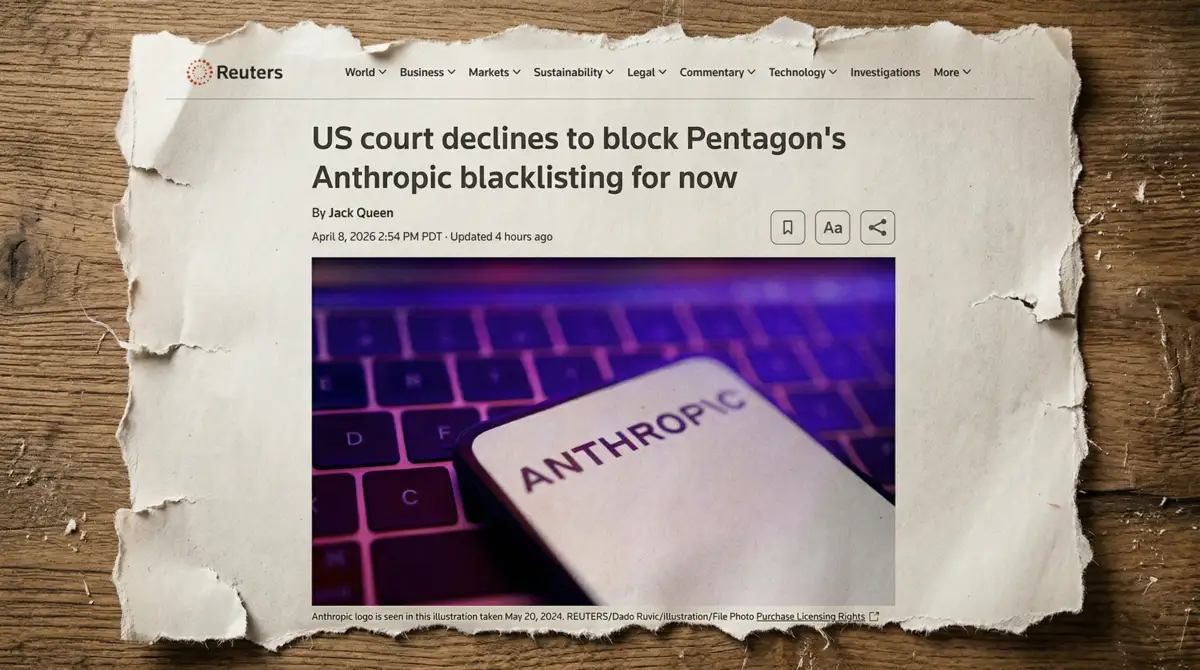
A D.C. federal appeals court declined to block the Pentagon's "supply chain risk" designation of Anthropic, saying the company failed to meet the "stringent requirements" for emergency relief. The ruling contradicts a California judge who blocked a separate Pentagon order on March 26, finding the Defense Department likely acted in bad faith. Anthropic is now simultaneously vindicated in one court and blacklisted in another. (Reuters, April 8, 2026)
Our take: Two federal courts examined the same dispute, the same facts, the same company, and produced rulings that flatly contradict each other. One judge said the Pentagon retaliated against Anthropic for having ethics. Another panel said the government's position was more persuasive. Meanwhile, the Pentagon's core argument is that an AI company's refusal to remove safety guardrails could "risk disabling military systems during operations." Read that again. The danger is not that the AI does something reckless. The danger is that it might decline to. Britain is already courting Anthropic with office space and a stock listing. Turns out the fastest way to attract foreign investment is to blacklist your own technology companies.

Marcus Schuler
Senior broadcast journalist and former ARD correspondent for Europe's largest public broadcaster. Covering the tech industry from San Francisco for 10+ years. Founded implicator.ai for independent, rigorous AI reporting. E-mail: [email protected]