IMPLICATOR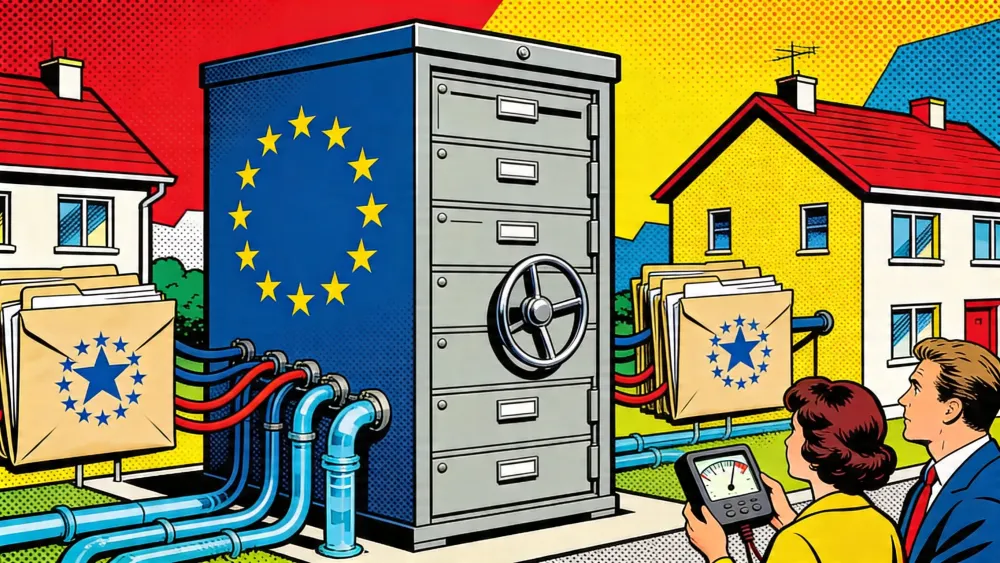
Investigate Europe reported that Microsoft and DigitalEurope pushed language into EU rules that blocks public access to facility-level data centre environmental data (source). The final 2024 regulation still makes operators file energy, water and performance metrics (text). Then it tells the Commission and member states to keep each site report confidential. The database exists. The useful rows sit behind a lock.
That matters because the EU is not regulating a tidy office sector. It is watching concrete warehouses fill with GPUs, cooling gear and new power contracts. Europe expects EUR176 billion in data centre investment over the next five years, according to the cross-border investigation, while the bloc is trying to triple capacity within roughly the same window.
The arithmetic is blunt: about 770 facilities have reported so far, but citizens can see only national-level aggregates. A village may know a data centre is seeking grid capacity nearby. It cannot see the line item.
Key Takeaways
- Microsoft and DigitalEurope pushed for facility-level data centre reports to stay confidential under EU rules.
- About 770 facilities have reported, but the public sees only national-level aggregates.
- Legal scholars warn the blanket secrecy clause may conflict with EU transparency law and Aarhus obligations.
- AI power demand makes local energy and water data politically harder to hide.
AI-generated summary, reviewed by an editor. More on our AI guidelines.
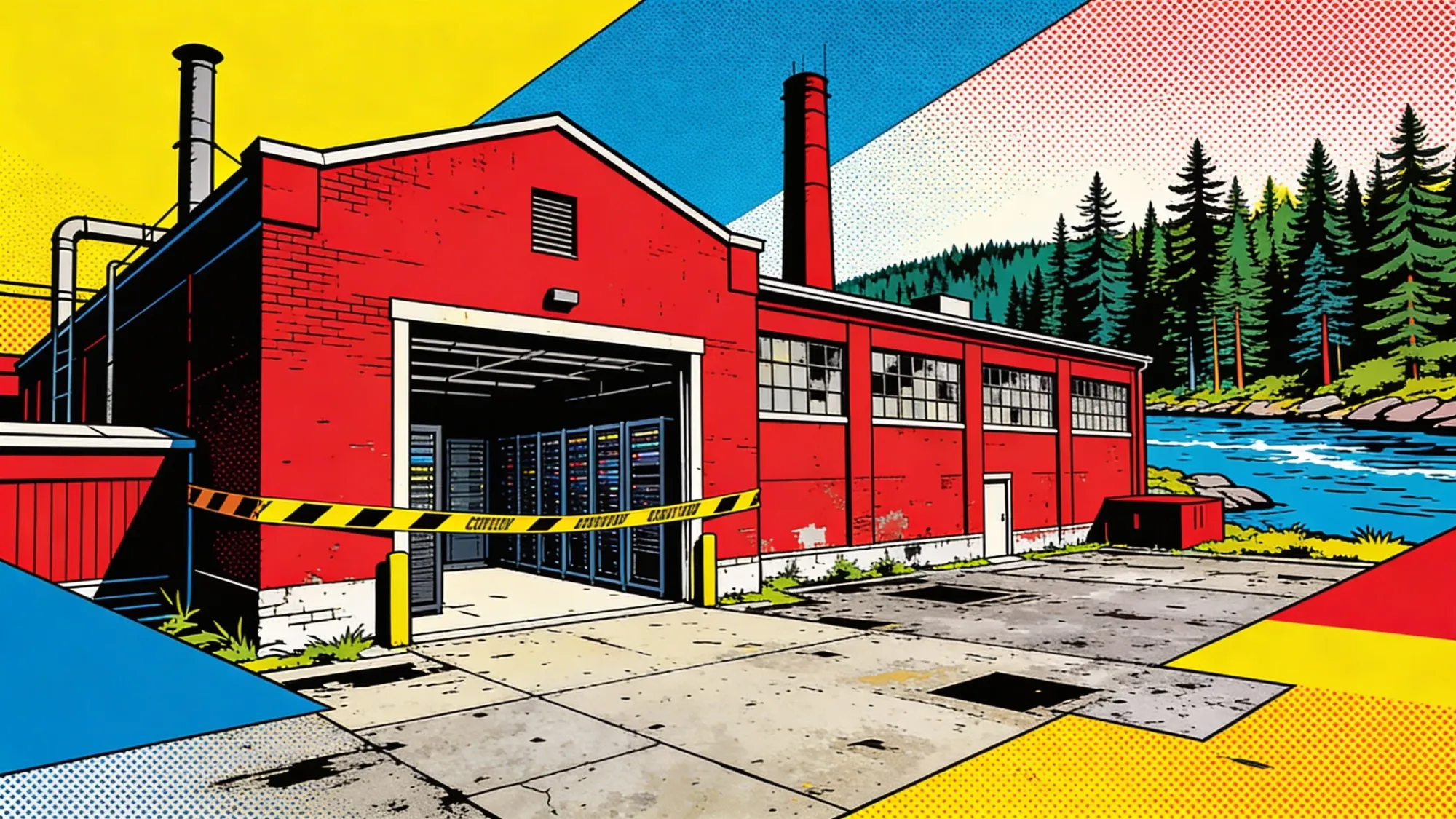
The database became a curtain.
Article 5 is where the trick happens. A small server closet is not the target; a site at 500 kW of installed IT power is. The first batch covered 2023, but it did not come due until September 2024. After that comes the yearly tick. By 15 May, file again.
The data is not trivial. Operators must report energy and sustainability indicators. They also send ICT equipment data and traffic metrics. Put those together and the site starts to show itself: grid strain, cooling water, renewable power behind the marketing copy.
Then Article 5 turns. It says individual information and key performance indicators must be treated as confidential commercial information. The public gets aggregation by member state and EU level. The Commission gets the actual reports. Member states get the reports from their territory. Everyone else gets fog.
That setup does not remove reporting. It removes comparison.
Microsoft asked for the lock.
Investigate Europe found that Microsoft and DigitalEurope submitted almost identical language during the 2024 consultation. DigitalEurope's members include Microsoft, Amazon, Google and Meta. The group argued that raw data such as kilowatt-hour figures and data traffic could let competitors infer capacity or customer information.
The final regulation did not adopt every industry request. DigitalEurope also wanted reported data erased within two years. That part died. The secrecy language survived, close enough for legal scholars and lobby watchdogs to call it a copy-paste job.
Microsoft's line to reporters was careful: more openness around data centres, yes, but confidential business information still needs protection. The Commission took a different route. It said confidentiality had always been in the proposal and that consultation comments shaped the adopted text.
Fine. But the burden did not land evenly. Companies kept their facility-level shields. Researchers, journalists and nearby residents lost the numbers that would let them test broad green claims against the electrical cabinet outside town. The meter is there, only now the reading sits in a closed drawer.
Lawyers see the weak joint.
Investigate Europe took the clause to 10 legal scholars. Their worry was not academic hair-splitting. EU transparency rules and the Aarhus Convention are supposed to give the public a route to environmental information. Jerzy Jendroska had worked inside that system for 19 years on the convention's compliance body. His reaction was blunt: reporters were told he could not recall a comparable case in two decades.
Get the AI infrastructure brief before it hits the grid
Strategic AI news from San Francisco. No hype, no "AI will change everything" throat clearing. Just what moved, who won, and why it matters. Daily at 6am PST.
No spam. Unsubscribe anytime.
Luc Lavrysen, who once led Belgium's constitutional court, went further and called the blanket clause a violation of EU transparency rules and Aarhus. Kristina Irion of the University of Amsterdam landed on the same practical test: confidentiality claim by confidentiality claim. No category-wide hall pass.
That is the legal fight in plain English. Trade secrets can deserve protection. Emissions and water use are not ordinary trade secrets. They sit in pipes, substations and planning files. They land on neighbors.
The Commission's internal concern, according to sources cited by Investigate Europe, is that public site-level data might discourage operators from reporting. That argument limps, because reporting is already mandatory and participation is weak anyway. EU data cited by the investigation showed only 36% of eligible data centres had reported, and only 80% of submitted data was deemed accurate and reliable.
Ireland shows the cost of averages.
The Journal's Irish reporting shows why aggregation fails (story). Ireland has missed the first two national reporting deadlines while the Department of the Environment works through legislation. The next deadline, 15 May 2026, was already close when The Journal checked in. The law still was not transposed.
The Irish numbers are the giveaway. CSO data cited by The Journal showed data centres using more electricity than urban homes in 2023. Still, only 18 Irish data centres had provided data to the Commission. When the article ran, the public database did not even show aggregated Irish figures for 2023 or 2024.
That leaves the public stuck with two claims at once. Data centres are important enough for Europe to build fast. Their local footprints are too commercially sensitive to publish. If you live near one, that is not transparency. That is a locked meter box.
AI made the numbers political.
Brookings put the global scale in colder terms. In 2024, the sector used about 415 TWh of electricity, around 1.5% of the world's total. The curve has not been gentle either. Since 2017, demand has climbed at roughly 12% a year. On the IEA base case cited by Brookings, the sector reaches 945 TWh in 2030.
The issue is local before it is global. Brookings said data centres can reach 42% of electricity demand in Frankfurt and nearly 80% in Dublin. Those figures turn a spreadsheet into a planning dispute.
You can see why companies want cleaner labels and fewer facility-level disclosures. Site numbers make promises falsifiable. They let outsiders compare Microsoft's stated climate targets with the power and water used by a specific campus.
The EU still plans sustainability scores for individual data centres. That may help. But if the underlying reports stay secret, the score is a badge pinned over a sealed file.
The sector wanted a reporting system. It got one. What Europe still lacks is the right to read the meter.
Frequently Asked Questions
What did Microsoft and DigitalEurope lobby for?
Investigate Europe reported that Microsoft and DigitalEurope pushed language classifying individual data centre reports as confidential commercial information, limiting public access to facility-level environmental data.
What data do EU data centre operators report?
Operators report energy and sustainability metrics, ICT equipment data, traffic indicators and other information used for the EU data centre database and rating work.
How many data centres have reported?
EU data cited by Investigate Europe showed about 770 facilities had reported, representing 36% of eligible data centres. The Commission said 80% of submitted data was accurate and reliable.
Why does the secrecy clause matter?
National averages can hide local effects. Facility-level data can show how a specific data centre affects electricity demand, water use and renewable-power claims.
What happens next in the EU process?
The Commission plans sustainability scores for individual data centres, but the investigation found that much of the underlying facility-level reporting would remain confidential.
AI-generated summary, reviewed by an editor. More on our AI guidelines.
Free AI briefing · Weekdays
The AI stories that matter, sourced and explained.
Join the Morning Briefing. It goes out every weekday at 4:45 a.m. Pacific, with later sends for the East Coast, Berlin and Tokyo.
Free when you sign up: The Paperclip Compendium, our tested guide to running AI agents.
Free. Unsubscribe in one click.

Marcus Schuler
Editor-in-Chief and founder of Implicator.ai. Former ARD correspondent and senior broadcast journalist with 10+ years covering tech. Writes daily briefings on policy and market developments. Based in San Francisco. E-mail: editor@implicator.ai