Implicator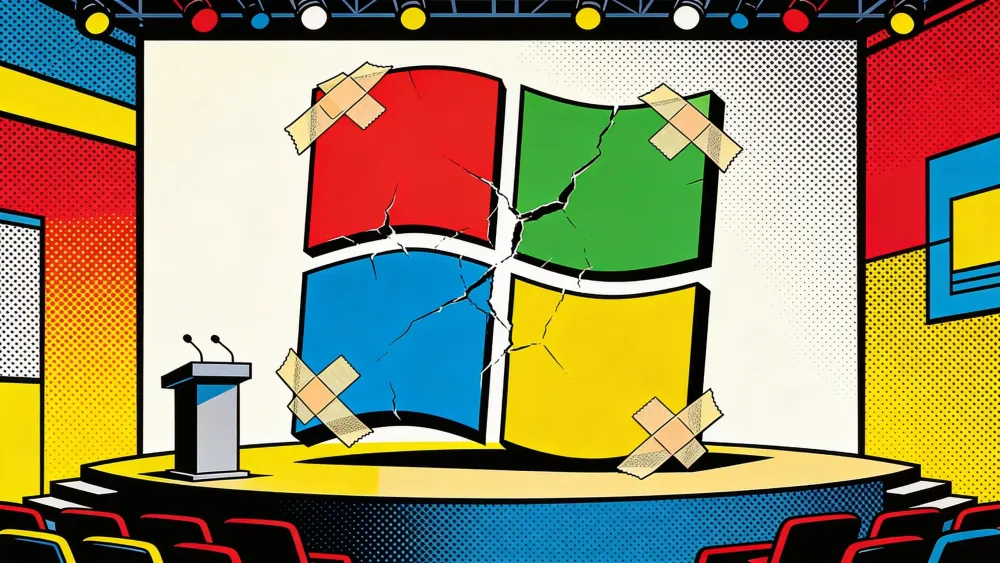
Microsoft's Windows chief Pavan Davuluri published a detailed quality pledge on Friday, promising to reduce Copilot entry points in some apps and give users more control over updates and taskbar placement. The first changes will preview to Windows Insiders this month and through April, with broader rollout expected later in 2026. The announcement arrived on a Friday afternoon. It did not include an apology.
Davuluri organized the memo around three pillars, performance, reliability, and "craft," but the practical changes are more concrete than the branding. Microsoft said it will reduce unnecessary Copilot entry points starting with Snipping Tool, Photos, Widgets, and Notepad. Users will finally be able to drag their taskbar to the top or sides of the display. The company also promised to calm Windows Update down. People will be able to shut down or restart without installing pending patches first. Fewer forced reboots, more room to hit pause.
Why this memo exists is no mystery if you follow Windows. The Feedback Hub tells the story. More than a billion people run Windows 11, and for years the complaints filling that Hub have grown nastier, harder to ignore. The single request to bring back taskbar repositioning piled up tens of thousands of upvotes. Comments underneath turned hostile. Complaints run deeper than any single feature, though. Buggy updates interrupted work mid-presentation, someone staring at a frozen Teams call while Windows rebooted itself. AI additions nobody asked for ate system resources. And underneath all of it, a growing sense that Redmond cared more about Copilot than about making Windows work. Some went looking for the exit. Linux, mostly. Plenty of others never left Windows 10 at all, ignoring the October 14, 2025 end-of-support deadline the way you ignore a parking ticket you don't plan to pay.
What Changed
- Microsoft will reduce Copilot entry points in Snipping Tool, Photos, Widgets, and Notepad after years of user backlash
- Taskbar repositioning returns after 4+ years as Feedback Hub's most upvoted request went unanswered
- Windows Update moves toward single monthly reboots; users can shut down without installing pending patches
- Microsoft reportedly replaced human QA with AI tools, linked to visible decline in Windows build quality
The Copilot pullback
For two years, Microsoft jammed Copilot into virtually every surface of Windows 11. Notepad got AI writing assistance. Photos got AI editing tools. The keyboard got a dedicated Copilot key. Executives talked about turning the whole OS into an "agentic" platform, one that could act on your behalf whether you asked it to or not.
Users pushed back. Hard.
Pew Research found that half of U.S. adults now say AI makes them more concerned than excited. That number sat at thirty-seven percent five years ago. Windows users, though, weren't answering abstract poll questions about the future of technology. They weren't worried about AI in the abstract. They were furious about AI in their Notepad.
Before Friday's announcement, the signs were already there. Take Windows Recall. Early reviews shredded Recall's privacy and security protections. Microsoft yanked it, and Recall sat unreleased for over a year before finally shipping on April 25, 2025, to an audience that had already moved on. Windows Central spotted it this month. Microsoft had quietly scrapped its plans for more Copilot in Settings, File Explorer, and other core OS surfaces. Davuluri's memo made the retreat official. "You will see us be more intentional about how and where Copilot integrates across Windows, focusing on experiences that are genuinely useful and well-crafted," Davuluri wrote.
The language leaves wiggle room. Being "more intentional" about where Copilot shows up does not mean removing it. The company is not abandoning its AI strategy. It is pulling back from places where the backlash became impossible to ignore and keeping the assistant in places where users might actually want it. What shifts is the packaging, not the direction.
Four and a half years for a taskbar
Microsoft yanked the ability to move the taskbar when Windows 11 shipped its first preview in mid-2021. Power users had been snapping it to the sides or top for decades. The omission became Feedback Hub's most upvoted request on day one. It sat there, unanswered, for more than four years.
Microsoft said nothing. Third-party developers at Stardock stepped in with Start11, selling a fix for something Windows had given away free since the 1990s.
Davuluri's memo now confirms taskbar repositioning, including vertical and top placements, along with a smaller taskbar mode. Screenshots in the blog post show right-click context menus with the new position options. For the millions who filed requests, upvoted, and posted increasingly bitter comments year after year, this reads less like a breakthrough and more like a plumber finally showing up to fix the leak you reported in 2021.
Updates that stop interrupting your afternoon
Windows Update has inspired genuine dread for years. The complaint stays the same: you're presenting to a client, or you're deep in a spreadsheet that took hours to build, and the OS forces a restart. Work gone. Meeting derailed.
Davuluri addressed it directly. Microsoft wants to move to a single monthly reboot model for updates, according to reporting from multiple outlets summarizing the memo. Users will be able to shut down or restart without installing pending patches, and pause updates for longer when needed. "Receiving updates should be predictable and easy to plan around," the memo reads.
Stay ahead of the curve
Strategic AI news from San Francisco. No hype, no "AI will change everything" throat clearing. Just what moved, who won, and why it matters. Daily at 6am PST.
No spam. Unsubscribe anytime.
These fixes sound basic. They are. That Microsoft frames them as a major commitment in March 2026 says more about how far user expectations had fallen than about how bold the changes are. January's security updates caused a shutdown or hibernation bug on some Secure Launch/VSM-enabled PCs and triggered Outlook hangs in certain configurations, prompting emergency fixes from Microsoft. When even the patches need patches, promising "fewer automatic restarts" counts as progress.
Performance and the QA gap
Beyond the headline items, Davuluri laid out a broad performance agenda. File Explorer gets faster launch times, reduced flickering, and lower latency for search and context menus. Memory usage across the OS goes down. According to coverage from PCWorld and other outlets, core components like the Start menu will migrate to the WinUI3 framework, a technology that has existed longer than Windows 11 itself.
Developers get some attention on the Windows Subsystem for Linux side: faster file operations between environments, improved network throughput, and a smoother first-time setup. Device wake consistency also makes the list, a problem that has plagued laptop and handheld gaming PC owners for years. Bluetooth and USB connections, which have been a quiet source of daily annoyance, are promised fewer crashes and better peripheral discoverability. The sheer breadth of the list suggests Microsoft opened the Feedback Hub complaint log and worked down from the top. Windows Hello gets faster fingerprint reads. Even gaming handhelds like the ROG Xbox Ally X get a mention, with gamepad support for PIN setup during initial configuration.
But reporting from PCWorld's Mark Hachman adds an uncomfortable detail. Microsoft reportedly replaced some human quality-control work with AI tools in recent years, and Windows watchers linked that shift to a visible decline in build quality. Friday's memo did not mention hiring more human testers.
Davuluri promised "deeper validation and broader testing across real-world hardware and usage scenarios." Stripped of the corporate polish, that amounts to a concession. The testing process has not been good enough.
Friday afternoon confessions
Ars Technica's Andrew Cunningham captured the mood well: "If you were eating in a restaurant and the head chef came out from the back multiple times to loudly proclaim that the kitchen was deeply committed to the quality of the food, would you find that reassuring? Or would you start wondering why the chef felt the need to keep saying it?"
Davuluri has gone on record several times since January insisting Microsoft cares about Windows quality. Each public statement gets more detailed, each reads more defensive than the last. None has included the words "we're sorry."
His opening line is a study in corporate deflection. "Every day, we hear from the community about how you experience Windows. And over the past several months, the team and I have spent a great deal of time analyzing your feedback." ZDNet's Ed Bott was blunt: they needed months of data analysis to figure out that people just want Windows to work?
And the memo sidesteps some of the loudest complaints entirely. Mandatory Microsoft Account sign-in during setup? Not mentioned. Edge and Bing defaults that keep overriding browser preferences? Absent. The steady creep of ads and upsell prompts inside the operating system gets only a vague nod through promises of "quieter" experiences. Nothing concrete.
The pressure Microsoft won't name
Behind the public frustration sits a competitive threat Davuluri's memo carefully avoids. Valve's Steam Deck turned Linux into a credible gaming platform over the past two years. Hardware vendors noticed. Engadget put it plainly: "After one too many of you threatened to switch to Linux, Microsoft has published a long list of changes." Then there's the Windows 10 problem. Support ended last October. The OS still runs on a staggering number of machines anyway. Extended security patches buy them cover through October 13, 2026, roughly another year. Once that's up, the procrastination runs out. Stick with the Windows 11 they've spent years criticizing, or walk.
Hachman reported that Microsoft executives spent months making quiet, private promises to individual journalists before the public announcement. The need to work the press one by one before publishing a blog post tells you something the memo's polished language tries to obscure. The company knows it has a trust problem, and a single Friday afternoon post cannot fix it.
What Davuluri outlined is overdue and, in places, welcome. Copilot pulls back from apps where users never wanted it, and the taskbar finally moves again. But whether this marks a real change in how Microsoft builds Windows, or just another round of promises before the next wave of anger, comes down to what actually ships. Talk is easy. Shipping is the test. The bar sits where users left it. On the floor.
Frequently Asked Questions
When will these Windows 11 changes roll out?
The first changes preview to Windows Insiders this month and through April 2026. Broader public rollout is expected later in 2026, though Microsoft has not committed to specific dates for most features.
Is Microsoft removing Copilot from Windows entirely?
No. Microsoft is reducing Copilot entry points in specific apps like Snipping Tool, Photos, Widgets, and Notepad. The company says it will be 'more intentional' about where Copilot appears but is not abandoning its AI strategy.
What happened to Windows Recall?
The AI memory feature for Copilot+ PCs was delayed over a year after users found privacy and security flaws in preview builds. It reached general availability on April 25, 2025, but public trust had already eroded.
Will Windows Update still force restarts?
Microsoft aims to move to a single monthly reboot model. Users will be able to shut down or restart without installing pending patches and pause updates for longer periods. The timeline for these changes has not been confirmed.
What complaints did the memo ignore?
Davuluri's memo did not address mandatory Microsoft Account sign-in during setup, Edge and Bing default overrides, or the growing presence of ads and upsell prompts inside the operating system. These remain among the loudest user complaints.

Harkaram Grewal
Maps the India–Germany–U.S. AI triangle from New Delhi. Background in cross-market operations and business development. Writes about supply chains, enterprise adoption, and talent—the unsexy forces that actually move global AI.