

The lobster that never sleeps: Inside Clawdbot's vision for personal AI
Open-source Clawdbot turns a Mac Mini into a 24/7 AI employee for $2,400/year. What this means for workers in digital roles.
Open-source Clawdbot turns a Mac Mini into a 24/7 AI employee for $2,400/year. What this means for workers in digital roles.

Microsoft hands encryption keys to FBI on request. Unlike Apple's zero-knowledge approach, BitLocker stores keys unencrypted in the cloud by default.

Meta's $2B Manus deal triggered reviews by three Chinese agencies. The 'China shedding' playbook for AI startups faces its first test.
Microsoft analyzed 37.5M Copilot conversations. Health queries dominated mobile usage every hour of every day. Programming's share collapsed. The data shows users want a confidant, not a productivity tool. The industry built for the boardroom anyway.

Four weeks ago, Mustafa Suleyman sat for a podcast interview and made a revealing admission. "We want to have emotional support," he said, listing the capabilities Microsoft AI intends to build. "AIs provide us with a safe space to be wrong." He described a new Copilot feature called Real Talk, designed to be "philosophical, sassy, cheeky," with engagement metrics "way, way higher than the average session."
Today, Microsoft AI published the data that explains why.
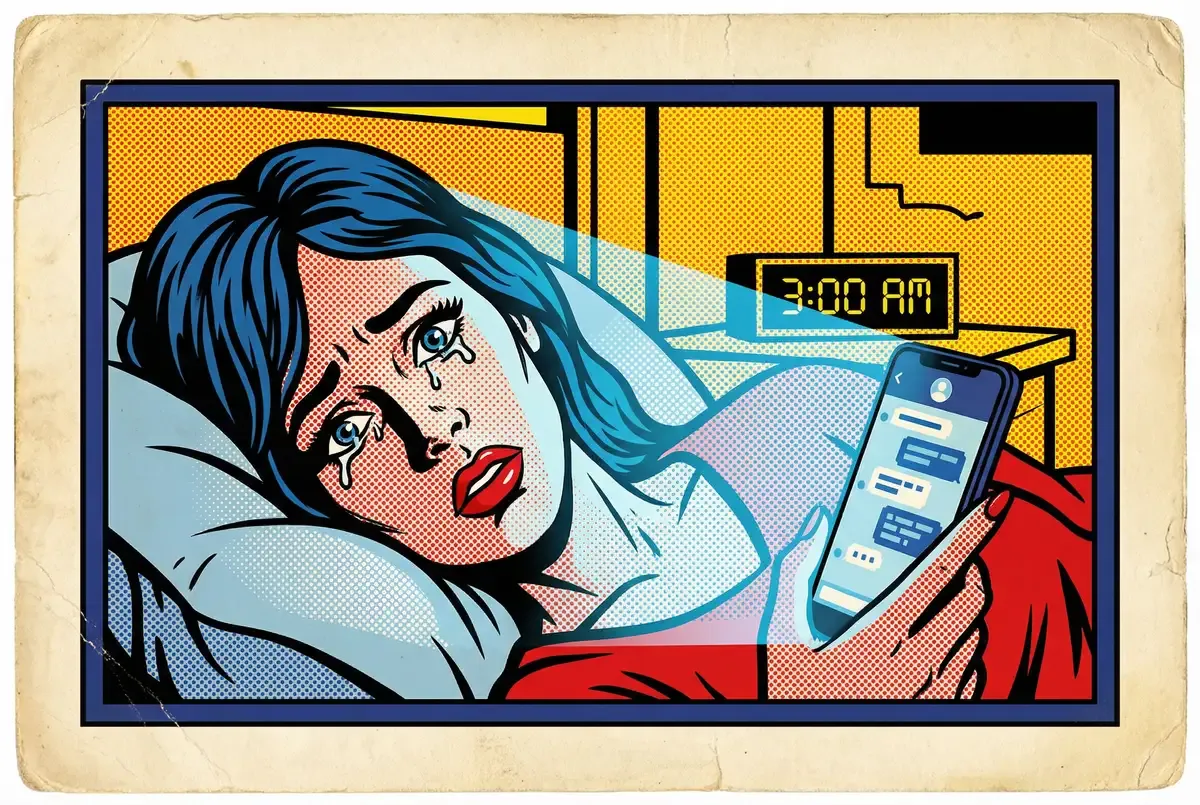
The Copilot Usage Report 2025 analyzes 37.5 million de-identified consumer conversations between January and September. In this dataset, which explicitly excludes enterprise traffic, health and fitness dominated mobile usage across every single hour, every single day, every single month of the study period. The primary intent tag was technically "Information Seeking." But the persistent dominance of health queries at 3 AM suggests users aren't just counting calories. They're seeking reassurance.
The Breakdown
• Health and fitness dominated mobile Copilot usage across every hour and month in 37.5M consumer conversations, excluding enterprise traffic
• Programming's share of conversation collapsed from January to September as mainstream users replaced early-adopter developers
• "Seeking Advice" is rising as an intent category, with users treating AI as a trusted advisor rather than a search engine
• Microsoft CEO Suleyman announced emotional support and personality differentiation as strategic priorities four weeks before this data dropped
The data reveals a bifurcation so clean it looks engineered.
On desktop, Copilot behaves like the productivity tool Microsoft markets to enterprises. "Work and Career" overtakes "Technology" as the top topic precisely between 8 AM and 5 PM, mirroring a standard economic workday with almost eerie precision. Programming queries spike on weekdays. Entertainment follows a "U-curve," high at night, cratering during business hours. Twenty distinct topic-intent pairs cycled through the desktop top 10 over nine months, suggesting users are still experimenting, trying workflows, abandoning approaches that don't deliver.
Mobile shows the opposite pattern.
Health and fitness holds the top position regardless of temporal context. Four topic-intent pairs remained within the top four for most of the year, showing remarkable stability. Only 11 distinct pairs entered the mobile top 10 over the entire study period. The researchers describe the phone as functioning like a "constant confidant for physical well-being."
Mobile users aren't experimenting. They've already decided what they want from AI in their pocket. It isn't help with spreadsheets.
Suleyman acknowledged this divergence in his November interview. "AIs provide high quality emotional support increasingly," he said. "And naturally, as we get more used to that, that's going to put us under pressure as humans to provide that support to other humans."
Then he dropped the real headline: "That's going to change what it means to be human in quite a fundamental way."
When darkness falls, the queries shift.
Between 2 AM and sunrise, "Religion and Philosophy" takes over. The researchers try to soften this in the report, noting that users turn to AI "to ask the big questions of life that are not always easy to answer, or perhaps to ask them at a time when others are not awake."
The pattern appeared across both device types, though with monthly variations. In June, "Religion and Philosophy" broke into the top 10 on mobile while "Personal Growth and Wellness" did the same on desktop. Then they vanished. July's data shows no trace of them. Something specific triggered a global moment of reflection in June, and by July, the users went back to sleep. The data offers no reason why.
Travel queries spike during commute hours. The researchers suggest users might be "planning trips or preparing for commutes." The simpler explanation: people stuck in traffic daydream about being somewhere else, and now they have an AI to daydream with.
Weekly rhythms emerge with mechanical regularity. August data shows you can identify weekends purely by watching programming and gaming queries swap positions. Code dominates Monday through Friday. Games take over Saturday and Sunday. The crossover happens with such consistency that researchers can pinpoint individual weekend days from topic rankings alone.
February's data contains the study's most psychologically revealing finding.
Relationship conversations spiked on Valentine's Day itself. That’s the easy prediction. The real story happened 72 hours prior. "Personal Growth and Wellness" queries surged. Users weren't looking for dinner reservations. They were panic-cleaning their personalities. They were asking a machine how to be loveable before the deadline hit.
"Seeking Advice" is rising as an intent category, particularly on personal topics. Users increasingly treat Copilot not merely as an information retrieval system but as what the researchers call "a reliable source of advice."
Suleyman sees this coming. In November, he described the strategic direction explicitly: "We want to have world-class legal advice on tap that costs almost nothing, a few bucks a month. We want to have financial advice. We want to have emotional support." Real Talk, the personality-forward Copilot mode, represents the first commercial iteration of this vision.
But the liability calculus shifts dramatically when users treat AI as an advisor rather than a search engine. A system that returns wrong information about medication dosages faces one category of risk. A system people trust for guidance on relationships, wellness, and life decisions faces quite another.
Between January and September, programming's share of conversation collapsed. "Society, Culture, and History" conversations grew to replace it. Rank deltas show the shift clearly. Programming fell further than any other category. Culture rose to meet it.
Note the distinction: share, not necessarily volume. The researchers attribute the shift to "a dual dynamic: the broadening of habits among existing users, and the democratization of the user base as mainstream adopters, who may have less technical priorities than the developer-heavy cohort of early January, joined the platform."
The early adopters were programmers using AI for programming. The mainstream users who followed want to talk about history, culture, and themselves. If the user base grew substantially, programming queries could have doubled in absolute volume while still crashing in percentage rank.
This trajectory inverts the standard AI industry narrative. The pitch to investors emphasizes enterprise productivity, coding acceleration, knowledge work transformation. The actual usage data suggests consumers want something more fundamental. Someone, or something, to talk to.
"Art and Design / Creating" illustrates the same dynamic. It held ranks 3 and 4 on desktop for two months before disappearing from the top 10 entirely, while remaining consistently ranked on mobile. The researchers connect this to "popular public interest around image generation at this time in 2025." Translation: the AI art bubble deflated faster on desktop than mobile, where creation remains more casual.
Here's what makes the timing interesting.
Four weeks before publishing this usage study, Suleyman announced Microsoft AI's new superintelligence team. The pitch emphasized frontier capabilities, training "omni models of all sizes, all weight classes to the absolute max capability." Standard AI lab rhetoric.
But buried in that same interview, Suleyman spent considerable time discussing personality differentiation, emotional support, and the future of AI companionship. "People like different personalities," he said. "They like different brands. They like different celebrities. They have different values. And those things are very controllable now."
The usage data validates the strategic pivot. Copilot has achieved 100 million weekly active users, Suleyman noted, across all surfaces. The fastest-growing use cases aren't enterprise workflows. They're the personal, emotional, identity-adjacent interactions that happen on mobile devices at odd hours.
Microsoft built a productivity tool and discovered demand for a confidant.
The methodology section of the paper reveals a limitation worth noting. Microsoft's classifiers assign each conversation both a topic and an intent, creating roughly 300 possible topic-intent pairs. "Searching for Information" remains the most common intent overall. But the rise of "Getting Feedback or Advice" as a category, particularly when paired with personal topics like relationships and wellness, signals a qualitative shift in how users conceptualize these interactions.
These systems hallucinate. They lack the contextual knowledge a human advisor accumulates over years of relationship. They cannot follow up, cannot notice when advice isn't working, cannot adjust recommendations based on outcomes they never observe. Yet the data shows users extending trust typically reserved for humans with professional training and personal investment in outcomes.
No classifier captures whether advice was good. No metric tracks outcomes. The 37.5 million conversations tell us what users asked for, not whether they got what they actually needed.
The framing in corporate communications positions AI as a learning aid. The usage data suggests something closer to a coping mechanism.
The report's conclusion suggests AI interfaces should differentiate by context. "A desktop agent should optimize for information density and workflow execution, while a mobile agent might prioritize empathy, brevity, and personal guidance."
This recommendation collides with how AI companies actually allocate resources. The money flows toward capabilities enterprise customers will pay for: code generation, document analysis, workflow automation. Consumer relationships generate engagement metrics but struggle to justify compute costs without advertising models the industry has been reluctant to embrace.
The researchers note that large language models demonstrate "the ability to sync with human circadian rhythms in a way no previous technology has." The same system handles coding questions at 10 AM and existential queries at 2 AM. But synchronizing with human rhythms isn't the same as being appropriate for all of them.
Microsoft's framing, that Copilot has integrated into "the full texture of human life," sounds like a feature. Given the regulatory vacuum around AI-delivered health information and personal guidance, it might be a liability.
The 37.5 million conversations suggest users have already decided what they want from AI on their phones. The industry can keep building for the boardroom if it wants. The users have already moved on.
Somewhere tonight, a teenager in a dark room will bypass the coding assistant, ignore the writing tools, and ask the machine a question they are too scared to ask their father. Not because the technology was designed for this purpose. Because this is what humans do when given something that listens.
Q: How did Microsoft collect this data without reading people's conversations?
A: Microsoft used machine-based classifiers that assign topic and intent tags to de-identified conversations. No human researchers see the actual content. The system extracts only a summary showing what the conversation was about and what the user wanted to accomplish. All personally identifiable information is automatically scrubbed before analysis.
Q: What is "Real Talk" and how is it different from regular Copilot?
A: Real Talk is a new Copilot mode Microsoft launched in late 2025. Suleyman described it as "philosophical, sassy, cheeky" with a distinct personality. Unlike standard Copilot's neutral assistant tone, Real Talk is designed for personal conversation. Microsoft says engagement metrics for Real Talk sessions run "way, way higher" than average Copilot interactions.
Q: Why was enterprise traffic excluded from the study?
A: The researchers wanted to understand how people use AI in their personal lives, not at work. Enterprise accounts connect through commercial or educational authentication, which changes usage patterns. By excluding that traffic, the 37.5 million conversations reflect consumer behavior only. This is why health and personal topics dominate rather than work tasks.
Q: What does "topic-intent pair" mean in this study?
A: Each conversation gets two labels. The topic is the subject (health, programming, relationships). The intent is the goal (searching for information, seeking advice, creating content). Combined, they form roughly 300 possible pairs like "Health / Seeking Advice" or "Programming / Technical Support." This lets researchers track not just what people discuss but why.
Q: How does Copilot's 100 million weekly users compare to ChatGPT?
A: OpenAI reported 400 million weekly active users for ChatGPT in February 2025. Copilot's 100 million spans all Microsoft surfaces including Windows, Edge, Bing, and mobile apps. Direct comparison is tricky since Copilot is bundled into products people already use, while ChatGPT requires users to seek it out. Both numbers reflect consumer AI reaching mainstream scale.

40% of executives claim AI saves 8 hours weekly. Two-thirds of workers see under 2 hours. New surveys reveal why the productivity revolution isn't reaching the ground floor.


Anthropic researchers mapped how chatbots drift from helpful assistants to mystics and enablers. Their fix cuts harmful responses by 60% without touching normal behavior. The finding exposes a structure that exists before safety training even begins.

A computer science student trained an AI exclusively on texts from 1800-1875 London. When he prompted it about 1834, the model described street protests and Lord Palmerston. He Googled it. The protests were real. What does it mean when an AI starts accidentally telling the truth about history?

Microsoft says one in six people now use AI. The methodology: counting clicks on Microsoft products. The US ranks 24th despite hosting every major AI lab. South Korea's surge? A viral selfie filter. The company selling AI infrastructure has appointed itself scorekeeper of AI adoption.
Get the 5-minute Silicon Valley AI briefing, every weekday morning — free.