Implicator
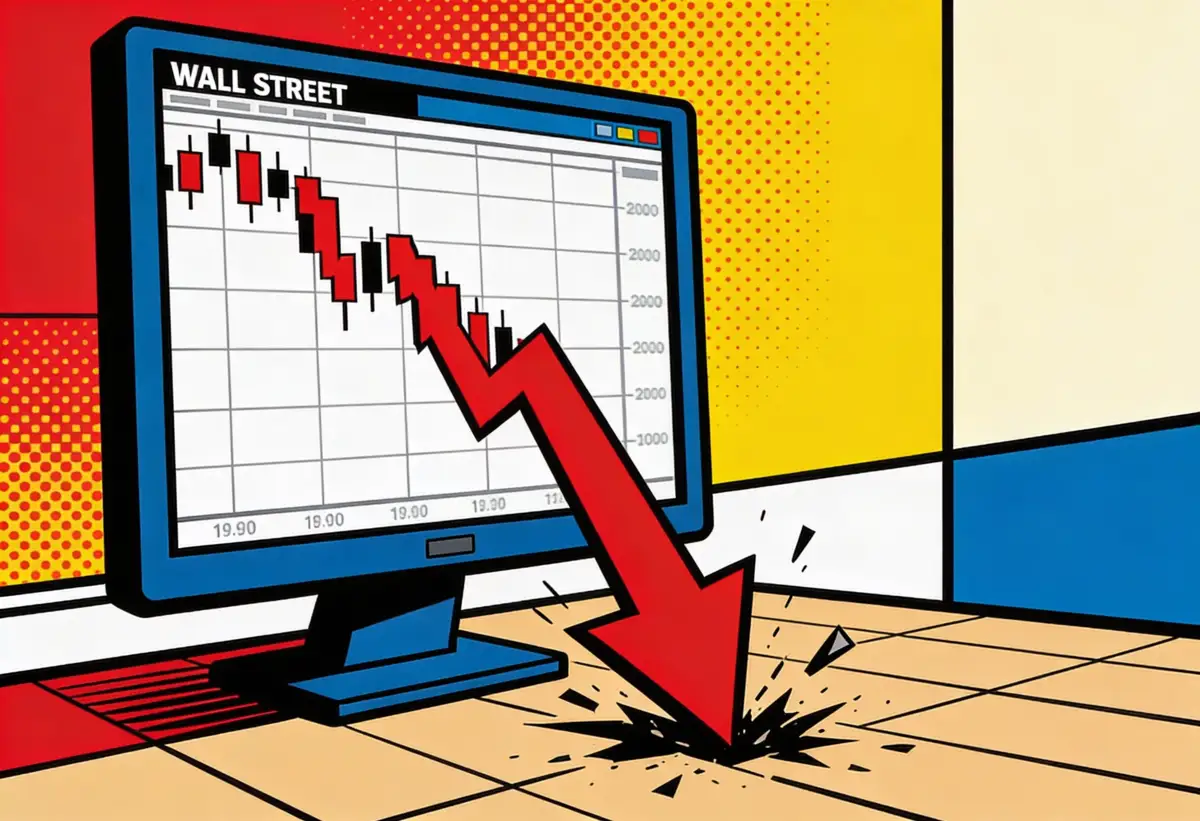
The Nasdaq Composite fell 3.23% this week, its steepest weekly drop since President Trump's tariff threats triggered a near-panic in April 2025. The sell-off wiped $850 billion from the Magnificent Seven megacap stocks alone, with surging oil prices, twin legal defeats for Meta, and a surprise algorithm from Google all feeding into a single week of cascading losses. By Thursday's close, the tech-heavy index had entered correction territory, down more than 10% from its October record high.
Key Takeaways
- Nasdaq dropped 3.23% this week, its worst performance since April 2025, entering correction territory
- Magnificent Seven stocks lost more than $850 billion in combined market value in five trading days
- Meta fell 11% after $375 million child safety verdict in New Mexico and addiction ruling in California
- Brent crude surged past $110 as Iran squeezed the Strait of Hormuz, pushing OECD inflation forecasts to 4.2%
Oil becomes the market's price tag
Brent crude surged past $110 per barrel in Friday trading, closing at its highest level in more than three years. Before the Iran war started in late February, that number was roughly $70. The math is punishing for growth stocks.
Look at the Strait of Hormuz. Roughly 20% of the world's oil goes through it, and Iran has been squeezing it shut for weeks. On Friday morning, the Islamic Revolutionary Guard Corps turned back three ships that tried to transit after Trump pushed his deadline for strikes to April 6. CBS News maritime tracking confirmed it.
And the oil price is bleeding into everything else. The OECD raised its U.S. inflation forecast this week. The old number was 2.8%. The new one: 4.2%. Bond markets reacted fast. The 10-year Treasury yield hit 4.42%, which has pushed mortgage rates from about 6% at the start of the war to north of 6.5%. Real money out of homebuyers' pockets every month, not just a line on a chart.
Meta's $375 million wake-up call
Meta dropped more than 11% for the week after two court defeats in as many days. A New Mexico jury ordered the company to pay $375 million in civil damages for misleading users about child safety on Facebook and Instagram. Internal Meta research presented at trial showed 16% of all Instagram users had reported being shown unwanted nudity or sexual activity in a single week. A day later in Los Angeles, a jury found both Meta and Alphabet liable for building platforms with addictive design features that harmed minors.
The dollar figures are manageable. Meta's free cash flow covers that penalty many times over. But the signal hit the entire sector. Reddit, Pinterest, and Snap all sold off hard. Snap lost more than 10% in a single session.
Get Implicator.ai in your inbox
Strategic AI news from San Francisco. No hype, no "AI will change everything" throat clearing. Just what moved, who won, and why it matters. Daily at 6am PST.
No spam. Unsubscribe anytime.
"Investors are worried about a regime change," Ahmed Khan, a senior equity analyst at Morningstar, told Investopedia. "If this was an idiosyncratic problem then Reddit and Snap and Pinterest wouldn't be down." Eric Goldman, a law professor at Santa Clara University, said the liability exposure "jeopardizes the entire social media industry." Thousands of similar lawsuits are waiting in U.S. courts.
Google rattles the memory trade
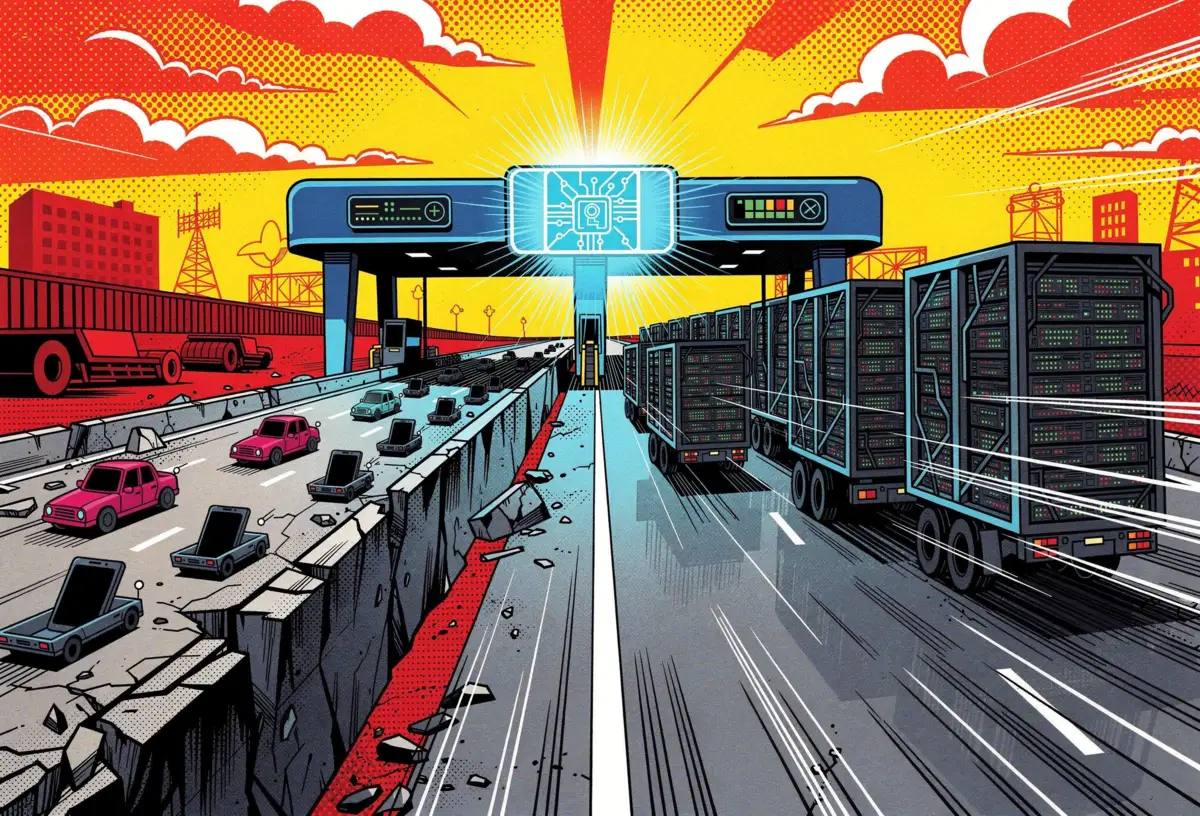
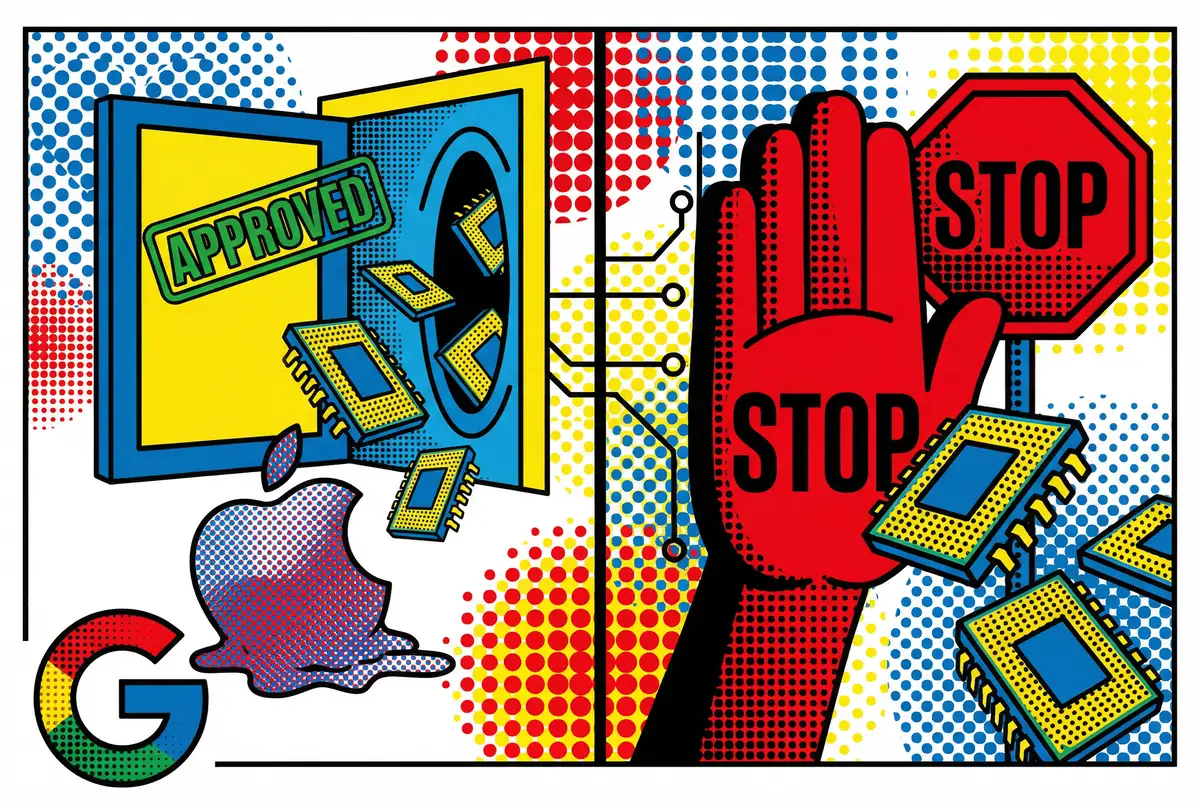
An unexpected blow landed midweek when Alphabet published research on TurboQuant, an algorithm designed to cut the amount of memory needed to run large AI models. The reaction was immediate and ugly.
Micron Technology fell more than 15% for the week, though the stock is still up nearly 300% over the past 12 months. SanDisk, the hottest S&P 500 stock of 2025, dropped 28% from its March 19 record high of $772.09. Western Digital and Seagate bled out alongside them.
Here's the thing about Micron. The company just reported a quarter for the ages. Revenue nearly tripled to $23.86 billion. Gross margins projected at 80% for the next quarter. CEO Sanjay Mehrotra told CNBC that "memory today is very tight supply and supply cannot be brought up that easily." None of it mattered. In a market rattled by oil and inflation, blowout earnings could not stop the rotation out.
The S&P 500's longest losing streak in four years
Damage went well beyond the Nasdaq. The S&P 500 is on pace for a fifth straight weekly decline, its longest losing streak since 2022. Thursday was brutal by itself, the Dow dropping more than 450 points in a single session. Apple was the one Magnificent Seven stock that finished higher, and only because of an oddly specific catalyst: reports that it plans to open Siri to competitors.
Microsoft had a worse week than most people realize. The stock fell 6.5% in five days. More than 30% gone from its peak. Management keeps spending on AI infrastructure. Revenue growth keeps slowing. Worst quarter since 2008 is where this is headed.
What comes next
Two events could shift the mood. SpaceX carries a $1.25 trillion valuation after merging with xAI. It is preparing what would be the largest IPO in history. And Tesla's quarterly delivery numbers land next week, a report that will either steady nerves or accelerate the exit from momentum trades.
But Trump's April 6 deadline for Iran hangs over all of it. Brent is already above $110. Another escalation at the strait, and the argument for rate cuts this year dies completely. Traders have largely given up hope for any Fed easing in 2026.
Five weeks of losses. A correction confirmed. Oil above $100. The market is pricing in a war that does not end soon.
Frequently Asked Questions
Why did the Nasdaq have its worst week since April 2025?
Three forces converged: surging oil prices from the Iran war pushed Brent crude past $110, twin legal defeats hammered Meta more than 11%, and Google's TurboQuant algorithm rattled memory chip stocks. Together they drove $850 billion out of the Magnificent Seven.
What were Meta's two court defeats this week?
A New Mexico jury ordered Meta to pay $375 million for misleading users about child safety. A day later in Los Angeles, a jury found Meta and Alphabet liable for building addictive platform features that harmed minors. Both companies plan to appeal.
Why did Micron stock fall 15% despite record earnings?
Google published research on TurboQuant, an algorithm that cuts memory needed for AI models. That shook confidence in memory chip demand despite Micron reporting revenue of $23.86 billion, nearly triple from a year earlier, with 80% gross margins.
How has the Iran war affected oil prices and inflation?
Brent crude surged past $110 per barrel, up from roughly $70 before the war started in late February. Iran's control of the Strait of Hormuz has driven the spike. The OECD raised its U.S. inflation forecast to 4.2%, up from 2.8%.
Will the Federal Reserve cut interest rates in 2026?
Traders have largely abandoned expectations for cuts this year. Oil-driven inflation and the OECD's revised 4.2% forecast make easing nearly impossible. The 10-year Treasury yield hit 4.42%, pushing mortgage rates above 6.5%.

Harkaram Grewal
Maps the India–Germany–U.S. AI triangle from New Delhi. Background in cross-market operations and business development. Writes about supply chains, enterprise adoption, and talent—the unsexy forces that actually move global AI.