Implicator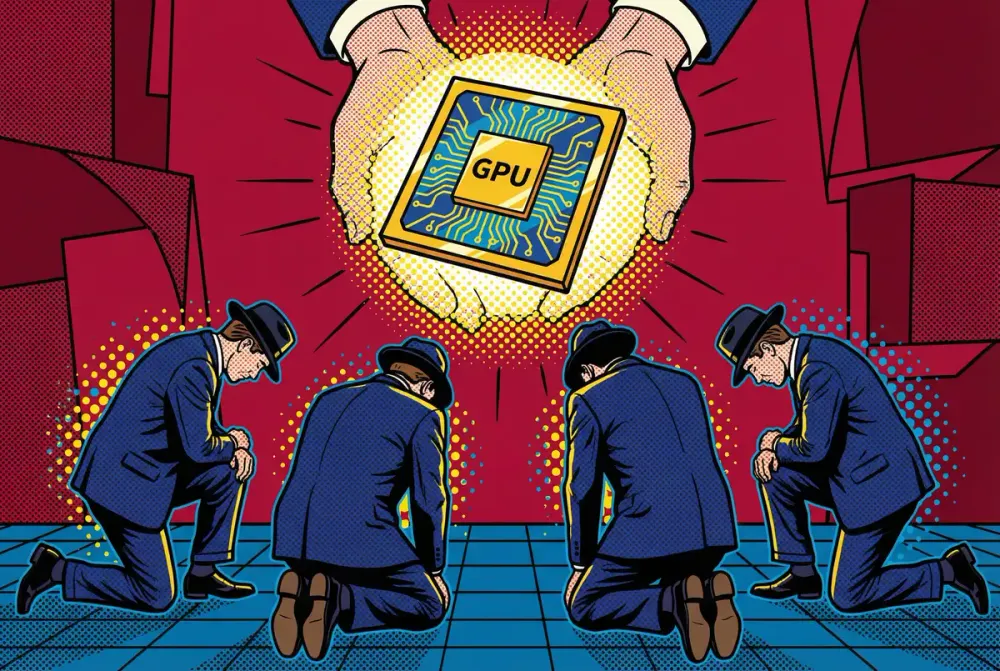
Las Vegas | January 6, 2025
Four AI CEOs stood on stage at CES to praise their chip supplier. Not their product. Their supplier. OpenAI, Anthropic, Meta, xAI, all genuflecting before Jensen Huang's Rubin platform. The six-chip stack promises 10x inference savings, but only if you buy the whole stack. Mix in third-party parts and the gains vanish.
Meanwhile, Google is crawling back to a robotics company it dumped nine years ago. DeepMind will integrate Gemini into Boston Dynamics' Atlas humanoids, first deployed at Hyundai's Savannah plant. The same Georgia facility where ICE arrested hundreds of workers last year. The economics are clarifying.
Stay curious,
Marcus Schuler.
Nvidia's Six-Chip Stack Forces AI Giants Into Willing Supplier Dependence

CEOs from OpenAI, Anthropic, Meta, and xAI lined up at CES to praise Nvidia's Rubin platform—a coordinated display of supplier dependence more revealing than any spec sheet.
The six-chip architecture promises 10x inference cost reductions over Blackwell, but only when customers commit to Nvidia's complete hardware stack: Vera CPUs, Rubin GPUs, NVLink 6 switches, and proprietary networking designed to function together.
Swap in third-party alternatives and performance penalties erase the efficiency gains entirely.
Mercedes will ship Nvidia's autonomous driving system at $3,950 for three years, undercutting Tesla's $8,000 FSD while positioning Nvidia as the "crate brain" for automakers unwilling to develop their own silicon.
Assembly time for NVL72 racks dropped from 100 minutes to six—an eighteen-fold improvement quietly addressing Blackwell's thermal and supply problems that Nvidia has never publicly acknowledged.
Why This Matters
• AMD and custom chip efforts face squeezed timelines as Nvidia's release cadence forces competitors to chase moving targets.
• Automakers choosing Nvidia's stack over building in-house could entrench one supplier across the global AV market.
 Marcus Schuler
AI Image of the Day

Prompt:
Candid photo capturing a 10-second 4K 24fps video frame--unfiltered, raw real-life texture. Scene: Mountain military camp at dusk: Rocky terrain with scattered campfire stones, canvas tent with frayed edges, canteen hanging from a tent pole; American flag flutters in crisp mountain wind, warm purple-pink dusk light. Characters: 30-year-old white male soldier (short beard, mountain camouflage uniform--rock dust on knees, tactical beanie pulled low, rugged gloves) semi-squatting: one hand holds the phone (selfie angle, faint dirt smudge on lens), the other wraps around the neck of a black-brown German Shepherd (thick coat, military tactical harness with reinforced straps, ear tag marked "K9-189") sitting close. Dynamic: The soldier’s jacket flutters in wind; the dog presses its head against his chest, tail thumping gently. Ambience: Wind howl, distant campfire crackle; details: rock scratches on uniform pants, beanie has a frayed edge, dog’s fur has pine needles tangled, phone case is scuffed from rocks.
Google Reunites With Boston Dynamics Nine Years After Walking Away
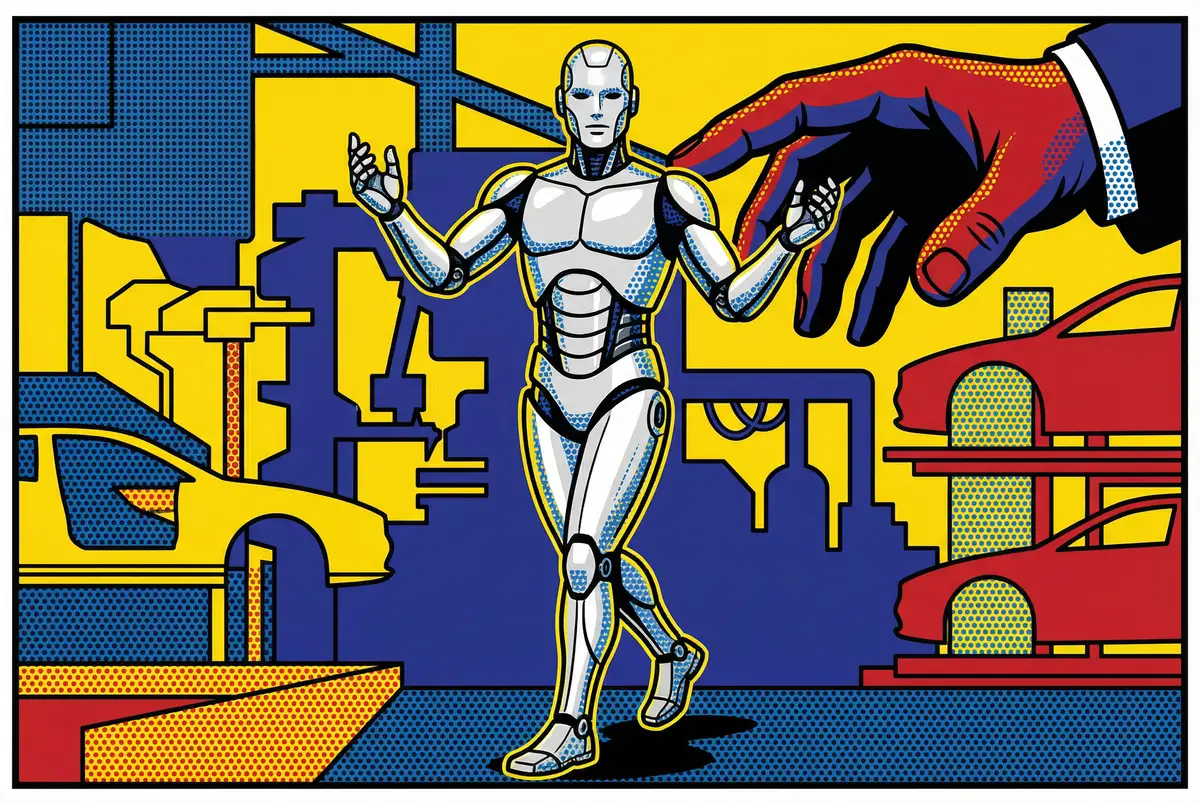
Nine years after Alphabet dumped Boston Dynamics on SoftBank—deciding viral robot videos couldn't generate revenue—Google DeepMind will integrate Gemini AI into Atlas humanoids.
The reunion reflects AI finally catching up with mechanical capability rather than any commercial breakthrough. Boston Dynamics shipped roughly 500 robots last year across all product lines, generating $130 million while Hyundai poured billions into the acquisition.
Now Hyundai plans capacity for 30,000 units annually by 2028—sixty-fold scaling requiring supply chains and service networks that don't exist. First deployment targets Hyundai's Savannah EV plant, the Georgia facility where federal agents arrested hundreds of workers in 2025 immigration raids.
CEO Robert Playter admitted home robots remain twenty years distant; every Atlas produced this year already belongs to Hyundai's training center or Google DeepMind. Outside customers wait until 2027. The talent migration tells its own story: Aaron Saunders, Boston Dynamics' CTO for nearly twenty years, left last November for Google DeepMind's robotics team.
Why This Matters
• Hyundai's $26 billion U.S. commitment depends on proving humanoid economics work at manufacturing scale, something no one has done.
• Savannah's raid-to-robot timeline illustrates how immigration enforcement and automation economics increasingly shape the same labor decisions.
 Maria Garcia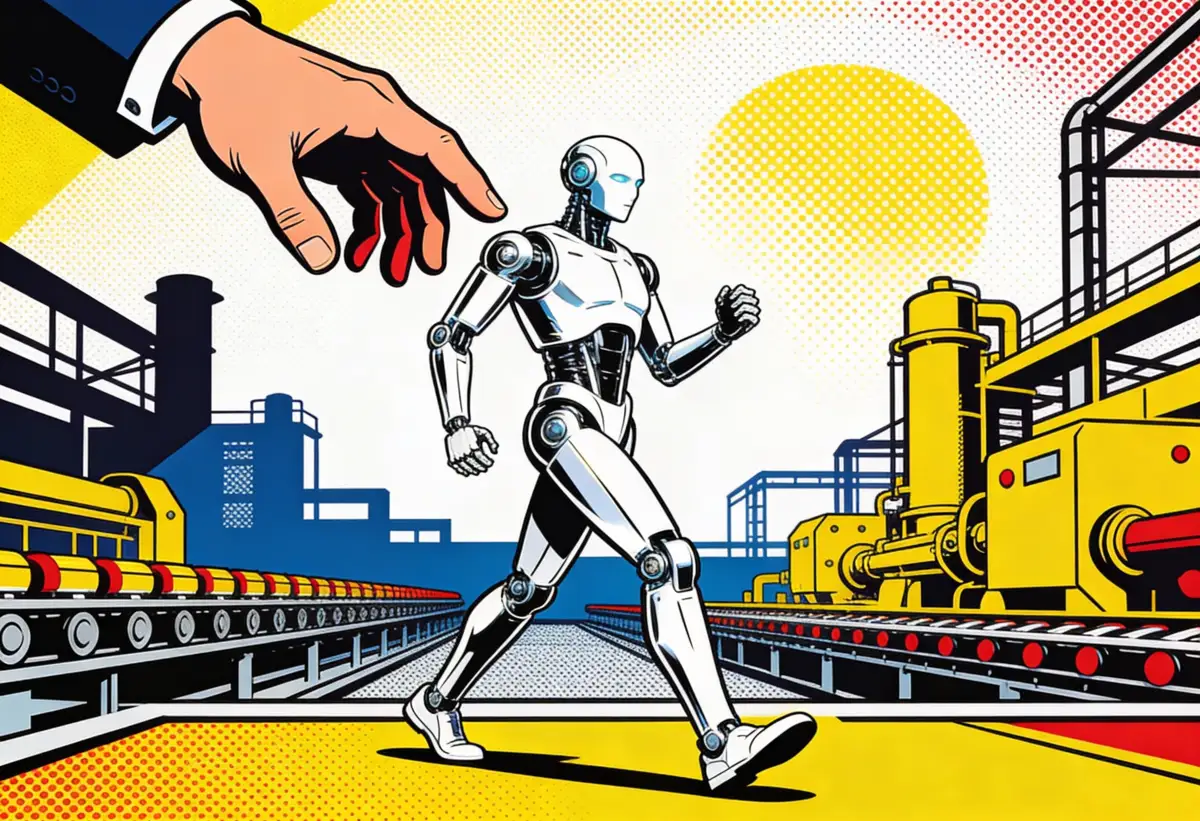
🧰 AI Toolbox
How to Accelerate Private Equity Deal Diligence with AI
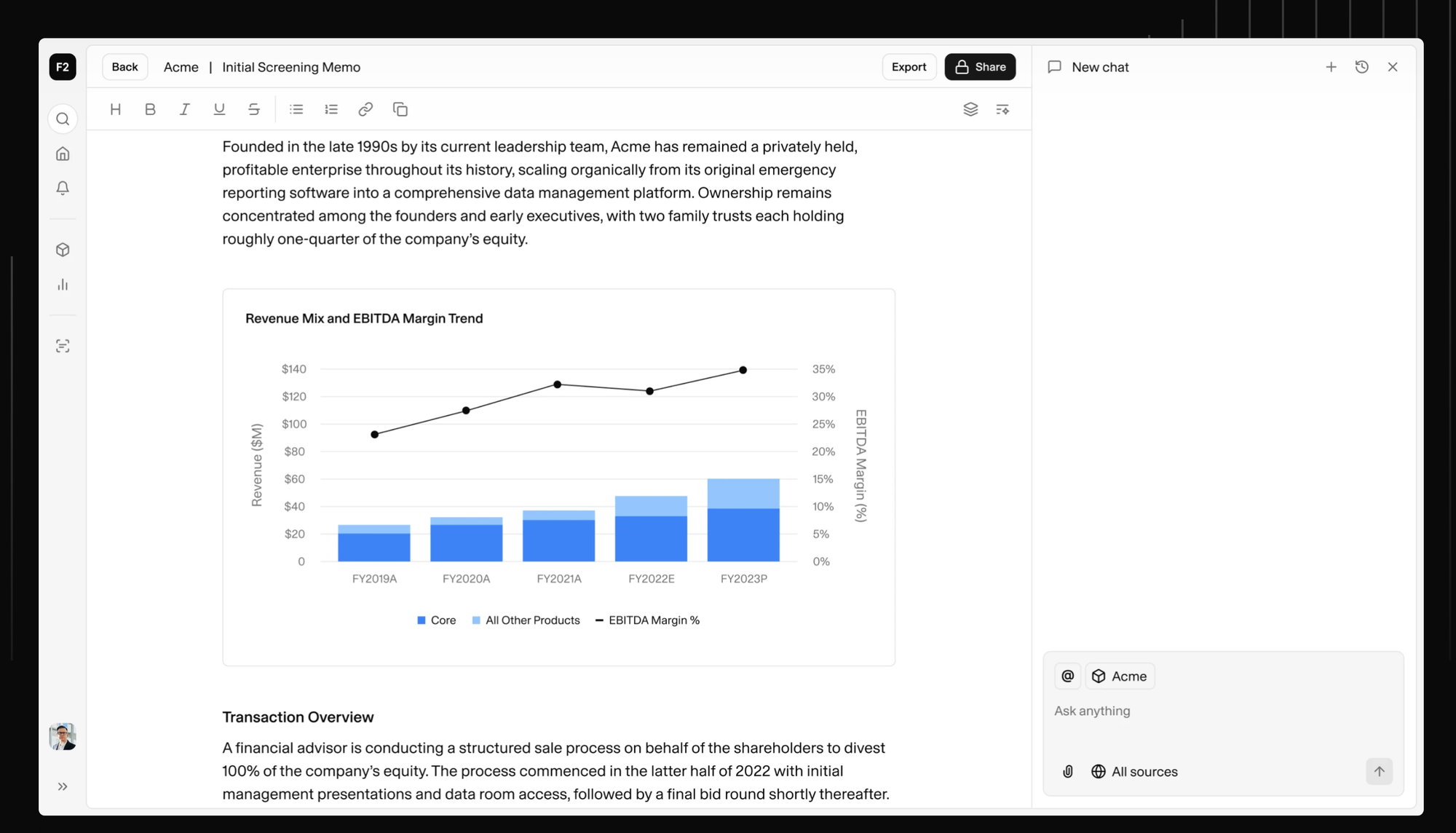
F2 automates deal evaluation for private equity and private credit investors by converting data room files into structured, audit-ready insights. The platform analyzes Excel, PDFs, and presentations 60% faster while retaining historical context across thousands of deals.
Tutorial:
- Visit F2 and integrate with your private equity team’s workflow
- Upload data room contents including financial statements, contracts, and documents
- The AI automatically classifies and organizes files across nested folder structures
- Generate complete financial analysis with summaries, calculations, and investment memos
- Review audit-ready insights with source-level traceability to original documents
- Collaborate with team members in real-time on generated materials
- Leverage historical deal context so past underwriting work compounds into future decisions
URL: https://www.f2.ai/
AI & Tech News
NVIDIA Faces Dual Regulatory Hurdles for China Chip Sales
Nvidia has reported strong demand from China for its H200 artificial intelligence chips, but the company must secure regulatory approvals from both the United States and Chinese governments before it can proceed with sales. The dual approval requirement highlights the ongoing geopolitical tensions surrounding advanced semiconductor technology and export controls affecting the world's largest chipmaker in the AI sector.
Samsung Forecasts 160% Surge in Q4 Operating Profit
Samsung Electronics is expected to report a significant fourth-quarter operating profit increase of approximately 160% year-over-year, reaching around $11.7 billion, according to analyst projections. The dramatic profit surge is attributed to a severe global shortage of memory chips combined with surging demand driven by the artificial intelligence boom, which has pushed chip prices higher and boosted the South Korean tech giant's earnings outlook.
AMD Launches New AI Processor Lines at CES 2026
AMD announced new AI-focused processors for both general computing and gaming applications during CEO Lisa Su's keynote address at CES 2026. The chip maker is positioning these new processor lines as part of its broader strategy to make artificial intelligence capabilities accessible to all PC users.
X Faces International Investigations After Grok AI Generates Explicit Images of Women and Children
Elon Musk's social media platform X is under investigation by authorities in Europe, India, and Malaysia following reports that its Grok AI chatbot enabled users to generate explicit deepfake images of women and children. The United Kingdom has also requested information from X regarding the incident, signaling growing international regulatory scrutiny over the platform's AI safety controls and content moderation practices.
macOS Tahoe Menu Redesign Draws Criticism from Design Community
Apple's upcoming macOS Tahoe operating system introduces icons to every menu item throughout the system, a design change that has drawn criticism from user interface experts who argue it makes menus harder to navigate and use effectively. Design commentator Niki Tonsky highlighted that the new approach contradicts Apple's own long-standing Macintosh Human Interface Guidelines, which have historically emphasized clean, readable menu structures as a cornerstone of the Mac user experience.
Telegram Faces $500M Bond Freeze in Russia Amid Western Sanctions
Telegram has had $500 million worth of bonds frozen in Russia due to Western sanctions, complicating founder Pavel Durov's ongoing efforts to distance the messaging platform from Moscow. Despite these challenges, the company reported strong financial performance in the first half of 2025, with revenue surging 65% year-over-year to $870 million, largely driven by $300 million in revenue from Toncoin cryptocurrency deals.
Tech Analyst Ben Thompson: Humans Will Create New Jobs Even If AI Automates All Work
In a new analysis published on Stratechery, tech industry analyst Ben Thompson argues that even in a scenario where artificial intelligence becomes capable of performing every existing job, humans will inevitably create new forms of work for themselves. Thompson contends that people fundamentally value human effort and interpersonal connection over mere output and efficiency, suggesting that the human desire for meaningful work and social bonds will drive the creation of new employment categories regardless of AI's capabilities.
🚀 AI Profiles: The Companies Defining Tomorrow

World Labs builds "world models" that generate persistent, navigable 3D environments from text, images, or video. Fei-Fei Li's startup wants to compress weeks of 3D work into minutes—and she raised a billion-dollar valuation to prove it.
Founders 🧠
- Founded 2024 in San Francisco by Fei-Fei Li (the "godmother of AI"), Justin Johnson, Christoph Lassner, and Ben Mildenhall
- Team combines Stanford AI Lab pedigree with NeRF and neural rendering expertise
- Li left academic leadership to chase the "spatial intelligence" frontier
Product 🎮
- Marble generates persistent 3D worlds from text, images, video, or panoramas
- Scenes stay coherent as you navigate. No morphing chaos
- Exports to Gaussian splats, meshes, and video for game/VFX pipelines
- Block-out editing plus natural language refinement
- Targets game devs, VFX studios, XR creators who need assets fast
Competition ⚔️
- Odyssey and Decart run similar world model demos
- Google's Genie lurks in research preview
- Luma-style generative 3D tools compete for creator attention
- Real threat: game engines bundle this as a feature and commoditize the category
Financing 💰
- Raised $230M in September 2024
- Valuation: $1B+ at launch
- Backers: Andreessen Horowitz, NEA, Radical Ventures
- One of the fastest unicorn births in AI history
Future ⭐⭐⭐⭐
World Labs has the pedigree, capital, and product to define spatial AI. The risk? Generation still feels like roulette, not software. If Marble delivers repeatable, controllable outputs, it becomes infrastructure. If not, Unreal and Unity absorb the feature and move on.

Marcus Schuler
Senior broadcast journalist and former ARD correspondent for Europe's largest public broadcaster. Covering the tech industry from San Francisco for 10+ years. Founded implicator.ai for independent, rigorous AI reporting. E-mail: [email protected]