Implicator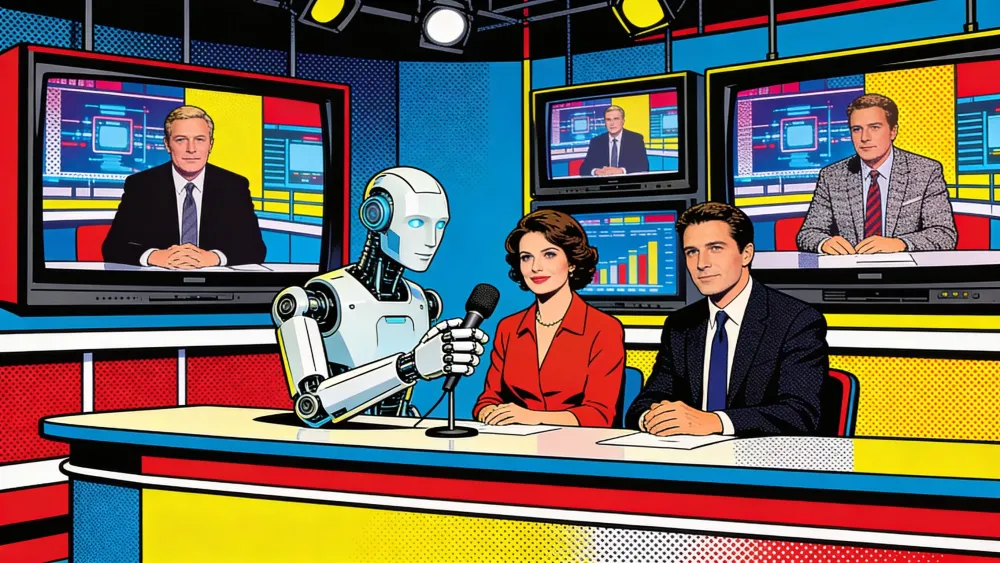
OpenAI said Thursday it has acquired TBPN, the daily livestreamed tech talk show that averages 70,000 viewers per episode and counts Mark Zuckerberg, Satya Nadella, and Sam Altman among its past guests. The company declined to disclose terms. In an internal memo, Fidji Simo, OpenAI's CEO of applications, wrote that "the standard communications playbook just doesn't apply to us" and called TBPN "one of the places where the conversation about AI and builders is actually happening day to day."
The 11-person show will report to Chris Lehane, OpenAI's chief global affairs officer, under the company's Strategy organization. TBPN's co-founders and co-hosts, John Coogan and Jordi Hays, along with president Dylan Abruscato, will also assist with OpenAI's corporate communications and marketing outside the broadcast.
Key Takeaways
- OpenAI acquired the 11-person TBPN talk show for undisclosed terms, housing it under Strategy chief Chris Lehane
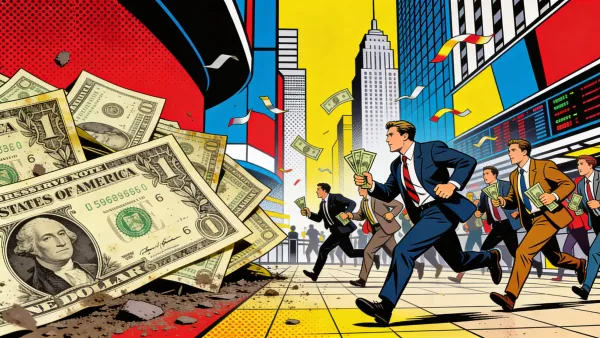
- TBPN will wind down its advertising business, walking away from a projected $30 million in 2026 revenue
- An 'Editorial Independence Covenant' promises the show will control its own programming and guest selection
- The deal comes days after OpenAI's $122 billion funding round as the company prepares for an expected IPO
AI-generated summary, reviewed by an editor. More on our AI guidelines.
A profitable startup walking away from its ad business
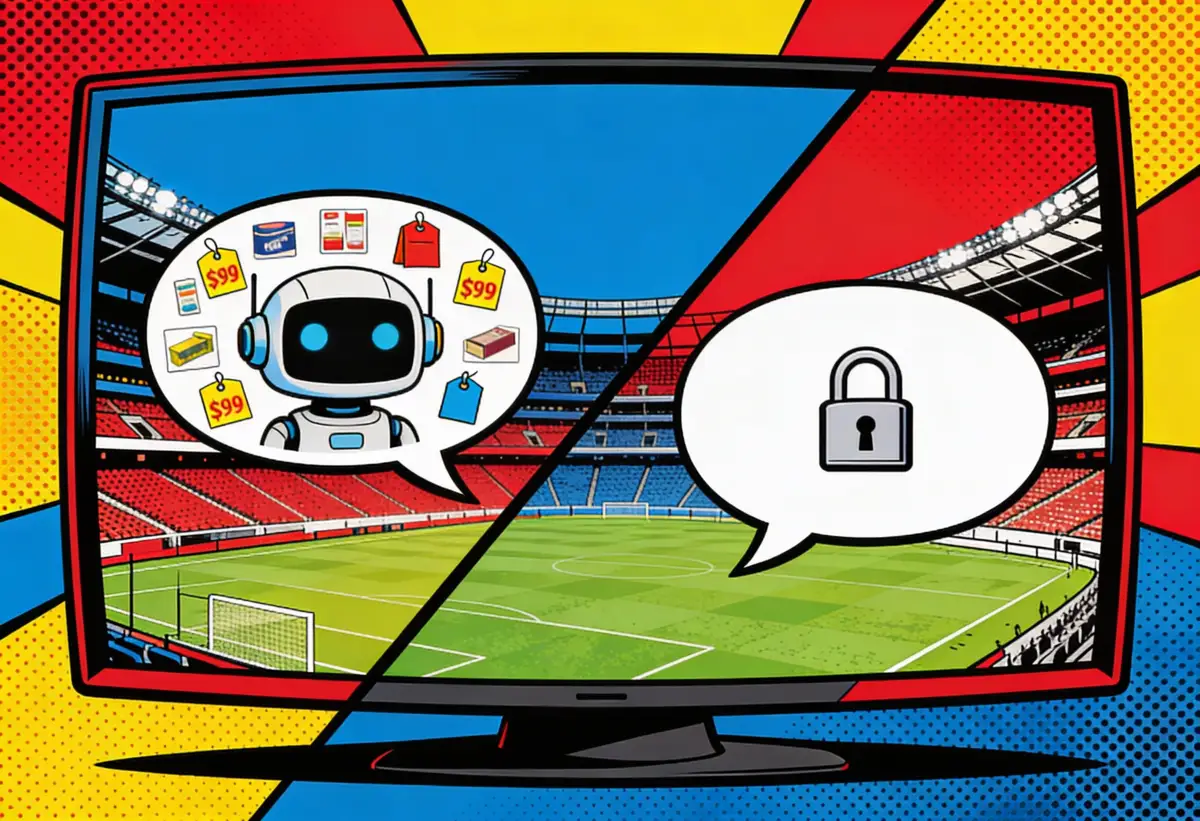
TBPN launched in October 2024 and began its weekday three-hour livestream in March 2025. The show generated roughly $5 million in advertising revenue last year and claimed it was on track for more than $30 million in 2026, according to the Wall Street Journal. It was profitable. Under OpenAI, TBPN will wind down that advertising business entirely, scrapping the sponsor-logo racing jackets and live-read commercials that had become part of the show's identity.
The show had built a roster of more than 25 advertisers, including Google Gemini, Figma, Ramp, and Shopify. Thirty million dollars in projected revenue, gone. That tells you where OpenAI sees the value. Not in ad dollars. In audience access.
Editorial independence, on paper
OpenAI and TBPN announced what they call an "Editorial Independence Covenant," a contractual framework meant to preserve the show's autonomy over programming, guest selection, and editorial decisions. Simo's memo emphasized the point: "That's foundational to their credibility, and it's something we're explicitly protecting as part of this agreement."
Get Implicator.ai in your inbox
Strategic AI news from San Francisco. No hype, no "AI will change everything" throat clearing. Just what moved, who won, and why it matters. Daily at 6am PST.
No spam. Unsubscribe anytime.
Corporate promises of editorial independence carry a mixed record. The Wall Street Journal noted the parallel to CoinDesk, whose staff alleged in 2024 that the crypto exchange owning the site ordered an article removed. Chris Lehane, writing on OpenAI's global affairs Substack, addressed the skepticism directly, arguing the arrangement "differs from historical precedents" and that OpenAI intends to support an independent platform rather than build an internal communications arm.
Whether OpenAI's rivals, the very executives TBPN would need as guests to maintain credibility, will still show up is another question.
The Altman orbit
The acquisition traces personal lines. Coogan called it "a full circle moment," noting that Altman funded his first company in 2013. Last year, Altman was "the very first lab lead to join the show," according to Coogan. Before TBPN, Coogan co-founded Soylent. Hays built Party Round, a startup that simplified fundraising.
TBPN earned its audience by being openly enthusiastic about tech at a moment when Silicon Valley had grown to resent mainstream media coverage. The New York Times called it "Silicon Valley's newest obsession." After OpenAI's for-profit transition in October, the first interview Nadella gave went not to CNBC or the Journal but to TBPN. Jim Cramer visited the show at the NYSE trading floor, screens flashing the TBPN logo behind him. "You guys are what I always hoped would occur," he told the hosts.
That access came with a trade-off. "The scrutiny that TBPN has gotten is that they're not necessarily asking the hard questions," Feed Me editor Emily Sundberg told the New Yorker. She added that the hosts function "as much entertainers and producers as they are journalists."
Timing and context
The deal dropped days after OpenAI closed a $122 billion funding round at an $852 billion valuation, and roughly a week after shutting down Sora, its video-generation app. Yahoo Finance called the TBPN purchase OpenAI's "biggest media play yet" as the company prepares for an expected IPO later this year.
OpenAI also faces a trial later this month in its lawsuit with Elon Musk, who co-founded the company before splitting and now owns X, the platform where much of TBPN's audience watches the show. Buying a media property that streams primarily on a rival's platform adds a layer of competitive tension to an already tangled relationship.
For you, the calculation is simpler. When a company valued at $852 billion acquires the show its own CEO appears on, the editorial independence question stops being theoretical. It becomes the only question that matters.
Frequently Asked Questions
What is TBPN?
Technology Business Programming Network is a daily three-hour livestreamed tech talk show hosted by John Coogan and Jordi Hays. It airs weekdays from 11 a.m. to 2 p.m. PT on X, YouTube, and podcast platforms. The show averages 70,000 viewers per episode and has featured guests including Sam Altman, Mark Zuckerberg, and Satya Nadella.
Why did OpenAI buy TBPN?
OpenAI's Fidji Simo wrote that 'the standard communications playbook just doesn't apply to us' and described TBPN as a place where conversations about AI are 'actually happening day to day.' The TBPN team will also help with OpenAI's communications and marketing outside the broadcast.
Will TBPN remain editorially independent?
OpenAI and TBPN established an 'Editorial Independence Covenant,' a contractual framework meant to preserve the show's autonomy over programming, guest selection, and editorial decisions. However, corporate promises of editorial independence have been tested before, as the CoinDesk situation demonstrated in 2024.
What happens to TBPN's advertising business?
TBPN will wind down its ad business entirely under OpenAI. The show generated roughly $5 million in ad revenue in 2025, had more than 25 advertisers including Google Gemini and Shopify, and claimed it was on track for $30 million in 2026 revenue.
How does this fit into OpenAI's broader strategy?
The acquisition is OpenAI's biggest media play to date, coming days after a $122 billion funding round at an $852 billion valuation. The deal arrives as OpenAI prepares for an expected IPO later this year and faces a trial in its lawsuit with Elon Musk.
AI-generated summary, reviewed by an editor. More on our AI guidelines.

Maria Garcia
Bilingual tech journalist slicing through AI noise at implicator.ai. Decodes digital culture with a ruthless Gen Z lens—fast, sharp, relentlessly curious. Bridges Silicon Valley's marble boardrooms, hunting who tech really serves.