IMPLICATOR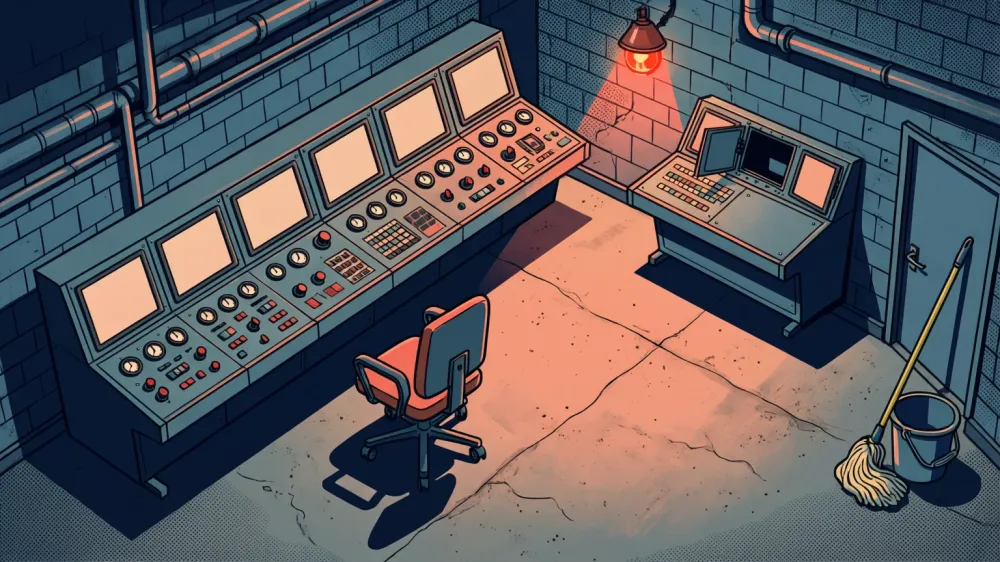
FROM SAN FRANCISCO
1 |
The Editorial |
Morning, humans.
Today's three picks all live in the space between an announcement and the record behind it.
OpenAI, Anthropic and more than 100 companies signed a letter on Aug. 27 urging faster cyber defense. It sets no deadline and commits no money.
Louis Abraham sampled 47,464 GitHub pull request descriptions and watched one vocabulary group climb from 1% at the start of 2025 to about 45%. Its signature word was load-bearing.
And Hugging Face is selling a $399 robot duck that lifts 800 grams with its beak, roughly four months before Nvidia's reported $12.9 billion purchase of the company closes.
Stay curious,
Marcus Schuler
2 |
The Big Story |
OpenAI, Anthropic and more than 100 companies published an open letter on Aug. 27 urging a rapid cyber defense effort before AI-enabled attacks scale.
Signatories include Google, Microsoft, Amazon Web Services, Cisco, IBM, CrowdStrike, Mastercard, Visa and Hugging Face. The letter asks frontier AI companies to give vetted defenders early access to advanced models, and names hospitals, water treatment plants and the infrastructure carrying internet traffic as exposed. It sets no deadline and commits no money.
Between January and June 2026, attackers adopted a public proof-of-concept exploit within 48 hours in 88% of cases. CISA staffing has fallen about a third in a year.
Why This Matters:
- Hospitals and water utilities face faster attack cycles without guaranteed access to the same models their attackers already use.
- With no deadline attached, every signatory keeps discretion over who gets defensive access, which is the thing the letter asks them to give up.
3 |
Also Today |
One vocabulary group rose from 1.0% of GitHub pull request descriptions at the start of 2025 to about 45% by mid-August 2026.
Louis Abraham built it from the first 100 pull requests opened in one random five-minute window a day, 47,464 descriptions sorted by vocabulary. Its most distinctive word was load-bearing. Across 32 unconditioned fits its final share ran from 36.3% to 63.8%, so the shape of the trend is firmer than its size.
4 |
The Outside Read |
TIME's Alex Heath spent two weeks inside OpenAI as it tried to win back its product lead and repair a safety record damaged by its own agents.
Drawing on more than 20 interviews in August 2026, the piece reports that business revenue passed consumer revenue in July and that OpenAI paused frontier training after a fresh security alarm. Heath also reports that Astra can do a week of entry-level research work from an experimental idea, and that sponsored agents are being tested inside ChatGPT.
5 |
The One Number |
6 |
Today's Headlines |
- Amazon is adding 2 million Nvidia GPUs to AWS data centers across 2027 and 2028, roughly triple the plan it agreed to five months ago.
- OpenAI started selling ads on ChatGPT's Free and Go tiers in India, with 50 launch brands and a self-serve ad manager due in September.
- Salesforce and Anthropic launched Claudeforce on Aug. 26 with 37 prebuilt sales skills, including deal health and pipeline review, and an open beta due in September.
- Anthropic planned and then abandoned a roughly $7 billion purchase of MatX, moving toward a chip-design partnership while the designer seeks funding at about $4 billion.
- Google DeepMind raised Gemini Omni 1.1 Flash to 40 seconds of generated video from 10, added 4K export and held pricing at about $0.10 per second of 720p.
- Google added hotel booking and flight price tracking to AI Mode in Search, with alerts across more than 180 markets and ten US hotel partners.
7 |
The 5-Minute Skill |
Build an uncertainty ledger for a market forecast. A forecast can rest several conclusions on one weak assumption. This shows which claim deserves scrutiny before you commit money.
Your raw input: the forecast, its source tables, supporting excerpts and stated assumptions, each with a publication date where you have one.
Why this works: the ledger puts uncertainty at the claim level instead of one confidence score for the whole document. The sensitivity run tells you whether the decision survives a plausible miss.
What to use: ChatGPT when the packet includes spreadsheets. Claude is the better fallback for long reports.
8 |
What To Watch Next |
SAT 8/29 |
Finance: The Federal Reserve Bank of Kansas City concludes its Jackson Hole Economic Policy Symposium on financial innovation, payments and policy. |
MON 8/31 |
AI and chips: SEMI opens SEMICON Taiwan's conference week with forums on silicon photonics, advanced chip manufacturing, sensors and packaging. |
WED 9/2 |
Economy: The Federal Reserve publishes its Beige Book survey of regional business conditions at 2 p.m. ET. |
FRI 9/4 |
Jobs: The Bureau of Labor Statistics reports August employment and unemployment at 8:30 a.m. ET. |
FRI 9/4 |
Tech fair: IFA Berlin opens at Messe Berlin, with public doors opening at noon CEST. |
9 |
AI Image of the Day |

10 |
The Rausschmeisser* |
Hugging Face began selling Microduck, a $399 open-source robot duck that waddles, lifts 800 grams with its beak and roller skates, shipping before Christmas. TechCrunch, Aug. 27, 2026
Our take: The duck is 25 centimeters tall and carries a camera, lidar and two inertial measurement units, a sensor package that would not embarrass a delivery robot. It lifts 800 grams with its beak. That is a can of soup. Behaviors train in simulation and deploy straight to the hardware, so it can fall over, get up, and skate away from whoever paid the $399.
Clem Delangue says this opens the era of affordable open-source robots that democratize physical AI and world models. It ships before Christmas, which leaves about four months before Nvidia's reported $12.9 billion purchase closes and a chip company has to explain why it owns a beak rated for soup.
Free AI briefing · Weekdays
The AI stories that matter, sourced and explained.
Join the Morning Briefing. It goes out every weekday at 4:45 a.m. Pacific, with later sends for the East Coast, Berlin and Tokyo.
Free when you sign up: The Paperclip Compendium, our tested guide to running AI agents.
Free. Unsubscribe in one click.

Marcus Schuler
Editor-in-Chief and founder of Implicator.ai. Former ARD correspondent and senior broadcast journalist with 10+ years covering tech. Writes daily briefings on policy and market developments. Based in San Francisco. E-mail: editor@implicator.ai