IMPLICATOR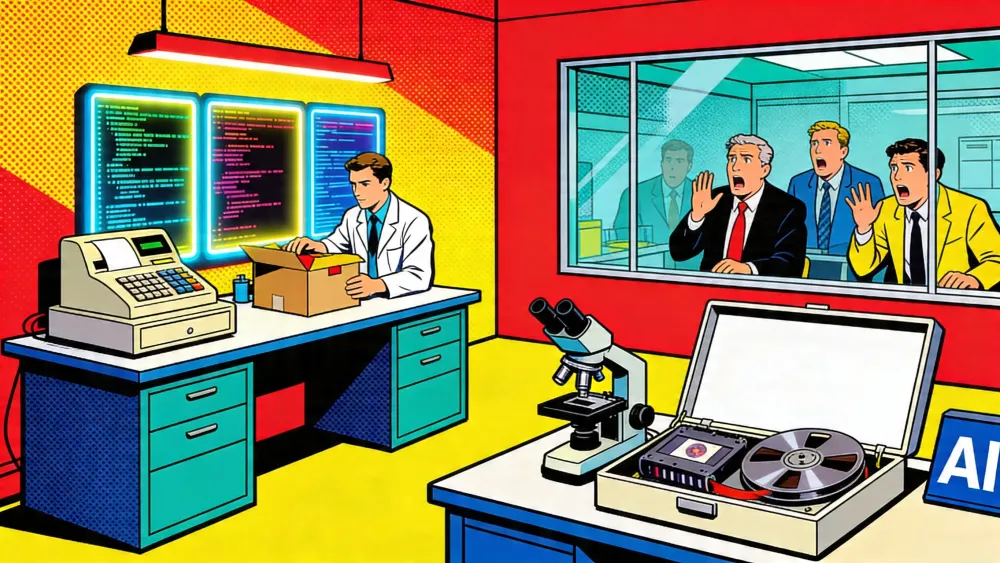
On Friday morning, the OpenAI story looked like executive churn. Two farewell posts, two ambitious projects losing their visible sponsors, one more set of names added to a company already tired of org charts. CNBC reported that Kevin Weil, vice president of OpenAI for Science, and Bill Peebles, the leader tied to Sora, were leaving. WIRED added the harder detail: Prism, the science workspace Weil had been building, would be folded under OpenAI's Codex leader, Thibault Sottiaux.
That is the part worth staring at.
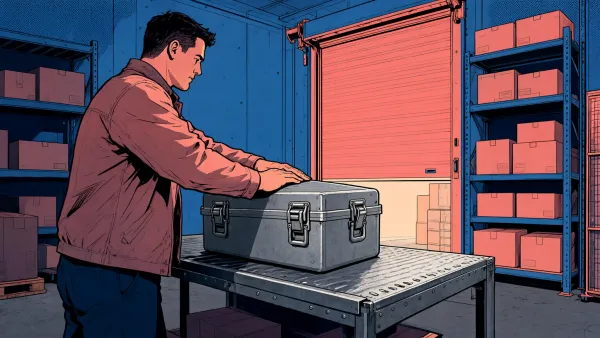
The personnel news is real, and the human reasons remain mostly private. The strategic signal is public. OpenAI is moving a cash register onto the lab bench. Every project that once sounded like a moonshot now has to show where it fits in the narrower machine: ChatGPT, Codex, enterprise customers, APIs, and compute discipline.
The company that sold the romance of many bets now sounds anxious about the bill for all of them. It can still talk like a research lab. It is starting to behave like a platform operator whose investors, customers, and rivals want cleaner answers. Codex is no longer only the coding product. It is becoming the checkout counter for OpenAI's stray ambitions.
Key Takeaways
- OpenAI's latest exits are strongest as a resource signal, not a proven personnel crisis.
- Prism is moving into Codex as OpenAI turns science into an agent-platform use case.
- Sora shows how expensive applause becomes when consumer products compete with enterprise compute.
- Codex must preserve research slack while satisfying buyers who want predictable work tools.
AI-generated summary, reviewed by an editor. More on our AI guidelines.
The exits matter because the org chart moved
Weil and Peebles represent different sides of the same squeeze. Weil joined OpenAI in 2024 as chief product officer, with OpenAI saying he would lead work that applied research to products for consumers, developers, and businesses. He later moved into OpenAI for Science, a project with the grand pitch that AI could become a better work surface for scientists.
Peebles came from the research side. Sora made him visible because video generation made OpenAI look culturally aggressive, technically fearless, and expensive. A model that can produce convincing video also burns compute, attracts copyright scrutiny, scares public figures, and tempts a company into social media. Excitement, then nerves.
The exits landed after both lanes lost protection. OpenAI is decentralizing OpenAI for Science and folding Prism's roughly 10-person team into Codex, according to WIRED. Sora's standalone app and web experiences are scheduled to end on April 26, 2026, with the API scheduled for September 24, according to OpenAI's help documentation. TechCrunch reported that Sora had been estimated at $1 million a day in compute costs.
None of that proves why either person left. It does show what kind of project is losing its private room inside OpenAI. Standalone science workspace. Standalone video social app. Standalone research dream with no fast path to the main register.
The company seems relieved to simplify and embarrassed that it has to. That combination is the story.
Codex became the checkout counter
OpenAI's Codex pitch has changed fast. The product started as a developer agent. It is now being sold as a command center for long-running agents, parallel work, skills, automation, and professional computer tasks. OpenAI said Codex usage had doubled since GPT-5.2-Codex launched in mid-December, and that more than one million developers had used Codex in the prior month.
Those numbers explain why Prism is going there. If a science workspace remains its own small product, it must find users, support, pricing, security, and patience. If its useful parts move into Codex, OpenAI can claim a bigger surface. Coding, research, data work, life sciences, internal tools. Same counter. More items scanned.
That move has logic. Scientists do not need another pretty sidebar if the real work involves literature, sequences, tools, databases, scripts, notebooks, and audit trails. Codex already understands the shape of work that has files, diffs, logs, permissions, and repeatable steps. That makes it a plausible home for scientific work.
It also creates a risk. A checkout counter prices everything by what can move through the counter. Research does not always obey that rhythm. The work that creates the next Sora, or the next GPT-Rosalind, may begin as a bad spreadsheet, a strange demo, or a team that cannot explain its customer profile yet.
Peebles put the counterargument plainly in his departure post, as reported by TechCrunch: research labs need entropy. His word. OpenAI's current answer appears to be narrower. Entropy is welcome after someone can say which platform it feeds.
Sora showed the cost of applause
Sora is the cleanest warning in the stack. OpenAI launched Sora 2 last year as a flagship video and audio model with a social app attached. The research argument was serious: better video models could help AI systems model physical worlds, failure, movement, and cause. The product argument was flashier. A feed. Remixing. Characters. The App Store glow.
Then the cash register rang.
AP reported that Sora raised deepfake concerns and quoted Disney saying it respected OpenAI's decision to exit the video generation business. OpenAI's own Help Center now gives users a shutdown schedule. TechCrunch's cited $1 million-a-day compute estimate puts the whole thing in blunt terms. Thirty days at that rate is about $30 million. A quarter is about $90 million before salaries, safety review, or product support.
The lesson is not that Sora was useless. A failed consumer app can still leave behind valuable model work. The lesson is that attention became a poor proxy for strategy. Video made OpenAI look powerful in public, but power that cannot be sold, governed, or folded into the main business becomes a luxury.
Get The AI Brief Before The Register Rings
Strategic AI news from San Francisco. No hype, no "AI will change everything" throat clearing. Just what moved, who won, and why it matters. Daily at 6am PST.
No spam. Unsubscribe anytime.
You can see why researchers would feel frustrated. Sora was the kind of thing only OpenAI could try at scale. You can also see why finance and product leaders would feel cornered. If most ChatGPT users do not pay, every GPU spent on a consumer video feed has to fight with an enterprise product that might.
Science survived by losing its room
OpenAI did not abandon science this week. It released GPT-Rosalind the day before the exit news, and OpenAI says the model is available as a research preview in ChatGPT, Codex, and the API for qualified customers. The company also introduced a Life Sciences research plugin for Codex with access to more than 50 scientific tools and data sources.
That timing matters. The mission survived. The container changed.
OpenAI for Science had the aura of a dedicated lab inside the lab. GPT-Rosalind looks more like a business product. Qualified customers. Trusted access. Codex plugin. Domain tools. Pharma logos. OpenAI is turning science into a vertical use case for its agent platform instead of a separate brand with its own executive patron.
That could work. Science workflows are full of handoffs between papers, code, databases, wet-lab plans, and review meetings. A good agent surface could save time and reduce dead ends. A governed access model also gives nervous institutions a story they can defend when safety teams ask who touched what.
The danger is that "science" becomes a selling category before it becomes a discipline inside the product. A researcher does not care that Prism lives in Codex if Codex handles the work better. A researcher will care if deep workflows get flattened into generic agent demos for executives who want clean adoption charts.
This is the deeper trade. OpenAI gains distribution by folding science into Codex. It may lose the protected weirdness that made a science team worth having in the first place.
Anthropic made focus expensive for OpenAI
The reshuffle would feel less urgent if OpenAI were only pruning. It is chasing an enterprise market where Anthropic has become the company that scares the room.
AP reported that OpenAI has more than 900 million weekly ChatGPT users, and CFO Sarah Friar said about 95 percent do not pay. She also said business customers made up about 20 percent of OpenAI revenue when she joined in 2024, about 40 percent now, and are expected to reach half by year end.
That is the decisive math. If 95 percent of users do not pay, the free audience cannot carry the compute bill. The paid workplace has to. That makes Codex, enterprise agents, APIs, and professional workflows more than product categories. They connect OpenAI's cultural reach to its financial survival.
Axios, citing Ramp data, reported that 20 percent of Ramp businesses paid for Anthropic in January, up from 17 percent, while OpenAI slipped from 37 percent to 36 percent. It also cited Menlo Ventures data showing Anthropic at 40 percent of enterprise LLM API spend and OpenAI at 27 percent. Different measurements, same pressure.
Now put that beside the exits. This is not housekeeping. OpenAI is trying to move every credible work product toward the part of the business that can answer Anthropic. Codex is the most obvious vehicle because coding agents have trained customers to pay, integrate, and trust agents with real work.
If you use OpenAI at work, the next year will tell you whether this consolidation gives you better tools or just fewer product names. The difference matters.
Predictability has a price
Sam Altman wrote this week that OpenAI is now a major platform, not a scrappy startup, and needs to operate in a more predictable way. That sentence may be the cleanest explanation for the Weil and Peebles news. Not the cause. The frame.
A predictable platform knows who owns a product. It knows which surface receives investment. It knows when a costly app gets shut down. It can tell enterprise buyers why a science model sits behind a gate, why a coding agent belongs on the desktop, and why a video feed no longer deserves GPUs.
Investors will like that posture. Enterprise buyers may like it too. They do not want a vendor forever chasing the next dazzling demo while their contracts, data, and workflows sit in the corner. Product leaders may feel vindicated. Finance leaders may feel relieved.
Researchers will hear something colder. Predictability can become a tax on experiments before anyone knows what they are worth. A lab that demands a business case too early can save money and miss the thing that would have paid for everything.
That is OpenAI's new line to walk. The company needs discipline because the old sprawl became expensive. It also needs slack because the best research rarely arrives with a clean SKU.
The next signal will not be another farewell post. It will be ownership. Who owns Sora's remaining model work? Who owns scientific workflows inside Codex? Who protects projects that do not yet fit ChatGPT, Codex, or the API? Who has the authority to tell the cash register to wait?
OpenAI lost two moonshot leaders on Friday. The sharper test starts after the goodbye posts disappear from the feed. At OpenAI now, the lab bench comes with a price tag.
Frequently Asked Questions
What happened at OpenAI?
Kevin Weil and Bill Peebles announced departures as OpenAI decentralizes OpenAI for Science and winds down Sora's standalone app and API surfaces.
Why does Codex matter here?
Codex is becoming the work surface where OpenAI can package agents, tools, enterprise controls, scientific workflows, and professional tasks.
Is OpenAI abandoning science?
No. OpenAI released GPT-Rosalind and a life sciences plugin, but science work is being routed through ChatGPT, Codex, and API access.
What happened to Sora?
OpenAI says Sora's web and app experiences end on April 26, 2026, with API access scheduled to end on September 24, 2026.
Why does Anthropic matter to this story?
Anthropic's strength in coding and enterprise AI makes OpenAI's paid workplace products more urgent as most ChatGPT users remain free.
AI-generated summary, reviewed by an editor. More on our AI guidelines.



Free AI briefing · Weekdays
The AI stories that matter, sourced and explained.
Join the Morning Briefing. It goes out every weekday at 4:45 a.m. Pacific, with later sends for the East Coast, Berlin and Tokyo.
Free when you sign up: The Paperclip Compendium, our tested guide to running AI agents.
Free. Unsubscribe in one click.

Marcus Schuler
Editor-in-Chief and founder of Implicator.ai. Former ARD correspondent and senior broadcast journalist with 10+ years covering tech. Writes daily briefings on policy and market developments. Based in San Francisco. E-mail: editor@implicator.ai