IMPLICATOR
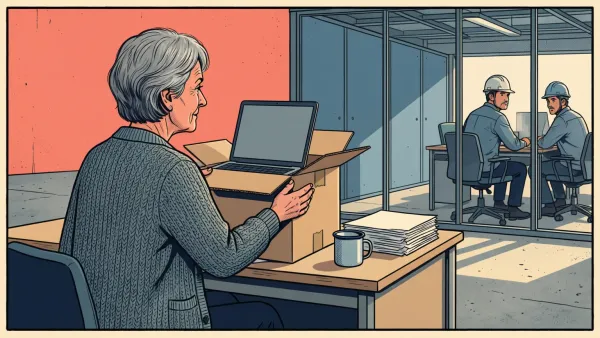
The Justice Department said Tuesday, August 4, 2026, that OpenAI agreed to a $3.2 million settlement over allegations that the company and its Statsig subsidiary discriminated against U.S. workers while recruiting for fewer than 10 jobs tied to permanent-residency sponsorship. Federal investigators alleged that the companies kept those openings off OpenAI's public careers site and used application methods that differed from those for other jobs. The case centers on PERM, the federal process employers use when seeking to sponsor workers for permanent residence.
DOJ alleged that OpenAI normally advertised jobs on its external website but did not post the PERM positions there. Applicants for those roles had to mail paper applications even as the company accepted electronic applications for other openings. Investigators also cited radio advertisements aired late at night as an effort to discourage U.S. workers from applying.
What Changed
- The Justice Department said on Tuesday, August 4, 2026 that OpenAI and its Statsig subsidiary agreed to a $3.2 million settlement over allegations they discriminated against U.S. workers during green-card sponsorship recruiting.
- OpenAI will pay $1.2 million in civil penalties and establish a $2 million back-pay fund. Fewer than 10 PERM positions were at issue.
- Investigators alleged the PERM jobs were kept off OpenAI's public careers site, required mailed paper applications, and were advertised on the radio late at night.
- OpenAI must post PERM openings publicly, accept electronic applications, retrain staff and submit to departmental monitoring. The company disputes the findings and admits no liability.
AI-generated summary, reviewed by an editor. More on our AI guidelines.
Under the agreement, OpenAI will pay $1.2 million in civil penalties to the United States and establish a $2 million back-pay fund for workers the department identifies as victims. The size of the resolution, DOJ said, accounted for the harm caused when applicants are excluded from lucrative technology jobs.
PERM permits an employer to sponsor a worker for permanent resident status after good-faith recruitment shows no qualified U.S. worker is available. The Immigration and Nationality Act bars citizenship-status discrimination during that process. OpenAI must now place PERM openings on its public careers website, accept electronic applications, revise employment policies and train staff on the law. The company will also submit to departmental monitoring and reporting. Those changes apply to future PERM recruitment.
The Epoch Times wrote that the agreement runs for three years and requires unique identifiers for job postings and a good-faith review of U.S. applicants. Its account states that the settlement resolves allegations, not a court finding that OpenAI violated the law. According to the same account, OpenAI denies the claims, and its payment and hiring changes do not constitute an admission of liability.
Get Implicator.ai in your inbox
Strategic AI news from San Francisco. No hype, no "AI will change everything" throat clearing. Just what moved, who won, and why it matters. Daily at 6am PST.
No spam. Unsubscribe anytime.
This is the 13th settlement since DOJ relaunched its Protecting U.S. Workers Initiative in 2025. Spectrum News reported that it is the largest of those resolutions. By then, the department had reached agreements with 11 companies during 2026; most were technology businesses assessed penalties in the tens of thousands of dollars. The initiative began in 2017 during President Donald Trump's first term and was deprioritized during the Biden administration, according to department records cited in the same report.
Know someone who'd find this useful? ✉️ Email it to a friend in one click, or they can subscribe free here.
Spectrum News cited the 2025 Silicon Valley Index for its finding that foreign-born workers held 65% of technology jobs in the San Francisco Bay Area. The same report noted that Statsig founder Vijaye Raji, a former Meta and Microsoft executive, was born and educated in India and entered the United States on an H-1B visa. Statsig had not responded to the outlet before publication.
Assistant Attorney General Harmeet K. Dhillon stated: "This substantial settlement ensures that OpenAI redresses harm and changes its recruitment practices so that U.S. workers receive a fair opportunity for highly sought-after technology positions." OpenAI described its mission and U.S. competitiveness as dependent on talent from inside and outside the country. A company spokesperson responded, "While we disagree with the DOJ's findings, we reached this agreement to resolve the matter and move forward with our PERM program, which is critical for employees and candidates requiring immigration support."
Frequently Asked Questions
How much is OpenAI paying, and to whom?
OpenAI will pay $1.2 million in civil penalties to the United States and establish a $2 million back-pay fund for workers the Justice Department identifies as victims, for a combined $3.2 million.
What is the PERM process?
PERM permits an employer to sponsor a worker for permanent resident status after good-faith recruitment shows no qualified U.S. worker is available. The Immigration and Nationality Act bars citizenship-status discrimination during that process.
What conduct did the Justice Department allege?
DOJ alleged OpenAI did not post PERM positions on its external website even though it normally advertised jobs there, required mailed paper applications for those roles while accepting electronic applications for others, and aired radio advertisements late at night.
Has OpenAI admitted wrongdoing?
No. The Epoch Times wrote that the settlement resolves allegations rather than establishing a court finding, that OpenAI denies the claims, and that its payment and hiring changes do not constitute an admission of liability. A company spokesperson said OpenAI disagrees with the DOJ's findings.
How does this fit the Justice Department's broader enforcement?
It is the 13th settlement since DOJ relaunched its Protecting U.S. Workers Initiative in 2025. Spectrum News reported it is the largest of those resolutions, and that the department reached agreements with 11 companies during 2026, most of them technology businesses penalized in the tens of thousands of dollars.
AI-generated summary, reviewed by an editor. More on our AI guidelines.



Marcus Schuler
Editor-in-Chief and founder of Implicator.ai. Former ARD correspondent and senior broadcast journalist with 10+ years covering tech. Writes daily briefings on policy and market developments. Based in San Francisco. E-mail: editor@implicator.ai