The mockup shows a conversation about travel to Santa Fe. The user asks for recommendations. ChatGPT responds with suggestions about the city's history, the art scene, the high-desert light. And then, below the answer, in a box labeled "Sponsored": a boutique hotel called Pueblo & Pine, complete with images of adobe walls and desert vistas. A booking link. The chatbot you trusted with your vacation planning is now selling you a room.
Sam Altman once called advertising "a last resort." On Friday, OpenAI reached for it.
The company announced it will begin testing ads inside ChatGPT in the coming weeks, starting with US users on the free tier and the new $8-a-month Go subscription. Ads will appear in labeled boxes below the chatbot's responses. The company promises they won't influence what ChatGPT says. Personalization will be on by default.
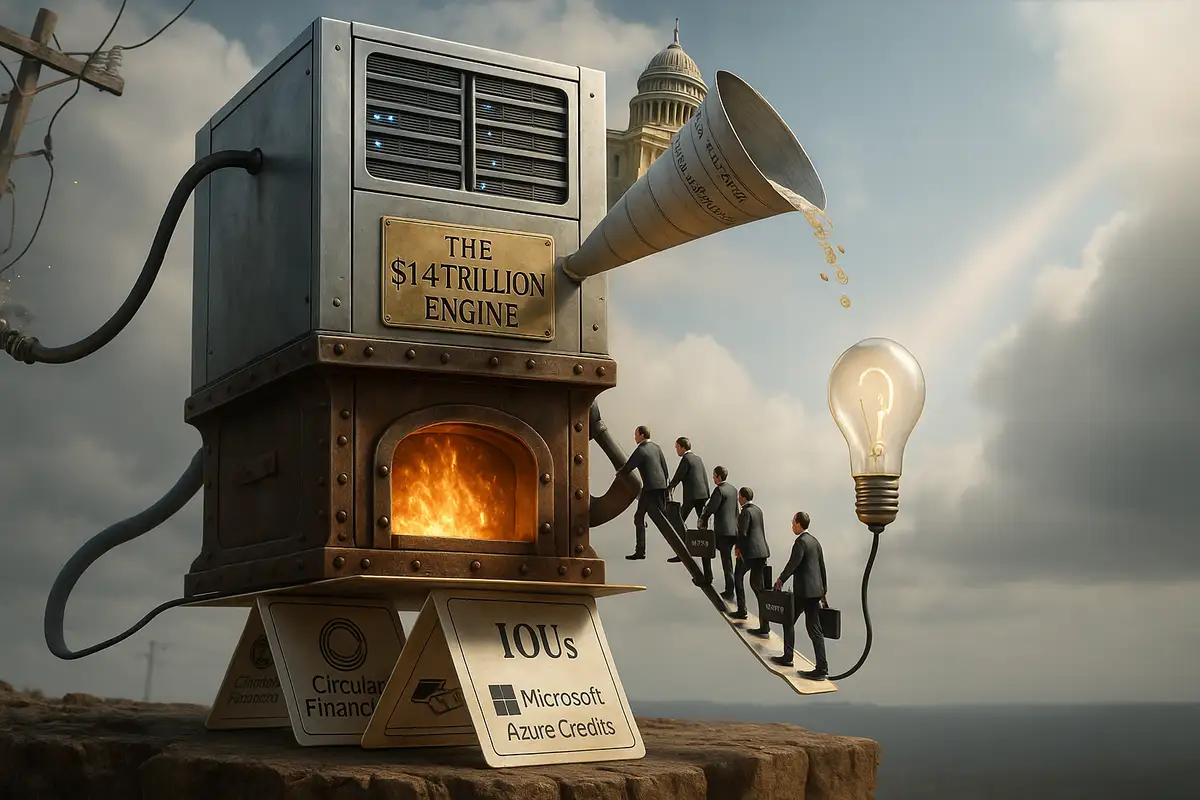
If you've watched a consumer platform grow up, you know this script. First the product is free and delightful. Then it's free and pretty good with some minor annoyances. Then it's free and you're the product. OpenAI swears ChatGPT won't follow that trajectory. But the company has committed to spending $1.4 trillion on data centers and chips. It burned through roughly $8 billion in the first half of 2025 alone. And only 5% of its 800 million weekly users pay anything at all.
The math doesn't work without ads. OpenAI knows it. Wall Street knows it. Now you know it too.
The Breakdown
• OpenAI will test ads on free and $8/month Go tiers in the US, while Plus ($20) and Pro ($200) subscribers stay ad-free
• The company burned $8 billion in H1 2025 and projects burning $115 billion by 2030, with only 5% of 800M users paying
• Ads will be "matched to conversation topics," using the intimate data ChatGPT already collects about users
• New hires Fidji Simo (ex-Meta ads) and Denise Dresser (ex-Slack) signal advertising is now central to strategy
The Fidji Simo playbook
OpenAI didn't hire Fidji Simo to run a nonprofit. Before joining as CEO of applications, Simo spent years at Meta building the Facebook app's advertising machine, the one that learned to wedge sponsored posts between photos of your niece and your college roommate's vacation. She then ran Instacart, where every inch of screen real estate became a potential revenue source, where the search results you see depend partly on which brands paid for placement. When OpenAI brought her aboard in 2025, they weren't hiring for restraint. You don't recruit someone with that résumé to optimize user trust.
"Our enterprise and subscription businesses are already strong," Simo wrote in her blog post announcing the ad trial. "We believe in having a diverse revenue model where ads can play a part in making intelligence more accessible to everyone."
That framing is doing heavy work. Accessible. Diverse. The language of democratization wrapped around the reality of monetization. Strip away the corporate poetry and you're left with a company that built an organism requiring more calories than foraging can provide. It had to start farming the users.
The company poached Slack CEO Denise Dresser in December to serve as chief revenue officer. Between Simo and Dresser, OpenAI now has two executives whose entire careers have been built on extracting revenue from users. Neither was hired for their AI research credentials.
Stay ahead of the AI monetization curve
Strategic AI news from San Francisco. No hype, no "AI will change everything" throat clearing. Just what moved, who won, and why it matters. Daily at 6am PST.
No spam. Unsubscribe anytime.
The trust problem OpenAI can't solve with promises
Here's what OpenAI wants you to believe: ads will appear in a separate box, walled off from the answers. Advertisers won't get to shape what ChatGPT tells you. Your data stays in-house, never sold. Your conversations remain private.
But here's the thing OpenAI won't mention: that chatbot knows you better than Google ever could. Stop and remember what you've actually typed into it. The 2 AM anxiety spirals about your health. The questions about whether your relationship is working. What you can and can't eat. The random hobbies you mentioned once that it somehow still remembers three months later. ChatGPT pulls from all of it, stitching your past conversations into its answers. That's the product working as designed.
Now OpenAI says it will "match conversation topics to relevant advertisements." Some personalization data may be used to serve ads, though users can opt out. The company won't share raw conversations with advertisers, but it will give them aggregate performance metrics. If you're looking for the loophole, that's where it lives. Aggregate data has a funny way of becoming more granular over time.
Altman himself warned about this. In interviews over the past two years, he repeatedly expressed concern that users wouldn't trust a chatbot they suspected was selling products. He framed advertising as something OpenAI would only pursue reluctantly, if at all. Then in November, speaking on a podcast, he acknowledged the company would "try ads at some point." The shift from philosophical objection to grudging acceptance took about eighteen months. The shift from grudging acceptance to active deployment took two more.
The billion-dollar gap between revenue and reality
OpenAI generated roughly $20 billion in annualized revenue run rate last year. That sounds impressive until you remember the company has raised $64 billion from investors and committed to $1.4 trillion in infrastructure spending. The Financial Times reported losses of $8 billion in just the first six months of 2025. At that burn rate, even massive subscription growth wouldn't close the gap.
There's a specific kind of corporate anxiety that settles in when the burn rate slide appears in the board deck. The room goes quiet. Everyone does the math. And the math says: advertising is how you monetize 760 million people who use your product but refuse to pay for it. Meta built a trillion-dollar company on that insight. Google built another. OpenAI is now betting it can do the same, except with a twist: instead of showing you ads based on what you search for, it will show you ads based on what you confess.
The company told investors in September it could burn through $115 billion in cash by 2030. That's not a projection you make if you expect subscriptions to cover the bills. It's a projection you make when you're planning to build the next great advertising machine.
Daily at 6am PST
Don't miss tomorrow's analysis
No breathless headlines. No "everything is changing" filler. Just who moved, what broke, and why it matters.
Free. No spam. Unsubscribe anytime.
Why the guardrails won't hold
OpenAI's blog post comes loaded with restrictions. No ads on sensitive topics like health, mental health, or politics. No ads shown to users under 18. No advertiser influence on ChatGPT's responses. Users can dismiss ads, provide feedback, and clear their data at any time.
These guardrails sound reassuring. They also sound temporary.
History offers a clear pattern. Meta swore WhatsApp would stay ad-free. We know how that ended. Google once drew a bright line between organic results and paid placements. The line got blurry, then it disappeared. Twitter said user data would never be for sale. Then Elon needed to make payroll. Each company found reasons to walk back those commitments once revenue pressure mounted.
OpenAI faces the same forces, and you can feel the defensiveness in Simo's blog post, the pre-emptive reassurances stacked like sandbags against the flood of criticism she knows is coming. The company's board has fiduciary duties to investors. Its executives have equity stakes tied to growth. Its competitors at Google and Meta are already experimenting with AI advertising. The stated principles matter less than the incentive structures surrounding them.
And the incentive structure is clear: OpenAI needs to turn 800 million weekly users into a revenue engine capable of funding the most expensive technology project in human history. Ads are the obvious lever. The only question is how hard the company will pull it.
What ChatGPT becomes now
ChatGPT launched as something genuinely new. A conversational interface that felt like talking to a thoughtful colleague. An assistant that could help you draft emails, debug code, plan vacations, work through difficult decisions. For two years, the product got better without getting worse. Users trusted it with information they wouldn't share with their therapists.
That era ended Friday. Not because the ads themselves will ruin ChatGPT, though they might. But because the announcement signals what OpenAI has become: a consumer platform with 800 million users and a trillion-dollar infrastructure habit to feed.
Simo promised the company prioritizes "user trust and user experience over revenue." OpenAI has already hinted at "interactive ad experiences" where users can ask ChatGPT questions about products to help make purchase decisions. The line between assistant and salesman blurs a little more with each iteration.
Users who want an ad-free experience can pay for Plus at $20 a month or Pro at $200. That's the deal now: privacy is a premium feature. If you're not paying, you're not the customer. You're the inventory.
Frequently Asked Questions
Q: Which ChatGPT users will see ads?
A: Ads will appear for logged-in US users on the free tier and the new $8/month Go subscription. Users on Plus ($20/month), Pro ($200/month), and Enterprise plans won't see ads. OpenAI says users under 18 won't see ads either.
Q: Will ads change what ChatGPT tells me?
A: OpenAI claims ads won't influence ChatGPT's responses and will appear in separate labeled boxes below answers. However, ads will be "matched to conversation topics," meaning ChatGPT analyzes your chat to determine relevant ads.
Q: What data does OpenAI share with advertisers?
A: OpenAI says it won't sell user data or share raw conversations with advertisers. Instead, advertisers receive aggregate performance metrics like impression counts and click-through rates. Users can opt out of personalization and clear ad-related data.
Q: Why is OpenAI adding ads now?
A: OpenAI burned $8 billion in H1 2025 and projects $115 billion in cash burn by 2030. With 800 million weekly users but only 5% paying, ads offer a path to monetize the free user base. The company has committed $1.4 trillion to infrastructure.
Q: What is ChatGPT Go?
A: ChatGPT Go is a new $8/month subscription tier launching in the US. It offers more messages and features than the free tier but less than Plus. Go users will see ads, unlike Plus and Pro subscribers.