IMPLICATOR
Good Morning from San Francisco,
OpenAI's AI just learned to think in pictures.
Their new o3 model doesn't just stare at your sketches – it understands them, tweaks them, and uses them to solve problems. Its smaller sibling, o4-mini, offers similar smarts for less cash.
The real kicker? These models can now use ChatGPT's full toolkit, from web browsing to coding. They're not just armchair philosophers – they get things done.
OpenAI's timing is impeccable. GPT-4.1 dropped two days ago, and now this. Sam Altman's been teasing "bigger things." At this rate, they'll teach AI to juggle by Saturday. 🎪
Stay curious,
Marcus Schuler
OpenAI's New AI Models Can Think With Images
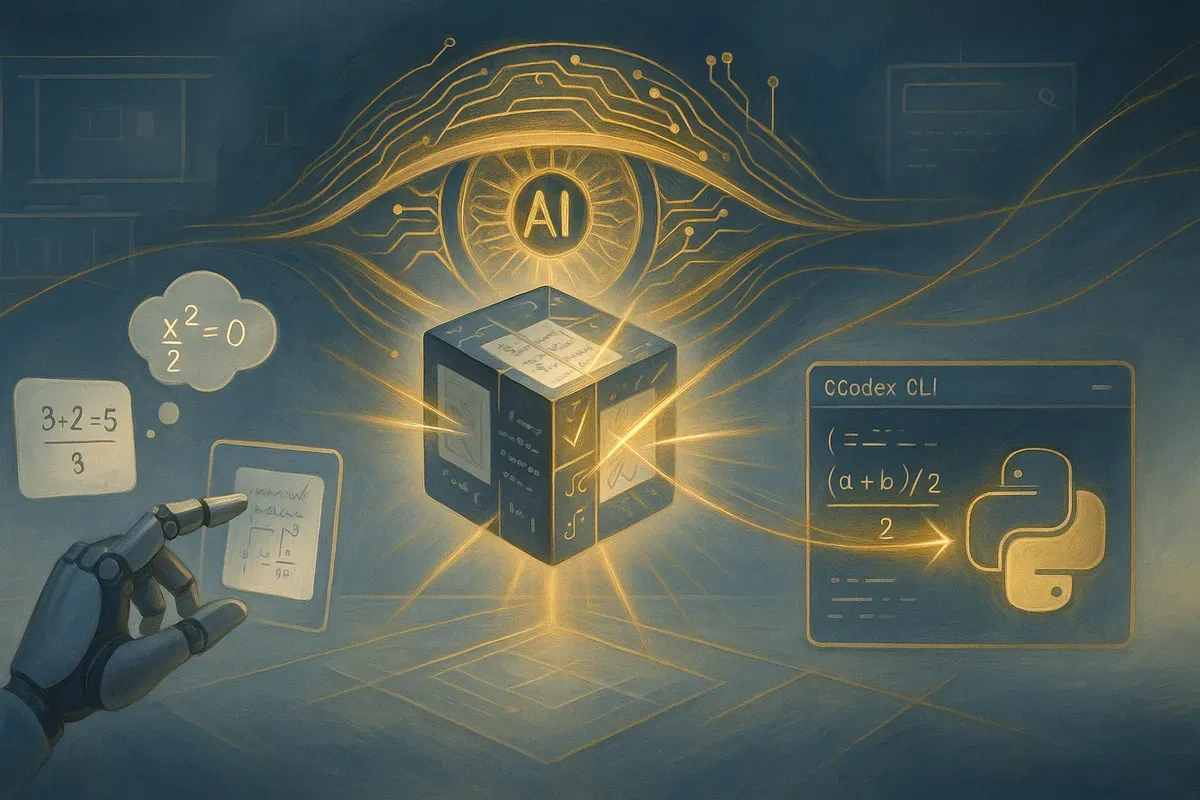
OpenAI just dropped two new AI models that can think in pictures. The star of the show, o3, takes OpenAI's reasoning capabilities to new heights, while o4-mini offers similar smarts at a lower cost.
These models don't just look at images – they think with them. Upload a whiteboard sketch or a blurry diagram, and they'll get it. More impressively, they can tweak and adjust images as part of their problem-solving process.
For the first time, OpenAI's reasoning models can use every tool in ChatGPT's arsenal. Web browsing, coding, image generation – it's all fair game. This combo lets them tackle complex problems by breaking them into steps and actually doing something about them.
OpenAI also launched Codex CLI, a new coding sidekick that runs in your terminal. It works with both new models out of the box, with GPT-4.1 support coming soon. To sweeten the deal, OpenAI's handing out $1 million in API credits to developers who put it to good use.
The timing raises eyebrows. Just two days ago, OpenAI released GPT-4.1. Now this. CEO Sam Altman recently changed course on the company's roadmap, hinting at even bigger things ahead with GPT-5.
Why this matters:
- OpenAI's new models blur the line between thinking and doing – they don't just give advice, they take action
- The race for AI supremacy just got more interesting: While others focus on chat, OpenAI's betting on AI that can actually get things done
Read on, my dear:
- Implicator.ai: Latest AI Models Can "Think With Images," Cut Costs
- OpenAi: Introducing OpenAI o3 and o4-mini
AI Photo of the Day

Prompt:
Portrait, futuristic Woman, blacklight neon Zentangle Skin Texture, Dark Background
Nvidia's China Crisis Deepens: $5.5B Hit, Congress Investigates
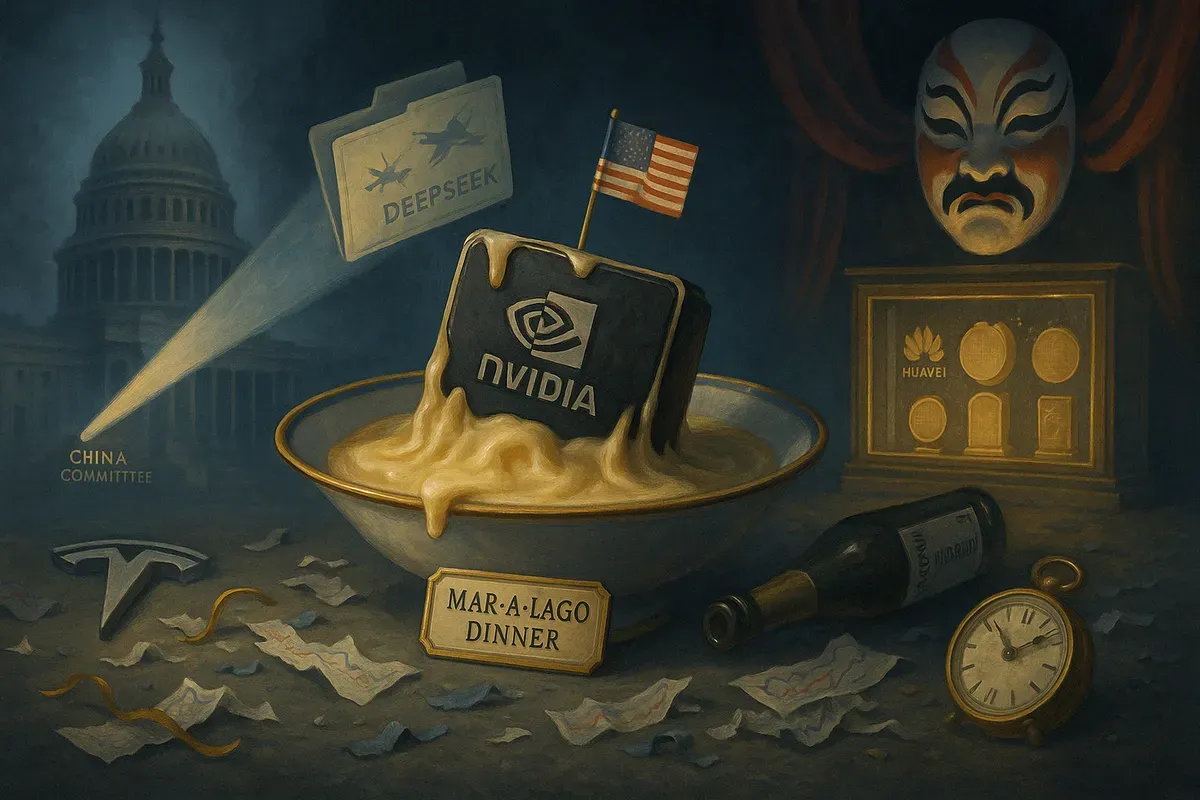
Nvidia shares dropped 7% Wednesday as new China restrictions and a congressional probe rattled investors. The chipmaker faces a $5.5 billion charge from tighter controls on its H20 chip, designed specifically for the Chinese market.
Meanwhile CEO Jensen Huang's Beijing visit raises eyebrows. Days after the U.S. restricted chip sales, he showed up talking about "continued cooperation."
The timing couldn't be worse. Two months ago, Chinese AI firm DeepSeek shocked the industry by building a competitive AI system for just $6 million. That news alone wiped $600 billion from Nvidia's value in a single day.
Now Congress wants answers. The House Select Committee on China opened its first-ever investigation into Nvidia, demanding details about chip sales across Asia. Officials suspect DeepSeek dodged export rules by buying 60,000 Nvidia chips through Singapore middlemen.
The probe follows unsettling revelations about DeepSeek's military ties. Reports link its researchers to Chinese weapons labs and nuclear facilities. Commerce Secretary Howard Lutnick didn't mince words: "We've had enough of people supporting those who seek to destroy our way of life."
The pain spread across tech. AMD warned of an $800 million hit from similar restrictions. Equipment makers ASML, Applied Materials and Lam Research fell about 5%. Meta, Apple, Amazon and Microsoft each dropped around 3%.
Why this matters:
- China found a way to build cutting-edge AI on the cheap, upending U.S. strategy to maintain tech dominance through export controls
- Silicon Valley must now choose between Chinese profits and national security as Washington tightens the screws
Read on, my dear:
AI & Tech News
Speed Dating: Wikipedia Meets AI Developers on Kaggle
Wikipedia wants AI companies to stop hoarding its data like squirrels before winter. Instead, it's dishing out a pre-packed lunch. The online encyclopedia teamed up with Google's Kaggle to serve its content on a silver platter – complete with article summaries, descriptions, and neatly organized data in English and French.
Ex-Trump Official Chris Krebs Quits Job to Fight Federal Probe
Trump targeted his former cybersecurity chief Chris Krebs with a federal investigation, prompting Krebs to resign from security firm SentinelOne and vow to fight back. In classic Trump fashion, the president called Krebs a "wiseguy" for contradicting his claims about election fraud.
Smashing News App Shuts Down After Growth Falls Short
Smashing, a news aggregation app created by GoodReads founder Otis Chandler, is closing its doors after failing to grow fast enough. The AI-powered app burned through $3.4 million in venture funding while trying to become the one-stop shop for news, blogs, and social posts.
AI Startups Devour 70% of North American VC Money, Nobody's Surprised
North American venture capitalists are showing all the restraint of a kid in a candy store, pumping 70% of their investments into AI and machine learning startups this quarter. Globally, AI companies gobbled up $73.1 billion - with OpenAI taking the lion's share at $40 billion, leaving other startups to fight over the remaining crumbs like pigeons at a bread factory.
Perplexity Makes Bold Move for Your Phone's Home Screen
Perplexity AI is mounting an ambitious challenge to tech giants by negotiating prime placement for its AI assistant on Samsung phones, while already securing a deal with Motorola to be announced April 24. The startup's aggressive push into mobile comes as it eyes a new funding round that could double its valuation to $18 billion - though Samsung's existing ties to Google's AI might make things awkward at the dinner table.
Grok Gets Memory Upgrade, Still Playing Catch-Up
Grok, Elon Musk's AI chatbot, now remembers your past conversations - a feature ChatGPT and Gemini have offered for months. The upgrade lets users manage their chat history through the settings menu, though Europeans will have to wait their turn since the feature isn't available in the EU or UK.
Google Makes Gemini's Camera and Screen Sharing Free
Google is dropping the paywall for Gemini's camera and screen sharing features on Android, letting users show Gemini what they're looking at through their screen or camera lens. The rollout starts in the coming weeks, following last week's debut for Advanced subscribers - though if you're in Europe, you'll still need to wait while Google sorts out the paperwork.
Zuckerberg to Court: We Bought Instagram for Value, Not Fear
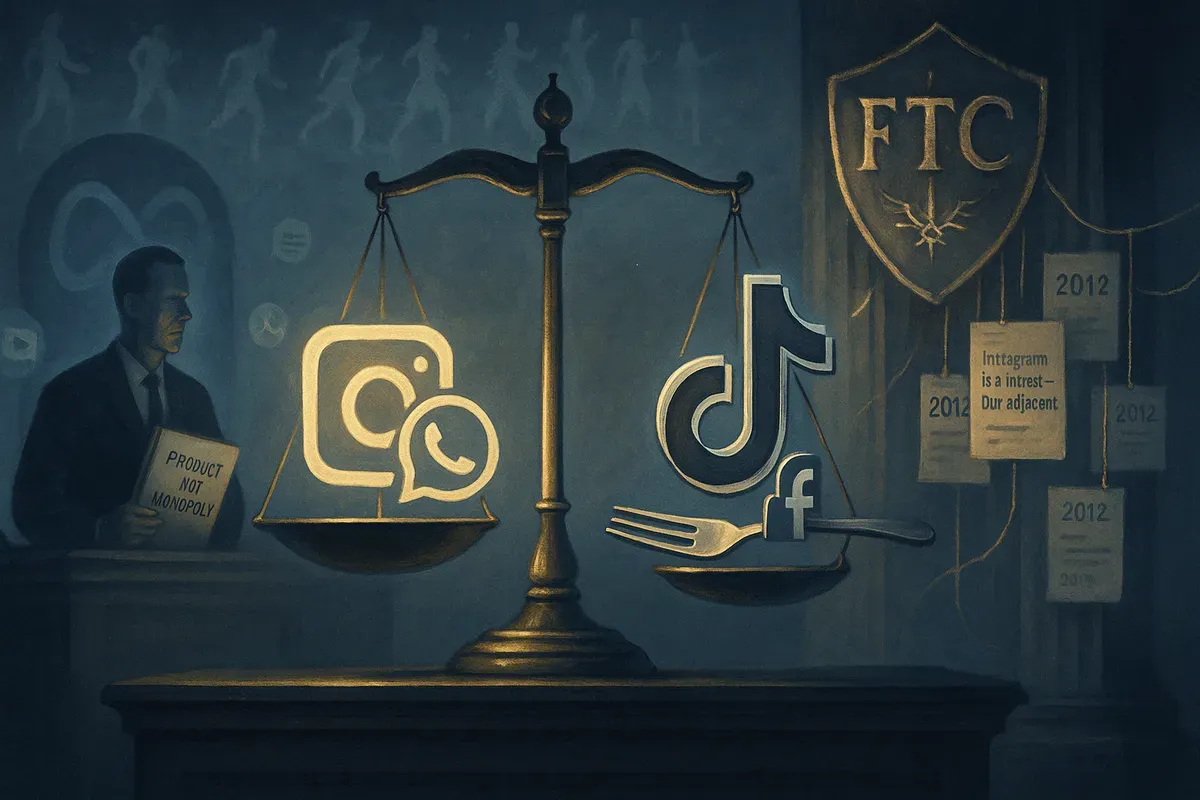
Mark Zuckerberg faced tough questions in court Wednesday about why Meta bought Instagram and WhatsApp. His answer? To build better products, not kill competitors.
On his third day of testimony, Meta's CEO pushed back against FTC claims that the company crushed rivals to build a social media monopoly. He pointed to TikTok and YouTube as proof of fierce competition. People spend more time watching YouTube than Facebook and Instagram combined, he told the court.
Internal emails from 2012 show Zuckerberg more worried about Path, a failed social network, than Instagram. He saw Instagram as "adjacent" to Facebook's core mission. When he met WhatsApp's founder Jan Koum in 2012, Zuckerberg found him "disappointingly unambitious."
The stakes are huge. If the FTC wins, Meta might have to sell Instagram and WhatsApp. The company bought these apps over a decade ago for billions, transforming them into social media giants.
Why this matters:
- The trial could force the biggest breakup in tech history - right when social media faces new threats from AI
- Meta's defense rests on a simple claim: You can't be a monopoly when TikTok eats your lunch
Read on, my dear:
🎬 AI Video in 2025: Best Free and Paid Tools
A new wave of AI video tools hits the market, with free options now matching premium quality. The gap between free and paid services keeps shrinking.
🎁 Free Tools:
- ✨ Kling 2.0 matches premium services and adds "Elements" for blending reference images
- 🎯 Hailuo AI transforms still images into smooth, stable videos
- 💻 Wan 2.1 leads open-source options - run it locally or get free credits
💵 Paid Services:
- 🎨 Krea bundles top models with real-time editing tools
- 🎥 Runway Gen-4 targets pros with advanced features
- 🌟 Veo 2 makes the most lifelike videos at 50 cents per second, with limited free trials on Google AI Studio
The market splits between casual tools and pro options, but free services like Kling 2.0 now rival industry leaders. Quality keeps improving while costs drop.
🚀 AI Profiles: The Companies Defining Tomorrow

Perplexity AI: Reimagining How We Search
Perplexity AI is upending traditional search with its AI-powered "answer engine" that delivers direct, cited responses instead of endless links. Founded in 2022 by a dream team of AI experts from OpenAI, Meta, and Databricks, the California startup has skyrocketed to unicorn status with backing from tech's biggest names.
THE FOUNDERS 👨💻
- Founded August 2022 by Aravind Srinivas (ex-OpenAI), Denis Yarats (ex-Meta AI), Johnny Ho (ex-Meta/Quora), and Andy Konwinski (Databricks co-founder)
- 🚀 Small but mighty team; grew from skeleton crew to tens of employees
- Mission: "serve the entire planet's unbounded curiosity" with trustworthy answers
- Headquartered in California
THE PRODUCT 🔍
- AI-powered "answer engine" that provides direct, concise responses with cited sources
- Multi-model approach: leverages OpenAI's GPT, Anthropic's Claude, Meta's LLaMa
- Real-time web search integration via Microsoft Bing partnership
- Pro tier ($20/month) unlocks GPT-4/Claude-3, file uploads, image generation
- Mobile, desktop apps and browser extensions with voice capabilities
THE COMPETITION 🥊
- Google dominates with 90% search market share – massive incumbent advantage
- Microsoft Bing offers similar AI chat with GPT-4 integration
- Smaller players: You.com, DuckDuckGo, Phind target specific niches
- Failed competitor Neeva (shut down 2023) proves breaking search habits is tough
- Key differentiation: source citations build trust vs. AI "hallucinations"
FINANCING 💰
- Total funding: $165M+ (reportedly seeking $500M more)
- Current valuation: ~$9 billion (Nov 2024 reports)
- Major investors: IVP, NEA, Jeff Bezos, NVIDIA, Daniel Gross
- Star-studded angel roster: Naval Ravikant, Balaji Srinivasan, Elad Gil, Yann LeCun
- Early revenue: Pro subscriptions + new shopping feature with affiliate commissions
THE FUTURE ⭐⭐⭐⭐
Perplexity faces David vs. Goliath odds against Google, but its "cite sources" approach solves AI's trust problem brilliantly. 😎 Content access remains tricky – recent lawsuits from News Corp and NYT highlight publisher tensions. Must convert early adopters to mainstream users while finding sustainable revenue beyond subscriptions. If successful, CEO Srinivas's bold prediction that "Google is going to be viewed as something that's legacy and old" might actually come true.

Marcus Schuler
Editor-in-Chief and founder of Implicator.ai. Former ARD correspondent and senior broadcast journalist with 10+ years covering tech. Writes daily briefings on policy and market developments. Based in San Francisco. E-mail: editor@implicator.ai