Implicator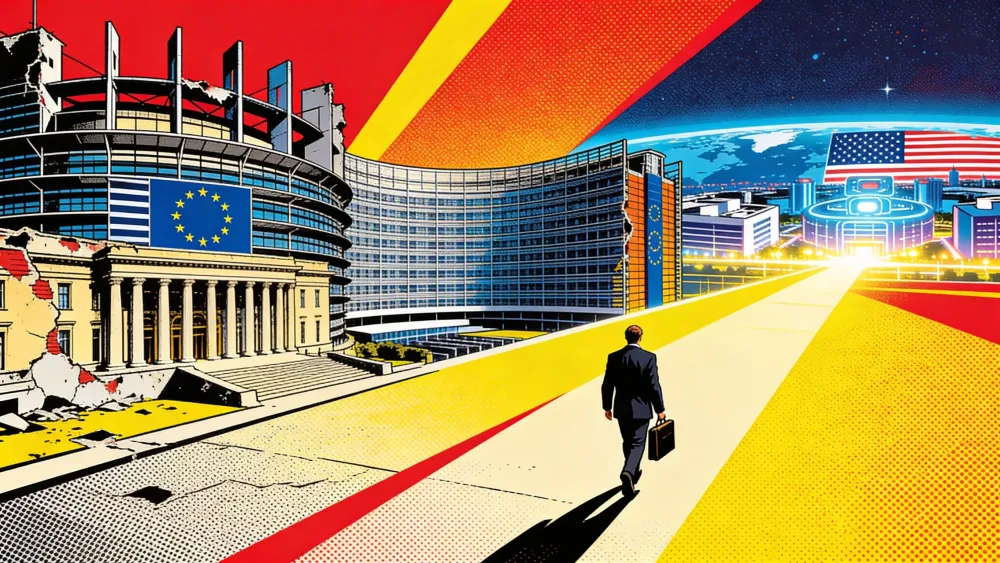
On Saturday, Peter Steinberger announced he was joining OpenAI. Sam Altman called him a genius within hours. Three OpenAI executives posted on X in coordinated enthusiasm. Mark Zuckerberg had already spent ten minutes arguing with Steinberger about coding tools on WhatsApp. Both companies made offers reportedly valued in the billions.
Steinberger is Austrian. He built OpenClaw in Vienna.
Indifference is a policy.
Call it "brain drain." Better: call it what Europe has perfected into an art form, the production of talent for American consumption. Europe educates, subsidizes, incubates. America writes the check. The continent has been rehearsing this pattern for so long that Brussels now has a liturgy for it: convene a panel, publish a communiqué, pledge "digital sovereignty" with great solemnity, then change nothing.
The Breakdown
• Peter Steinberger built OpenClaw in Vienna, hit 196,000 GitHub stars in three months, then joined OpenAI
• No European investor or institution offered Steinberger the structure he needed; OpenAI did over a weekend of calls
• The Draghi report found exactly one European tech company (SAP) in the global top 100
• Europe's regulatory complexity and fragmented single market function as competitive liabilities for early-stage tech
Steinberger spent 13 years building PSPDFKit into a company worth over $100 million. He sold it. He took three years off. Then he built OpenClaw, the fastest-growing open-source project in GitHub history. 196,000 stars in under three months. Two million visitors in a single week. Six hundred contributors from around the world. He subsidized the entire operation from savings, losing ten to twenty thousand dollars a month, routing his sponsorship revenue to the developers whose software OpenClaw depends on rather than keeping a cent.
During those three months, while OpenClaw was becoming the most visible AI agent on earth, the European Commission was finalizing implementation guidelines for the AI Act. Austria's digital ministry was updating its broadband strategy. Germany was debating whether to classify foundation models as high-risk systems. Nobody in any European capital picked up the phone.
No European investor offered him the structure he needed. OpenAI did.
Talent does not wait for committees.
France tried something similar three centuries ago. Louis XIV wanted religious conformity in 1685 and got economic catastrophe instead. Two hundred thousand Huguenots packed their tools and left. Not soldiers. Weavers, clockmakers, merchants, the skilled hands that kept French industry competitive. Brandenburg-Prussia welcomed them. So did the Dutch Republic and England. France's textile industry never recovered its preeminence. The governing lesson is precise: you do not need to persecute talent to lose it. Failing to value it accomplishes the same thing, somewhat more politely and at exactly the same cost.
Nobody in Brussels is revoking anything. The process is quieter, and over time, more corrosive. Europe watches its best builders leave because the institutions cannot move at the speed the builders need. Steinberger did not need capital. He had already made his fortune. What he needed was compute, distribution, and 300 million weekly users. Europe could offer none of these things.
Reports are not remedies.
Mario Draghi's report on European competitiveness, published in September 2024, counted exactly one major European technology company among the global top 100: SAP.
One.
The report ran to nearly 400 pages and diagnosed, with admirable precision, three structural ailments. Capital in Europe arrives slowly, which in technology means it arrives too late. Regulatory complexity masquerades as industrial policy but functions as its opposite. And a single market that still requires legal entities in 27 countries, with 27 sets of notaries, labor codes, and tax regimes, is single in name only.
Stay ahead of the curve
Strategic AI news from San Francisco. No hype, no "AI will change everything" throat clearing. Just what moved, who won, and why it matters. Daily at 6am PST.
No spam. Unsubscribe anytime.
From Draghi's analysis follow three conclusions, each uncomfortable. European founders who want global scale must leave Europe to get it. The regulatory apparatus that Europe treats as a comparative advantage is, for early-stage technology, a competitive liability. And no quantity of sovereignty rhetoric compensates for the absence of the infrastructure that sovereignty requires.
Steinberger confirmed this on the Lex Fridman podcast last week. He wanted to build an agent his mother could use. That required frontier models, unreleased research, and distribution to hundreds of millions of people. He spent a week in San Francisco talking to every major lab. At the end, one company offered to keep OpenClaw open-source, fund a foundation, and give him access to the compute he needed.
That company was not European.
Speeches are not structures.
Thomas Dohmke, the Berlin-born former CEO of GitHub, described the identical gravitational pull when he explained why good founders leave Europe. The capital is missing. The structures slow everything down. The speed is wrong. He was talking about software. He could have been talking about anything where velocity determines survival. His family home in Germany still runs on a copper DSL line. No fiber, no deployment plan. The metaphor writes itself.
Picture the next iteration. Fast-forward two years. Some developer in Munich or Barcelona ships a tool that rewires how ordinary people talk to their devices. A million users inside a month. Altman calls. Zuckerberg calls. Brussels puts out a press release congratulating European ingenuity. The builder is already packing for SFO.
Run that sequence enough times and "digital sovereignty" stops meaning anything at all. It becomes a eulogy.
Europe does not lack engineers. It does not lack ideas. It does not even lack money in the aggregate. What it lacks is institutional speed, concentrated compute, and the willingness to build structures that match the velocity of the talent it trains. Steinberger was losing $20,000 a month on OpenClaw. He was routing his own income to other developers. Not a single European institution found a way to match what a San Francisco lab offered over a weekend of phone calls.
Sovereignty without capability is a speech. Capability without structure is an export.
Europe keeps giving the speech.
Frequently Asked Questions
Q: Who is Peter Steinberger?
A: Austrian developer who built PSPDFKit into a company worth over $100 million, sold it, then created OpenClaw, the fastest-growing open-source project in GitHub history. He joined OpenAI in February 2026 after Sam Altman called him a genius.
Q: What is OpenClaw and why does it matter?
A: An open-source AI agent that reached 196,000 GitHub stars in under three months, attracted 600 contributors, and drew two million visitors in a single week. Steinberger funded it from personal savings, losing $10,000-$20,000 monthly.
Q: Why didn't Steinberger stay in Europe?
A: He needed frontier compute, unreleased research, and distribution to 300 million weekly users. No European company or institution could provide these. OpenAI offered all three plus a commitment to keep OpenClaw open-source.
Q: What did the Draghi competitiveness report find?
A: Mario Draghi's September 2024 report identified SAP as the sole European company among the global top 100 tech firms. It diagnosed three structural problems: slow capital, regulatory complexity masquerading as policy, and a single market fragmented across 27 legal jurisdictions.
Q: What is the Huguenot comparison about?
A: In 1685, Louis XIV drove 200,000 skilled Huguenots out of France. Brandenburg-Prussia and England welcomed them. France's textile industry never recovered. The parallel: you don't need to persecute talent to lose it. Failing to value it works just as well.


Marcus Schuler
Tech translator with German roots who fled to Silicon Valley chaos. Decodes startup noise from San Francisco. Launched implicator.ai to slice through AI's daily madness—crisp, clear, with Teutonic precision and sarcasm. E-Mail: [email protected]