 IMPLICATOR

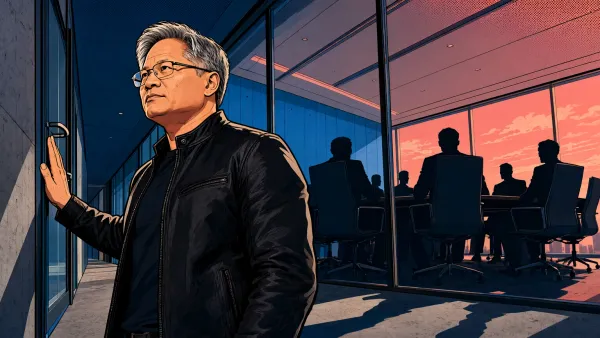
In May, Marco Rubio warned Donald Trump aboard Air Force One about Jensen Huang's relationship with Alice Huang. The plane had not yet reached its refueling stop in Anchorage. US intelligence suspected her of working for Beijing. The two Huangs are not related. Jensen Huang then boarded the plane. He had not initially received an invitation to join the China trip.
On Wednesday, Nvidia's directors were preparing to remove Huang after another affair became public, with an executive who reports to him. They were meeting to decide his future. They had announced no decision. Asked about that relationship by phone Wednesday, Huang said, “I don’t think you should be talking to me directly.” He then hung up.
In December 2025, Megaspeed had imported 50,000 more Nvidia chips than Nvidia tallied in its data centers. Removing Huang would answer the affairs. It would leave open what he knew about those chips, and whether Trump will keep shielding him. My inference is that Huang's departure could let Washington close the wrong case because a workplace sanction supplies an ending before investigators account for the hardware.
A question for Huang before any farewell. Did he cultivate his closeness to Trump for protection?
Trump has called Huang an “honorable man” and said Huang told him he “had no idea that she was a spy.” His administration controls the licenses Nvidia needs. Rubio's classified memo also went to Commerce Secretary Howard Lutnick. By May 14, Commerce had cleared around 10 Chinese companies to buy H200 chips. Some approvals predated the warning. On Nov. 9, Trump said the memo “didn't make much of an impact on me.” His defense now makes the protection question concrete: would he pardon Huang if investigators establish wrongdoing?
In October 2026, Nvidia said diversion allegations had been “thoroughly investigated and debunked.” Megaspeed denies wrongdoing.
The Commerce inquiry shifted to Justice after Nvidia's general counsel emailed Commerce seeking information about the investigation. The affair with Huang's subordinate is the smaller matter. Huang owes an account of his involvement with a customer suspected of diverting regulated technology to mainland China.
Intel's Brian Krzanich resigned in 2018 after acknowledging a “past consensual relationship” with an employee. That precedent explains a workplace sanction. It stops helping where export controls and an intelligence warning begin.
No evidence establishes that Huang knew, and US officials reportedly did not believe he knew of Alice Huang's suspected activities. No charge has been filed against him. Columbia's John C. Coffee Jr. said, “It's possible he was at most negligent.” Negligence still leaves a question of responsibility for the chip gap. An executive's ignorance needs explaining when his company has declared the allegations debunked.
James Czerniawski of the Consumer Choice Center warns that selectively surfacing intelligence can advance tighter export controls. That objection calls for published findings rather than punishment by leak. It does not account for the chip discrepancy documented before this week's revelations. Findings from Joon Kim, who leads the board's investigation, and Justice that account for those chips and establish Huang's ignorance would end my demand for answers about his knowledge.
Republican Sen. Kevin Cramer called Wednesday for Huang to resign. My concern is that continued protection could cost congressional Republicans seats after Democrats won sweeping majorities in both chambers last week. House Foreign Affairs Committee chair Brian Mast has signaled willingness to subpoena Huang for a requested Nov. 18 appearance. Nvidia reports earnings Nov. 17. Trump is due to meet Xi Jinping next week. He should let investigators finish without promising Huang an escape. The warning already made it aboard Air Force One. American export controls must outlast a passenger's friendship with the president.
Free AI briefing · Weekdays
The AI stories that matter, sourced and explained.
Join the Morning Briefing. It goes out every weekday at 4:45 a.m. Pacific, with later sends for the East Coast, Berlin and Tokyo.
Free when you sign up: The Paperclip Compendium, our tested guide to running AI agents.
Free. Unsubscribe in one click.

Marcus Schuler
Editor-in-Chief and founder of Implicator.ai. Former ARD correspondent and senior broadcast journalist with 10+ years covering tech. Writes daily briefings on policy and market developments. Based in San Francisco. E-mail: editor@implicator.ai