Implicator
San Francisco | December 16
Oracle's credit default swaps trade at 125 basis points. Three times Microsoft. Junk territory. The rating agencies still call it investment grade. The split is structural: Microsoft and Meta route AI infrastructure debt through special purpose vehicles that never touch their balance sheets. Oracle loaded $100 billion directly onto its books. Barclays projects they exhaust cash by November 2026.
Cloudflare's year-end data confirms what publishers already knew. Googlebot crawls 11.6 percent of the web. Block it, lose your search rankings. The DOJ's proposed remedies don't touch crawler architecture. The fine print always wins.
Stay curious,
Marcus Schuler
Oracle's Bonds Trade Like Junk While Rating Agencies Look Away
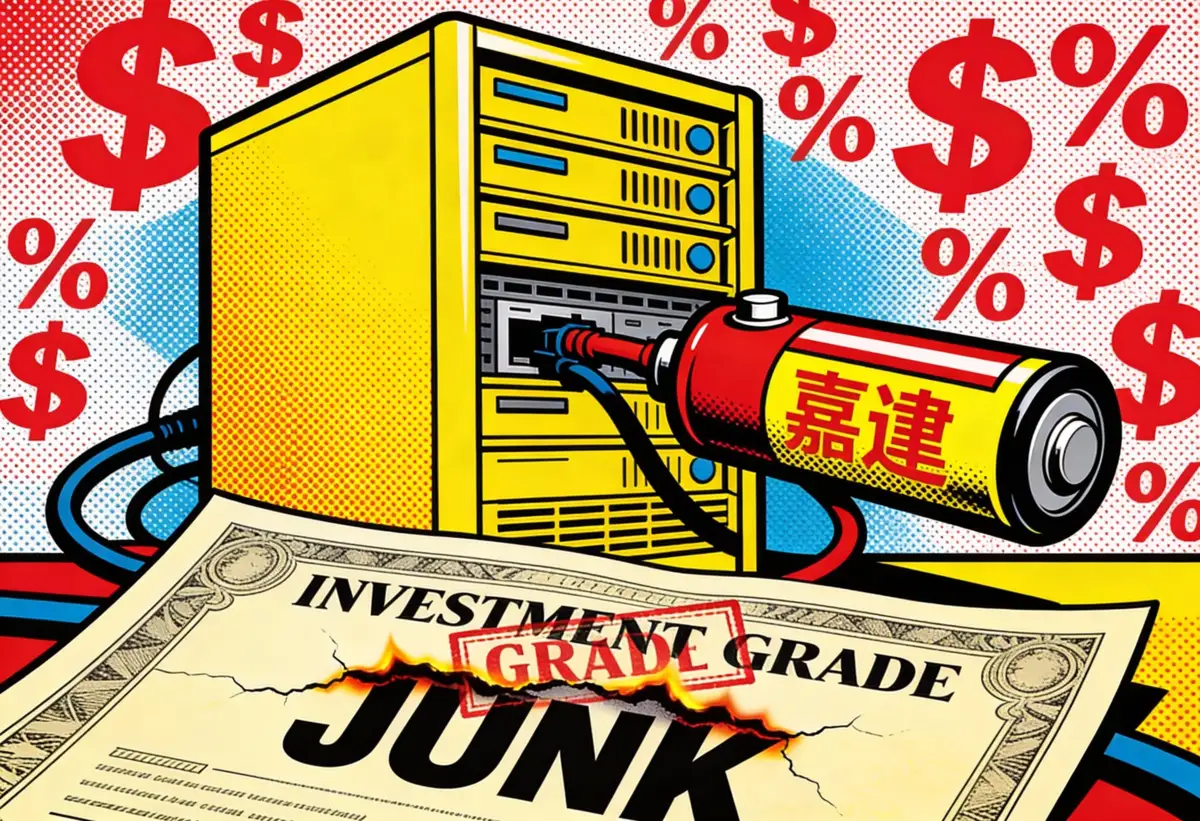
Oracle holds investment-grade ratings from Moody's and S&P. The bond market disagrees. Credit default swaps on Oracle debt have widened to 125 basis points, three times the spread on Microsoft or Google and consistent with junk-rated credits.
Barclays projects the company exhausts cash by November 2026 at current spending levels.
The divergence exposes a structural split in AI infrastructure financing. Microsoft and Meta use special purpose vehicles to fund data centers, keeping debt off corporate balance sheets. Microsoft's $40 billion Aligned Data Centers acquisition through BlackRock carries 70% leverage that never appears in its 10-K. Meta's Blue Owl structure delivered $3 billion in cash at closing rather than drawing down credit. Oracle loads $100 billion directly onto its books, with a 500% debt-to-equity ratio that dwarfs peers running between 7% and 23%.
Behind the financing scramble sits a revenue problem. Bain calculates AI must generate $2 trillion annually by 2030 to justify current infrastructure spending. That's more than three Amazons' worth of new revenue in five years.
Why This Matters:
• Oracle's potential downgrade could trigger forced institutional selling, raising borrowing costs industry-wide
• Chinese battery suppliers provide 60% of U.S. imports with no alternatives at scale before 2026 tariff hikes
 Maria Garcia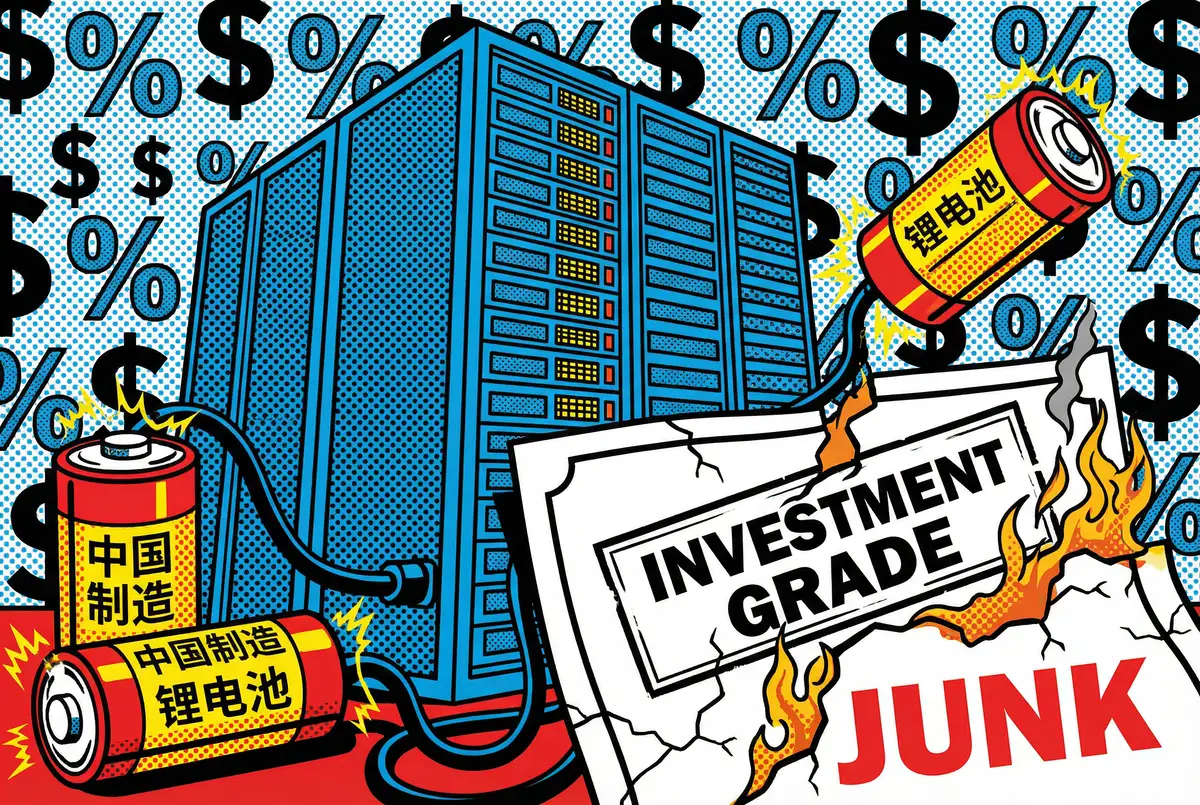
AI Image of the Day

Prompt:
Ultra-realistic, fine-art portrait photograph of an impossibly beautiful black alien woman, captured with a Canon EOS R5 and an 85mm f/1.4 L-series prime lens. Hyperdetailed, shallow depth of field, soft cinematic lighting, exquisite color grading the atmosphere feels sacred and dreamlike, as if shot by a French haute couture photographer of another planet. Her flawless pink skin glows with a smooth, silken sheen, softly illuminated by diffused light that caresses every contour like the hand of a lover. Her straight, luminous pink hair falls fluidly around her shoulders, gleaming like strands of pastel starlight. Her enormous, perfectly black eyes vast and liquid as cosmic obsidian dominate the face, swallowing the universe within. There is no white in them, only endless, reflective depth. Her eyelashes are impossibly long and delicate, like whispers of light around the darkness. Her nose is almost invisible, a mere shadow of form so small that only the faint suggestion of nostrils remains, elegant and otherworldly, as if sculpted from breath itself. Her lips are soft and subtly curved, hinting at a serene knowledge of cosmic scales. Lighting: soft studio glow with gentle rim light outlining her pink silhouette, every photon worshipping the harmony of alien femininity. Background dissolves into a graceful haze of lavender mist, faint stars and silver dust. The aesthetic is hyperreal and philosophical, a mix of fine-art portraiture, high-fashion editorial, and divine surrealism. She is the embodiment of purity beyond species beauty distilled into form, color, and cosmic tenderness.
Google's Crawler Dominates AI Training While Publishers Can't Opt Out
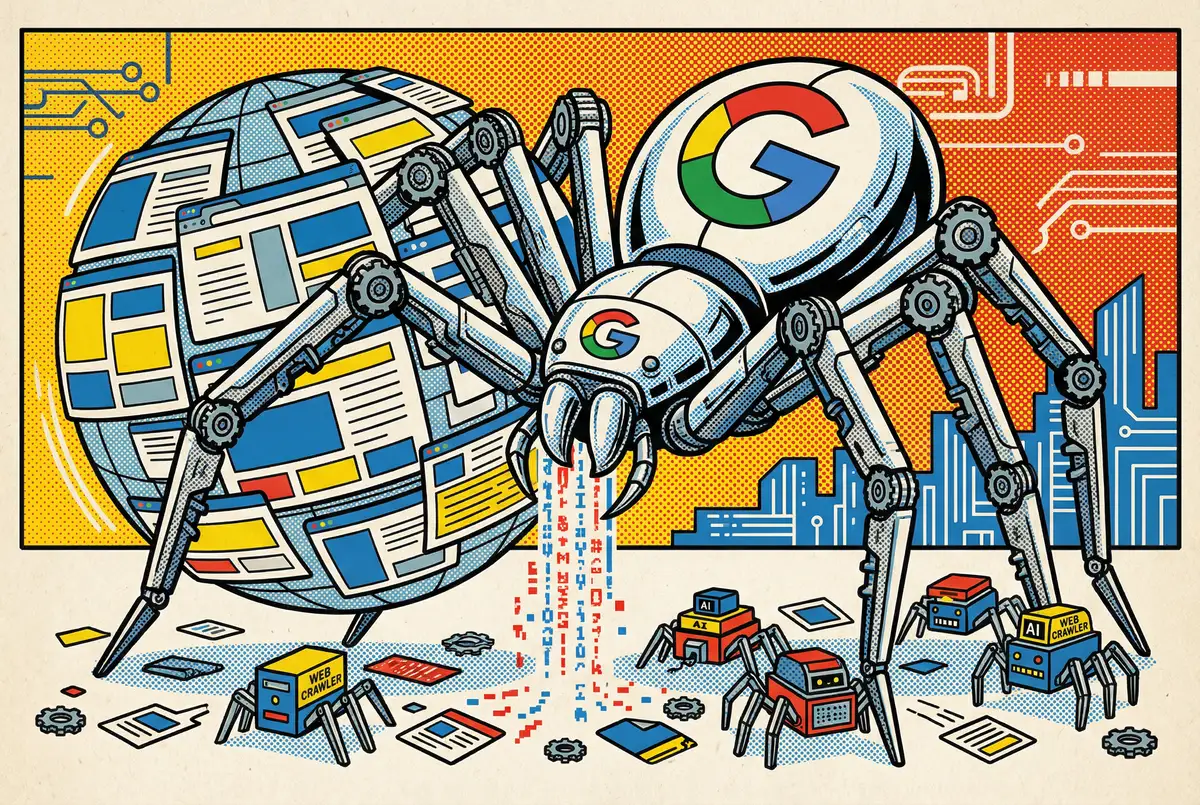
Cloudflare's 2025 Year in Review reveals Googlebot crawled 11.6 percent of sampled web pages—more than three times OpenAI's GPTBot and nearly 200 times Perplexity's crawler.
The disparity matters because Googlebot serves dual purposes: search indexing and AI model training. Publishers who block it lose search visibility entirely. No technical mechanism allows separating the two functions, and Google has no commercial incentive to create one.
Meanwhile, crawl-to-refer ratios expose the extraction economy's scale. Anthropic's ClaudeBot operated at ratios between 25,000:1 and 100,000:1 during 2025's second half. OpenAI peaked at 3,700:1.
Traditional Google search runs between 3:1 and 30:1.
The DOJ's August 2024 antitrust ruling against Google addressed similar bundling dynamics in search distribution agreements. But proposed remedies—Chrome divestiture, data sharing—don't touch crawler architecture.
Civil society organizations became 2025's most attacked sector at 4.4 percent of mitigated traffic, while 83 of 174 major outages came from government-directed shutdowns. Post-quantum encryption reached 52 percent of human traffic, up from 29 percent in January.
Why This Matters:
- Publishers face a structural trap: no technical standard exists to separate Google's search crawling from AI training access.
- The DOJ's proposed Google remedies miss crawler bundling entirely, leaving the advantage intact regardless of Chrome's fate.
 Maria Garcia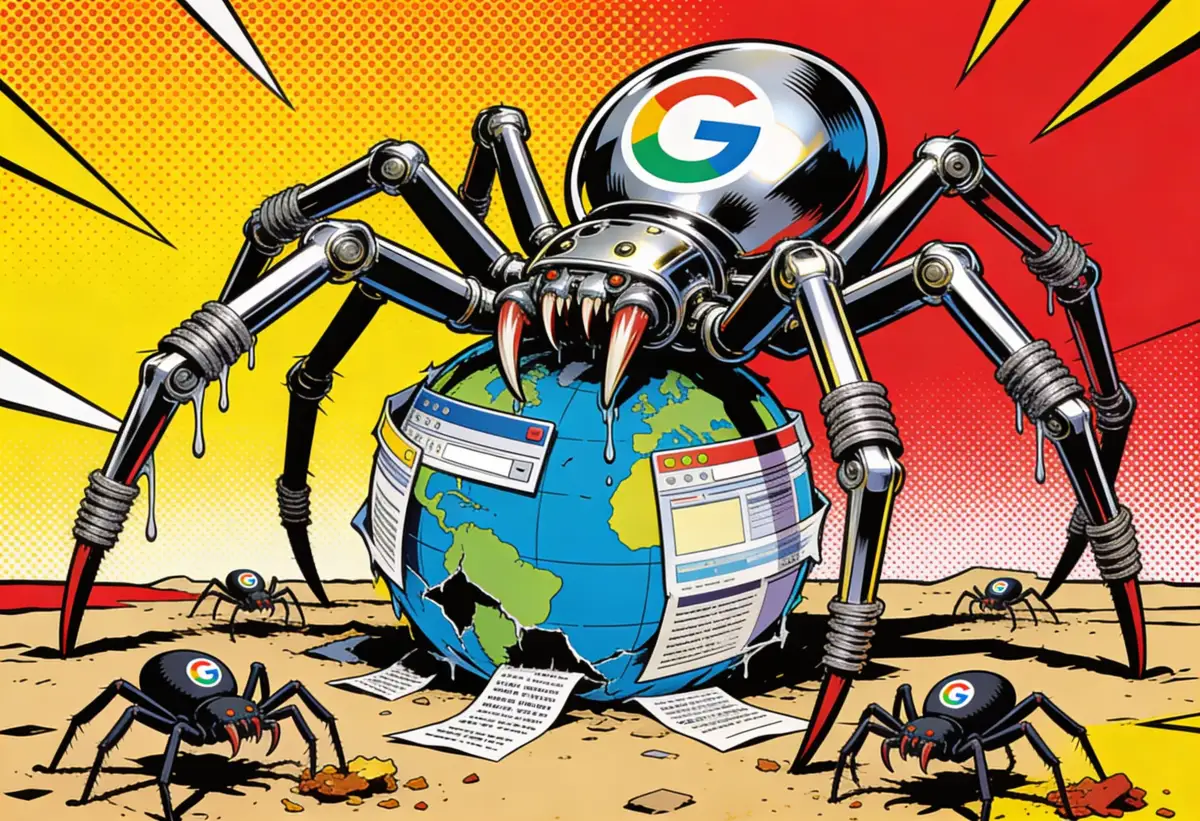
🧰 AI Toolbox
How to Build Production-Ready Apps from a Single Prompt
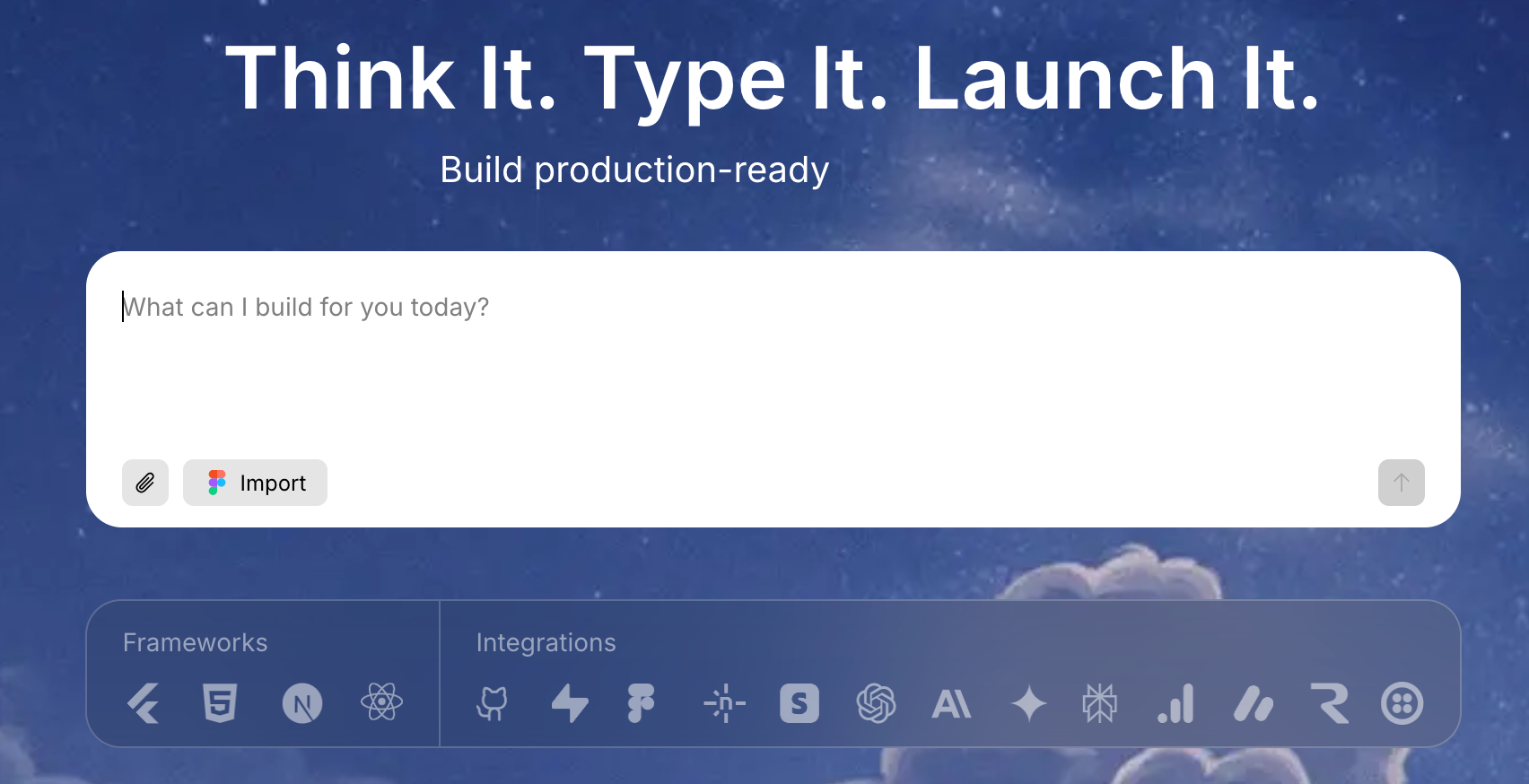
Rocket.new is an AI-powered no-code builder that transforms plain language descriptions into fully functional web and mobile apps. It handles everything from UI/UX design to backend logic and integrations, generating clean, human-readable code you fully own. Import Figma designs or just describe what you want, and get a polished, deployable product in minutes.
Tutorial:
- Go to the Rocket.new website and create a free account
- Enter a plain language description of the app or website you want to build
- The AI analyzes your requirements, researches market context, and designs your UI/UX
- Select which features and pages to include in your application
- Connect integrations like Supabase for backend, Stripe for payments, or push to GitHub
- Preview, test, and customize your generated app before launch
- Deploy instantly with full code ownership and no vendor lock-in
AI & Tech News
CoreWeave Stock Plummets $33 Billion Amid Data Center Woes
CoreWeave, the AI-focused data center provider, has seen its market value collapse by $33 billion over a six-week period due to construction delays at its Denton, Texas facility and intensifying scrutiny from prominent short seller Jim Chanos. The company's stock decline accelerated as investor concerns mounted over operational setbacks and questions raised about the sustainability of AI infrastructure spending.
Senate Democrats Launch Investigation Into Tech Giants Over Data Center Energy Costs
Senator Elizabeth Warren and two fellow Democratic senators have sent letters to major technology companies including Google, Microsoft, Amazon, and Meta, demanding information about how their AI data centers are contributing to rising electricity costs for consumers and businesses. The congressional inquiry reflects growing concerns that the massive energy demands of artificial intelligence infrastructure may be shifting costs onto ordinary ratepayers across the country.
Nearly 80% of World's Data Centers Located in Suboptimal Climate Zones, Analysis Reveals
A comprehensive analysis of 8,808 global data centers as of October 2025 reveals that approximately 7,000 facilities are situated in areas outside the optimal temperature range of 18°C to 27°C, with 600 data centers operating in regions exceeding 27°C. The study, published by Rest of World, found that all data centers in 21 countries are located in climates considered too hot for ideal operations, highlighting Singapore as a particularly challenging location despite its status as a major tech hub.
Chinese AI Infrastructure Stocks Soar Despite US Trade Tensions
Shares in Chinese companies essential to artificial intelligence infrastructure experienced significant gains in 2025, with battery manufacturer CATL rising 45% and energy technology firm Sungrow surging 130%. The strong performance comes as these companies continue to generate substantial profit margins from export sales, demonstrating resilience despite tariffs imposed by the Trump administration.
Databricks Raises $4 Billion at $134 Billion Valuation, Marking Rapid Growth
Databricks is raising over $4 billion in Series L funding at a $134 billion valuation, a significant increase from its $100 billion valuation in August and $62 billion in December 2024. The data-analytics and AI software company reported crossing $4.8 billion in annual revenue run rate as of October, demonstrating strong business momentum amid growing enterprise demand for AI and data solutions.
Anduril Pursues UK Defense Market with Billion-Dollar Strategy
American defense technology company Anduril is aggressively pursuing expansion into the United Kingdom's defense sector as Europe increases military spending, employing tactics that include co-funding major programs, establishing manufacturing partnerships, and rebranding itself as an "Anglo-American" firm. The company's billion-dollar playbook represents a significant push to secure drone deals and other defense contracts in the UK market during a period of heightened European rearmament.
Volkswagen Transforms Dresden Factory from Car Production to Tech Research Hub
Volkswagen has announced plans to cease vehicle production at its Dresden plant, which has been operational since 2001, and transform the facility into a research center dedicated to artificial intelligence, robotics, and chip design. The decision comes as the German automaker confronts weakening demand and the impact of steep U.S. tariffs on its business operations.
Luxembourg Faces Largest Layoffs in Two Decades as Tech Giant Restructures
Amazon plans to eliminate 370 positions at its European headquarters in Luxembourg, representing approximately 8.5% of its 4,370-person workforce in the country and marking Luxembourg's largest layoffs in 20 years. The cuts are part of Amazon's broader global restructuring announced earlier this year, which targeted 14,000 employees worldwide.
OpenAI Communications Chief Hannah Wong to Depart in January
OpenAI's Chief Communications Officer Hannah Wong has announced plans to leave the company in January, telling staff she is moving on to her "next chapter." Wong, who joined OpenAI in 2021, played a critical role leading the company's public relations efforts during the turbulent period in 2023 when CEO Sam Altman was briefly ousted and subsequently returned. The company has announced it will conduct an executive search to find her replacement.
Smartphone Market Faces Decline as Memory Costs Surge
Global smartphone shipments are projected to decline 2.1% in 2026 as rising memory costs squeeze manufacturers, with Chinese OEMs expected to bear the brunt of the impact, according to new analysis from Counterpoint Research. DRAM price increases are forecast to drive up bill-of-materials costs by 10% to 15%, forcing the industry to revise shipment forecasts downward amid the memory shortage.
AI Divide Deepens in Hollywood as Filmmakers Take Opposing Stances
The entertainment industry is experiencing a growing rift over artificial intelligence, with some Hollywood professionals firmly opposing any AI use while others are actively experimenting with the technology. Director Timur Bekmambetov, known for his upcoming film Mercy starring Chris Pratt, has emerged as a prominent advocate for AI integration, reportedly developing a new movie almost entirely generated by artificial intelligence.
🚀 AI Profiles: The Companies Defining Tomorrow
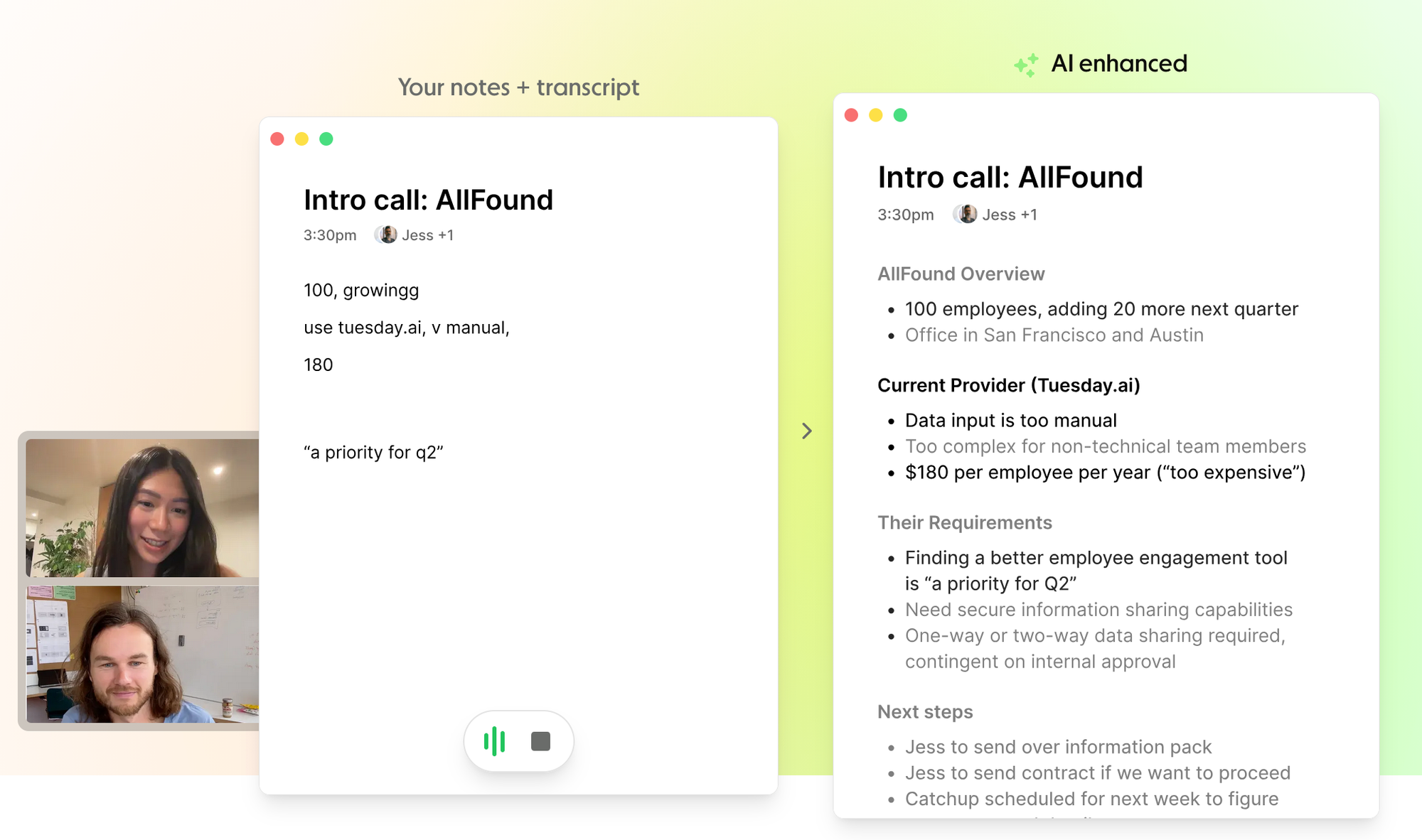
Granola turns your scattered meeting scribbles into polished notes. It blends what you type with a background transcript, then lets AI do the heavy lifting after the call ends.
👥 Founders
Chris Pedregal and Sam Stephenson launched Granola in March 2023 from Shoreditch, London. Pedregal sold his previous startup Socratic to Google in 2018. Stephenson brings a designer's obsession with simplicity. The team has grown quickly off three funding rounds.
🛠️ Product
Granola works like a notepad that secretly listens. You jot down what matters. The app transcribes everything else. After the meeting, AI merges both into a structured summary with action items. No awkward bot joins your call. No audio gets stored. Just text. The company added team folders and cross-meeting search in 2025, pushing toward a shared workspace play.
⚔️ Competition
Crowded space. Otter, Fireflies, and Read AI chase the same users. Microsoft Copilot, Zoom AI Companion, and Google Meet now bundle similar features for free. Granola counters with platform neutrality and a cleaner UX. Whether that's enough against distribution giants remains the open question.
💰 Financing
Lightspeed led a $4.25M seed in May 2023. Spark Capital followed with a $20M Series A in October 2024. Then NFDG, the Nat Friedman and Daniel Gross vehicle, led a $43M Series B in May 2025. Total raised: $67M. Valuation: $250M. Angel roster includes Guillermo Rauch, Tobias Lütke, and Amjad Masad. 🔥
🔮 Future ⭐⭐⭐⭐
Granola has product love and investor momentum. The risk is commodification. Transcription and summaries are becoming table stakes. To survive, Granola must evolve from notepad to team brain, and do it faster than Microsoft ships the next Copilot update.

Marcus Schuler
Tech translator with German roots who fled to Silicon Valley chaos. Decodes startup noise from San Francisco. Launched implicator.ai to slice through AI's daily madness—crisp, clear, with Teutonic precision and sarcasm. E-Mail: [email protected]