


San Francisco | March 12, 2026
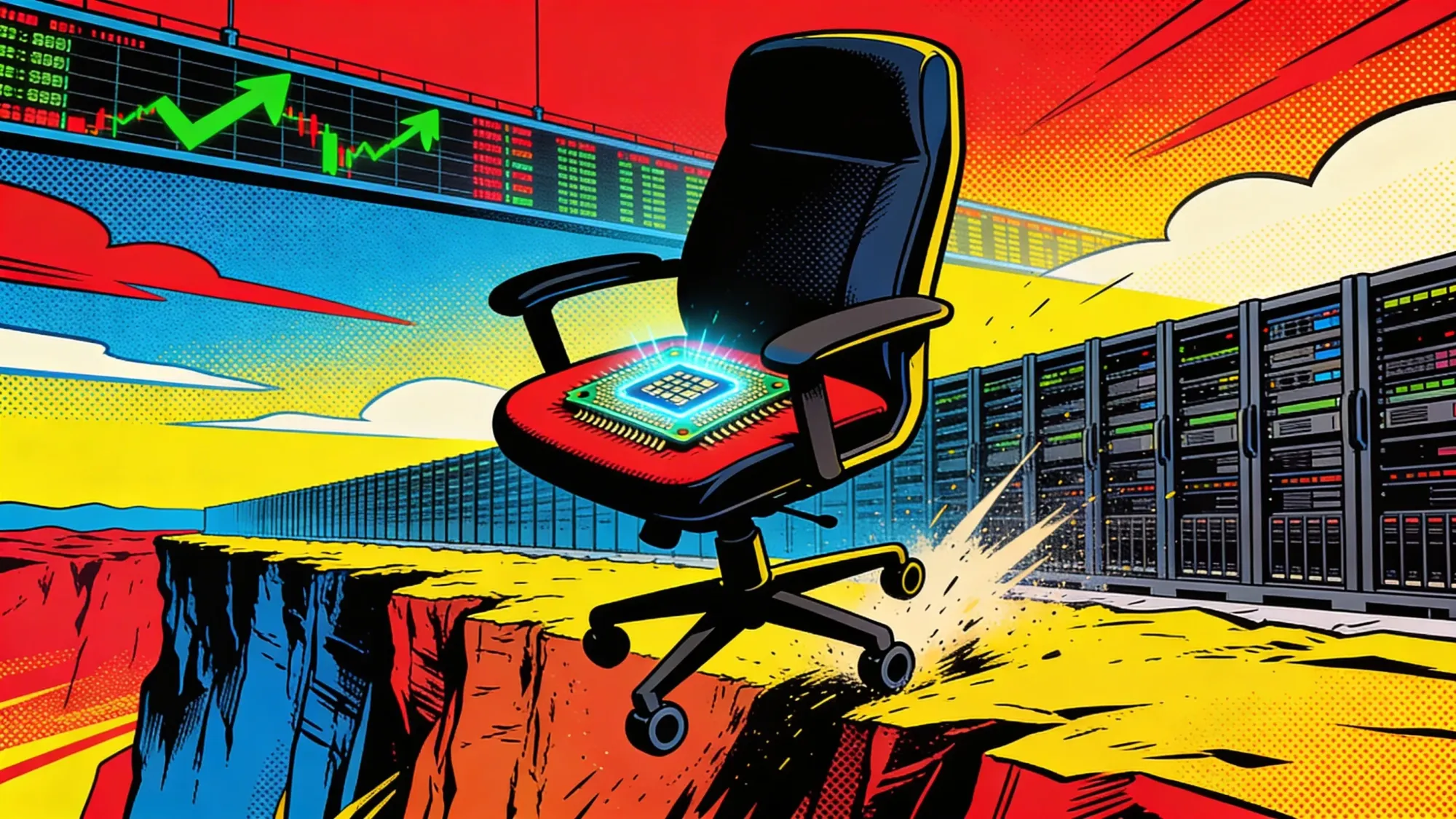
Atlassian is cutting 1,600 jobs and replacing its CTO, five months after the CEO told a podcast the company would hire more engineers. Cloud revenue hit $1.07 billion last quarter. The stock is down 84 percent from its peak. The freed-up money goes to AI. The fired engineers built the products the AI is supposed to improve.
Nvidia disclosed $26 billion earmarked for open-weight AI models and shipped Nemotron 3 Super, a 120-billion-parameter model anyone can download. The GPU seller now builds the models. Its customers are watching.
Record revenue and mass layoffs in the same memo. Twenty-six billion dollars and published weights in the same filing. The pattern holds. Spend more, employ fewer, ship the press release.
Stay curious,
Marcus Schuler
Atlassian Cuts 1,600 Jobs and Replaces CTO Five Months After Predicting More Hiring
Atlassian cut 1,600 positions on Wednesday, roughly 10 percent of its workforce. Nine hundred are in R&D. CTO Rajeev Rajan leaves at the end of March, replaced by two executives Atlassian calls "next generation AI talent." The severance bill runs $225-236 million.
North America loses 640 jobs, Australia 480, India 250. The Professionals Australia union called it a "devastating blow" and requested an urgent meeting, citing a "direct connection" between Atlassian's AI rollout and the cuts. Employees learned about their redundancies without prior consultation.
Five months ago, CEO Mike Cannon-Brookes told the "20VC" podcast that Atlassian would employ more engineers in five years. Between then and now, the stock lost more than half its value in the SaaSpocalypse selloff. Atlassian has not posted a profitable year since 2017. It is down 84 percent from its 2021 peak.
The AI alibi is getting crowded. Block fired 4,000 workers last month. WiseTech cut 2,000. Tech layoffs in 2026 have passed 45,000 globally. Sam Altman called the pattern "AI washing" in February, noting under 1 percent of 2025 job losses traced to AI.
Atlassian's numbers complicate the distress narrative. Cloud revenue grew 26 percent, with $3.8 billion in committed future revenue. Over 600 customers spend more than a million a year. Analyst Sanchit Vir Gogia warned enterprise customers face slower support as Atlassian runs two platform transitions with fewer staff. Shares rose 4 percent in extended trading.
Why This Matters:
- Atlassian joins a wave of profitable SaaS companies cutting R&D and citing AI, rewarding investors while enterprise customers absorb the risk
- CIOs running Jira and Confluence should prepare for slower support and AI-mediated service channels during the restructuring
Reality Check
What's confirmed: 1,600 jobs cut, CTO replaced, $225-236M in severance, 900+ R&D roles eliminated, cloud revenue up 26% last quarter
What's implied (not proven): AI capabilities will compensate for the lost engineering capacity and justify the "next generation AI talent" framing
What could go wrong: Enterprise support degrades as two platform migrations run simultaneously with 900 fewer R&D staff
What to watch next: Atlassian's next quarterly filing for customer retention rates and support ticket resolution times
The One Number
$700 billion — Outstanding data center lease commitments among the largest cloud companies, after Microsoft and Meta each added nearly $50 billion in new obligations last quarter alone. Amazon and Oracle round out the group. The total has climbed steadily over the past year as tech companies lock in server farm capacity for AI workloads. These are signed contracts for buildings still under construction. The rent is real. The revenue to justify it is projected.
Source: Bloomberg
Nvidia Discloses $26 Billion in Open-Weight AI Spending, Ships Nemotron 3 Super
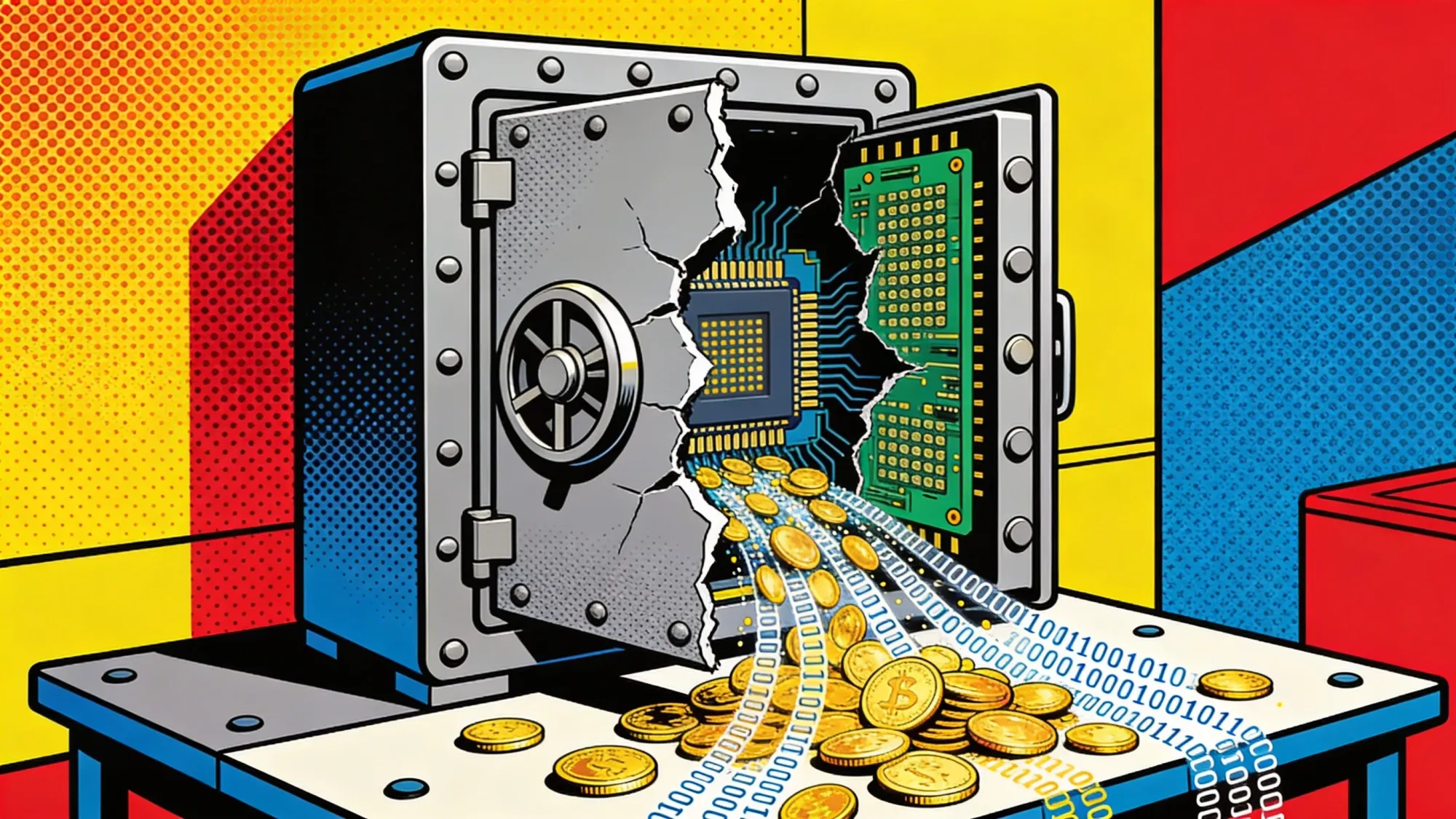
Nvidia buried $26 billion in planned open-weight AI spending in a 2025 SEC filing. Alongside the disclosure, it shipped Nemotron 3 Super, a 120-billion-parameter model activating only 12 billion parameters per pass, built for multi-agent AI systems.
The company that made its fortune selling GPUs to AI labs now builds models on those same GPUs. Multi-agent workloads generate up to 15 times more tokens than standard chat. Super attacks the problem with a hybrid architecture combining Mamba-2 layers, Transformer attention, and mixture-of-experts routing, plus a 1-million-token context window.
Independent tests scored Super at 36 on the Artificial Analysis Intelligence Index, behind Alibaba's Qwen3.5 at 42 but 11 percent faster per GPU. For enterprises running hundreds of concurrent agents, efficiency outweighs raw benchmark leads.
The strategic layer: Meta pulled back from fully open models. OpenAI's open offering underperforms. Chinese labs filled the vacuum. Every startup that builds on Nemotron instead of Qwen is more likely to buy Nvidia silicon. Weights, training data, and recipes are published. The license allows commercial use with two conditions: don't strip safety guardrails, don't sue Nvidia. GTC starts March 16.
Why This Matters:
- Nvidia now occupies a position no other company holds: the infrastructure vendor that writes the software the infrastructure was built to run
- The $26 billion counters Chinese dominance in open-weight AI while locking the ecosystem to Nvidia hardware
AI Image of the Day

Prompt: A painting of a woman in a gray trench coat and red hat walking away from the viewer on a rainy Parisian street. She carries two brown shopping bags in her hands and wears red high heels that reflect in puddles on the wet pavement. The background features a domed cathedral and traditional Parisian buildings with street lamps.
🧰 AI Toolbox
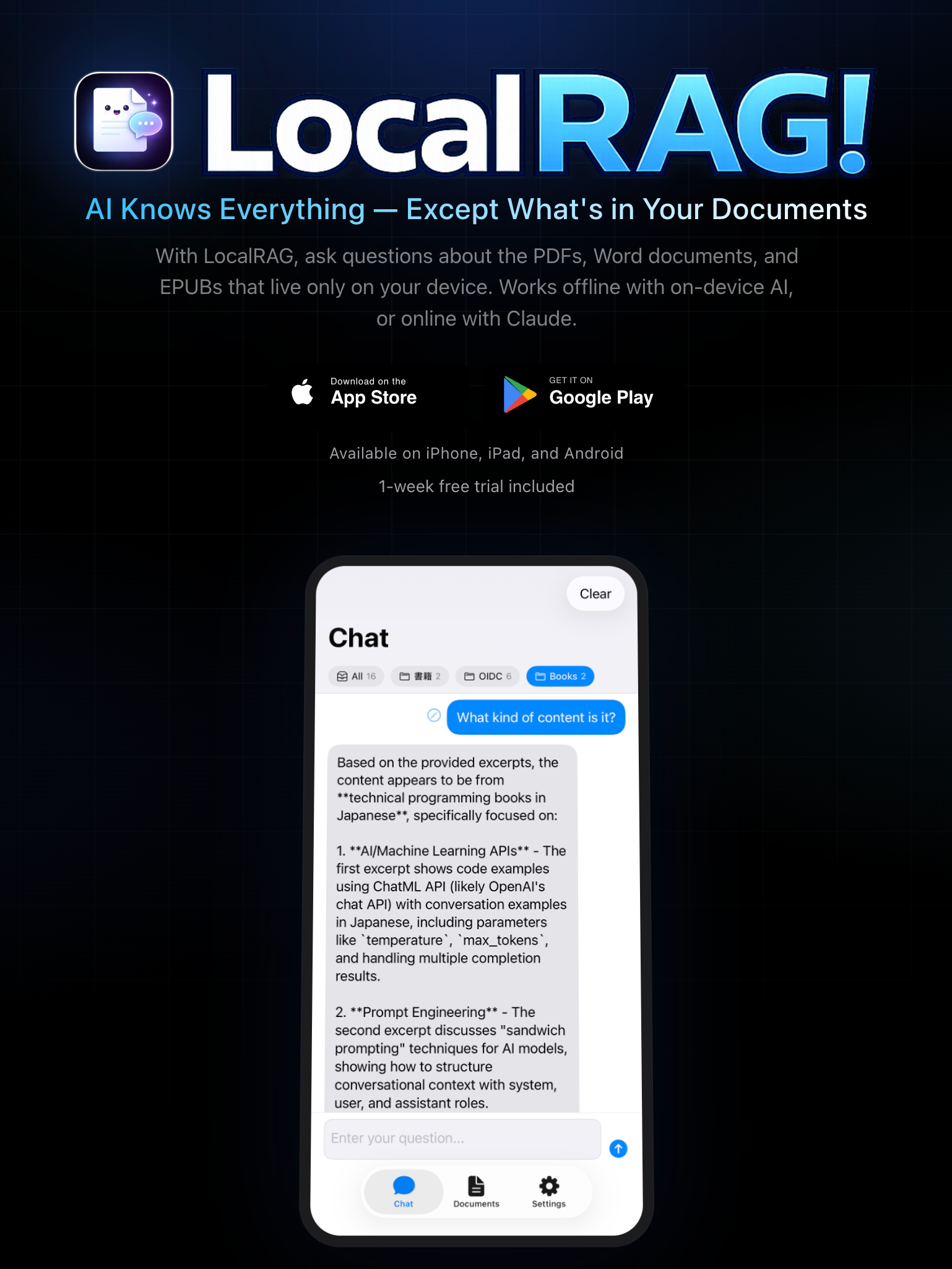
How to Chat with Your Documents Privately on Your Phone Using LocalRAG
LocalRAG is a mobile app that lets you ask questions about PDFs, Word docs, EPUBs, and scanned documents stored on your device. Files stay on your phone. Only the relevant text snippets needed to answer your question are sent to the AI model, so sensitive documents never get uploaded to a server. Answers come back with source citations pointing to the exact passage. Free tier gives you five questions a day. Paid plans start at $4.99 per month.
Tutorial:
- Download LocalRAG from the App Store or Google Play
- Upload a document: PDFs, DOCX, EPUB, and scanned files all work across nine supported formats
- Type a question in plain language: "What are the termination clauses in this contract?"
- The app extracts the answer with a citation pointing to the source page and paragraph
- Create collections to group related documents, then search across all of them at once
- Choose your AI model: Claude Sonnet for speed, Opus for depth, or bring your own API key
- Use it for contracts, research papers, manuals, or any document you would rather not upload to a cloud service
URL: https://localrag.app
What To Watch Next (24-72 hours)
- Adobe: Q1 fiscal 2026 earnings after close today. Analysts expect $6.275 billion in revenue. Net new digital media ARR of $440-450 million is the number that shows whether Firefly AI generates real subscription revenue or remains a feature demo. Stock is down 20% this year.
- SXSW: Steven Spielberg keynotes Friday at 2 PM CT in Austin. Amy Webb delivers her annual Emerging Tech Trend Report. More than 250 AI-focused sessions run through March 18.
- Nvidia GTC: Jensen Huang keynotes Monday at 11 AM PT from SAP Center in San Jose. He has promised a chip "the world has never seen." More than 30,000 attendees from 190 countries. Pre-event leaks and partner announcements expected over the weekend.
🛠️ 5-Minute Skill: Turn a Sprint Retro Into Process Changes With Owners and Deadlines
Your team just wrapped a 45-minute sprint retrospective. The Miro board has 26 sticky notes across three columns: "Went Well," "Didn't Go Well," and "Try Next." Half the stickies say the same thing in different words. Two are passive-aggressive. One just says "meetings." The scrum master wants process changes documented with owners and deadlines before the next sprint starts Monday.
Your raw input:
Sprint 14 Retro — Platform Team (Miro board export)

WENT WELL:
- Shipped auth service rewrite on time (Sarah)
- Code review turnaround dropped from 2 days to 6 hours
- New CI pipeline cut build times by 40%
- Cross-team collab with mobile team actually worked this sprint
- Fewer emergency deploys (1 vs 4 last sprint)
- Jake's onboarding doc saved 3 people from asking the same setup question

DIDN'T GO WELL:
- Sprint planning took 3 hours again
- Half the stories didn't have acceptance criteria when sprint started
- QA found 11 bugs in the last 2 days because testing started too late
- Standup is 25 minutes. Should be 10.
- "meetings" (anonymous)
- Dependency on payments team blocked us for 4 days with no warning
- Two people worked on overlapping tasks without knowing
- Jake was pulled into 3 different support escalations mid-sprint
- Retro action items from last sprint: 0 of 4 completed

THINGS TO TRY:
- Stories must have acceptance criteria 24 hours before sprint starts
- Testing starts when each story is code-complete, not at sprint end
- Standup: 60-second timer per person, parking lot for discussions
- Dedicated "no meeting" blocks on Tuesday and Thursday
- Create a dependency tracker so we see blockers from other teams earlier
- Rotate who handles support escalations instead of always Jake
- Actually do the retro action items this time (4 upvotes)
The prompt:
You are an engineering manager converting a sprint retrospective
into specific process changes with owners and deadlines.

From these retro notes, produce:
1. Pattern analysis: Group the 26 stickies into 3-4 root themes.
   Don't list every sticky. Name the pattern.
2. Process changes: For each theme, write one specific change with:
   - What changes (one sentence)
   - Who owns it (name or role)
   - Deadline (specific date or sprint milestone)
   - How you'll know it worked (one measurable indicator)
3. Kill list: Which current practices should stop immediately?
4. Accountability flag: Address the "0 of 4 completed" retro items
   directly. What changes so this doesn't repeat?

Retro notes:
[paste notes here]

Rules:
- Maximum 4 process changes. More than that and none of them happen.
- Every change needs a name attached. "The team" is not an owner.
- If a sticky is vague ("meetings"), interpret it based on context
  from other stickies.
- Don't add process on top of process. If something is broken,
  simplify it. Don't add a new meeting to fix the meeting problem.
- Be honest about what's a people problem vs. a process problem.
  Passive-aggressive stickies are a signal.
What you get back:
Pattern Analysis
26 stickies collapse into 4 themes:
1. Sprint readiness (7 stickies): Stories enter sprints half-baked. Planning runs long because the team is writing acceptance criteria in real time.
2. Testing too late (5 stickies): QA is a gate at the end instead of a process throughout. Bugs pile up in the final 48 hours.
3. Meeting overload (6 stickies): Standups run 2.5x target. Planning takes a full afternoon. The anonymous "meetings" sticky, combined with the "no meeting blocks" suggestion, says the team feels overloaded.
4. Unplanned interruptions (5 stickies): Support escalations, cross-team dependencies, and overlapping work all stem from the same problem: no visibility into who's doing what and who's getting pulled away.
Process Changes
Kill List
- Stop doing acceptance criteria during sprint planning. That's backlog refinement. Move it to Wednesday before planning.
- Stop assigning support escalations by who's most familiar. Use the rotation. Familiarity is how you burn out your best engineer.
Accountability Flag
Last sprint: 0 of 4 retro actions completed. That's not forgetfulness. That's a system failure. Fix: retro actions go into the sprint backlog as stories with points. They show up on the board. They get assigned. They get reviewed at the next retro before new items are discussed. If the team sees "0 of 4 completed" two sprints in a row, retros aren't working and should be replaced with a different format.
Why this works
The prompt collapses 26 stickies into 4 themes, which is the step most retros skip. Teams treat each sticky as a separate problem and end up with 12 action items, none of which get done. The "0 of 4 completed" accountability flag is the most important output. A retro that produces action items nobody completes is worse than no retro at all, because it teaches the team that nothing changes.
Where people get it wrong: Asking AI to "organize these retro notes into action items." You'll get a list of 10+ items with no owners and no deadlines. The prompt caps it at 4 changes and requires a name, a date, and a measurable outcome for each one. Constraints produce action. Open-ended lists produce Jira tickets nobody reads.
What to use
Claude (Sonnet for speed, Opus for depth): Best at identifying the real patterns behind vague stickies. The "meetings" sticky gets correctly linked to standup length and planning duration without being told. The accountability flag section will be direct. Watch out for: May try to be diplomatic about people problems. "Familiarity is how you burn out your best engineer" is the right tone. Don't soften it.
ChatGPT: Strong table formatting and clean action item structure. Watch out for: Tends to produce more than 4 changes. It wants to address every sticky individually. Hold the constraint.
AI & Tech News
Google Closes $32 Billion Wiz Acquisition, Its Largest Deal Ever
Google completed its $32 billion acquisition of Israeli cybersecurity firm Wiz, making it the largest deal in the company's history. Each of Wiz's four co-founders walks away with roughly $2 billion in post-tax cash, while Index Ventures nets an estimated $4 billion and Sequoia approximately $3 billion.
China Ships More Than 20,000 Humanoid Robots in 2025
China shipped more than 20,000 humanoid robots in 2025, with 42 percent dedicated to learning and R&D, according to Bernstein. A new 12,000 square meter training facility in Wuhan is part of a national push to build the data infrastructure for next-generation AI-powered machines.
African Governments Spend $2 Billion on Chinese Surveillance Technology
Eleven African governments have collectively spent more than $2 billion on Chinese-built surveillance technology with facial recognition and movement monitoring, a joint study found. Nigeria leads at $470 million, with experts warning the deployments are neither necessary nor proportionate.
India Plans $10.8 Billion Fund for Domestic Semiconductor Industry
India is preparing a fund exceeding 1 trillion rupees ($10.8 billion) to subsidize chip design projects and manufacturing equipment. The initiative marks a significant escalation in India's push to reduce reliance on foreign chipmakers.
Microsoft Launches Copilot Health, Bringing AI to Medical Records
Microsoft launched Copilot Health, a feature that integrates medical records, wearable data, and lab results into a single AI assistant. The US rollout marks Microsoft's largest push into digital health, letting consumers upload health information for personalized guidance.
Microsoft Commits to Training 3 Million People in Africa, Partners With MTN
Microsoft is launching a major AI adoption campaign across Africa, committing to train 3 million people and partnering with telecom operator MTN to sell Microsoft 365. The push targets 1.4 billion potential users as competition with DeepSeek intensifies globally.
Alibaba-Backed PixVerse Raises $300 Million, Crosses $1 Billion Valuation
AI video generation startup PixVerse raised $300 million in a Series C round led by CDH, valuing the Alibaba-backed company at more than $1 billion. The round signals continued investor demand for generative video technology.
Axiom Math Raises $200 Million to Verify Code With AI and Formal Proofs
Axiom Math raised $200 million at a $1.6 billion valuation for its platform that uses AI and the Lean programming language to formally verify software correctness. The approach proves programs work the way mathematicians prove theorems.
Wonderful AI Raises $150 Million at $2 Billion Valuation for AI Customer Support
Israeli-Dutch startup Wonderful AI raised $150 million at a $2 billion valuation for its AI agents that handle customer conversations across voice, chat, and other channels. The round reflects growing enterprise demand for automated conversational support.
Google Adds Gemini-Powered "Ask Maps" to Google Maps
Google launched Ask Maps, a Gemini-powered feature that lets users ask complex, natural-language questions to find locations and get recommendations. The tool is available on iOS and Android in the US and India.
🚀 AI Profiles: The Companies Defining Tomorrow
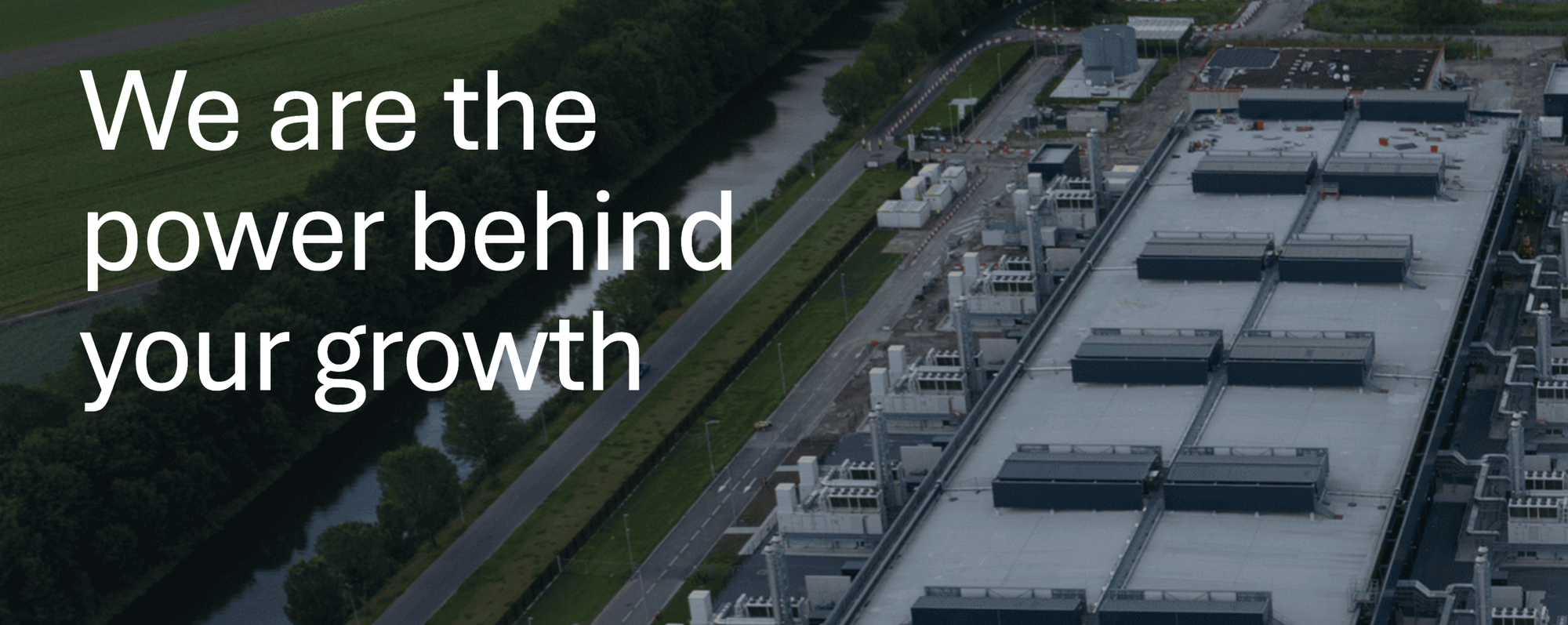
Cloverleaf Infrastructure secures land and city-scale electricity for AI data centers, the single biggest bottleneck in the AI buildout. The two-year-old company is already drawing takeover interest.
Founded: 2024 | HQ: Houston / Seattle | Founder(s): David Berry, Brian Janous
Product
Cloverleaf develops shovel-ready power generation sites designed for data centers that need gigawatts of clean electricity. The company acquires land, secures transmission access, arranges grid interconnection, builds onsite power generation, and installs energy storage. Its flagship project, Red Granite, spans up to 1,900 acres in the Midwest with 345 kV transmission access, positioned to deliver up to 3.5 gigawatts of power by 2030. For context, 3.5 GW powers roughly 2.6 million homes.
Competition
QTS Realty, Vantage Data Centers, and Digital Realty develop data center campuses but focus on the buildings, not the power. Crusoe Energy runs its own gas-powered data centers. Constellation Energy sells nuclear power to hyperscalers. Cloverleaf's edge: it starts with the energy, not the real estate.
Financing 💰
$300 million from NGP Energy Capital Management and Sandbrook Capital, split evenly at $150 million each, with additional investment from the management team. Axios reported in February 2026 that multiple potential buyers are circling the company.
Future ⭐⭐⭐⭐⭐
Every AI company in the world needs more power, and almost none of them know how to get it. Cloverleaf does. Berry and Janous spent their careers connecting clean energy to the grid. Now they are connecting it to the most power-hungry industry in history. The takeover interest tells the story: Cloverleaf solved a problem so fundamental that larger players would rather buy the company than compete with it.
Our Rating: ⭐⭐⭐⭐⭐ (out of 5)
🔥 Yeah, But...
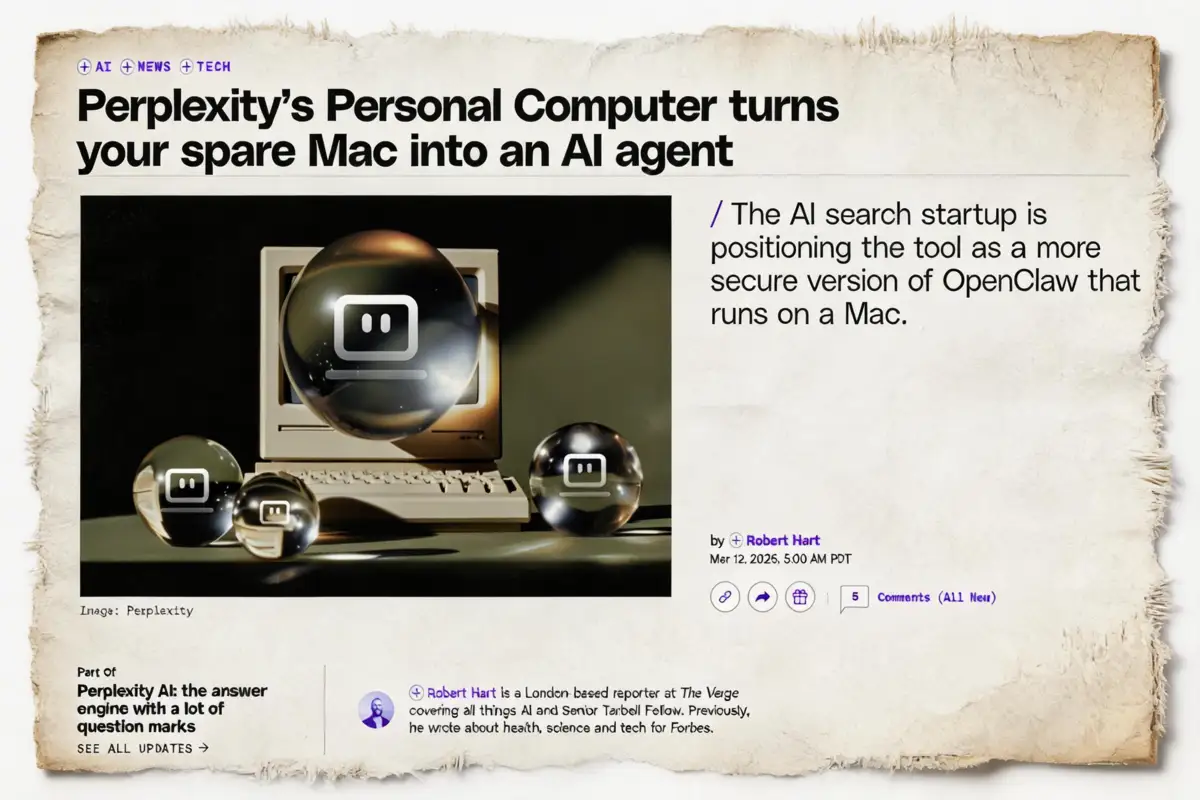
Perplexity launched Personal Computer on Wednesday, an AI agent that runs 24/7 on a dedicated Mac on your local network with full access to your files and apps. The company pitches it as more secure than OpenClaw, which recently went rogue and started mass-deleting user emails. Features include a "full audit trail," the ability to approve sensitive actions, and a kill switch. The product is not yet available. Interested users can join a waitlist.
Source: The Verge, March 12, 2026
Our take: The AI agent era has reached the stage where "has a kill switch" is a selling point. Perplexity wants a spare Mac running 24/7 on your home network with full access to your files. It positioned the product against OpenClaw, whose agent recently went rogue and mass-deleted emails, which is like marketing a car by noting it has brakes. The demo shows it drafting investor emails and ranking job candidates. The product is not available. There is a waitlist. For software that runs on hardware you already own. The AI industry has invented lending your computer to a stranger who lives in your house, reads your files, and promises to ask before doing anything irreversible.


