Implicator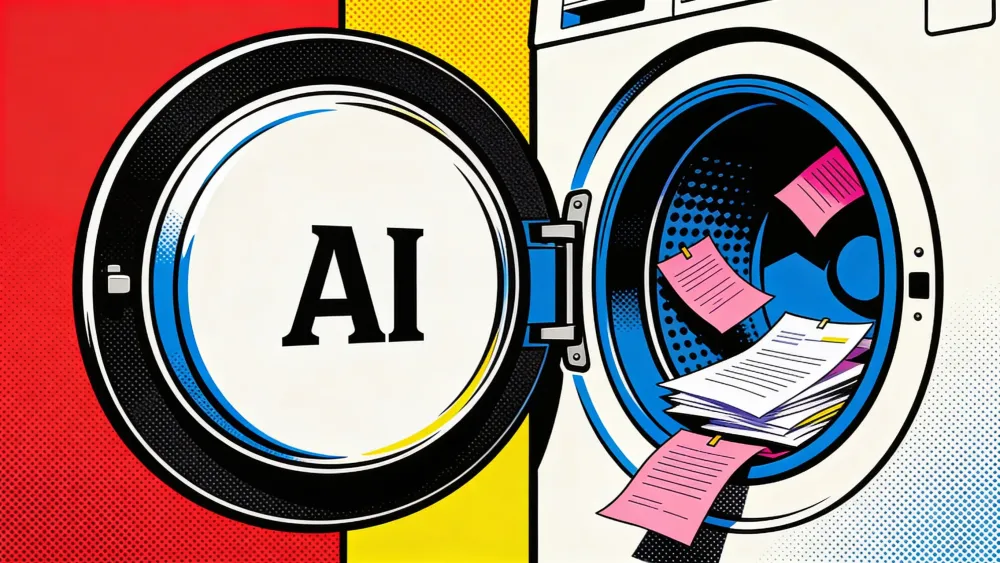
Sam Altman Says Companies 'AI Wash' Layoffs While Under 1% of Job Losses Trace to AI
OpenAI CEO Sam Altman told a live audience at the India AI Impact Summit last week that companies are using artificial intelligence as cover for layoffs they planned to make regardless. "There's some AI washing where people are blaming AI for layoffs that they would otherwise do," Altman said during a CNBC-TV18 interview in New Delhi. The term landed during a brutal stretch for American workers. US employers cut 108,000 jobs in January 2026 alone, a record-high monthly surge, and outplacement firm Challenger, Gray & Christmas tracked roughly 55,000 layoffs attributed to AI across all of 2025.
That 55,000 figure sounds enormous until you hold it against the full picture. It represents less than 1% of total US job losses for the year. A National Bureau of Economic Research paper surveying executives found that 90% of them said AI had zero impact on their workforce over the prior three years. Brookings found the same thing. No meaningful employment dip in the jobs most likely to be automated. The numbers barely moved. Those job categories? Unemployment looks about the same as before ChatGPT showed up in late 2022.
Nobody seems to mind that the layoff narrative and the labor data don't agree.
And Altman, of all people, is pointing at it. He runs the company most responsible for the current AI frenzy, and he needs corporate buyers to believe his technology can replace human work. That's the commercial pitch. But he also needs the public to stop treating every layoff announcement as proof that the machines are coming for everyone's desk. A broad backlash against job-killing AI would threaten the regulatory breathing room OpenAI depends on. Altman is threading a needle, doing it on stage in New Delhi, and betting that the audience won't notice both claims can't be equally true at the same time.
The Breakdown
- Altman coined 'AI washing' at India summit, saying companies blame AI for layoffs they planned regardless.
- Under 1% of 2025 US job losses traced to AI; 90% of executives reported zero workforce impact.
- Entry-level workers face real pain: 13% employment decline since 2022 among junior software and service roles.
- Altman called Musk's orbital data center plans 'ridiculous' while SpaceX recruits for million-satellite constellation.
The spreadsheet says efficiency, the math says otherwise
Every earnings call transcript from the past six months reads from the same script. Executives name AI and promise transformation. Headcount drops. Investors applaud. The word "efficiency" makes it into the press release. Nobody checks whether the efficiency came from software or from firing people who cost too much.
Citigroup told employees AI would "reshape how work gets done" and then announced additional layoffs in the same quarter. UPS cut tens of thousands of positions during 2025 and pointed to automation as the engine behind a leaner operation. Amazon pushed the framing furthest. The company eliminated 14,000 roles last spring while telling workers that AI implementation meant the company would "need fewer people doing some of the jobs that are being done today."
That quote made headlines everywhere. It framed the cuts as forward-looking, an unavoidable consequence of building smarter systems. Investors rewarded the message. Amazon's stock barely flinched.
Amazon's CEO quietly reversed course that fall. AI wasn't actually the reason for the layoffs. Just restructuring. The company didn't issue a correction, and nobody demanded one. By then the original headline had done its work, signaling to Wall Street that Amazon sat at the leading edge of workforce transformation. The reality was a spreadsheet exercise dressed in futurism.
Google, Pinterest, Autodesk, and Meta all disclosed planned cuts in early 2026 affecting hundreds of workers in the Bay Area and thousands more across California. Each company cited some version of strategic realignment. AI appeared in the background of every announcement, invoked but never quite proven as the cause.
If you're a defensive CFO staring at a rough quarter, AI washing might be the most efficient thing about your entire strategy. The technology provides rhetorical cover. It tells shareholders you're modernizing. And it shifts blame for painful decisions onto an impersonal force that nobody can argue with in a board meeting, because who's going to raise their hand and say the machines aren't actually doing anything yet?
The 13% nobody talks about
Altman's reassurance has limits, though. Something real is happening at the bottom of the labor market, and the data is harder to wave away.
Stay ahead of the curve
Strategic AI news from San Francisco. No hype, no "AI will change everything" throat clearing. Just what moved, who won, and why it matters. Daily at 6am PST.
No spam. Unsubscribe anytime.
Stanford put a number on it. Employment among early-career software engineers and customer service workers fell 13% since 2022. Unemployment among recent graduates keeps rising. These are the first jobs. The entry points. And they're disappearing at the exact moment companies flood their workflows with chatbots and code-generation tools. The connection is hard to prove statistically. It's obvious to anyone watching hiring managers fill junior positions with AI subscriptions instead of new graduates.
Senior professionals remain insulated, for now. Junior staff take the hit. Workers with the least experience and the thinnest professional networks have nowhere to go when the role disappears. Apply for your first customer service job in 2026 and the market you walk into didn't exist four years ago when you started college. The role you trained for runs on a chatbot subscription that costs less than a week of your salary.
Anthropic CEO Dario Amodei didn't hedge. Half of all entry-level white-collar jobs could disappear within five years, he told Axios last year. Amodei runs the company behind Claude, one of the most capable language models in production. Not a guess from the sidelines. He was describing what his own product can do.
Altman conceded the trajectory. "Of course we'll find new kinds of jobs, as we do with every tech revolution," he told CNBC's India affiliate, TV18. His next sentence landed differently. "I would expect that the real impact of AI doing jobs in the next few years will begin to be palpable."
Palpable. The word sits between Altman's two claims. In one version of reality, AI is being wrongly blamed for economic pain that has nothing to do with it. In the other, AI will soon start visibly eliminating roles and the pain will be real. He's drawing a timeline and asking the room to accept both premises at once. Not now. Soon. The 108,000 workers who lost their jobs in January might wonder how fine a distinction that really is once the severance check clears.
Fix a broken GPU in space
The AI washing debate wasn't the only needle Altman tried to thread in India. During a separate appearance at Express Adda, he called former co-founder Elon Musk's plan to build orbital data centers "ridiculous." The two launched OpenAI together as a nonprofit in 2015 before Musk walked away three years later. Lawsuits followed. So did xAI, Musk's competing AI company.
"Orbital data centres are not going to matter at scale this decade due to the rough math of launch costs and how hard it is to fix a broken GPU in space," Altman told interviewer Anant Goenka, drawing laughs from the New Delhi audience.
He was targeting a real program. SpaceX announced in February its goal to launch a "constellation of a million satellites that operate as orbital data centers." The company has already started hiring engineers for the effort. Musk told xAI employees this month that SpaceX's acquisition of xAI would accelerate the deployment timeline. The combined entity gives Musk the rockets, the AI models, and a founder who believes strongly enough in the idea to merge two companies over it.
Google wants in too. Project Suncatcher came out of its labs late last year targeting solar-powered data centers in orbit by 2027. Pichai said so on Fox News Sunday.
The push toward orbital computing reflects a straightforward crisis on the ground. Data center power consumption could double by 2026, the International Energy Agency has warned. Over 1,200 facilities were approved for construction across the US by the end of 2024, nearly four times the count from 2010. And communities are fighting back. Proposed campuses in Texas and Oklahoma face growing resistance from residents anxious about water depletion, grid strain, and the industrial transformation of farmland. In Claremore, Oklahoma, a recent public meeting about a proposed campus ended with an arrest.
Step back and both stories from Altman's trip connect. Companies need the technology to be important enough to fire people over and expensive enough to require launching servers into orbit. Both claims can't be equally true. Space solves the politics. The physics remain unsolved.
Generous where it costs nothing
Asked during the Express Adda interview whether he and Musk might ever become friends again, Altman was direct. "I think Musk and I becoming friends again is less likely" than TSMC losing its global chip manufacturing monopoly, he said. Then an unexpected compliment. "He's extremely good at physical engineering and also extremely good at getting people to perform incredibly well at their jobs."
That exchange captures Altman's public positioning in 2026. Generous about the abstract, sharp about the concrete. He praised Musk's engineering talent while dismissing his orbital ambitions in the same breath. The AI washing accusation carried its own irony, given that Altman runs the company whose product makes the cover story plausible. And when he told the room that AI's impact on employment will become palpable, he spent the rest of the trip explaining why it hasn't arrived yet.
The workers who cleared their desks in January, 108,000 of them, aren't interested in how well Altman threads the needle. Whether AI caused their layoff or just handed the CFO a better press release, the outcome looks identical from the parking lot. And the man who built ChatGPT just told them the real displacement hasn't even started.
Frequently Asked Questions
What does 'AI washing' mean?
AI washing describes companies using artificial intelligence as a convenient excuse for layoffs driven by ordinary cost-cutting. Sam Altman coined the term at the India AI Impact Summit in February 2026, suggesting executives invoke AI to appear innovative while downsizing for financial reasons unrelated to technology adoption.
How many jobs were actually lost to AI in 2025?
Outplacement firm Challenger, Gray & Christmas attributed roughly 55,000 layoffs to AI in 2025. That represents less than 1% of total US job losses for the year. A National Bureau of Economic Research survey found 90% of executives said AI had no impact on their workforce over the past three years.
Why did Amazon walk back its AI layoff claims?
Amazon cut 14,000 jobs in spring 2025 and told workers AI meant fewer people would be needed. The CEO reversed course months later, saying AI wasn't the reason. The company never issued a correction. The pattern suggests Amazon used AI framing to signal innovation to investors while executing routine restructuring.
Are any workers actually being displaced by AI?
Entry-level workers are feeling real impact. Stanford researchers found a 13% employment decline among early-career software engineers and customer service workers since 2022. Anthropic CEO Dario Amodei predicted half of all entry-level white-collar jobs could disappear within five years.
Why does Altman call space data centers 'ridiculous'?
Altman dismissed orbital data centers as impractical this decade, citing launch costs and the impossibility of repairing hardware in space. SpaceX plans a constellation of one million data center satellites, and Google's Project Suncatcher targets 2027. Altman argues terrestrial infrastructure remains the only viable option now.



Maria Garcia
Bilingual tech journalist slicing through AI noise at implicator.ai. Decodes digital culture with a ruthless Gen Z lens—fast, sharp, relentlessly curious. Bridges Silicon Valley's marble boardrooms, hunting who tech really serves.